 Blaine Siding
 Board & Batten in Nooksack: A Style That Has to Earn Its Keep
Board and batten has been showing up on homes around Nooksack for a long time, and it's easy to see why. The vertical lines suit the farmhouses, barns-turned-homes, and newer builds scattered through this part of Whatcom County, and the deep shadow lines the battens throw give a house real presence instead of a flat, builder-grade look. But out here, close enough to Semiahmoo Bay and the Strait of Georgia to catch salt-laden wind, and wet enough for moss to colonize anything that holds moisture, board and batten siding is doing more than looking good. It's the first line of defense against a climate that doesn't let up for most of the year.
This page is about that one job, done right, on Nooksack homes specifically — not board and batten in general. If you're comparing siding options or trying to understand why we only install one product in this profile, this is the detail you need.
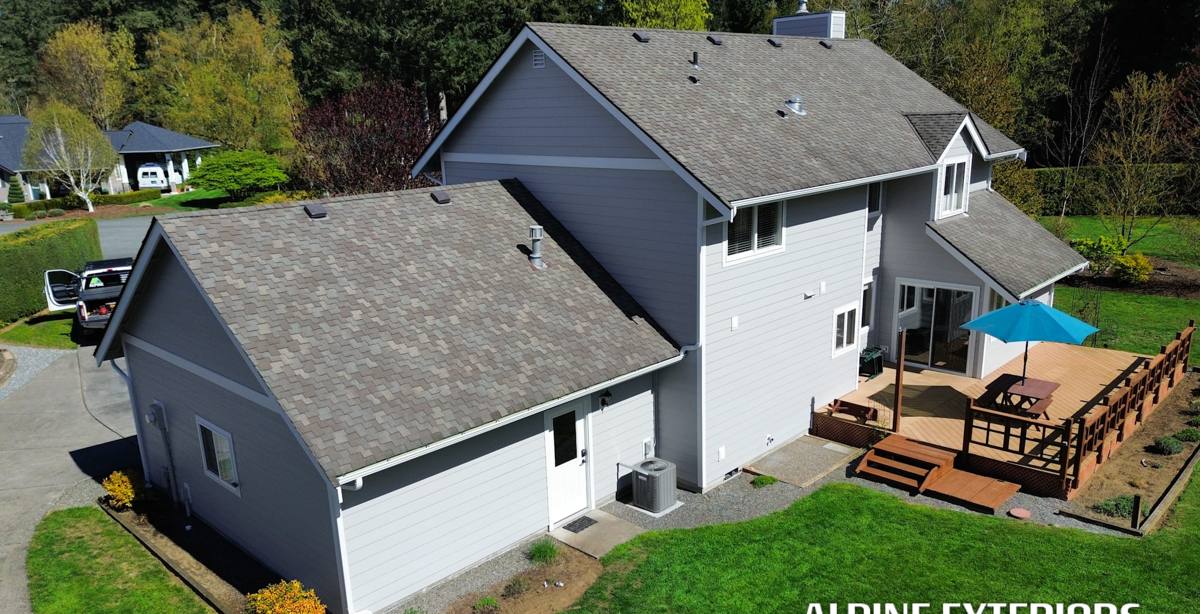
What Nooksack's Climate Actually Does to Vertical Siding
Nooksack sits in a stretch of Whatcom County where three climate factors compound each other, and board and batten siding, by its nature, is more exposed to all three than a standard lap profile.
Salt Air
Proximity to Puget Sound and the Strait means airborne salt reaches siding, fasteners, and trim here more than it would inland. Salt is corrosive to unprotected metal fasteners and flashing, and it accelerates the breakdown of finishes that aren't built to resist it. Board and batten has more vertical seams and more exposed fastener lines than lap siding, which means more places for that corrosion to start if the wrong materials are used.
Driving Rain
Wind-driven rain off the water doesn't just wet a wall — it pushes water sideways and upward, testing every seam, joint, and batten edge. Vertical board and batten channels water differently than horizontal lap siding; done correctly, the battens shed water down and away. Done poorly, the gaps behind battens become funnels that trap moisture against the wall assembly.
A Long Moss Season
Whatcom County's damp, mild winters and shaded, tree-lined lots around Nooksack give moss a long runway. Moss holds moisture against a surface for extended periods, and on a siding material that can absorb water or swell, that's a slow, steady path to rot, cracking, and finish failure. On a material that resists moisture intrusion, moss is a surface nuisance you clean off — not a structural threat.
Why We Only Install James Hardie Fiber Cement for This Profile
We don't install board and batten in vinyl, LP SmartSide, primed spruce, cedar, or other fiber cement brands like Cemplank or Allura. That's a standard we hold across every job, not just this one, but it matters more on a board and batten profile in a climate like Nooksack's because of how exposed the seams and fastener points are.
James Hardie's HardiePanel and HardiePanel HZ10 vertical siding, run with battens, is engineered fiber cement — non-combustible, dimensionally stable, and manufactured with a factory-applied ColorPlus finish that's baked on rather than field-applied. That finish matters directly in a salt-air, high-moisture area: it resists fading and doesn't rely on a field-applied coat holding up against wind-driven rain and UV for years before it needs recoating. Wood products (cedar, primed spruce) can look excellent initially but require ongoing paint and moisture maintenance that gets harder to keep up with in a climate this wet. Vinyl board and batten can warp or fade, and it doesn't offer the same fire-resistance profile. Other fiber cement brands may be reasonable products, but we've standardized on Hardie because of its climate-engineered HZ10 line (built for the Pacific Northwest's freeze-thaw and moisture cycles), its transferable warranty, and the consistency we get installation after installation.
Panel and Batten Configuration Options
| Option | What It Offers | Where It Fits Best |
|---|---|---|
| HardiePanel vertical siding + wood or composite battens | Classic deep-shadow board and batten look, wide color range | Full facades, farmhouse and modern-farmhouse styles |
| HardiePanel HZ10 | Formulated for wetter, colder climates like ours — better moisture and freeze-thaw performance | North and west-facing walls that catch the most driving rain |
| Board and batten as an accent | Used on gables, entries, or a single elevation paired with lap siding | Homes wanting texture contrast without a full re-side |
What a Correct Board & Batten Installation Actually Involves
Board and batten is unforgiving of shortcuts because every seam and batten line is a potential water path. A correct install on a Nooksack home includes:
- A drainage plane (weather-resistant barrier) installed and lapped correctly before any siding goes up
- A rain screen gap where conditions call for it, so any water that does get behind the siding can drain and dry instead of sitting against the sheathing
- Corrosion-resistant fasteners appropriate for a salt-air environment, driven per Hardie's fastening schedule — not just "close enough"
- Proper batten spacing and fastening so panels can expand and contract without cracking the finish
- Correct flashing at every window, door, and roofline intersection, since these are the highest-failure points on any siding job
- Factory-cut and factory-primed edges kept intact wherever possible, with field-cut edges properly sealed
- Manufacturer-specified caulking only at the joints Hardie's install guide calls for — over-caulking traps moisture just as much as under-caulking lets it in
The gap between a board and batten job that lasts twenty-plus years and one that starts showing problems in five is almost always in that list — not in the material itself.
Common Mistakes We See on Poorly Installed Board & Batten
| Mistake | Why It Fails Here |
|---|---|
| No rain screen / drainage gap | Driving rain that gets behind battens has nowhere to go and soaks the wall assembly |
| Standard (non-corrosion-resistant) fasteners | Salt air accelerates corrosion, leading to streaking and eventual fastener failure |
| Battens face-nailed with no expansion allowance | Cracks the finish and opens hairline gaps that collect moisture and moss |
| Missing or incorrect flashing at penetrations | The single most common source of hidden water damage behind siding |
Our Process for a Nooksack Board & Batten Job
1. On-Site Assessment
We walk the exterior, check existing siding and sheathing condition where accessible, and note the elevations that take the most weather — usually the sides facing the prevailing wind and rain off the water.
2. Product and Layout Plan
We map out panel and batten spacing, decide where HZ10 makes sense versus standard panels, and plan trim and color to match the home's style.
3. Tear-Off and Prep
Old siding comes off, sheathing is inspected and repaired if needed, and the drainage plane goes on correctly before anything else happens.
4. Installation to Manufacturer Spec
Panels, battens, and flashing go on following Hardie's published installation requirements — the same requirements that keep the warranty intact.
5. Final Walkthrough
We go over the finished siding with you before calling the job done, so nothing gets missed.
Maintenance in a Moss-Prone, Salt-Air Climate
Fiber cement board and batten is low-maintenance compared to wood, but "low" isn't "zero," especially around Nooksack. A simple seasonal routine keeps it performing:
- Rinse the exterior once or twice a year, focusing on shaded, moss-prone areas and any wall that faces prevailing wind and rain
- Keep gutters clear so overflow doesn't run down the siding face and feed moss growth
- Trim back vegetation and tree cover that keeps siding damp and shaded longer than it needs to be
- Check caulking at trim and penetrations every couple of years and have it touched up if it's cracking
- Have any impact damage (branches, debris) inspected and repaired promptly rather than left through a wet season
What Board & Batten Costs to Factor In Around Nooksack
| Factor | Why It Moves the Price |
|---|---|
| Tear-off vs. new construction | Removing and disposing of old siding adds labor beyond straightforward installation |
| Sheathing repair | Moisture-damaged sheathing found during tear-off needs to be replaced before new siding goes on |
| HZ10 vs. standard panel | HZ10's added moisture and freeze-thaw performance carries a modest premium, often worth it on exposed elevations |
| Trim and batten complexity | Steep gables, dormers, and multiple roof intersections add cutting and flashing time |
| Color and finish selection | Factory ColorPlus finishes vary slightly by color line and can affect material cost |
We don't quote a number without seeing the house — a broad range without context isn't useful to you. What we can tell you upfront is that the biggest cost swings usually come from tear-off condition and how much flashing and trim detail the home's design requires, not from the siding material itself.
Why Hiring a Crew That Already Works Nooksack Matters
Board and batten's failure points — flashing, fastener corrosion, drainage — are exactly the details that a crew unfamiliar with this specific stretch of coastal Whatcom County is more likely to underestimate. A crew that already works Nooksack and the surrounding Blaine area knows which elevations on a typical local lot take the worst of the wind-driven rain, how aggressive the moss season really gets under tree cover, and what corrosion-resistant fastening actually requires this close to salt water. That's not something you learn from a spec sheet — it's something you learn from doing the work here, repeatedly, and seeing what holds up five and ten years later.
If you're planning a board and batten project in Nooksack, we're happy to walk the property, talk through James Hardie's panel and HZ10 options, and give you a straightforward, no-pressure estimate using the form below.