 Blaine Siding
 Custom Windows in California Creek: Built for a Low-Lying, Water-Close Corner of Whatcom County
California Creek sits on the edge of Blaine, in the low, water-close land where the creek and its surrounding wetlands drain toward Drayton Harbor. It's a different setting than downtown Blaine or the more developed parts of town — more rural, more tree cover along the creek corridor, and lots that hold moisture longer than higher, more open ground nearby. That combination of shade, standing dampness, and closeness to the harbor puts real, steady stress on window systems, and it's a big part of why window work out here often means custom-built openings rather than something you can order off a standard size chart.
We handle siding, roofing, windows, and decks for homes throughout this part of Whatcom County, and California Creek is regular territory for our crew. On windows specifically, a lot of what we do here is custom work — matching non-standard openings on older homes, building out additions and remodels where nothing on the wall is a stock size, and replacing units where the surrounding trim, siding, and structure all have to be accounted for, not just the glass and frame.
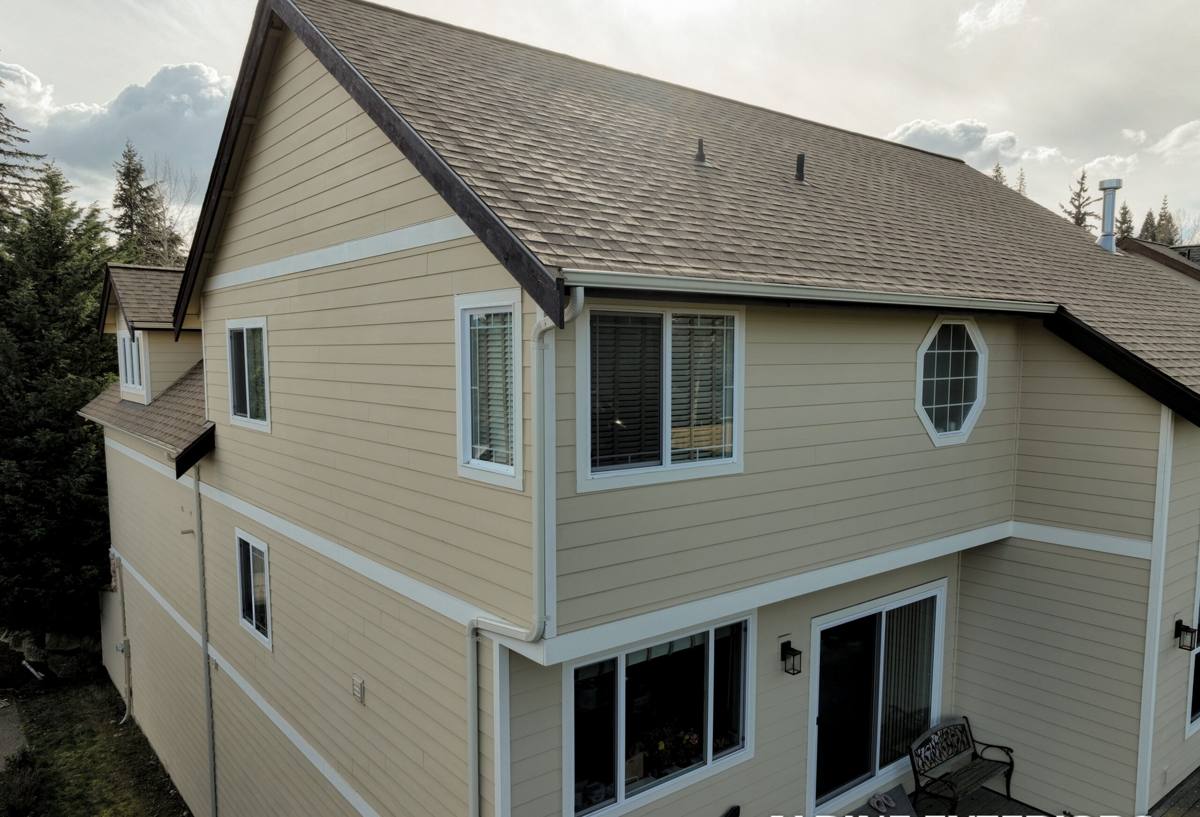
What This Climate Does to Windows Near the Creek
Salt Air Off Drayton Harbor
California Creek isn't as exposed as a home sitting right on the water, but it's close enough to Drayton Harbor and Semiahmoo Bay that salt-laden air still reaches the property regularly, especially during winter storms. That air accelerates corrosion on window hardware, fasteners, and any exposed metal trim faster than a drier, more inland setting would. Hardware and fastener grade matter more here than a homeowner might expect from a property that isn't technically waterfront.
Driving Rain With Nowhere to Break It
Storms moving through this part of Whatcom County push rain sideways as much as down, and low-lying land near the creek doesn't offer much in the way of a windbreak. Wind-driven rain finds gaps at window flashing and trim joints that a straight-down rain would never reach. That's exactly the kind of moisture load that turns a small flashing shortcut into a real leak a few seasons down the road.
A Long Moss and Mildew Season
Mild temperatures and near-constant humidity give moss and mildew a growing season that runs most of the year across Whatcom County, and the tree cover and dampness along the creek corridor stretch that season out even further on shaded walls and window trim. Sills, casing, and any wood trim around older windows are common places it takes hold first, especially on north-facing elevations that don't get much direct sun through the winter.
Ground Moisture From the Creek and Wetlands
Low, water-close lots near California Creek tend to sit with more ambient ground moisture than higher ground elsewhere in Blaine, which means siding, trim, and the lower portions of window openings can stay damp longer after a storm passes. That's not a defect in any one property — it's just the nature of building close to a creek and wetland system — but it does mean drainage and flashing details matter more here than they would on a well-drained, open lot.
What "Custom" Actually Means for a Window Project
"Custom windows" covers more ground than most homeowners expect. It's not just about odd shapes — arched tops, angled bays, or oversized picture windows — though we do build those. More often it means an older California Creek home where the rough openings were never built to today's standard sizes, or a remodel and addition where a window has to be built to fit an opening that already exists rather than the other way around. A custom job also comes up any time a window needs to match existing trim profiles, siding lines, or a home's original architectural character closely enough that a stock unit just won't sit right.
Standard vs. Custom: What Actually Changes
| Factor | Standard/Stock Window | Custom Window |
|---|---|---|
| Sizing | Fits common rough-opening sizes | Built to the exact existing or planned opening |
| Lead time | Typically shorter | Often several weeks longer, since it's built to order |
| Shape and style | Rectangular, limited configurations | Arched, angled, oversized, or matched to existing trim |
| Structural review | Rarely needed | Often needed for larger or reconfigured openings |
| Cost | Lower baseline | Higher, driven by size, shape, and glazing package |
None of this means custom automatically costs dramatically more — a lot of California Creek homes just need a handful of accurately sized replacement units, which isn't a large premium over stock pricing. Where the cost and timeline really shift is with larger reconfigured openings, egress requirements for bedroom windows, or matching a specific historic trim profile.
Egress and Structural Considerations
Any bedroom window replacement needs to meet current egress requirements for opening size and sill height, which sometimes means a straightforward swap isn't an option and the opening itself has to be enlarged. Larger custom openings, especially ones that widen a wall opening beyond what's currently framed, can also require a header size check before the window order even goes in. We flag both of these during the initial site visit, not after materials have already been ordered.
Getting the Installation Right in This Climate
A well-built custom window still fails early if the installation around it is careless, and that's especially true this close to the creek and the harbor. A few things we won't shortcut on any California Creek window job:
- Flashing that laps correctly: Every flashing layer needs to shed water down and out into the drainage plane below it, not just sit against the opening.
- Integration with the surrounding wall assembly: Window flashing has to tie into the house wrap and siding around it as one continuous system, not stop at the window's edge.
- Sealed, not just caulked, joints: Caulk is a supplement to proper flashing, not a substitute for it — caulk alone breaks down and cracks well before the window itself wears out.
- Drainage clearance at the sill: The sill pan and rough opening need a clear path for any water that does get past the exterior surface to drain back out, especially on lower-elevation lots that already hold ground moisture.
This is the same standard we hold on every window we install, but it carries more weight here than it would on a well-drained, open lot elsewhere in town.
Choosing Materials and Glazing for a Custom Window Here
We install vinyl and fiberglass window systems, and for most California Creek homes the right choice comes down to budget, the size of the opening, and whether frame color flexibility matters for matching existing trim. Fiberglass tends to hold up a little better across the temperature swings and long damp stretches this area sees, and it can be painted if a homeowner wants a specific color match. Vinyl is generally the more affordable option and performs well in this climate too, particularly on smaller, simpler openings.
- Frame material: Vinyl or fiberglass — both resist rot in a way uncladded wood frames don't, which matters given the ground moisture near the creek.
- Glazing package: Double or triple-pane with low-E coatings, which helps with both energy performance and reducing interior condensation during cold, damp months.
- Hardware grade: Corrosion-resistant hardware, given the salt air reaching this area off the harbor.
- Trim and cladding match: Custom color, profile, or cladding options where matching existing exterior details actually matters to how the finished job looks.
Our Process for a California Creek Window Project
We start with an on-site visit to measure every opening precisely, note frame and structural condition, and check how the current flashing and trim tie into the surrounding siding. For custom shapes or reconfigured openings, that visit also covers a structural check before anything gets ordered. From there we give a written scope, an honest read on lead times — custom units routinely take longer to arrive than stock sizes — and a clear line between the manufacturer's product warranty and our own installation warranty. Flashing and drainage detailing are standard on every job, not an upgrade a homeowner has to request.
Signs a California Creek Home Needs Window Attention
- Fogging or visible moisture trapped between the panes of a double-pane window
- Drafts or cold spots at the frame even with the window fully closed and locked
- Soft, discolored, or visibly rotted wood trim or sills
- Windows that stick, won't latch, or have become difficult to operate over time
- Daylight or visible gaps where the frame meets the surrounding siding or trim
- Persistent moss or mildew on sills and trim that returns quickly after cleaning
Why a Crew That Already Works California Creek Matters
A contractor who works this stretch of Whatcom County regularly already knows how low-lying, water-close land behaves differently than a well-drained lot a mile inland — which walls stay damp longest, how much lap a flashing detail needs on a windward elevation, and when a header check is worth doing before an order goes in rather than after. That local familiarity shows up in the details that aren't visible once a job is finished, which is exactly where most window problems in this climate actually start.
Get a Free, No-Pressure Estimate
If you're planning a custom window project on a California Creek property — whether that's replacing aging windows, sizing new ones for an addition, or matching a home's existing character — we're glad to take a look and walk through the options honestly. Reach out using the form below to schedule a free, no-pressure estimate.