 Blaine Siding
 Siding Repair Built for the California Creek Climate
Homes along the California Creek corridor on the edge of Blaine sit in one of the more demanding exterior environments in Whatcom County. You've got salt-laden air drifting in off Semiahmoo Bay and the Strait of Georgia, long stretches of driving rain that come in sideways during fall and winter storms, and creekside tree cover that keeps north- and east-facing walls shaded and damp for months at a time. That combination is hard on any siding material, and it's why repair needs here look different than repair needs on a dry, sun-exposed lot twenty minutes inland.
We work on siding repair calls in this specific area regularly, which matters more than it sounds like. A repair crew that understands how California Creek properties actually weather — where moss takes hold first, which wall orientations fail earliest, how wind-driven rain finds its way behind trim — makes better repair decisions than a crew seeing the neighborhood for the first time.
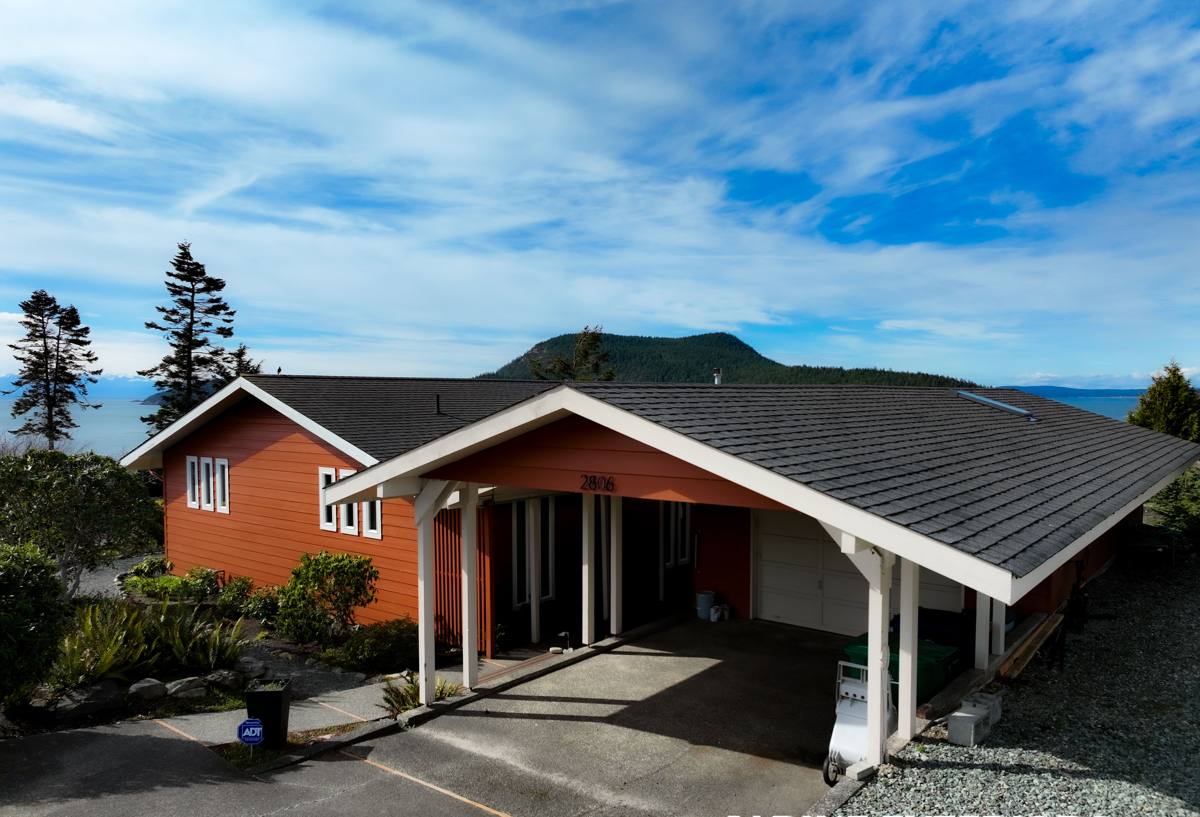
Why Siding Fails Faster Near California Creek
Salt Air and Slow Corrosion
Proximity to saltwater doesn't just affect metal fasteners and flashing, though it does accelerate corrosion there. Salt-laden moisture also settles into caulk joints and seams, breaking down sealants faster than manufacturers' warranty timelines assume. Over years, that means small gaps open up sooner than a homeowner would expect, and water starts working its way behind the siding long before any damage is visible from the ground.
Driving Rain and Wind-Driven Moisture
Blaine gets its share of storms rolling off the Strait, and wind-driven rain behaves differently than a straight-down downpour. It gets pushed sideways and upward into laps, seams, and trim intersections that were never designed to handle water moving in that direction. This is one of the most common root causes we find when we open up a "small" repair and discover moisture damage that extends well beyond the visible symptom.
Moss, Shade, and Extended Dampness
Creekside lots often carry more tree cover and shade than open properties elsewhere in Blaine, which means siding surfaces — especially on north and east elevations — stay damp longer after every rain event. That extended moisture window is exactly what moss and algae need to establish themselves, and once organic growth takes hold on a porous or damaged surface, it holds moisture against the substrate around the clock instead of just after a storm.
Signs Your Siding Needs Repair, Not Just Cleaning
A lot of homeowners in this area assume moss or dark staining is a cosmetic problem solved with a pressure wash. Sometimes it is. Often it isn't. Here's what should prompt an actual inspection rather than a cleaning:
- Soft or spongy spots when you press on a wall surface, especially near the bottom courses
- Visible cracking, splitting, or buckling in individual boards or panels
- Paint that's peeling, bubbling, or failing in a localized area rather than evenly across a wall
- Moss or algae that returns within weeks of being cleaned off
- Dark staining or discoloration around window and door trim, especially on upper-story walls exposed to wind-driven rain
- Gaps opening up at seams, corners, or where siding meets trim, flashing, or foundation
- A musty smell or visible interior staining on a wall that backs up to a suspect exterior section
- Fastener heads that are rusting, backing out, or streaking rust down the siding face
Any one of these can be an isolated, minor fix. Several of them together, or any sign paired with soft substrate, usually means moisture has been getting behind the cladding for a while.
What a Correct Repair Actually Involves
The biggest mistake we see in siding repair — done by other crews, or by well-meaning homeowners — is treating the visible symptom as the whole problem. A patched board over a rotted sheathing section looks fine for a season and then fails again, usually worse, because the water source was never addressed.
A repair done right starts with diagnosis, not patching:
- Find the water path. Damaged siding is a symptom. We trace where water is actually getting in — a failed seam, missing or corroded flashing, a caulk joint that gave up, a fastener penetration that was never sealed correctly.
- Check what's behind the siding. Once panels are opened up, we look at the house wrap or building paper, the sheathing, and any framing in the affected area. If there's rot, it gets addressed before anything goes back on the wall.
- Correct the underlying detail. That might mean re-flashing a window head, re-lapping house wrap correctly, or changing how a trim board sheds water — not just replacing the siding on top of the same flawed detail.
- Match or replace to a standard that holds up. Where full-panel replacement makes more sense than a patch — which is often, given how this climate treats seams — we install materials engineered for this kind of exposure, not whatever's fastest to source.
Repair Prognosis by Siding Material
What we find behind the wall, and what we recommend, depends heavily on what's already on the house. Here's an honest look at how common siding types typically hold up to repair in a salt-air, high-moisture, moss-prone environment like California Creek:
| Material | Common Failure Pattern Here | Repair Outlook |
|---|---|---|
| Vinyl siding | Cracking in cold snaps, warping near heat sources, panels loosening in wind, moisture tracking behind at seams | Individual panels are easy to swap, but color-matching aged vinyl is difficult and underlying moisture damage is often missed |
| Cedar / untreated wood | Rot at butt joints and lower courses, moss and algae colonization in shaded areas, ongoing repaint cycles | Repairable short-term but labor-intensive to maintain; damaged sections often indicate wider moisture exposure |
| LP SmartSide (engineered wood) | Edge swelling where factory sealant has worn through, especially at cut ends and seams exposed to driving rain | Swollen or delaminated sections generally need full board replacement rather than a patch |
| Primed spruce / OSB-based products | Moisture absorption at unsealed cuts, paint failure, softening near ground contact | Prognosis depends heavily on how well the original install sealed cut edges; often needs section replacement |
| James Hardie fiber cement | Rare structural failure; issues are usually caulk, flashing, or fastener-related rather than the board itself | Because the board itself doesn't absorb and swell like wood-based products, repairs are typically isolated and durable |
This isn't a knock on any of these products in general — each has a place, and plenty of homes wear them fine in drier climates. But in a coastal, shaded, high-moisture corridor like California Creek, the materials that rely on surface coatings or organic wood fiber to keep water out simply need more frequent intervention here than they would elsewhere.
Repair vs. Replacement — Making the Right Call
Not every damaged section needs a full re-side, and we won't tell you it does. But there's a point where patch-repair stops being the economical choice. Generally, repair makes sense when damage is contained to a small, identifiable area with a clear, fixable water source. Full or partial replacement starts making more sense when:
- Damage shows up in multiple, unrelated areas of the same wall or elevation
- The siding material itself (not just the finish) has absorbed moisture and lost structural integrity
- Repeated past repairs haven't stopped the same spot from failing again
- The existing material is discontinued or impossible to color-match, making patches visually obvious
- You're already dealing with related work — trim, paint, or window flashing — where doing it all together saves labor cost
We'll give you a straight answer on which category your situation falls into. A good repair contractor should sometimes talk you out of a bigger job, and sometimes tell you a patch is just delaying an inevitable, larger repair.
Why We Rebuild Repairs With James Hardie Fiber Cement
When a repair requires replacing siding sections — rather than just resealing or refastening what's there — we install James Hardie fiber cement, and only James Hardie. We don't carry vinyl, LP SmartSide, Cemplank, Allura, primed spruce, or cedar as repair materials, even for patch work on a house that already has one of those products elsewhere on the wall.
The reasoning is specific to the conditions this neighborhood deals with. Fiber cement is non-combustible and doesn't swell, delaminate, or feed moss growth the way wood-based or wood-fiber products can when they stay damp for extended periods. Hardie's ColorPlus factory finish is baked on and warranted against fading and peeling, which matters on walls that see constant salt-air exposure and reduce the repaint cycles that cedar and primed wood products demand. Hardie's HZ5 product line is engineered specifically for climates with extended moisture exposure — the kind Whatcom County's coastal edge delivers for a good part of the year — and it carries a strong transferable warranty when installed to manufacturer specification.
That last part — installed to spec — is where a lot of fiber cement repairs go wrong in general, not just here. Hardie board performs the way it's designed to only when fastening patterns, clearances, flashing, and caulking details are done correctly. A repair patch installed loosely into an existing wall, without correcting the details that caused the original failure, undermines the material's advantages no matter how good the product itself is.
Our Repair Process on California Creek Properties
Every repair call in this area starts the same way, whether the job turns out to be a single board or a full elevation:
- On-site inspection. We look at the visible damage, then check the surrounding area, adjacent walls, and roofline details that could be contributing water — gutters, flashing, deck ledgers, and grade slope are common culprits we check every time.
- Moisture assessment. Where damage suggests the sheathing or framing may be affected, we open up enough of the wall to confirm before quoting anything, rather than guessing from the outside.
- Honest scope and estimate. You get a clear explanation of what's causing the problem, what needs to happen to fix it — not just cover it — and what that involves in materials and labor.
- Correct-detail repair. We fix the underlying cause first — flashing, house wrap, sealant, drainage — then install replacement material to current best practice, not just to match what failed.
- Finish and cleanup. Repaired sections are finished to blend with the surrounding wall as closely as the existing material allows, and the site is left clean.
Why Local Experience on This Specific Area Matters
California Creek properties don't all face the same exposure — a wall shaded by mature trees behaves differently than an open, wind-exposed elevation two lots over, even on the same street. A crew that already works this specific pocket of Blaine has seen enough of these houses to know where problems tend to start: which elevations take the worst of the wind-driven rain, where moss establishes fastest, and which older construction details in this area are common weak points.
That local pattern recognition shortens diagnosis time and avoids guesswork. It also means we're not learning Whatcom County's coastal climate on your project — we already account for it in how we flash, seal, and material-select every repair here.
After the Repair: Keeping Moss and Moisture From Coming Back
A correct repair fixes the water path, but ongoing conditions here don't change. A few habits keep repaired sections — and the rest of the siding — performing well:
- Keep gutters clear so overflow doesn't run down the wall face, especially before fall storm season
- Trim back vegetation that shades walls and keeps them damp longer than necessary
- Rinse moss and algae off before it thickens, rather than letting it establish and hold moisture against the surface
- Have caulking at trim and penetrations checked every few years, since it's usually the first thing to fail in salt air
- Address small issues — a lifting seam, a cracked board — before the next wet season, not after
If you're seeing moss that won't stay gone, soft spots, or staining on siding anywhere near California Creek, we're happy to take a look and give you a straightforward, no-pressure assessment of what's actually going on and what it would take to fix it right. Use the form below to request a free estimate.