 Blaine Siding
 Asphalt Shingle Roofing Built for Cherry Point's Climate
Cherry Point sits right up against the Strait of Georgia, which means homes here take on a mix that most roofers inland never have to plan for: salt-laden air off the water, wind-driven rain that comes in sideways more often than straight down, and shaded, damp lots that grow moss on a shingle roof faster than almost anywhere else in Whatcom County. An asphalt shingle roof that's installed correctly for this exact combination will outlast one that was installed the same way you'd install it in Spokane or Yakima. The materials aren't different — the details are.
This page is specifically about asphalt shingle roofing for Cherry Point homes and the surrounding Blaine area, not a general rundown of shingle types. If you're comparing roofing options for a home near the water, this is the information that actually matters for your decision.
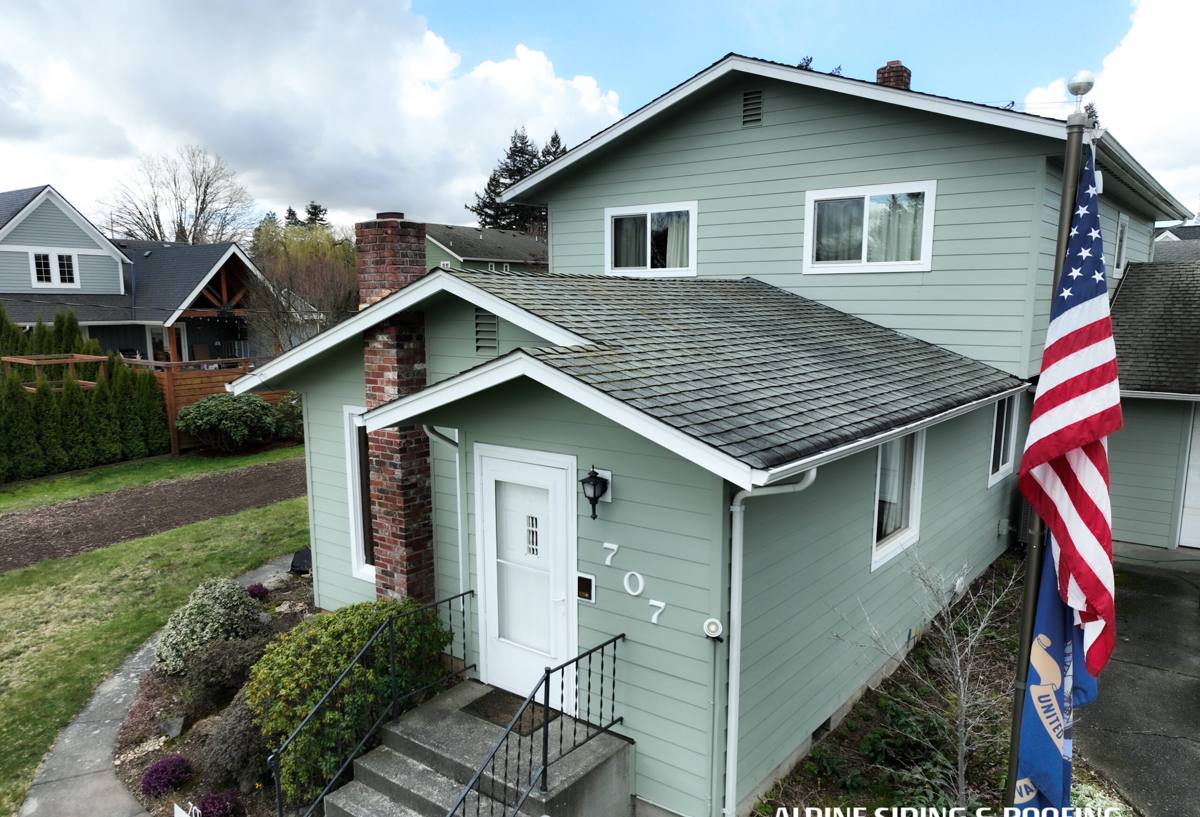
What Cherry Point's Climate Does to a Shingle Roof
Salt Air
Salt in the air doesn't rot asphalt shingles the way it corrodes metal, but it does accelerate the breakdown of exposed metal roof components — flashing, drip edge, nail heads, vent housings, and gutter hardware. On a shingle roof, the metal detailing is often the first thing to fail, well before the shingles themselves are worn out. We spec corrosion-resistant flashing and fasteners on every Cherry Point job for this reason, not as an upsell.
Driving Rain
Wind off the water pushes rain sideways and up under shingle tabs, especially at eaves, ridges, and anywhere two roof planes meet. A roof that would shed water fine on a calm inland lot can leak at Cherry Point if the underlayment, ice-and-water membrane, and flashing details weren't sized for wind-driven rain. This is a design and installation issue, not a shingle-brand issue.
Moss and Shade
Whatcom County's moss season runs long — many Cherry Point lots stay damp under tree cover well into the warmer months. Moss holds moisture against the shingle surface, works its way under tabs, and lifts granules over time. Left unchecked for a few seasons, moss growth alone can knock years off a roof's usable life regardless of how good the shingle was when installed.
What a Correct Asphalt Shingle Job Looks Like Here
A shingle roof is a system, not a single product. Every layer below the visible shingle does specific work, and skipping or downgrading any layer is where most premature failures start.
- Deck inspection and repair — any soft, delaminated, or water-stained sheathing gets replaced before anything else goes down. Roofing over a bad deck just hides the problem.
- Ice-and-water shield — installed at eaves, valleys, and around penetrations, extended further than the code minimum given the wind-driven rain exposure this close to the water.
- Synthetic underlayment — a full water-resistant layer across the whole deck, not just felt paper, as the backup plane if wind ever drives water past the shingle surface.
- Corrosion-resistant flashing — step flashing, counter-flashing, valley metal, and drip edge rated for coastal exposure, not the cheapest stock option.
- Proper nailing pattern — correct nail count and placement per shingle, matched to the local wind exposure, not just enough to pass a quick inspection.
- Balanced attic ventilation — intake at the eaves and exhaust at the ridge, sized to the attic volume, so trapped heat and moisture don't cook the shingles or the deck from underneath.
- Clean valley and penetration work — pipe boots, chimney flashing, and skylight curbs are common leak points if rushed.
Every one of these steps is standard trade practice. What changes for Cherry Point is how much margin we build into the details that face salt air and driving rain, because there's less room for error here than on a sheltered inland roof.
Ventilation and Moisture Control: The Step Homeowners Don't See
Attic ventilation gets overlooked constantly, and it's one of the biggest factors in how long a shingle roof actually lasts near the water. A shaded, damp climate like Cherry Point's means attics are already fighting moisture from the outside; if the attic also traps heat and humidity from the inside because intake and exhaust venting aren't balanced, you get condensation on the underside of the deck, premature shingle aging from the back side, and conditions that encourage mold and wood rot nobody sees until there's a stain on the ceiling.
We check existing ventilation on every reroof and flag it as part of the estimate, not as a surprise add-on once work has started. If your current attic has no soffit intake, blocked baffles, or an undersized ridge vent, that's worth fixing at the same time as the shingles — doing it later means paying for roof access twice.
Choosing the Right Shingle for a Coastal-Adjacent Home
Standard three-tab shingles are the least expensive option but tend to show wind and moisture stress fastest in exposed coastal locations — they're a reasonable choice for a budget-driven project but not what we'd recommend as a first choice at Cherry Point. Architectural (laminated) shingles are heavier, rated for higher wind speeds, and hold up better against the kind of driving rain and gusts this area sees regularly. Algae-resistant shingles, which contain copper granules that slow moss and algae growth, are worth the modest upcharge on shaded Cherry Point lots — they don't stop moss forever, but they buy real time between cleanings.
| Factor | 3-Tab Shingle | Architectural Shingle |
|---|---|---|
| Wind rating | Lower — more exposed to lifting in driving coastal wind | Higher — better suited to Cherry Point's wind-driven rain |
| Moss/algae resistance option | Limited availability | Widely available with copper-granule algae resistance |
| Expected lifespan in this climate | Shorter end of manufacturer range | Longer end of manufacturer range, with proper ventilation |
| Upfront cost | Lowest | Moderate step up |
| Best fit | Budget-constrained projects, outbuildings, rentals | Primary residences facing direct water exposure |
How We Approach a Cherry Point Roofing Project
1. On-Site Inspection
We walk the roof and the attic, not just the roof. Deck condition, existing ventilation, flashing condition, and moss buildup all get documented before we write a number.
2. Honest Estimate
You get a written scope that spells out tear-off, deck repair (if needed), underlayment, flashing, ventilation work, and shingle selection — no vague line items. If deck repair is a possibility but not confirmed until tear-off, we say so upfront instead of surprising you mid-project.
3. Tear-Off and Deck Check
Full tear-off to bare deck on reroofs. This is the only way to actually see the sheathing condition and catch hidden water damage before it's covered up again for another 20-plus years.
4. Installation to Coastal-Grade Detailing
Ice-and-water shield, synthetic underlayment, corrosion-resistant flashing, correct nailing, and balanced ventilation — installed to the standards described above, on every job, not as an option tier.
5. Cleanup and Walkthrough
Magnetic sweep for stray fasteners, full site cleanup, and a walkthrough where we show you what was done and why.
Why a Crew That Already Works Cherry Point Matters
Roofing crews who mostly work inland don't run into salt-air corrosion or moss-driven maintenance schedules often enough to build habits around them. A crew that regularly works Blaine and Cherry Point knows which flashing grades hold up here, how far to extend ice-and-water shield given the wind exposure, and what a moss-damaged deck looks like before it's obvious. That's not a marketing claim — it's just what comes from doing the same climate-specific work repeatedly instead of occasionally.
It also means we're not guessing at permitting, disposal, or access logistics for the area — we already know the local process, which keeps the project moving instead of stalling on paperwork.
Maintenance That Actually Extends the Roof's Life
- Have moss physically removed (not just chemically treated) every 1–2 years on shaded sections, more often under heavy tree cover.
- Keep gutters clear — clogged gutters back water up under the first course of shingles, which is a common and preventable leak source here.
- Trim back overhanging branches to cut down on shade, debris, and moss-friendly moisture pockets.
- Have flashing and pipe boots checked every few years — these are the parts that fail before the shingles do in coastal exposure.
- Confirm attic ventilation is still clear after any insulation work — added insulation sometimes blocks soffit intake without anyone noticing.
Warranty and What It Actually Covers
Manufacturer material warranties cover defects in the shingle itself. They generally do not cover leaks caused by poor installation, which is why our workmanship warranty matters separately from the manufacturer's paper — it's our guarantee on the flashing, nailing, ventilation, and underlayment work described above. Ask any roofer for the specifics of both warranties in writing before you sign anything, and be wary of verbal promises that aren't backed up in the contract.
If you'd like a straight, no-pressure look at what your roof actually needs, request a free estimate below. We'll walk the roof, tell you what we see, and give you a written scope — no obligation either way.