 Blaine Siding
 Cherry Point's Shoreline Climate Is Hard on Siding
Cherry Point sits right on the Strait of Georgia shoreline north of Blaine, in Whatcom County — close enough to the water that salt-laden air is a daily fact of life for the homes out there, not an occasional nuisance. Add in wind-driven rain off the Salish Sea and the long, wet moss season that Northwest Washington is known for, and you've got a combination that wears through siding faster than it would a few miles inland. Homes on the water-facing side of a lot take the brunt of it: salt spray settles on the surface, driving rain finds every gap in flashing and trim, and shaded, tree-lined lots stay damp long after a storm has passed.
None of that means siding on a Cherry Point home is doomed — it means the material and the installation both need to be matched to the exposure. That's the whole point of this page: what a siding replacement actually needs to accomplish out here, and why we approach it the way we do.
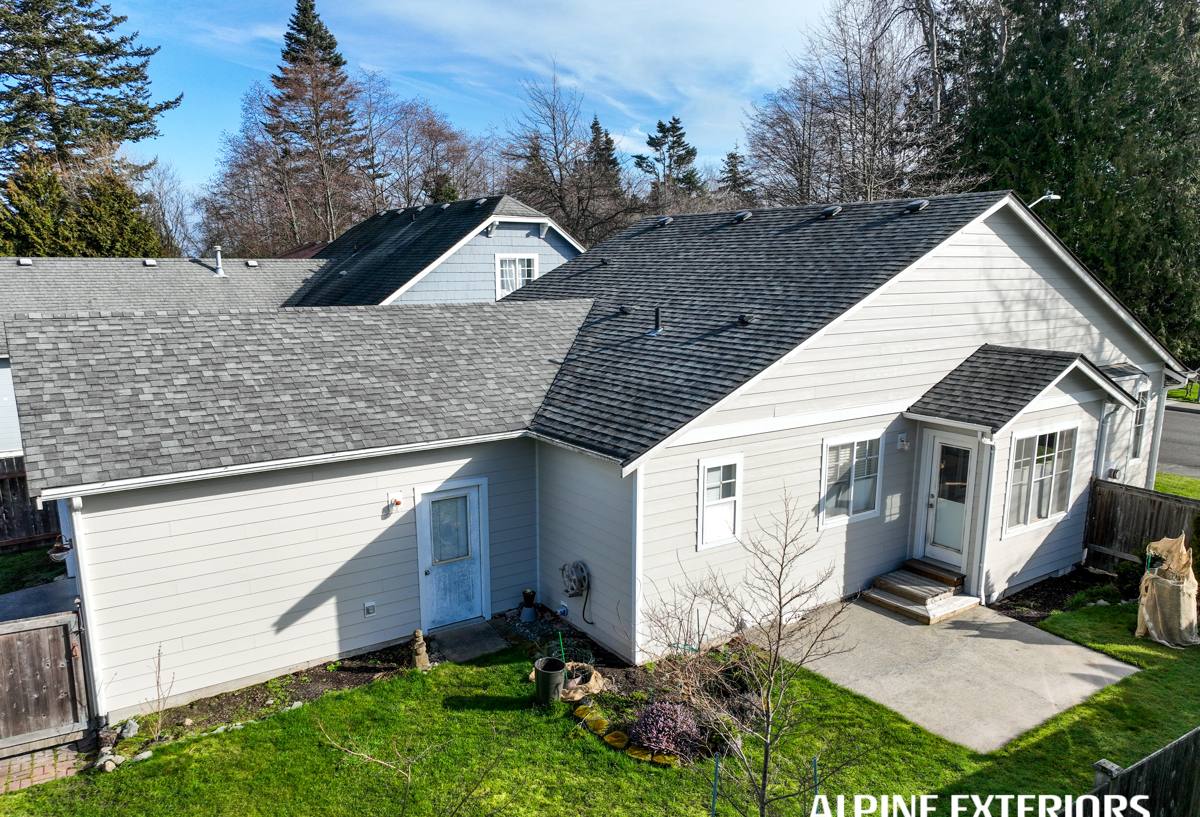
Signs a Cherry Point Home Needs Replacement, Not Just Repair
Not every siding problem calls for a full tear-off. But there's a point where patching individual boards or panels stops making sense and a full replacement becomes the more honest — and often more economical — recommendation. Watch for:
- Soft or spongy spots when you press on the siding, especially near the bottom courses or below windows
- Persistent moss or dark algae staining that comes back within a season or two of cleaning
- Cupping, warping, or bowing boards, particularly on wood-based or engineered wood products
- Rust streaking around fasteners — a sign that salt air is corroding the nails or staples holding the siding on
- Paint that's failing in cycles shorter than it should — chalking, peeling, or blistering every few years instead of every decade-plus
- Gaps opening up at trim, corners, or seams that let wind-driven rain track behind the siding
A single damaged board can usually be repaired. Widespread staining, soft sheathing behind multiple sections, or fastener corrosion across the wall usually means the underlying material or the original installation wasn't built for this exposure, and repair work is just delaying the inevitable.
What a Correct Siding Replacement Actually Involves
Siding replacement isn't just pulling off old boards and nailing up new ones. On a coastal Whatcom County property, the parts you don't see matter as much as the finished look:
- Full tear-off and inspection. Old siding comes off so the sheathing underneath can be checked for rot, soft spots, or prior water damage — problems that are invisible with the siding still on.
- Sheathing repair. Any damaged sheathing gets replaced before anything new goes up. Installing over compromised sheathing just locks the problem in.
- Weather-resistive barrier. A properly lapped and sealed house wrap goes on to manage bulk water before it ever reaches the siding itself.
- Flashing at every penetration. Windows, doors, and any wall penetrations get flashed so driving rain is directed out and away instead of behind the wall assembly — this is where most siding failures actually start.
- Corrosion-resistant fastening. In a salt-air environment, fastener choice matters. Fasteners rated for coastal exposure resist the corrosion that ordinary hardware succumbs to within a few years here.
- Correct reveal and fastening pattern. Siding installed to the manufacturer's specified exposure and nailing schedule performs as designed; shortcuts here are a common cause of early failure.
- Sealed transitions and trim. Caulking and trim details at corners, penetrations, and terminations are finished to shed water, not trap it.
Skip any one of those steps and you can end up with siding that looks fine on install day and fails within a few years — usually from the inside out, where it's harder to catch early.
Why We Install Only James Hardie Fiber Cement Here
We standardized on James Hardie fiber cement siding for every home we work on, and Cherry Point's exposure is a good example of why. It's a non-combustible material that doesn't rely on a field-applied paint job to hold up — it comes from the factory with a baked-on ColorPlus finish engineered to resist fading, chipping, and peeling far longer than paint applied on site. James Hardie also builds region-specific product lines (its HZ5 line is engineered for climates like ours, with wetter winters and more moisture cycling than the drier regions HZ10 is built for), and the warranty is transferable if the home sells.
We don't install vinyl, LP SmartSide, Cemplank, Allura, primed spruce, or cedar, and we're upfront about why. Vinyl can warp and fade under sun and salt exposure, and once it's damaged there's no repainting it to match — you're replacing panels. Primed wood products and engineered wood siding depend on maintaining an intact paint film to keep moisture out; in a climate with this much sustained dampness, that maintenance window is unforgiving, and a missed repaint cycle can let moisture in before anyone notices. Cedar is a genuinely beautiful material, but it demands real upkeep — regular refinishing and active moss and mildew management — to hold up against the moss season Whatcom County is known for. Those aren't flaws that make those products bad; they're trade-offs that don't line up well with a shoreline exposure like Cherry Point's, which is why we don't put them on homes out here.
How the Materials Compare in This Exposure
| Material | Moisture behavior | Finish durability | Maintenance burden here |
|---|---|---|---|
| James Hardie fiber cement | Non-combustible, dimensionally stable, engineered HZ lines for wet climates | Factory ColorPlus finish, resists peeling/fading | Low — periodic rinse and inspection |
| Vinyl | Can warp or distort with heat and impact | Color molded in, but fades over time and can't be spot-repaired invisibly | Low to moderate — panel replacement if damaged |
| LP SmartSide / engineered wood | Performs well if paint film stays intact; vulnerable if it doesn't | Field or factory paint, needs recoating over time | Moderate — paint maintenance is time-sensitive |
| Cedar / primed spruce | Natural material, absorbs and releases moisture | Requires refinishing on a regular cycle | High — active moss/mildew management, refinishing |
Cost Factors for a Cherry Point Siding Job
Every home is different, and we won't quote a number without seeing the property, but these are the factors that most often move a project's scope up or down:
| Factor | Why it matters |
|---|---|
| Extent of hidden water damage | Rot found behind old siding has to be repaired before new siding goes on — this is usually the biggest cost swing |
| Home size and number of stories | More wall area and taller elevations affect material quantity and access/equipment needs |
| Trim, soffit, and fascia condition | Aging trim is often replaced alongside siding rather than left mismatched against new material |
| Siding profile and plank width | Lap width and texture affect material cost and labor time |
| Site access | Waterfront lots with limited driveway or staging space can add setup and material-handling time |
| Existing exterior complexity | Dormers, multiple gables, and window/door count all add cutting and flashing work |
Our Process on Cherry Point Homes
We start with an on-site walkthrough, not a drive-by estimate. That means checking siding for soft spots, looking at flashing and trim condition, and being honest with you about whether you're looking at repair or replacement. From there:
- We give you a written scope — what's being torn off, what's being repaired, what product and color you're getting
- We schedule around realistic weather windows, since tear-off exposes sheathing and we don't want a wall open when a system rolls in off the water
- We protect landscaping, walkways, and windows during tear-off and install
- We walk the finished job with you before calling it done, checking caulking, trim lines, and fastening up close
Why a Crew That Already Works Cherry Point Matters
A siding job out here isn't identical to one a few miles inland, and a crew that regularly works the Blaine and Cherry Point area has already seen how the exposure plays out — which walls take the worst of the salt spray, how moss builds up faster under mature tree cover on shaded lots, and how driving rain off the water tends to find weak flashing details. That's not something you can fully substitute with a general contractor coming from out of the area for a single job. Being local also means we're not far away if a punch-list item comes up after the install, and we're familiar with Whatcom County permitting and inspection expectations, so there are no surprises mid-project.
Maintaining Your New Siding After Installation
James Hardie siding installed correctly is low-maintenance, but "low" isn't "none," especially this close to the water. A few habits go a long way:
- Rinse accumulated salt spray off exterior walls periodically, particularly on water-facing elevations
- Keep gutters and downspouts clear so water isn't sheeting down the wall face
- Trim back vegetation and tree limbs that keep siding shaded and damp, which speeds up moss growth
- Do a visual walk-around once or twice a year to check caulking at trim and penetrations for cracking or gaps
What to Ask Before Hiring a Cherry Point Siding Contractor
- Do they inspect and repair sheathing before installing new siding, or install over whatever's there?
- What weather-resistive barrier and flashing details do they use at windows and doors?
- Are they using fasteners rated for coastal/salt-air exposure?
- Do they install to the manufacturer's specified exposure and nailing schedule, and can they explain what that means?
- Are they licensed and insured to work in Whatcom County, and can they provide a written scope before work starts?
If a siding replacement is on your radar for a Cherry Point property, we're glad to come take a look and give you a straight assessment — no pressure, no upsell. Use the form below to request a free estimate.