 Blaine Siding
 Decking Built for the Sumas Stretch of Whatcom County
Homes in and around Sumas deal with a specific kind of weather beating that a lot of decking material simply isn't built for. The marine air moving in off the Strait and Georgia Basin carries salt that settles on hardware and finishes. Fall through spring, driving rain hits horizontal surfaces for weeks at a stretch. And because the sun sits low for so much of the year and tree cover is heavy in a lot of yards, moss and algae get a long runway to establish themselves on anything that stays damp and shaded. A deck built without those three factors in mind will show it within a few seasons — soft spots, discoloration, slick boards, and hardware that rusts or stains long before the structure is actually worn out.
This page is about one job done right in one area: composite decking for Sumas properties, installed by a crew that already works this part of Whatcom County and knows what the climate does to a deck over time.
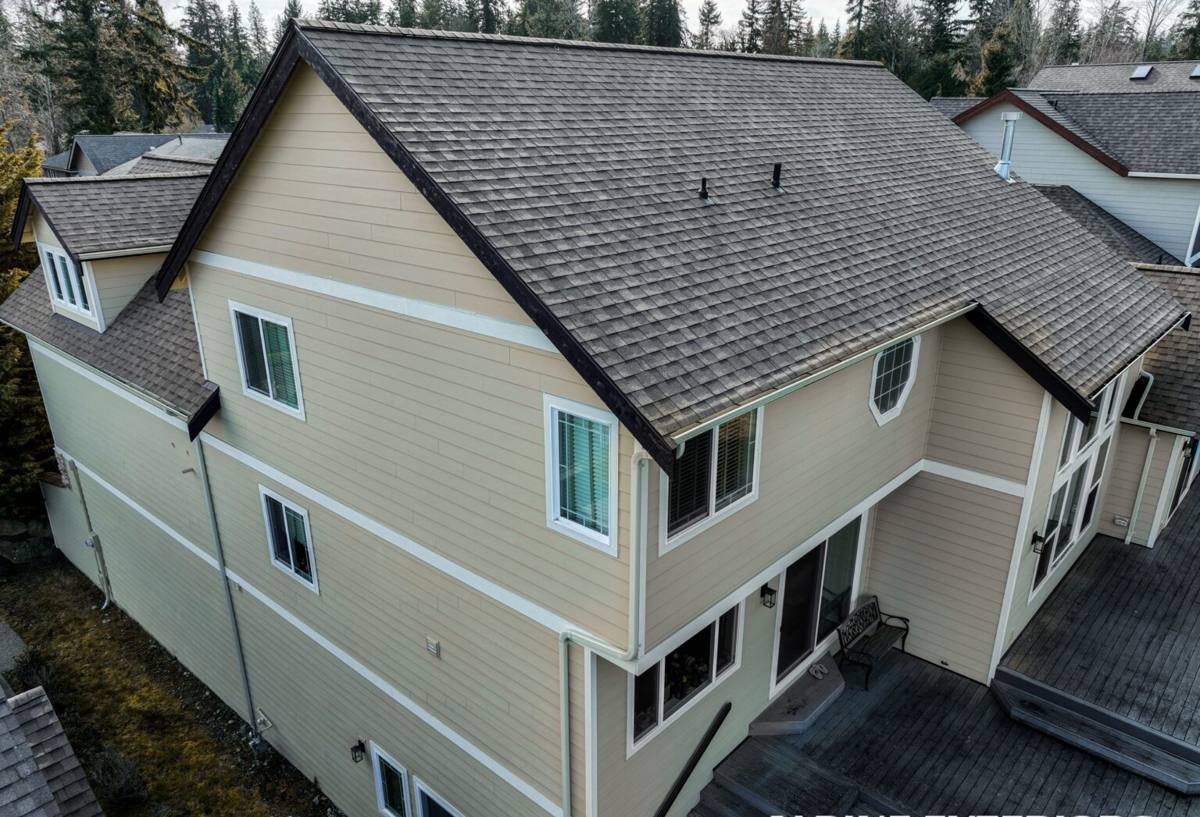
Why Composite Makes Sense Here
Wood decking isn't a bad product — it's a maintenance product. In a climate that stays wet as long as this one does, that maintenance schedule gets demanding fast: annual cleaning, re-staining or sealing every year or two, and constant vigilance against rot at fastener points and board ends where water sits. Composite decking shifts that equation. It doesn't absorb water the way wood fibers do, so it isn't feeding the mold and algae that thrive in a long moss season, and it doesn't need refinishing to keep weather out.
That doesn't mean composite is maintenance-free — no outdoor product is, especially here. It means the maintenance is lighter and more forgiving, which matters when a deck sits under trees or in salt-influenced air for ten-plus months of usable weather a year.
What the Climate Actually Does to a Deck
- Salt-influenced air accelerates corrosion on exposed fasteners, brackets, and railing hardware — stainless or coated hardware isn't optional here, it's the standard.
- Driving rain finds every gap in flashing, ledger connections, and board end cuts, which is where hidden rot starts on a wood deck and where composite substructure detailing matters most.
- Extended moss season means any surface that doesn't shed water and dry between rain events becomes a growth surface — board spacing, airflow underneath, and surface texture all affect how much moss a deck actually collects.
Choosing the Right Composite Board
Not all composite decking is built the same, and the differences matter more in a wet climate than they do somewhere dry. The two biggest distinctions are whether a board is fully capped or only capped on the top face, and whether the profile is grooved (for hidden fasteners) or solid-edge.
Capped vs. Partially Capped Boards
Fully capped composite has a protective polymer shell wrapped around all four sides of the board, not just the visible surface. In a climate where board ends and cut edges take on rain and stay damp longer than the field of the deck, full capping is the difference between an edge that sheds water and one that slowly wicks moisture into the wood-fiber core over years. We treat full capping as the standard for anything installed here, not an upgrade.
Board Profile and Surface Texture
Grooved-edge boards paired with hidden fastener clips give a clean surface with no exposed screw heads for water — or salt — to sit on. Surface texture matters too: a deeply embossed, low-sheen texture sheds standing water and resists the slick film that builds up on smoother boards during the wettest months. We steer homeowners toward textured, capped boards specifically because of how many damp, low-light days this area gets in a given year.
| Decking Type | Moisture Behavior Here | Typical Maintenance |
|---|---|---|
| Pressure-treated wood | Absorbs rain, prone to cupping and checking; end grain rots first | Annual cleaning, re-sealing every 1-2 years |
| Cedar | Naturally moisture-resistant but still needs sealing to fight moss staining | Sealing every 1-2 years, regular cleaning |
| Uncapped composite | Core can wick moisture at cut edges over time | Periodic cleaning, watch cut ends and fastener points |
| Fully capped composite | Sheds rain on all sides, resists moss growth and staining | Routine rinsing and occasional deck cleaner |
What a Correct Installation Involves
The board you choose only performs as well as the structure underneath it. Most of the decking problems we get called out to fix on older builds trace back to substructure and drainage decisions made when the deck was framed — not the decking surface itself.
Framing and Ledger Flashing
Where a deck attaches to the house, the ledger board connection is the single most common source of long-term water intrusion. Proper flashing, correctly lapped with the house's water-resistive barrier, keeps rain from tracking behind the siding and into the wall assembly — a detail that matters even more here given how many weeks of the year that connection sees rain.
Airflow and Drainage Underneath
A deck built low to the ground or over poorly graded soil traps moisture underneath, which extends how long the whole structure stays damp after a storm and gives moss and mildew more time to take hold on the underside of boards and joists. We plan joist height, ground clearance, and drainage slope so air can actually move under the deck between rain events.
Fasteners and Expansion Gaps
Composite boards expand and contract with temperature more than wood does. Fastening systems and butt-joint gaps have to account for that movement, and every exposed fastener needs to be rated for the corrosive effect of salt-influenced coastal air — standard interior-grade hardware doesn't hold up out here over the long run.
Our Process, Start to Finish
- On-site assessment — we look at existing framing (for replacements), ground clearance, drainage, and sun/shade exposure, since that tells us how much moss and moisture pressure the deck will actually face.
- Honest estimate — a clear, itemized quote covering framing, decking, railing, and any repair work the site needs, with no pressure to decide on the spot.
- Framing and flashing — correct ledger flashing, joist spacing, and hardware rated for this climate, whether we're building new or reinforcing an existing structure.
- Decking installation — hidden fastener systems, proper expansion gaps, and attention to cut-end sealing on any board that has to be trimmed on site.
- Final walkthrough — we go over basic care with you before we consider the job finished, not after.
Living With a Composite Deck in a Moss-Prone Climate
Composite decking cuts down on maintenance, but "low-maintenance" isn't "no-maintenance" — especially with the amount of organic debris and damp shade a lot of Sumas-area yards deal with.
- Sweep leaves, needles, and debris off regularly — trapped organic matter is what feeds moss and algae, even on capped boards.
- Rinse the deck a few times a year with a hose or low-pressure wash to clear pollen, salt residue, and grime before it builds a film.
- Use a cleaner made for composite decking if moss or algae does establish — avoid high-pressure washing, which can damage the board's surface texture.
- Keep gutters and downspouts near the deck clear so runoff isn't dumping extra water onto the surface or the structure below.
- Check railing hardware and fasteners once a year for early corrosion, especially on decks with more direct exposure to marine air.
Why a Local Crew Matters for This Job
A deck built by a crew that doesn't work this specific climate regularly tends to make generic decisions — standard hardware, standard drainage assumptions, standard board choices — because that's what works in drier or milder regions. Working Whatcom County and the Sumas area on a regular basis means we've seen what actually fails out here over five and ten years, not just what looks good on installation day. That shows up in the hardware we spec, how we detail flashing, and which board profiles we steer people away from because we've seen how they perform once the moss season sets in.
It also means straightforward logistics — we're not driving in from out of the area for a service call or a warranty question, and we're familiar with how permitting and inspection typically work for deck projects in this county.
What Affects the Cost of a Sumas Composite Deck
Every project is different, but the cost drivers tend to be the same handful of factors. We give firm numbers after seeing the site — not before — but this is generally what moves the price up or down.
| Factor | Why It Matters |
|---|---|
| Deck size and shape | Square footage and the number of angles or cutouts drive both material and labor |
| Existing structure condition | Replacing decking on sound framing costs less than a full tear-off and rebuild |
| Board tier | Fully capped, textured boards cost more upfront than uncapped or basic composite |
| Railing and stairs | Composite or metal railing systems and any stairs add material and labor |
| Site access and grading | Slope, ground clearance, and how easily materials reach the build site affect labor time |
| Permit requirements | Height, attachment to the house, and local code review can add time and fees |
If you're weighing a new composite deck or a replacement for an aging wood one in the Sumas area, we're happy to walk the site with you and put together a straightforward, no-pressure estimate — just fill out the form below to get started.