 Blaine Siding
 Custer Decks Face a Different Set of Problems Than Decks Inland
Custer sits close enough to the Strait of Georgia and Puget Sound that homes here deal with the same salt-laden air and driving rain that shape building decisions all along the Whatcom County coastline. A deck built the way you'd build one in Spokane or even Seattle's drier neighborhoods won't hold up the same way out here. The combination of moisture, salt, and long stretches of shade or overcast sky creates conditions that go after wood, metal, and finishes in ways that aren't always obvious until a few years in.
We've built and repaired decks throughout the Custer area long enough to know which shortcuts show up as callbacks two winters later, and which details actually matter. This page focuses specifically on what a deck needs to perform well here — not generic deck-building advice.
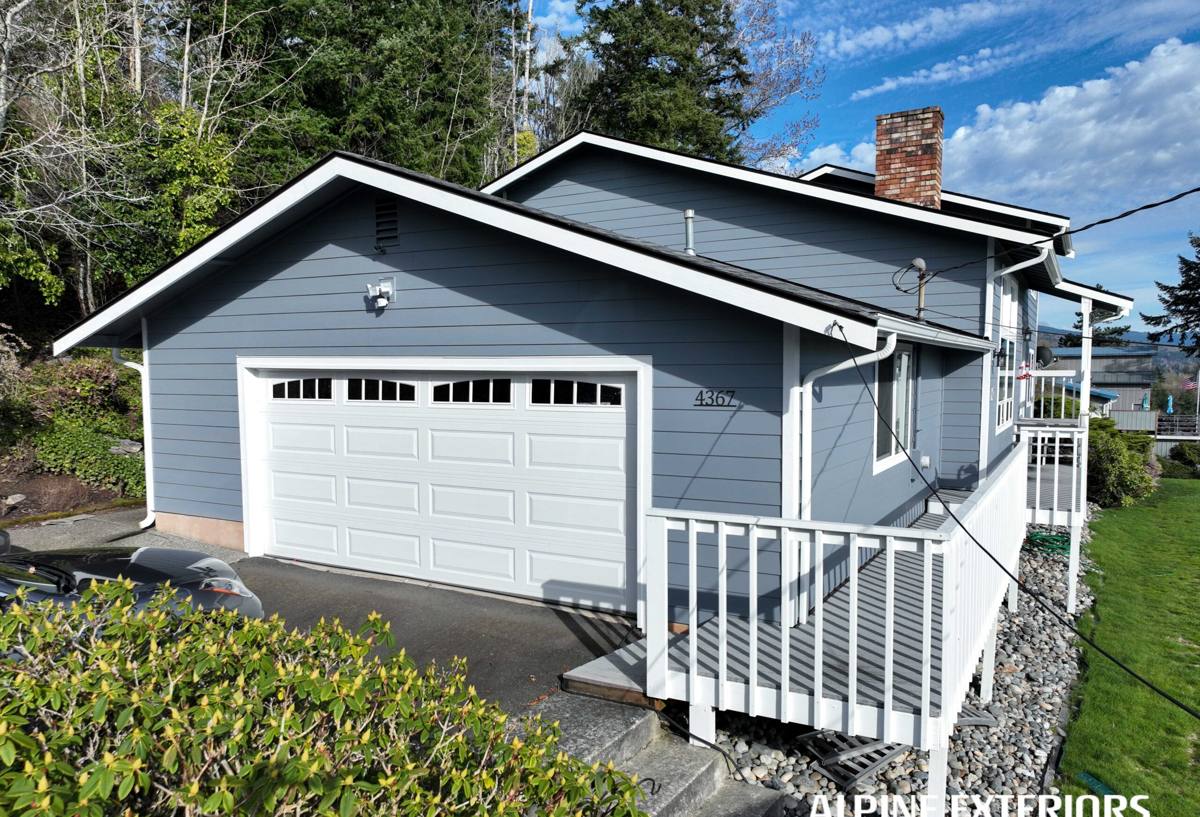
What This Climate Actually Does to a Deck
Three things drive most of the deck problems we see in this part of Whatcom County:
- Salt air corrosion — even a few miles inland from Blaine's shoreline, airborne salt accelerates rust on standard fasteners, brackets, and hardware.
- Driving rain — wind-driven rain gets pushed sideways under railings, into ledger connections, and behind poorly flashed joints, which is where rot starts.
- A long moss season — shaded decks, north-facing decks, and anything under tree cover stay damp for months at a time, which feeds moss and algae growth on decking surfaces and makes them slick.
None of these are dramatic, one-time events. They're slow, cumulative conditions that punish decks built with generic-grade materials and minimum-code hardware. A deck that's going to last here has to be built assuming it will spend a good portion of the year wet.
Choosing the Right Decking Material
There's no single "best" decking material — it depends on how much maintenance you want to do and how much shade or moss exposure the deck will get. Here's how the common options compare for this climate specifically:
| Material | Moisture behavior | Moss/algae resistance | Maintenance | Typical lifespan |
|---|---|---|---|---|
| Pressure-treated lumber | Absorbs and releases moisture; prone to cupping if not dried properly before install | Low — needs regular cleaning | Annual cleaning, re-staining every 2-3 years | 15-20 years with upkeep |
| Cedar | Naturally moisture-resistant, but surface still needs sealing | Moderate — better than PT, still grows moss in shade | Sealing every 1-2 years | 15-20 years with upkeep |
| Composite decking | Doesn't absorb water into the board core; won't rot | Better, but algae can still grow on the surface film in constant shade | Periodic washing, no staining | 25-30+ years |
| PVC/capped decking | Fully sealed surface, best moisture performance | Best resistance, easiest to keep clean | Occasional washing | 25-30+ years |
For decks that sit under tree cover or on the shaded side of a house — common on many Custer lots — we generally steer homeowners toward composite or capped PVC. It's not that wood is a bad product; it's that a heavily shaded wood deck in this climate requires more upkeep than most homeowners are realistic about signing up for. If a client wants the look and feel of real wood and is willing to maintain it, cedar is a solid choice and we'll build it correctly either way.
A Note on Underdeck Drainage
On raised decks — which are common where lots have a walkout basement or sloped grade — we'll often talk through whether an underdeck drainage system makes sense. It keeps the space below dry and usable, but it also changes how the framing and gutters need to be detailed, so it's worth deciding before framing starts, not after.
Getting the Foundation and Framing Right
This is where most deck problems actually start, long before anyone notices a soft board or a rusted bracket.
Footings
Footings need to be dug to proper frost depth and sized for the soil conditions on your specific lot. Whatcom County soils vary a lot from parcel to parcel — some Custer properties have well-draining ground, others hold water and stay saturated for long stretches of the wet season. We check the soil on site rather than assuming; a footing that works fine on one lot can shift or heave on another a quarter mile away.
Ledger Attachment
The ledger board — where the deck attaches to the house — is the single most common failure point on decks in wet climates. It needs proper flashing that directs water away from the house rim joist, not just a bead of caulk and a hope. We flash every ledger connection correctly and use joist tape on top of the framing to keep water from sitting in fastener holes and starting rot from the inside out.
Joist and Beam Spacing
Spacing gets tightened up for composite and PVC decking versus wood, since those materials have different span ratings. Building to the manufacturer's spec, not just to generic code minimums, is what keeps a composite deck from feeling bouncy years down the road.
Fasteners and Hardware: The Detail Most Decks Get Wrong
This is the one homeowners almost never think to ask about, and it's often the difference between a deck that looks fine at year three and one that's already showing rust streaks and loosening joints. Standard galvanized fasteners corrode faster in salt-air conditions than they do further inland. We use stainless steel or high-grade coated fasteners rated for coastal exposure on structural connections, and we match hardware coatings to the type of lumber or composite being used — some coatings react badly with certain treated lumber chemicals if you don't pair them correctly.
It's a small line-item cost difference up front. It's a much bigger difference in how the deck holds up over ten or fifteen years.
Permits and Whatcom County Code
Most new decks and many deck replacements in unincorporated Whatcom County require a building permit, especially once you're dealing with structures attached to the house, decks above a certain height off grade, or anything with guardrails. Guardrail height, baluster spacing, and stair requirements are all governed by code and get checked at inspection. We handle the permit process as part of the job — pulling the permit, building to the approved plan, and scheduling the inspections — so you're not the one tracking down paperwork or guessing at setback requirements for your lot.
Our Process for Custer Deck Projects
- On-site assessment — we look at your lot's sun/shade exposure, drainage, soil, and how the deck will connect to the house.
- Design and material selection — we walk through decking options honestly, including maintenance trade-offs, based on your specific conditions.
- Permitting — we pull the required permits and build to the approved plan.
- Foundation and framing — footings sized to your soil, ledger flashed correctly, coastal-rated fasteners throughout.
- Decking, railing, and finish work — installed to manufacturer spec, not just code minimum.
- Final walkthrough and inspection — we confirm everything passes and walk you through basic care for the material you chose.
Keeping a Custer Deck in Good Shape Year-Round
A well-built deck still needs some seasonal attention in this climate. This is a reasonable annual routine for most homes in the area:
- Sweep debris and standing leaves off the deck surface regularly, especially in fall
- Clean moss and algae off the surface at least once a year, more often on shaded decks
- Check that drainage gaps between boards aren't clogged with debris
- Inspect railings and stair connections for looseness once a year
- For wood decks, plan on re-sealing or re-staining every 1-3 years depending on sun exposure
- Check the ledger flashing area and any spots where the deck meets the house for signs of moisture staining
None of this is complicated, but skipping it is how a well-built deck starts to look neglected before its time.
Why It Matters to Hire a Crew That Already Works This Area
A deck contractor who mostly works drier inland regions can still build a structurally sound deck on paper — but they may not default to coastal-rated fasteners, may not think through underdeck drainage on a shaded lot, or may not know which local soils need larger footings. Those aren't things that show up as problems on day one. They show up in year three or four, as a loose railing, a stained ledger, or a slick, moss-covered surface that never quite dries out. Building for Custer's conditions from the start costs little to nothing extra and saves a lot of frustration later.
If you're planning a new deck or need to replace one that's showing its age, we're happy to come take a look and give you a straightforward, no-pressure estimate — just fill out the form below.