 Blaine Siding
 Building a Deck That Holds Up in Lynden
Lynden sits a little inland from Semiahmoo Bay and Birch Bay, but the weather that rolls in off the water doesn't stop at the shoreline. The same marine-driven rain patterns, heavy fall and winter cloud cover, and long stretches of damp, shaded ground that soak Blaine and the coastline reach Lynden too, just with a bit less direct salt exposure. What that means for a deck is simple: this is not a climate where you can treat a deck as a one-time carpentry project and forget about it. The wood, the fasteners, and the footings all have to be chosen and built with moisture in mind from day one, not patched later.
We've built and repaired decks all over the Blaine and Lynden area long enough to know which shortcuts show up as problems in year three, not year one. This page is about what a correctly built custom deck actually requires here, and what our process looks like when we build one for a Lynden homeowner.
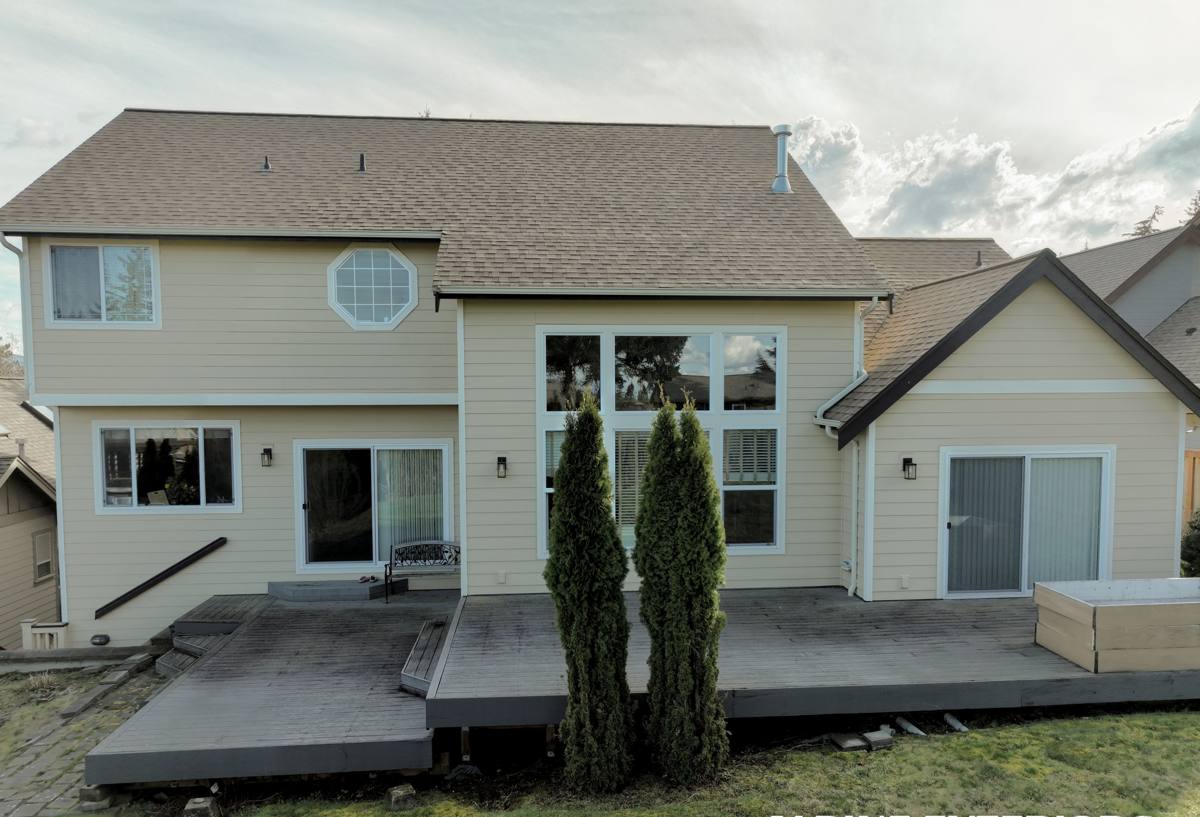
What Whatcom County Weather Does to a Deck
Moisture That Doesn't Dry Out
Whatcom County doesn't get the kind of hard, fast storms that dump water and move on. It gets weeks of low, steady drizzle and overcast skies. A deck surface can stay damp for days at a time, especially on the shaded side of a house or under trees. That constant dampness is what drives rot at joist ends, ledger boards, and post bases — not any single big rain event.
Moss and Algae Season
Anyone who has pressure-washed a Lynden driveway or roof in early spring knows how fast moss and algae take hold here. Decking surfaces are no different, especially boards that sit low to the ground, get partial shade, or don't drain well between the gaps. Moss holds moisture against the board surface, which accelerates rot in real wood and can leave composite decking looking dingy even when it's structurally fine.
Freeze-Thaw and Ground Movement
Lynden gets more frost than the immediate coastline, and the ground here does freeze and thaw through the winter. Footings that aren't poured to the correct depth, or posts that sit directly on grade instead of proper concrete piers, can shift over a few winters. That shows up later as a bouncy deck, gaps opening at the ledger board, or stairs that no longer sit level.
Choosing the Right Decking Material for Lynden
There's no single "best" decking material — there's the right material for how a family actually uses the deck, the budget, and how much upkeep someone wants to do. Here's how the common options actually perform in this climate.
| Material | How It Handles Local Moisture | Upkeep in Whatcom County | Typical Lifespan Here |
|---|---|---|---|
| Pressure-treated wood | Resists rot when properly sealed, but end grain and fastener holes are vulnerable | Needs re-sealing every 1-2 years to shed moisture and resist moss staining | 10-15 years with regular maintenance |
| Cedar | Naturally moisture-resistant, but softer and can gray and green quickly in shade | Cleaning and oiling recommended annually to control moss and algae growth | 15-20 years with consistent care |
| Capped composite | Resists moisture absorption at the surface; core is still sensitive at cut ends | Occasional washing; no sealing or staining required | 25-30 years, per most manufacturer warranties |
| PVC decking | Fully synthetic, does not absorb moisture | Lowest upkeep; periodic cleaning to prevent surface algae film | 25-30+ years |
We install all of these depending on what a homeowner wants, but we're honest about trade-offs. Real wood costs less up front and looks great, but it demands a maintenance routine that a lot of busy households don't keep up with — and once that upkeep lapses in this climate, moisture damage moves fast. Composite and PVC cost more initially but remove most of that ongoing burden, which is why they've become the more common choice for Lynden decks we build today.
What a Correctly Built Deck Involves
The decking surface is the part everyone sees, but it's the structure underneath that determines whether a deck lasts. In a climate like this, a few details matter more than they would somewhere drier.
Ledger Board Flashing
Where a deck attaches to the house, the ledger board connection is the single most common source of hidden water damage nationwide, and it's worse in a wet climate. Proper flashing — installed correctly against the house's water-resistive barrier, not just caulked over — keeps water from tracking behind the siding and into the rim joist.
Footings Below Frost Depth
Post footings need to be poured to the correct depth for our local frost line and inspected before backfilling. This is one area where permitted, inspected work matters — it's the part of the deck nobody sees once it's built, and the part most expensive to fix later.
Joist Protection and Fastener Choice
Joist tape or a comparable moisture barrier on top of the framing keeps standing water off the wood itself, which matters more here than in a dry climate because framing lumber simply doesn't get a chance to fully dry out between rains most of the year. Fasteners should be rated for treated lumber contact and coastal-influenced exposure — mismatched or bargain fasteners corrode and streak the decking within a couple of seasons.
Board Spacing and Airflow Underneath
Gap spacing between boards and clearance underneath the deck both affect how quickly the structure dries after rain. Decks built low to the ground with poor underside ventilation are exactly where we see the earliest moss growth and the earliest joist rot in this area.
Our Process for a Lynden Deck Project
- On-site assessment — we look at drainage, sun/shade exposure, existing structure (for replacements), and how the space will actually be used.
- Design and material selection — layout, railing style, and decking material chosen around budget and maintenance preference, not just looks.
- Permitting — deck permits and inspections through the applicable local jurisdiction, handled as part of the project rather than left to the homeowner.
- Framing and footings — built to the structural requirements for our frost depth and load requirements, inspected at the appropriate stages.
- Decking, railing, and finish work — installed with attention to drainage, fastener choice, and clean transitions at stairs and the house connection.
- Final walkthrough — we go over care and maintenance specific to whatever material was installed before we consider the job done.
Maintenance That Actually Matters Here
Whatever material a deck is built from, a few habits make the biggest difference in how it holds up through Whatcom County winters:
- Sweep leaves and debris off the surface before fall rains set in — trapped organic matter holds moisture and feeds moss growth
- Rinse or gently wash the deck surface in early spring before moss and algae get established
- Check and re-seal wood decking on the schedule appropriate to the product — don't wait until graying or cracking is visible
- Keep gutters and downspouts clear of anything that drains directly onto or near the deck
- Inspect the ledger board connection and post bases once a year for any signs of moisture staining
- Trim back vegetation that keeps sections of the deck in constant shade and dampness
What Affects the Cost of a Custom Deck
| Factor | Why It Matters |
|---|---|
| Decking material | Pressure-treated wood costs less up front; composite and PVC cost more but reduce long-term maintenance |
| Deck size and height | Larger decks and multi-level or elevated decks require more framing, footings, and stairs |
| Railing style | Cable, glass, and composite railing systems cost more than standard wood or metal balusters |
| Site access and grading | Sloped yards or difficult equipment access can add to labor and footing work |
| Permitting requirements | Deck height, guardrail requirements, and attachment to the house all factor into what's required |
We give straightforward, itemized estimates rather than a single vague number, so a homeowner can see exactly where the budget is going and adjust material or scope if needed.
Why It Matters to Hire a Crew That Already Works in Lynden
A deck built from a generic national playbook doesn't account for how differently this region's weather behaves compared to drier parts of the country. A crew that already works throughout Blaine, Lynden, and the rest of Whatcom County knows the local permitting process, knows what frost depth and drainage requirements actually apply here, and has already seen which fastener and flashing choices hold up through repeated wet seasons versus which ones fail early. That local track record is the difference between a deck that's still solid in fifteen years and one that needs early repairs at the ledger board or footings.
We're not asking a homeowner to take our word for it — we're happy to walk through the specifics of a property, talk through material trade-offs honestly, and explain exactly why we build a certain way in this climate.
Get a Free, No-Pressure Estimate
If you're considering a new custom deck or replacing an aging one in Lynden, we're glad to come take a look, talk through material and layout options, and put together a straightforward estimate — no pressure, no obligation. Use the form below to get started.