 Blaine Siding
 The Dakota Creek area sits inland just enough from Semiahmoo Bay and Drayton Harbor to have its own character within Blaine — wooded, low-lying, and shaped by the creek corridor that gives the neighborhood its name. That mix of mature tree cover, damp low ground, and Blaine's coastal exposure creates a window climate that's a little different from an open-water lot a mile away, but no easier on a window. Shade off the creek's tree line keeps siding and window sills wet longer after a storm than a sun-exposed property would, on top of the salt-tinged air and driving rain that come with living this close to Whatcom County's northern coastline.
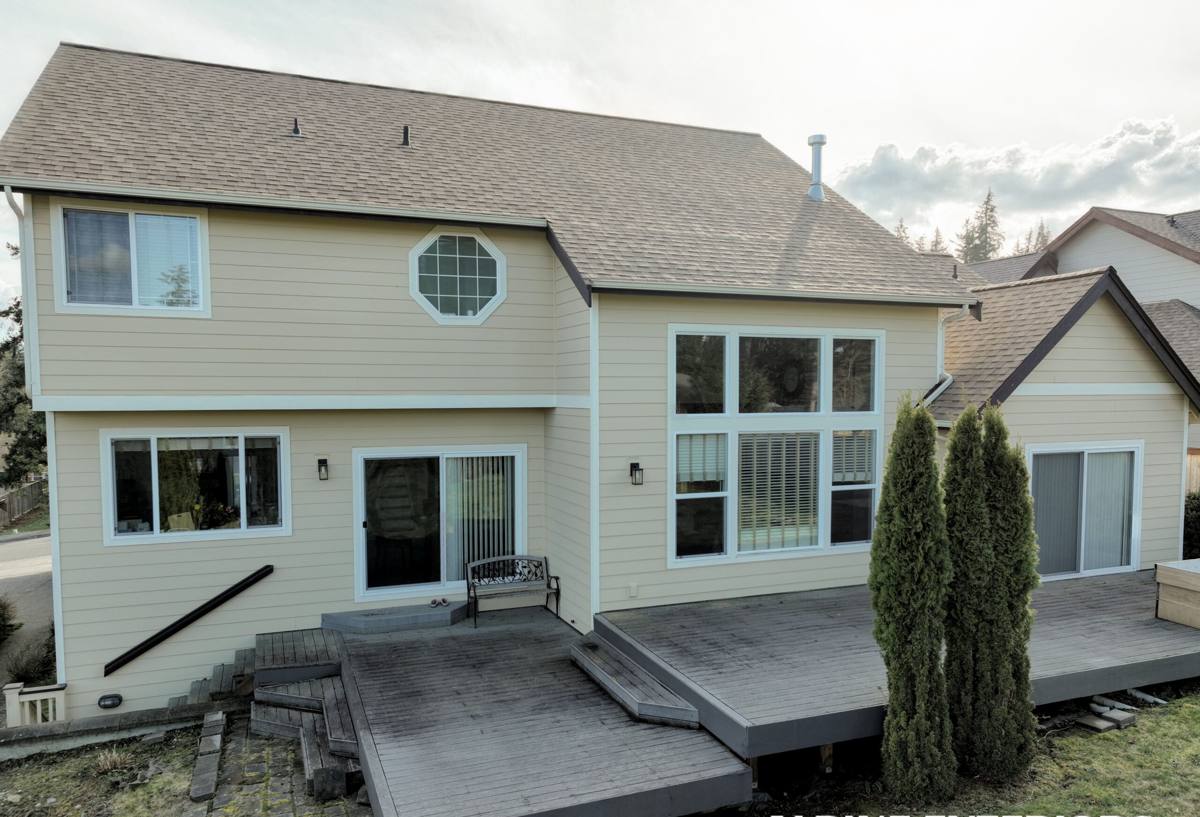
Homes along Dakota Creek also tend to be a mix of ages and styles — older rural-style houses and cabins that have been added onto over the decades, sitting alongside newer builds on lots carved out of what used to be more open land. That combination shows up constantly in window work: openings that don't match a manufacturer's standard sizing, additions with rooflines and walls that were never designed around a stock window, and a demand for custom shapes on newer homes built to make the most of a wooded or creekside lot. We treat custom windows as their own category of work here, not a bigger version of a standard replacement, because the measuring, the flashing sequence, and the lead time all change once a window stops being off-the-shelf.
Why Dakota Creek Homes End Up Needing Custom Windows
A few patterns repeat across this part of Blaine. Older homes and cabins near the creek were framed to whatever dimensions made sense at the time, long before manufacturers settled on today's standard sizes, so a true like-for-like replacement often isn't available off the shelf — it has to be custom-built or the opening has to be reframed. Additions built onto these older homes over the years frequently create openings that don't line up with anything original to the structure. And on newer construction, homeowners building around the creek's tree cover and topography often want larger or shaped windows — picture units, corner windows, taller openings — sized to the lot rather than to whatever's easiest to stock.
None of that makes a project unusual for us — it's routine work in this neighborhood. It does mean the job starts with careful field measurement and an honest conversation about lead time, since a custom unit is built to order rather than pulled off a shelf.
What Blaine's Climate Does to a Window Here
Salt Air Off the Bay and Harbor
Blaine sits close enough to Semiahmoo Bay and Drayton Harbor that salt-laden air reaches homes well back from the water, Dakota Creek included. Salt accelerates corrosion in exposed metal — hinges, cranks, fasteners, and lower-grade frame hardware — and a fastener or hinge that starts corroding loses strength before it looks obviously bad. On a custom window with a larger frame or more moving hardware, that adds up to more surface for salt air to work against over time.
Driving Rain
Storms coming off the water don't fall straight down by the time they reach inland neighborhoods like Dakota Creek — wind still pushes rain sideways into wall assemblies and window flashing rather than letting gravity do the work. That matters most at the transition points on a custom unit: where a resized opening meets the original wall, where a wide sill meets the siding below it, where a taller or shaped window has more perimeter to flash correctly in the first place.
A Shaded, Long Moss Season
This is where Dakota Creek differs a bit from a wide-open water-facing lot. Mature tree cover along the creek keeps a lot of properties here shadier and damper than homes with full sun exposure, which stretches the moss and mildew season on north-facing walls, trim, and window sills even longer than it already runs across Whatcom County. Sills and lower sashes on shaded elevations are usually the first place it shows up, and any frame or trim material with even a little surface porosity gives it something to grip.
Custom Window Types We See in This Neighborhood
- Non-standard replacement sizes — matching an opening in an older cabin or farmhouse-style home that predates modern sizing standards
- Reframed or resized openings — where the existing rough opening needs correction before any new unit can go in cleanly
- Matched sets for additions — new windows sized to sightline correctly with existing windows on an older, multi-era home
- Picture and larger-format windows — fixed units used to open up a view of the tree line or creek corridor, with more glass area to manage structurally
- Corner and shaped windows — used on newer builds designed around a wooded lot rather than a standard rectangular floor plan
- Egress and code-driven openings — bedroom or living space additions where the minimum opening size is set by code, not preference
What a Correct Custom Window Job Involves
Measuring and Ordering
Custom work starts with precise field measurement, not a catalog lookup. We measure the actual opening, note any out-of-square or out-of-level conditions common in older homes near the creek, and account for what the finished trim and flashing will need in terms of clearance. Because custom units are built to order, this is also where we set realistic expectations on lead time — custom windows generally take longer to arrive than stock sizes, and we'd rather say so upfront than surprise you mid-project.
Opening Prep and Structural Considerations
Larger custom units and reframed openings sometimes need structural support beyond what the original opening had, especially on older homes where the framing around a window was never engineered for a bigger unit. We evaluate that during the assessment, not after demolition has started. On older Dakota Creek homes, this step is also where we typically find out whether the original framing or flashing around the opening needs repair before a new window goes in — dampness from shaded, low-lying ground can work into wall framing over the years in ways that aren't visible until the old window comes out.
Flashing and Weatherproofing
This is the step that matters most given the exposure here. Every custom shape changes how flashing has to be sequenced — a wide sill needs to shed water outward instead of letting it pool, a resized opening needs new flashing tied cleanly into the surrounding wall rather than patched around the old detail, and a shaded elevation needs flashing and sealant that will hold up to staying damp longer between dry spells. We build the flashing plan around the specific opening, not a generic template pulled from a manufacturer's installation sheet.
Finish and Trim Integration
Custom windows often sit in visually prominent spots on a Dakota Creek home — a picture window facing the tree line, a matched set on an addition next to original windows decades older. We plan the trim and finish integration before the window arrives so the result reads as intentional rather than added on, and so the seam between old and new siding or trim doesn't become its own weak point.
Practical Checklist Before You Order
- Confirm the opening was field-measured, not estimated from old plans or a rough guess
- Ask what the flashing plan looks like for your specific opening, not a generic answer
- Get a realistic lead time in writing before committing to a schedule
- Ask whether the opening needs structural review, especially on an older or reframed wall
- Confirm what's covered under warranty — the window unit and the installation labor are often separate
- Ask how trim and finish will be matched to existing siding, especially on additions
Frame Materials for This Climate
Frame material matters even more on a custom unit, since a larger or shaded window has more surface area for salt air and sustained dampness to work against over time. We'll walk through the honest trade-offs for your specific opening rather than defaulting to whatever's fastest to install. In general, fiberglass and vinyl frames hold up to sustained coastal moisture with less ongoing upkeep than an all-wood exterior finish, which is why we lead with them on shaded, weather-exposed custom installs near Dakota Creek. A wood-clad interior paired with a low-maintenance exterior cladding can still be the right call when the interior look matters and the exterior is properly protected — it's a trade-off worth discussing against your specific opening and budget, not a one-size answer.
Our Process, Start to Finish
- On-site assessment — we measure the opening, check square and level, and evaluate any structural, moisture, or flashing concerns specific to its age and shape
- Honest recommendation — custom order, modified stock size, or opening reframe, explained with the reasoning behind it
- Ordering and lead time — a realistic timeline for the custom unit to arrive, since it isn't a same-week job
- Removal and opening prep — the old unit comes out carefully, and any hidden framing or moisture issues get addressed before the new window goes in
- Installation and flashing — the new unit is set, shimmed, and flashed to a sequence built for its specific shape and exposure
- Trim and finish — exterior trim is integrated to match the surrounding siding and the home's existing character
Costs and Trade-Offs: Custom vs. Stock
| Factor | Stock Window | Custom Window |
|---|---|---|
| Lead time | Often available relatively quickly | Built to order — expect weeks, not days, depending on complexity |
| Fit | Standard sizes only; reframing needed if the opening doesn't match | Matched to the exact opening or design intent |
| Flashing complexity | Straightforward, well-documented rectangular details | Shape-specific — resized openings, wide sills, or corner units each need their own plan |
| Structural review | Rarely needed for a like-for-like swap | Often needed on older homes or reframed openings |
| Cost | Lower, especially for common sizes | Higher, reflecting manufacturing and labor complexity |
| Best fit | Simple replacements in standard, already-correct openings | Older homes, additions, non-standard framing, or lot-driven design |
What actually moves price on a custom job is fairly consistent: overall size and glass area, shape complexity, whether structural framing needs to be added or corrected, frame material, the condition of the existing opening, and how many units are being ordered together. We won't quote a number without seeing the opening in person, but we'll walk through which of those factors apply to your project before you commit to anything.
Why a Local Blaine Crew That Knows Dakota Creek Matters
Manufacturer installation guidance is written for average, standard-size conditions in a moderate climate. Custom windows on an older Dakota Creek home rarely fit that description, and neither does the local exposure — salt air, wind-driven rain, and shaded, damp ground stack the deck against a shortcut installation more than they would on a drier, more open lot. A crew that has actually reframed odd-sized openings, matched additions to original windows, and flashed shaded elevations in this specific part of Blaine knows which parts of a manufacturer's guidance are non-negotiable here, and where extra time on flashing or sealant is worth it even when it isn't strictly required elsewhere.
That experience shows up in decisions that don't come up in a sales conversation — how much lap a flashing course needs on a resized opening, whether a shaded sill needs a sloped composite cap instead of relying on caulk alone, when an older wall's framing needs repair before a new custom unit goes in rather than after. Those are the details that decide whether a custom window is still performing cleanly in fifteen years or showing drafts and soft trim in five.
What to Ask Before Hiring for Custom Window Work
- Ask to see examples of custom shapes or sizes they've actually installed, not just standard replacements
- Ask how they sequence flashing for your specific opening and exposure
- Confirm current Washington contractor licensing and insurance
- Get a written scope of work and a realistic lead time before signing anything
- Ask how labor and the window unit are each covered under warranty
If you're weighing a custom window for an older Dakota Creek home, planning an addition, or looking at a larger or shaped window to make the most of a wooded or creekside lot, it's worth having someone look at the actual opening before you start pricing units. We offer free, no-pressure estimates for custom window projects in the Dakota Creek area and the rest of Blaine — use the form below to get a time on the schedule.