 Blaine Siding
 Why Dakota Creek Siding Has to Work Harder Than Most
Homes in and around Dakota Creek sit close enough to the water and the open weather patterns rolling off the Strait of Georgia that siding takes a different kind of beating than it would a few miles inland. Salt-laden air accelerates corrosion on fasteners and trim, wind-driven rain finds every gap in a wall assembly that isn't detailed correctly, and the long gray stretches of a Whatcom County winter and spring give moss and algae months of damp, shaded surface to take hold on. None of that is exotic weather. It's just persistent, and persistence is what wears out cheap materials and sloppy installations faster than any single storm would.
A siding system for this neighborhood needs to resist moisture intrusion at the seams, hold its finish without chalking or fading in salt air, and shed water fast enough that moss doesn't get the standing dampness it needs to spread. That's the whole design problem this page is about, and it's why we only install James Hardie fiber cement here rather than the wider mix of products you'll see marketed for siding jobs generally.
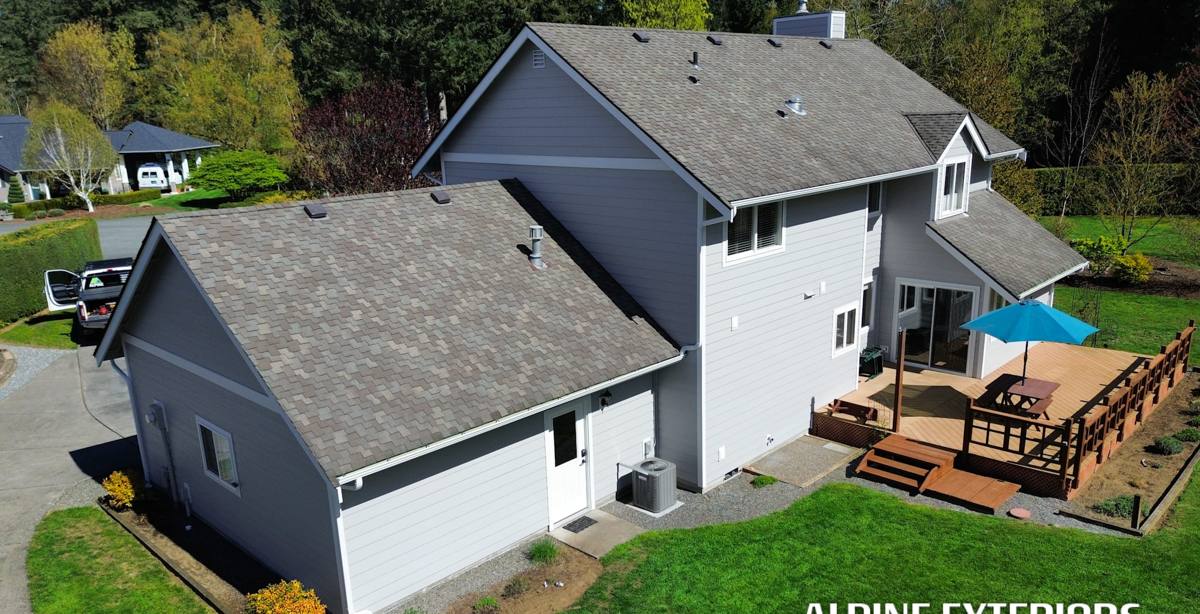
What James Hardie Brings to a Salt Air, High-Moisture Climate
James Hardie fiber cement is manufactured from cement, sand, and cellulose fiber, then cured into a dense, stable board. That composition matters directly for a place like Dakota Creek for a few reasons:
- Non-combustible core — fiber cement doesn't feed a fire the way wood-based products can, which matters for insurance conversations as much as safety.
- Dimensional stability — it doesn't swell and shrink with humidity swings the way wood and some engineered wood products do, so joints stay tighter over years of wet-dry cycling.
- ColorPlus factory finish — a baked-on finish applied under controlled conditions, which holds up better against salt air and UV than field-applied paint and doesn't require repainting on the same schedule as painted wood siding.
- Engineered for this climate specifically — Hardie's HZ5 product formulation is built for the Pacific Northwest's wet, moderate-freeze conditions, rather than being a one-size-fits-all national product.
None of that means fiber cement is maintenance-free. It means the maintenance burden shifts from constant vigilance against water and rot toward routine cleaning and inspection — a trade we think is the right one for this specific stretch of coastline.
Why We Don't Install the Alternatives
We get asked fairly often why we don't offer vinyl, cedar, primed wood, or engineered wood siding as options alongside Hardie. The honest answer is that each of those products asks a homeowner to accept a trade-off we don't think holds up well in this climate specifically: vinyl can warp and become brittle with UV and temperature cycling and doesn't hold paint if you ever want to change color; cedar and primed wood need a disciplined repainting and sealing schedule to keep salt air and rain out of the grain; engineered wood products depend heavily on perfect edge-sealing and flashing to avoid moisture wicking at cut ends. We'd rather stand behind one product system we can install and warranty with confidence than offer several and hope each one gets babied enough to perform.
Choosing the Right Hardie Line for a Dakota Creek Home
James Hardie makes several distinct product lines, and picking the right one is about more than looks. For most homes in this area, the decision comes down to three main options:
HardiePlank Lap Siding
The most common choice for traditional and craftsman-style homes. Available in several exposure widths and textures (smooth or cedarmill), it gives a clean horizontal line and sheds water efficiently when lapped and fastened correctly.
HardieShingle Siding
Used for accent gables, dormers, or full shingle-style elevations. It gives the staggered, textured look of cedar shingle without the maintenance cycle, which matters in a moss-prone environment where shingle-style profiles can otherwise trap moisture in overlaps.
HardiePanel Vertical Siding
Common for modern designs or as an accent material paired with lap siding, often used with batten strips for a board-and-batten look.
Color selection matters here too. ColorPlus finishes in muted, weather-appropriate tones tend to show less streaking from mineral deposits and salt residue than very dark or high-gloss colors, which is worth discussing during a site walk rather than picking from a swatch alone.
What a Correct Installation Actually Involves
Fiber cement siding is only as good as the assembly behind it. This is where most siding failures we get called out to inspect actually originate — not in the board itself, but in what's underneath it. A correct install for this area includes:
- A weather-resistive barrier (house wrap) installed shingle-style so every seam sheds water downward
- A drainage plane or rain screen gap where conditions call for it, so bulk water and incidental moisture behind the siding can drain and the wall can dry
- Correct flashing at every window, door, and roofline penetration — this is the single most common failure point we find on older installs
- Manufacturer-specified fastener type and placement, since the wrong fastener can corrode quickly in salt air and cause staining or failure at the nail line
- Proper clearance from grade, decks, and roof lines, so splashback and standing moisture don't sit against the bottom edge of the siding
- Factory-cut and factory-primed edges wherever possible, with any field cuts sealed per Hardie's application instructions
Skipping or rushing any one of these steps can quietly undercut everything the material itself is good at. A beautiful Hardie job with bad flashing behind it will still leak.
Where We See Installs Go Wrong in This Area
Because we work in and around Blaine and Whatcom County regularly, we see the same handful of problems repeat on homes near the water and creek corridors:
- Caulk used as a substitute for flashing at windows and trim, which fails within a few seasons of driving rain
- Siding installed tight to grade or to deck ledgers with no drainage gap, trapping moisture at the bottom course
- Moss and algae buildup on north-facing and shaded walls that was never addressed until it started holding moisture against the surface
- Mixed fastener metals that corrode and streak rust down the face of the siding in salt-heavy air
Most of these aren't material failures — they're installation shortcuts that show up years later as a homeowner's problem, not the installer's.
Comparing Siding Options for This Climate
| Factor | James Hardie HZ5 Fiber Cement | Vinyl | Cedar / Primed Wood |
|---|---|---|---|
| Salt air resistance | Strong — dense composite, factory finish | Moderate — can chalk and become brittle over time | Weak without frequent resealing |
| Moss/algae resistance | Good with correct drainage detailing | Moderate — surface can hold biofilm | Poor — grain holds moisture |
| Fire resistance | Non-combustible | Combustible, can melt/deform | Combustible |
| Repainting cycle | Rare — factory finish holds color for years | Cannot be repainted reliably | Every 3-7 years typically |
| Typical lifespan when correctly installed | Decades | Varies, shorter in harsh coastal exposure | Shorter without diligent maintenance |
This is a general comparison, not a guarantee for any specific product or brand — actual performance always depends heavily on installation quality and ongoing maintenance.
Our Process for a Dakota Creek Siding Project
We keep the process straightforward and transparent from the first visit through cleanup:
1. On-Site Assessment
We walk the exterior, check existing siding and trim condition, look at drainage, grade slope, and any areas already showing moisture staining or moss buildup, and talk through what's driving the replacement.
2. Product and Color Selection
We help narrow down the right Hardie line, profile, and ColorPlus color based on the home's style and its actual sun/shade exposure, not just a catalog photo.
3. Prep and Removal
Old siding comes off, and we inspect sheathing underneath for any rot or damage before it gets covered up again — this is the point where hidden moisture problems get caught and fixed, not buried.
4. Weather Barrier and Flashing
House wrap, flashing, and drainage detailing go in per manufacturer specification before a single piece of siding is hung.
5. Installation
Siding is installed with correct fastener spacing, exposure, and clearances, with trim and caulking done to Hardie's application guidelines.
6. Final Walkthrough and Warranty Registration
We walk the finished job with the homeowner and make sure product warranty registration is handled correctly, since that paperwork protects the investment long after we've left.
Living With Hardie Siding in a Moss-Prone Coastal Climate
Correct installation gets a Dakota Creek home most of the way there, but a little seasonal attention keeps things looking right for the long haul:
- Rinse siding down at least once a year, more often on shaded north- or east-facing walls where moss tends to establish first
- Keep gutters clear so overflow doesn't run down the face of the siding and streak it
- Trim back vegetation and tree cover that keeps a wall section shaded and damp longer than the rest of the house
- Check caulking at trim joints and penetrations every year or two and refresh it before it fails, not after
- Address any moss growth early with a gentle wash rather than letting it build up and hold moisture against the surface
Why Local Experience in Dakota Creek Matters
Siding crews that only occasionally work this close to the water tend to detail walls the same way they would inland — standard house wrap lap, standard fastener spec, standard clearance. That's not necessarily wrong, but it's not tuned to a site where salt air, driving rain, and a long moss season are the norm rather than the exception. Crews that work Blaine and the surrounding Whatcom County coastline regularly know which walls on a given lot type will need extra drainage detailing, which color families hold up best against salt residue, and where moss is likely to become a maintenance issue before the homeowner ever notices it. That familiarity doesn't show up on a spec sheet, but it shows up in how the job ages over the next ten years.
If you're weighing a siding replacement for a home in Dakota Creek, we're happy to walk the property, look at what's there now, and talk through what a correctly detailed James Hardie installation would look like for your specific home — no pressure, no obligation. Reach out below for a free estimate.