 Blaine Siding
 Building a Deck That Holds Up in California Creek
California Creek sits in a part of Blaine where tree cover, low-lying ground, and closeness to the water table all add up to a wetter yard than most. Add in the salt air that rolls off the Strait of Georgia and Semiahmoo Bay, the long stretch of driving rain that defines a Whatcom County winter, and a moss season that can run eight months or more, and you've got a climate that is genuinely hard on outdoor wood structures. A deck built with generic, catalog-spec materials and standard hardware will show its age here faster than the same deck would in a drier inland town. Building one correctly for this specific micro-climate isn't about upgrading everything to premium — it's about knowing which few details actually matter and not cutting corners on those.
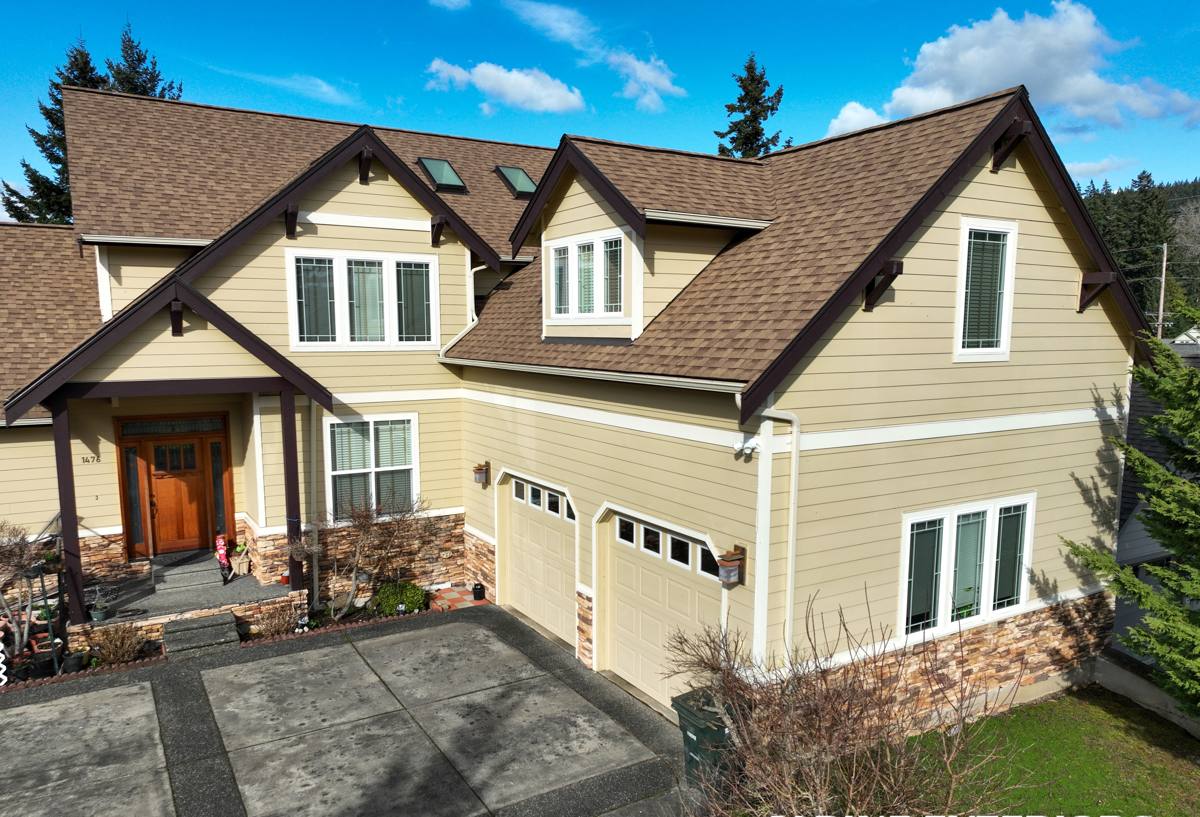
What California Creek Properties Actually Need From a Deck
Lots near the creek corridor tend to hold moisture longer than lots on higher, more open ground. Shade from mature trees keeps decking surfaces damp well after a storm has passed, which is exactly the condition moss and algae need to take hold. Combine that with salt-laden air moving in off the water, and you've got two separate problems working on the same structure at once: organic growth on the surface, and corrosion in the fasteners and connectors underneath. A deck here needs to shed water fast, dry out between rains, and use hardware that won't quietly weaken over a decade of salt exposure. None of that is exotic — it just has to be planned for from the framing stage, not patched in later.
Reading the Site Before Design
Before we talk decking material or railing style, we look at how water actually moves across the specific lot — where runoff collects, how much direct sun the deck footprint gets through the day, and how close the ground sits to grade. A deck tucked under tree cover on damp, low ground gets designed differently than one on an open, south-facing slope, even if they're a quarter mile apart.
Framing and Hardware: The Part Nobody Sees
The framing and fasteners are what actually determine whether a deck lasts 12 years or 30, and they're also the part most easily shortcut by a crew in a hurry. In a salt-air, high-moisture area like this, we treat the substructure as the priority, not an afterthought.
Fasteners and Connectors in Salt Air
Standard electro-galvanized screws and joist hangers are not built for coastal air. Salt accelerates corrosion, and once a fastener starts to weaken inside a joint you can't see it happening — you just eventually feel it in a soft spot or a wobbly rail post. We spec stainless steel or heavy hot-dip galvanized hardware rated for coastal and treated-lumber use, matched correctly to whatever decking and framing material is going in, since mismatched metals can accelerate corrosion at the contact point.
Ledger Attachment and Water Management
Where a deck attaches to the house, the ledger board connection is the single most common source of long-term rot and water intrusion if it's done wrong. Proper flashing, a water-resistant barrier behind the ledger, and correctly spaced structural screws or through-bolts keep rain from working its way behind the siding at that joint. Joist tape over the tops of joists and beams adds another layer of protection against standing moisture, which matters more here than in a drier climate because that lumber simply stays wet longer.
Post Bases and Ground Contact
Posts that sit directly on or near damp soil are a moss and rot risk. We use elevated post base hardware that keeps the wood off the concrete footing and out of standing water, rather than burying posts in the ground or setting them flush on a slab where moisture collects.
Decking Material Choices for This Climate
There's no single "best" decking material for every yard in Blaine — it depends on how much sun and shade the deck gets, how much upkeep the homeowner actually wants to do, and budget. Here's how the common options actually perform under salt air, heavy rain, and moss pressure:
| Material | Moss/Algae Resistance | Maintenance | Typical Lifespan | Rough Cost Range |
|---|---|---|---|---|
| Pressure-treated lumber | Moderate — needs regular cleaning | Annual cleaning, periodic sealing | 10–20 years | Lowest |
| Cedar | Moderate — natural oils help, fade over time | Cleaning plus re-staining every 2–3 years | 15–25 years | Mid-range |
| Composite decking | Good on capped boards, still needs washing | Periodic washing, no staining/sealing | 25–30+ years | Higher upfront |
| PVC decking | Very good — non-organic surface | Occasional washing | 25–30+ years | Highest upfront |
Composite and PVC decking cost more to install but skip the sanding, sealing, and staining cycle entirely, which matters in a climate where that cycle would otherwise need to happen more often than the label suggests. Real wood costs less upfront and still looks great when it's maintained, but it demands a homeowner who will actually keep up with cleaning and sealing on schedule — skipping a year or two in this climate shows.
Footings and Structure for Wet, Uneven Ground
Whatcom County building code sets minimum footing depth requirements to get below frost line and reach stable soil, and creek-adjacent lots can have softer or more variable soil than you'd expect just from looking at the surface. We dig and pour footings to spec for the actual soil conditions on the lot rather than assuming a standard depth will work everywhere, and we grade around footings so water drains away from the post bases instead of pooling against them.
Railings, Guards, and Code Compliance
Any deck more than 30 inches above grade needs a compliant guardrail, and Washington's adopted residential code sets specific requirements for rail height, baluster spacing, and guard strength. Beyond meeting code, railing hardware in this area faces the same salt-air corrosion risk as the framing hardware, so we carry that same standard through to every rail post connection and cable or baluster fastener.
Permits
Deck projects in Blaine typically require a permit through Whatcom County or the City of Blaine depending on the property's location, especially for anything attached to the house or built above a certain height. We handle that process as part of the job so the homeowner isn't left chasing down permit paperwork on their own.
Our Process for a California Creek Deck
- On-site assessment of drainage, sun/shade exposure, and existing structure (for replacement or repair jobs)
- Design and material discussion based on your budget, maintenance preference, and the lot's specific moisture conditions
- Permit filing with the applicable jurisdiction before any work begins
- Footings poured to code depth for the actual soil on your lot
- Framing with corrosion-resistant hardware, joist protection tape, and proper ledger flashing
- Decking and railing installed to your chosen material and code-compliant guard spec
- Final walkthrough covering how to maintain the specific materials used on your deck
Living With a Deck in This Climate: What Maintenance Actually Looks Like
No deck material in Blaine is truly maintenance-free — even PVC and composite boards need periodic washing to stay ahead of algae film in a shaded, damp yard. What changes by material is how much work that maintenance takes and how forgiving the material is if you fall behind.
- Sweep debris and leaf litter off the deck regularly, especially in fall, so damp organic material doesn't sit on the boards
- Wash the surface at least once or twice a year with a deck cleaner appropriate for the material to knock back algae and moss growth before it stains or gets slick
- Check railing and stair connections annually for movement, which can signal a fastener starting to corrode
- Re-seal or re-stain wood decking on the schedule appropriate to the product, typically every 2–3 years in this climate
- Keep gutters and downspouts near the deck clear so roof runoff isn't dumping extra water onto or under the structure
Why Local Experience With California Creek Matters
A crew that has already worked this specific stretch of Blaine knows the drainage patterns, the permit process with the relevant jurisdiction, and which hardware and material choices actually hold up here versus what just looks good on a spec sheet in a showroom. That's different from general deck-building experience picked up somewhere drier or more sheltered. It shows up in the small decisions — how a ledger gets flashed, which post base gets used, how footings get graded — that don't matter much in a dry climate but matter a great deal in Whatcom County's rain and salt air.
If you're planning a new deck or need to talk through repairing or replacing an existing one in California Creek, we're happy to take a look and walk you through your options. Reach out for a free, no-pressure estimate using the form below.