 Blaine Siding
 Why Semiahmoo Decks Wear Out Faster Than You'd Expect
Semiahmoo sits close enough to the water that salt air is part of daily life, not an occasional coastal breeze. That salt settles on fasteners, flashing, and railing hardware year-round, and it doesn't take a storm to do it — a steady onshore wind on an ordinary afternoon is enough. Combine that with Whatcom County's long, wet winters and the moss season that follows, and you get a deck environment that's harder on materials than most inland Blaine properties ever see.
Most decks in this area don't fail because the homeowner did anything wrong. They fail because the deck was built to a general Pacific Northwest standard instead of a Semiahmoo-specific one. Fastener corrosion, ledger board rot, and joist decay usually start below the surface, in places you can't see from the top of the deck — which is exactly why so many replacements get flagged too late, after the structure is already compromised.
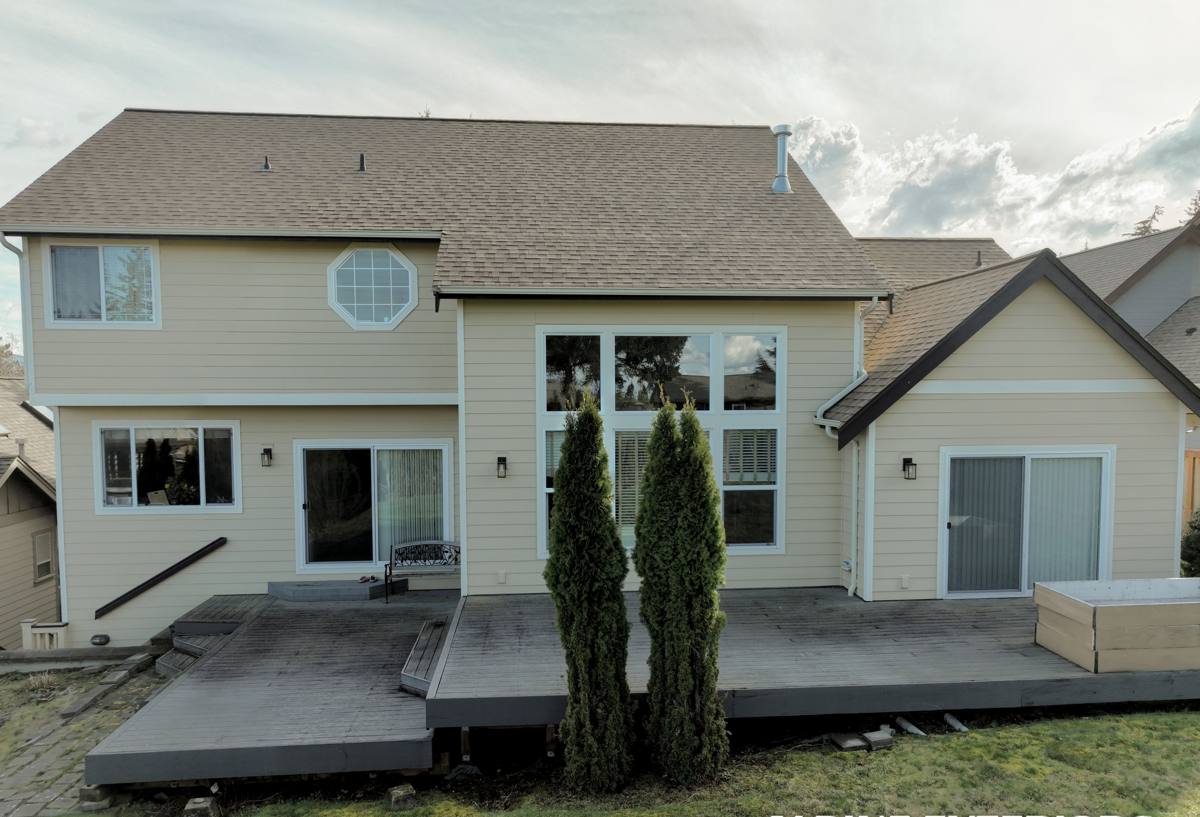
The Three Things That Actually Break Down Decks Here
Salt Air and Metal Fatigue
Standard galvanized fasteners and brackets corrode faster in a salt-air environment than their rated lifespan suggests. Once a fastener starts corroding, it loses holding strength long before it looks visibly bad, which is part of why a deck can feel "fine" right up until a board or railing section fails.
Driving Rain and Hidden Rot
Rain that comes in at an angle — common with Semiahmoo's exposure — gets pushed into joints, under flashing, and behind ledger boards in ways vertical rain doesn't. That's where rot starts: not on the top of a decking board where you'd notice it, but underneath, at the ledger-to-house connection and around post bases.
Moss and Trapped Moisture
Whatcom County's moss season isn't just cosmetic. Moss holds moisture against wood and composite surfaces for weeks at a time, which accelerates decay in wood framing and can void warranties on some composite decking if it's left unaddressed. A deck with poor drainage or tight board spacing traps moisture even after the rain stops.
Signs a Deck Needs Replacement, Not Repair
Not every aging deck needs a full teardown. But there's a point where patching individual boards or hardware stops being cost-effective and starts being a way to delay an inevitable full replacement. Here's how we tell homeowners to think about it:
- Soft or spongy spots underfoot, especially near the house connection — usually means joist or ledger rot has already started.
- Fasteners with visible rust bleed staining the decking around screw heads — a sign of accelerated corrosion, common in salt-exposed areas.
- Railing posts that wiggle even slightly — post base connections are a frequent failure point and a safety issue, not a cosmetic one.
- Persistent moss or algae film that returns within weeks of cleaning — indicates poor drainage or airflow under the structure.
- A deck older than 15-20 years that has never had the substructure inspected — framing lumber has a finite service life in this climate, even if it was well-built originally.
- Gaps or separation at the ledger board where the deck meets the house — this is a structural and moisture-intrusion concern, not something to caulk over.
Choosing Materials That Actually Hold Up in Semiahmoo
There's no single "best" decking material — the right choice depends on how much maintenance a homeowner wants to do, budget, and how exposed the site is to wind-driven salt air and rain. We walk through the real trade-offs rather than pushing one product line.
| Material | Salt Air Performance | Maintenance | Typical Lifespan |
|---|---|---|---|
| Pressure-treated wood | Fair — needs sealing to resist corrosion staining and moisture uptake | Annual cleaning and periodic re-sealing | 10-15 years before major repair or replacement |
| Cedar | Good natural resistance, but still needs sealing near the coast | Regular sealing; moss removal in wet months | 15-20 years with upkeep |
| Composite decking | Very good — resists rot and corrosion staining well | Low; periodic washing to prevent moss buildup | 25-30 years, per most manufacturer warranties |
| PVC decking | Excellent — fully resistant to moisture absorption | Lowest of the options; occasional washing | 25-30+ years |
Hardware matters as much as the decking surface. For Semiahmoo projects we default to stainless steel or coated fasteners rated for coastal exposure — the small upcap difference in cost is minor compared to what corroded hardware costs to fix later.
What a Correct Deck Replacement Actually Involves
A deck replacement that's done right goes well beyond swapping old boards for new ones. The parts that actually determine how long the deck lasts are mostly invisible once the job is finished:
Structural Framing
Joists, beams, and posts get inspected and replaced as needed — not just where they look bad, but wherever moisture patterns in this climate typically cause hidden decay, such as joist ends and post bases in contact with concrete footings.
Ledger Board and Flashing
The ledger board connection to the house is the single most common point of water intrusion on any deck. Correct flashing detail here — including proper flashing tape and a drainage gap — is what keeps driving rain from working its way behind the siding.
Fastener and Hardware Selection
Every bracket, screw, and post connector gets chosen for coastal-grade corrosion resistance, not just code minimum. This is one of the cheapest upgrades in the whole project relative to the problems it prevents.
Drainage and Airflow
Board spacing, joist height above grade, and any under-deck drainage system all affect how fast moisture clears after rain — which directly affects moss growth and rot risk.
Railings and Guards
Railing systems get rebuilt to current code requirements, with post connections that won't loosen under the freeze-thaw and moisture cycling typical of a Whatcom County winter.
Our Process for a Semiahmoo Deck Replacement
- On-site assessment. We check the substructure, not just the surface — pulling a few boards if needed to see what's happening underneath before quoting anything.
- Honest scope discussion. If a partial repair genuinely makes sense instead of a full replacement, we say so. If replacement is the right call, we explain exactly why.
- Material and design walkthrough. We go over decking, railing, and hardware options with real trade-offs, not a sales pitch toward the highest-margin product.
- Permitting. Deck work in Blaine and unincorporated Whatcom County often requires a permit depending on size, height, and attachment to the home — we handle that process rather than leaving it to the homeowner.
- Demolition and framing. Old structure comes out, framing gets inspected and rebuilt to current code and coastal-hardware standards.
- Decking, railings, and finish work. Surface materials and railings go in last, with attention to drainage and fastener placement throughout.
- Final walkthrough. We go over the finished deck with the homeowner, including basic maintenance guidance specific to the material chosen.
Timeline and Permitting Notes
Deck replacement timelines vary with scope, but a straightforward full replacement typically runs from a few days to about two weeks of on-site work, not counting permit review time. Whatcom County and City of Blaine permitting timelines shift throughout the year, so we build that into the schedule rather than promising a start date before permits are actually in hand. Weather is also a real factor here — driving rain and wet ground conditions common to this area can push framing work by a day or two, and we'd rather delay a pour or a framing step than build on wet lumber.
Maintenance That Actually Extends the Life of a New Deck
- Sweep and rinse the deck surface regularly through moss season to prevent buildup before it takes hold.
- Keep gutters and downspouts near the deck clear so runoff isn't draining directly onto the structure.
- Inspect railing post connections once a year — tightening hardware early is far cheaper than replacing a failed post.
- For wood decking, re-seal on the schedule recommended for the specific product, not just "when it looks dry."
- Trim back vegetation that shades the deck and slows drying time after rain.
Why It Matters to Hire a Crew That Already Works This Area
A deck built to a generic inland standard, using standard-grade hardware and framing details, tends to show problems within a handful of years in a salt-air, high-rainfall location like Semiahmoo. A crew that works this specific area regularly knows which fastener grades hold up, where moisture tends to collect given the local wind and rain patterns, and how to detail flashing so it actually sheds driving rain instead of channeling it behind the siding. That local knowledge shows up less in what the deck looks like on day one and more in how it holds up ten winters later.
If your deck is showing any of the warning signs above, or you'd just like an honest read on whether repair or replacement makes more sense for your situation, we're happy to take a look. Reach out for a free, no-pressure estimate using the form below.