 Blaine Siding
 Why Cherry Point's Coastal Climate Puts Extra Strain on Windows
Cherry Point sits right on the water, and that location shapes everything about how windows perform there. Salt-laden air moves off the Strait of Georgia and settles on every exterior surface, including window frames, hardware, and glazing seals. Combine that with driving rain that comes in sideways during winter storms, and you have two forces working against ordinary windows at the same time: corrosion from salt and water intrusion from wind-driven moisture.
Add in the long moss season that much of Whatcom County deals with from fall through spring, and you get a third factor — persistent damp shade around window trim and sills that keeps wood and lesser sealants wet far longer than they'd stay wet in a drier climate. None of this is unique to any one house in Cherry Point; it's just what the neighborhood's location on the water does to building materials over time, window included.
The upshot is that a window that would perform fine 20 miles inland can underperform here — not because the glass itself is bad, but because the frame, seals, and installation details weren't chosen or executed with this specific exposure in mind.
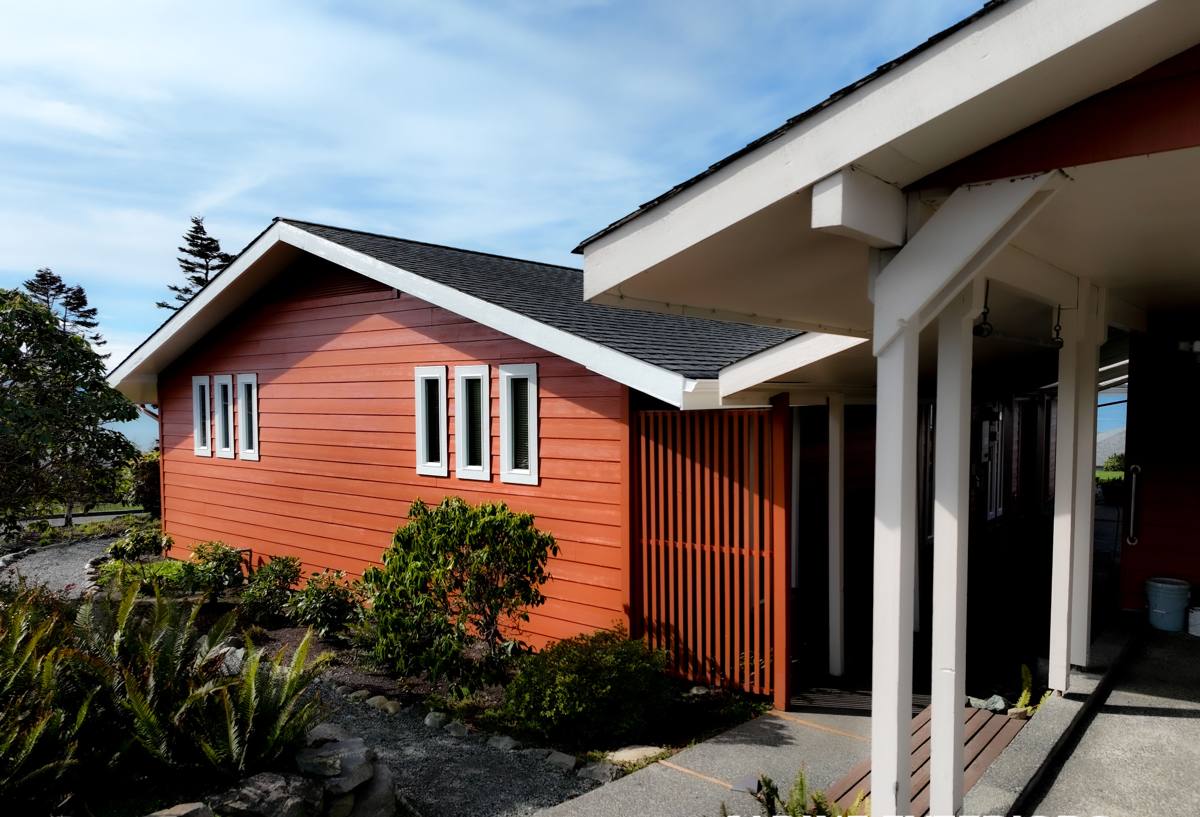
Signs Your Current Windows Are Costing You Money
Homeowners in Cherry Point usually notice a handful of consistent warning signs before they call about replacement. None of these are emergencies on their own, but together they point to windows that are no longer doing their job:
- Cold drafts near the frame edges even when the window is fully latched
- Visible condensation or fogging between panes, which means the seal on a double- or triple-pane unit has failed
- Hardware that's stiff, pitted, or won't latch tight — a common symptom of salt-air corrosion
- Soft or discolored wood at the sill or lower frame corners, often from long-term moisture exposure
- Noticeably higher heating bills during the same weather conditions compared to previous years
- Difficulty opening or closing sashes due to swelling from moisture absorption
Any one of these is worth a look. Several at once usually means the window system — not just the glass — has reached the end of its useful life.
What Actually Makes a Window "Energy-Efficient"
"Energy-efficient" gets used loosely in the window industry, so it's worth being specific about what it actually means and why each factor matters more in a coastal, high-rainfall area like this one.
Glazing and Coatings
Most efficient windows now use double- or triple-pane glass with a low-E (low-emissivity) coating that reflects heat back into the room in winter and blocks excess solar heat in summer. Between the panes, an inert gas fill — usually argon — slows heat transfer further. In a marine climate where temperature swings are moderate but damp cold is constant, the low-E coating and gas fill do more practical work for comfort than they would in a drier, more extreme climate.
Frame Performance
The frame is where heat actually escapes in most window assemblies, and it's also where a coastal climate does the most damage. A frame with poor thermal breaks will feel cold to the touch even with excellent glass installed in it, and a frame with poor moisture resistance will degrade regardless of how good the glass is.
U-Factor and Air Leakage Ratings
U-factor measures how well a window resists heat flow — lower is better. Air leakage ratings, tested independently, measure how much air moves through the assembly under wind pressure. In a spot that gets regular driving rain and wind off the water, the air leakage rating deserves just as much attention as the U-factor, because a window that's thermally efficient on paper but leaks air under wind pressure will still cost you comfort and money.
Choosing the Right Frame Material for Salt Air and Driving Rain
Frame material matters more here than in most inland neighborhoods, because salt exposure and sustained moisture are constant rather than occasional. Here's how the common options hold up under Cherry Point conditions:
| Frame Material | Salt Air Resistance | Moisture Behavior | Maintenance |
|---|---|---|---|
| Vinyl | Very good — won't corrode or rust | Doesn't absorb moisture or rot | Low — occasional cleaning |
| Fiberglass | Excellent — highly stable in coastal exposure | Dimensionally stable even with moisture cycling | Low |
| Aluminum | Fair — prone to corrosion unless well-coated | Conducts heat and cold; can promote condensation | Moderate — coatings need monitoring |
| Wood / Wood-Clad | Poor if unprotected — needs a durable exterior cladding | Absorbs moisture; vulnerable in long damp seasons | High — regular inspection and finish upkeep |
We're not going to tell you wood windows are a bad product — plenty of homeowners like the interior look and are willing to keep up with the maintenance. But on a property this exposed to salt air and driving rain, we set our own standard: if a wood or wood-clad window goes in, the cladding and flashing details have to be built for sustained coastal moisture, not just occasional weather. Vinyl and fiberglass carry that burden with far less upkeep, which is why they're what we recommend for most Cherry Point installations.
Installation Is Where Energy Efficiency Is Won or Lost
A high-performance window installed poorly will underperform a mid-range window installed correctly — this is true everywhere, but it's especially true in a location that gets driving rain off open water. The window itself is only part of the system; the flashing, sealing, and integration with the wall assembly are what actually keep water out and air infiltration down.
A correct installation in this climate includes:
- Proper sill pan flashing so any water that does get past the exterior cladding drains out and away from the framing, not into it
- Weather-resistant barrier integration so the window's flashing laps correctly with the house wrap — sequenced so water always sheds downward and outward
- Backer rod and high-quality, flexible sealant at the exterior perimeter, sized and applied for real movement and driving-rain exposure, not just a bead of caulk
- Proper shimming and fastening so the frame doesn't rack out of square, which is a common cause of failed seals and hardware that won't latch tight
- Interior air sealing with low-expansion foam or backer rod, so conditioned air isn't leaking out around the rough opening even if the window itself is airtight
Skip or rush any of these steps and you can end up with a window that's rated well on paper but still lets in drafts and, eventually, water — the exact problems homeowners are trying to solve by replacing windows in the first place.
Our Process for Cherry Point Homes
We approach every window job in Cherry Point the same structured way, because the details that matter here are consistent even though every house is a little different:
- On-site assessment. We look at existing window condition, frame material, current flashing and sealant condition, and any signs of past moisture intrusion around openings.
- Product selection. We walk through frame material, glazing package, and hardware options suited to salt air and wind-driven rain exposure, matched to your budget and the style of the house.
- Removal and opening prep. Old windows come out carefully, and we inspect the rough opening and sheathing underneath for hidden rot or moisture damage before anything new goes in.
- Flashing and installation. Sill pans, flashing tape, and weather barrier integration go in first, sequenced correctly, before the new window is set, shimmed, and fastened.
- Sealing, interior and exterior. Exterior sealant is applied for the specific exposure of that elevation of the house; interior air sealing is completed separately.
- Final check. We test operation, confirm hardware function, and walk the job with you before we consider it done.
What It Costs
Costs vary based on window size, frame material, glazing package, and how many openings you're doing at once. Rather than quote a single number that won't apply to your house, here's how the major cost factors break down:
| Cost Factor | Why It Matters |
|---|---|
| Frame material | Vinyl is generally the most budget-friendly; fiberglass and wood-clad cost more up front but differ in long-term maintenance |
| Glazing package | Triple-pane and higher-performance low-E coatings cost more than standard double-pane but improve comfort and efficiency |
| Window size and count | Larger openings and full-house replacements have more material and labor cost, but often better per-window pricing than one-off jobs |
| Condition of the opening | Hidden rot or moisture damage found during removal adds repair scope before the new window can go in correctly |
| Installation complexity | Second-story access, unusual shapes, or extensive flashing work on exposed elevations add labor time |
We'll walk you through actual numbers for your specific windows and house during a free estimate — broad ranges on a webpage don't account for what your opening actually needs.
Living With Your New Windows: Moss Season and Salt Air Maintenance
Energy-efficient windows installed correctly need very little upkeep, but a little regular attention goes a long way in this climate. A simple seasonal checklist:
- Rinse frames and hardware periodically to clear salt residue, especially on elevations facing open water
- Check exterior sealant lines once a year for cracking or separation, particularly after a hard winter storm season
- Keep gutters and nearby drainage clear so runoff isn't sheeting directly across window openings
- Clear moss or organic buildup from sills and trim promptly — during moss season, damp debris left against a frame holds moisture longer than the frame is designed to handle
- Operate hardware (locks, cranks, latches) a few times through the winter so mechanisms don't seize from disuse combined with damp air
None of this is heavy maintenance — it's the kind of thing that takes a few minutes a couple of times a year and meaningfully extends the life of the installation.
Why Local Experience in Cherry Point Matters
A window contractor who mostly works inland, drier areas can still install a window that looks right and passes inspection — but if they're not used to detailing flashing and sealant for sustained coastal wind-driven rain, or specifying frame materials that hold up against salt air, the mistakes usually don't show up until a year or two later, when water finds the one detail that wasn't built for this exposure.
Working regularly in Blaine and around Cherry Point means we're not guessing at how a given product or installation detail holds up here — we see the results of past jobs, good and bad, in the same climate your house sits in. That's the difference between a window install that's technically correct and one that's actually built for where it is.
If your windows are drafty, fogged, hard to operate, or just older than you'd like them to be, we're happy to take a look and give you a straightforward assessment. Use the form below to request a free, no-pressure estimate for your Cherry Point home.