 Blaine Siding
 Board & Batten Siding Built for Everson's Weather, Not Just Its Look
Board and batten has become one of the most requested siding styles in Whatcom County — the vertical lines, the shadow depth from the battens, the way it reads as both modern and farmhouse depending on the trim and color. But style is only half the job. In Everson, siding also has to survive a wet, mossy, salt-tinged marine climate for decades without cupping, splitting, or feeding rot behind the wall. We install board and batten in James Hardie fiber cement only, and we've built our crew and our process around getting the parts of this style that actually matter right: the water management behind the boards, not just the reveal spacing in front of them.
Why Whatcom County Punishes the Wrong Board & Batten Material
Everson sits inland from Blaine but still lives inside the same Pacific Northwest weather pattern — long stretches of driving rain, heavy dew and fog off the Nooksack lowlands, and a moss season that can run eight months out of twelve on north-facing walls and anything shaded by trees. Add the salt air that carries in off the Strait of Georgia and Puget Sound corridor, and you've got a climate that's hard on vertical siding in particular. Vertical boards shed water differently than lap siding — every horizontal seam, every batten joint, and every board end becomes a spot where water can sit or wick if the material and the install aren't both correct.
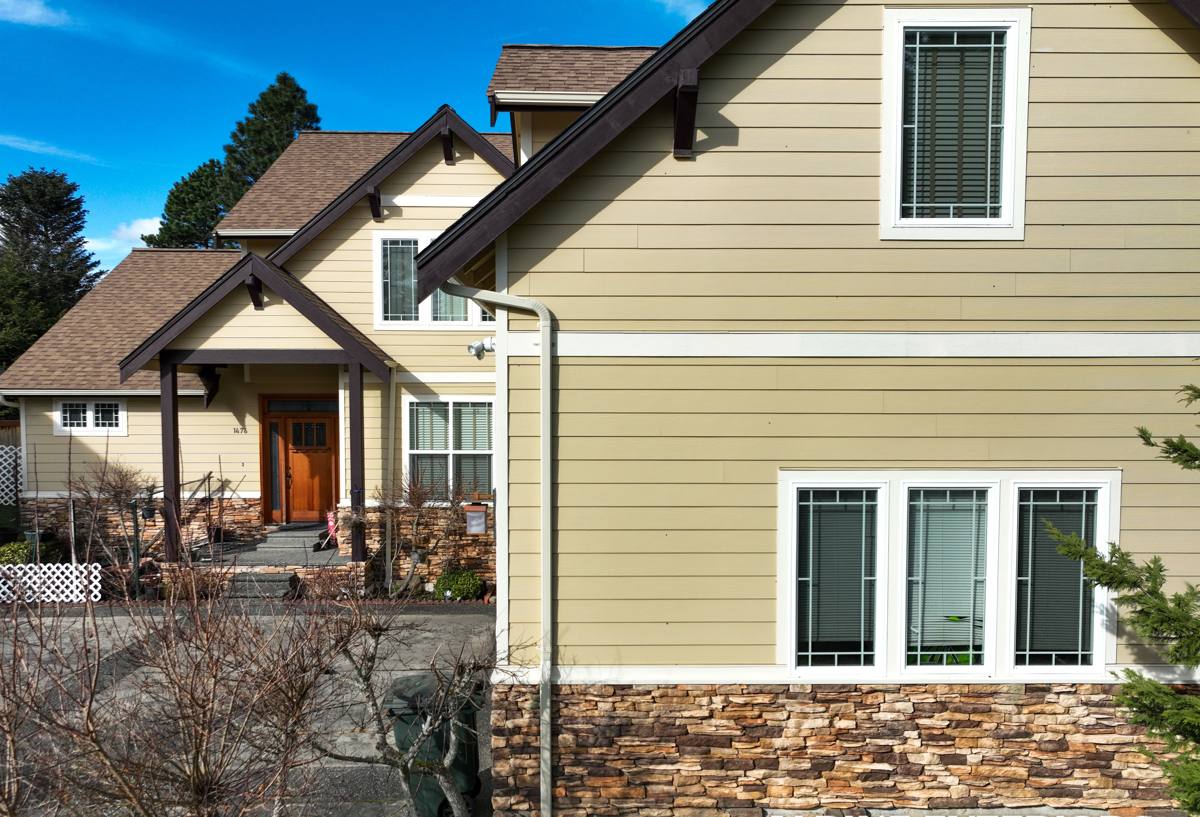
What a Correct Board & Batten Job Actually Requires
Board and batten looks simple from the curb — wide boards, narrow battens over the seams — but the installation details are where most siding failures start. Getting it right on an Everson home means paying attention to a handful of things that don't show up in a driveway estimate but matter every winter after:
- Rainscreen gap: a drainage space behind the siding so any water that gets past the surface can drain and the wall can dry, instead of sitting against the sheathing.
- Correct fastener placement: Hardie panel and batten systems have specific nailing patterns and edge clearances — get them wrong and you get panel movement, cracking, or blow-off in wind.
- Batten spacing over structural framing: battens need to land where they can actually be fastened into something solid, not just wherever the layout looks even.
- Flashing at every horizontal break: window heads, belly bands, and any place the wall steps need flashing detail — board and batten's vertical lines make it tempting to skip these, and that's exactly where leaks start.
- Factory-cut, factory-primed edges: field-cut ends need proper sealing so the cut edge isn't left absorbing moisture for the next 20 years.
Skip any one of these and the siding can look fine for a year or two while the problems build behind it. That's the trap with board and batten more than most siding styles — the vertical reveal hides a lot of sins until the wall behind it starts telling on itself.
Why We Only Install James Hardie for This Style
Board and batten shows up in a lot of materials — cedar, primed spruce, LP SmartSide, vinyl panel systems, other fiber cement brands. We've made a standing decision not to install most of them, and it's worth explaining why rather than just asserting it.
Wood and engineered-wood board and batten (cedar, primed spruce, LP SmartSide) depend on an intact factory or field-applied coating to keep water out of the substrate. In a climate like Whatcom County's, with sustained damp seasons and heavy moss growth, any coating failure — a hairline crack, a fastener that backed out, a joint that opened up — gives moisture a direct path into wood fiber that wants to swell, rot, or delaminate. These products can perform well for years with disciplined maintenance, but board and batten's narrow reveals and extra seams (every batten is another joint to maintain) make that maintenance burden higher than most homeowners expect going in.
Vinyl board and batten systems are low-maintenance and inexpensive, but they're a thin plastic panel relying on interlocking joints and a friable material that gets brittle and can crack in freeze cycles, fade under UV, and deform under enough heat. It's not what we're willing to warranty on an Everson home that's going to see decades of this weather.
James Hardie fiber cement is cement, sand, and cellulose fiber — it doesn't absorb water the way wood does, it's non-combustible, and it comes with a factory-applied ColorPlus finish baked on under controlled conditions, not brushed on in the field where weather and technique can vary. For board and batten specifically, Hardie's engineered panel and batten systems are built to hold a straight, tight reveal over time instead of cupping or bowing the way solid boards can. That combination — dimensional stability, a factory finish, and a material that doesn't feed rot — is why it's the only thing we put on a wall.
Comparing Board & Batten Materials
| Material | Moisture Behavior | Maintenance | Typical Lifespan |
|---|---|---|---|
| James Hardie fiber cement | Does not absorb and swell like wood; engineered for wet climates | Occasional wash; factory finish holds color | 30+ years with correct install |
| Cedar / primed spruce | Absorbs moisture if coating fails; prone to swelling and rot | Repaint/reseal on a recurring cycle | Highly maintenance-dependent |
| LP SmartSide | Engineered wood strand; depends on intact factory coating and sealed edges | Field-cut edges need diligent sealing | Coating-dependent |
| Vinyl panel systems | Doesn't rot but can crack, warp, or fade with age | Low, but panels aren't repairable — only replaceable | Variable, UV and impact-sensitive |
How We Approach Board & Batten Projects in Everson
1. On-Site Assessment
We walk the home and look at exposure — which walls take the worst of the wind-driven rain, where moss and shade are already a problem, and what's happening with the existing wall assembly before we ever talk product or price.
2. Water Management Plan First
Before layout or reveal spacing gets decided, we plan the rainscreen, flashing, and drainage details for that specific wall. This is the part that actually determines how the siding performs in ten years, and it's decided before the aesthetic choices.
3. Panel and Batten Layout
We lay out batten spacing to land on framing and keep the reveal consistent, factoring in window and door openings so the pattern reads clean instead of getting choked up at corners and trim.
4. Installation to Manufacturer Spec
Fastener schedule, clearances, and sealing at cut edges follow James Hardie's published installation requirements — not a shortcut version. This is also what keeps the manufacturer's warranty intact.
5. Final Walkthrough
We go over the finished job with the homeowner, including care basics — what to expect from the ColorPlus finish, how to handle moss on nearby surfaces, and what routine maintenance actually looks like (which, done right, is minimal).
Why a Crew That Already Works Everson Matters
Board and batten installation isn't regionally exotic, but the water-management decisions behind it should be informed by what a specific wall actually faces. A crew that works Whatcom County regularly already knows which orientations in this area take the worst wind-driven rain, how aggressive moss growth gets on shaded and north-facing walls here, and how the salt-air exposure common near the Blaine and Everson corridor affects fastener choice and finish longevity. That's not something you get from a general installation manual — it's pattern recognition from doing this work in this climate, on this kind of housing stock, repeatedly.
What to Ask Before You Hire Anyone for Board & Batten
- Do they install a rainscreen/drainage gap behind vertical siding, or fasten directly to the sheathing?
- Can they explain their flashing detail at window heads and horizontal breaks before you ask?
- Are they a certified or experienced James Hardie installer, with manufacturer-backed installation (not just "we've used it before")?
- Will cut edges be factory-primed or field-sealed per spec, every time, not just when it's convenient?
- Do they give you a written scope that covers water management, not just the material and the price?
Cost Factors to Understand Before You Budget
Board and batten in James Hardie fiber cement generally costs more than vinyl and is competitive with or better than quality wood systems once you account for wood's ongoing maintenance. A few things move the number more than people expect:
- Existing wall condition: if there's rot or moisture damage behind the current siding, that repair happens before new siding goes up — it's not optional.
- Batten density and reveal width: more battens means more material and more labor hours, straightforwardly.
- Trim and corner detailing: board and batten reads cleanest with proper corner and trim work, which adds labor but is what makes the style actually look intentional instead of patched-together.
- Access and wall height: steep rooflines or tall gable walls affect staging and labor time.
We give straightforward, itemized estimates so you can see exactly what's driving the number, rather than one lump figure.
If you're weighing board and batten for a home in Everson, we're happy to come take a look and walk you through what your specific walls need — no pressure, no obligation. The form below gets you a free estimate from a crew that already works this area.