 Blaine Siding
 Window Replacement Built for Everson's Climate
Homes in and around Everson deal with a specific combination of weather that most window manufacturers design for on paper but that only shows up as a real problem after a few Whatcom County winters. Long stretches of driving rain, humidity that never really lets up, and a moss season that can run most of the year all work against window units that weren't installed with real drainage and sealing details in mind. Add in the salt-tinged air that moves through this part of the county from the nearby waters around Blaine, and you get a slow, steady attack on hardware, seals, and finishes that homeowners further inland or in drier climates simply don't deal with.
None of that means Everson homes need exotic materials or a complicated process. It means the basics — flashing, drainage, sealant choice, and correct installation sequence — matter more here than they do in most parts of the country. A window that's "close enough" in a dry climate will show leaks, fogging, or rot around the frame within a few seasons here. This page walks through what a proper window replacement actually involves for this area, what to look for, and how we approach the work.
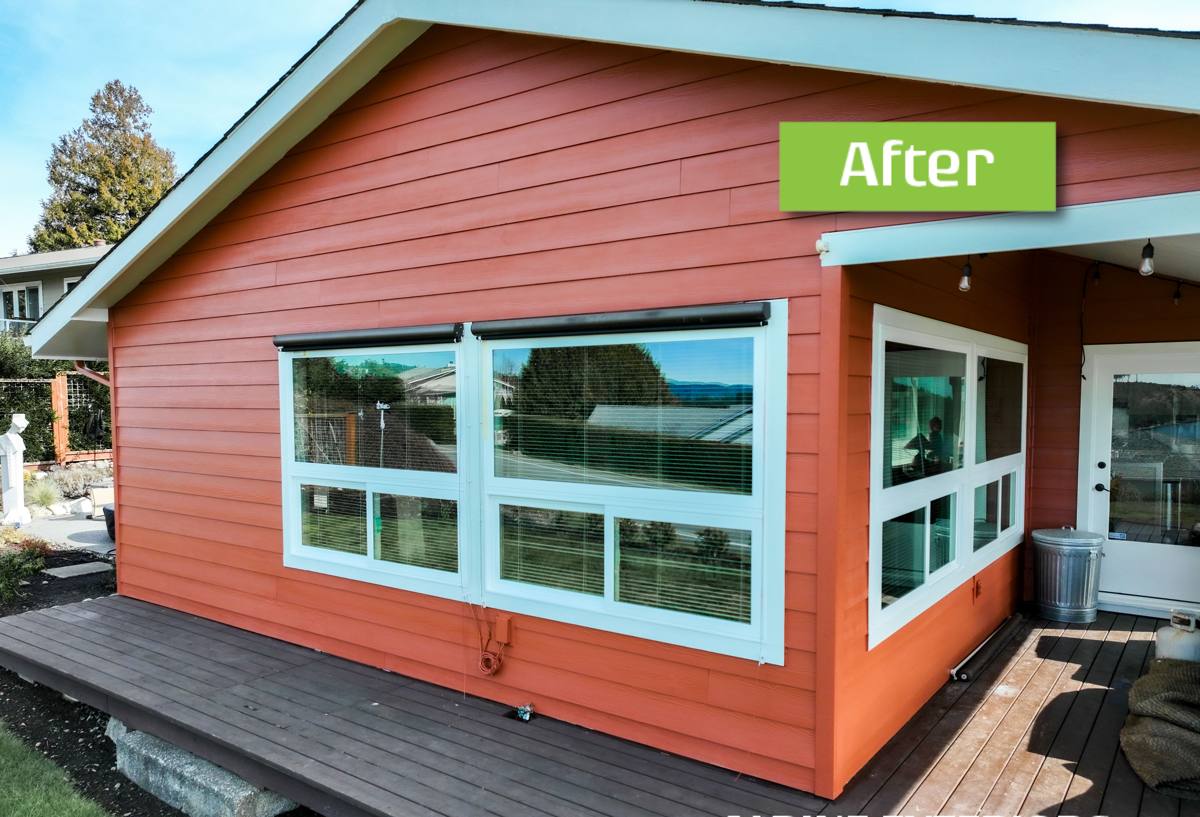
Signs Your Windows Are Due for Replacement
Whatcom County's weather tends to expose window problems earlier than in milder climates. Most of the time, homeowners notice one or two of these before deciding to call anyone:
- Condensation or fogging between the panes of double-pane glass, which means the seal has failed and the gas fill is gone
- Visible daylight, drafts, or a whistling sound around the frame during wind-driven rain
- Soft or discolored wood on the sill, jamb, or exterior trim — often the first sign moisture has been getting behind the frame for a while
- Windows that are hard to open, close, or lock, which usually points to a frame that's swelling, warping, or settling
- Moss or dark streaking building up on the sill or below the window, even after cleaning
- A noticeable rise in heating costs without any other explanation
- Paint that keeps peeling or bubbling around the window trim no matter how often it's touched up
Any one of these on its own might not mean full replacement is necessary. But when a home has several of them at once, or when the frame itself has moisture damage, patching individual symptoms usually just delays a bigger repair.
What a Correct Window Replacement Job Actually Involves
Removal and Inspection
The old window comes out carefully so we can see the condition of the rough opening — the framing, sheathing, and any existing flashing. This step matters more than most homeowners expect. If there's hidden rot or moisture damage behind the old window, that has to be addressed before a new one goes in, or the new window is just sitting on top of the same problem.
Flashing and Drainage
This is the step that separates a window that lasts from one that leaks in a few years, especially with the rain patterns typical of this part of Whatcom County. Proper flashing — sill pan, side flashing, and head flashing installed in the right order — directs any water that gets past the window itself back out, instead of letting it pool at the sill or migrate into the wall cavity. We don't skip or shortcut this step regardless of how the old window was installed.
Insulation and Air Sealing
Gaps between the new frame and the rough opening get filled with proper low-expansion foam or backer rod and sealant — not just caulked over on the surface. This is what actually stops drafts and helps with energy performance, rather than just making the trim line look finished.
Setting, Leveling, and Fastening
The window has to be shimmed level and plumb before it's fastened, or the sash won't operate correctly and the seals will be under uneven stress from day one. A slightly out-of-square window might still open and close now, but it will wear unevenly and is more likely to leak down the road.
Exterior Sealing and Trim
The final exterior seal — sealant type, bead placement, and trim detail — is what stands between the window and the next few years of coastal rain and wind. We use sealants rated for exterior exposure and movement, not general-purpose caulk that hardens and cracks within a season or two.
Full-Frame Replacement vs. Insert Windows
There are two basic approaches to replacing a window, and which one makes sense depends on the condition of the existing frame.
Insert (Pocket) Replacement
A new window is installed inside the existing frame, which stays in place. This works well when the original frame is still solid, dry, and square. It's typically faster and less disruptive to the surrounding siding or trim.
Full-Frame Replacement
The entire old frame comes out down to the rough opening, including trim. This is the right call when there's any rot, water damage, or the frame is out of square — which shows up more often in this climate than in drier regions, simply because moisture has had more opportunities to find its way in over the years. Full-frame replacement also allows us to correct flashing and drainage details that may have been done poorly, or not at all, the first time.
We'll tell you honestly which one your home needs after inspecting the opening — not just the window itself. Recommending an insert replacement over a frame with hidden damage would be cutting a corner that shows up later as a bigger repair.
Choosing Window Materials for Whatcom County Conditions
Material choice affects how a window handles years of damp, cool, salt-touched air. Here's how the common options compare for this climate:
| Material | Moisture Resistance | Maintenance | Typical Trade-Offs Here |
|---|---|---|---|
| Vinyl | Good — won't rot, resists moisture well | Low | Reliable value option; frame color and size options are more limited than fiberglass |
| Fiberglass | Very good — stable in wide temperature and moisture swings | Low | Higher upfront cost, but holds up well to repeated wet/dry cycling |
| Wood (unclad) | Poor without diligent upkeep | High | Needs regular painting/sealing to survive driving rain and moss growth; we're cautious recommending this without a clear maintenance plan |
| Wood-clad (exterior aluminum or vinyl cladding) | Good on the exterior face, but vulnerable at any cladding seam or corner where water can get behind it | Moderate | Good look, but installation quality at the cladding joints matters a lot in a wet climate |
| Aluminum | Fair — conducts cold and can promote interior condensation | Low | Less common for residential in this climate due to thermal performance |
For most Everson-area homes, vinyl or fiberglass frames offer the best balance of moisture resistance and low long-term upkeep. Where we do install wood or wood-clad units for appearance reasons, we make sure the client understands the maintenance commitment up front — that's a matter of setting honest expectations, not a knock on the product itself.
Glass Packages and Energy Performance
Beyond the frame, the glass package affects both comfort and how well the window resists condensation on cold, damp days. Double-pane with a low-E coating and argon gas fill is the standard for this climate — it cuts heat loss and helps reduce interior condensation on cold mornings, which is a common complaint in older single-pane or early double-pane homes throughout the county. Triple-pane is available for homes wanting maximum performance, though for most Everson homes the added cost doesn't always pencil out compared to a quality double-pane low-E unit properly installed and sealed.
What matters as much as the glass spec is the installation quality around it. A high-performance window installed with poor flashing or sloppy air sealing will underperform a mid-grade window installed correctly. We'd rather see a homeowner spend their budget on getting the installation right than chasing a marginally higher glass rating.
What Drives Cost
Every home is different, so we don't quote sight-unseen, but these are the main factors that move a window replacement estimate up or down:
| Factor | Why It Matters |
|---|---|
| Insert vs. full-frame replacement | Full-frame takes more labor and materials but is necessary when there's frame damage |
| Window size and type | Larger units, custom shapes, and operable styles (casement, sliding, awning) vary in cost and complexity |
| Frame material | Vinyl, fiberglass, and wood-clad carry different material costs |
| Number of windows | Doing multiple windows in one visit typically brings down the per-window cost |
| Hidden damage | Rot or moisture damage found once the old window is out adds repair scope |
| Trim and finish work | Matching existing exterior trim or siding detail can add time |
We give straightforward, itemized estimates so you know what you're paying for and why — not a flat per-window number that hides what's actually included.
Our Process, Start to Finish
- Free on-site estimate — we look at your existing windows, frames, and any trouble spots, and talk through what your home actually needs
- Written estimate — itemized, so you can see materials, labor, and scope clearly before committing to anything
- Scheduling — we plan around weather where possible, since exterior sealing work goes best in a dry window
- Removal and inspection — old windows come out, and we check the rough opening for hidden moisture or framing issues
- Installation — proper flashing, insulation, leveling, and fastening, not just dropping a new unit into the old hole
- Exterior sealing and trim — finished to shed water and match your home's existing look
- Final walkthrough — we check operation, sealing, and cleanup with you before calling the job done
Why a Crew That Already Works in Everson Matters
Window replacement isn't just about the window — it's about how it's installed against the specific conditions of the home and the region. A crew that regularly works Whatcom County homes has already seen how moss builds up on north-facing sills, how driving rain finds its way through poorly flashed corners, and how salt-tinged coastal air near Blaine accelerates wear on hardware and finishes over time. That experience shows up in the small decisions made on site — sealant choice, flashing lap direction, how tight to set a reveal — that don't show up on a spec sheet but make the difference between a window that lasts fifteen-plus years and one that needs attention again in five.
It also means fewer surprises during the job. We're not guessing at how local weather patterns will treat a given installation detail — we've already seen what holds up and what doesn't in homes like yours, in this same climate.
Maintaining Your New Windows
Even a correctly installed window benefits from basic upkeep in this climate. A few habits go a long way:
- Clear moss and debris from sills and tracks periodically, especially on shaded or north-facing windows
- Check exterior sealant annually for cracking or separation, particularly after a hard winter
- Keep gutters and downspouts clear so runoff isn't sheeting directly down over window heads
- Operate hardware a few times a year to keep hinges, locks, and rollers from seizing up in damp conditions
- Address any soft trim or paint failure promptly rather than waiting — moisture problems compound quickly here
If your windows in Everson or the surrounding area are showing any of the signs above, or you're simply ready to stop losing heat and fighting condensation every winter, we're happy to take a look. The estimate is free, there's no pressure to commit, and you'll get a straight answer about what your home actually needs — just fill out the form below to get started.