 Blaine Siding
 Fiber Cement Siding Built for Sumas Weather
Sumas sits at the edge of Whatcom County where marine air, valley moisture, and long stretches of overcast, wet weather combine into some of the toughest conditions a house exterior can face in this region. Homes here deal with driving rain that hits siding at an angle instead of straight down, salt-tinged air moving in off the Strait, and a moss season that can stretch from late fall well into spring. Siding that looks fine on a spec sheet doesn't always hold up once it's actually nailed to a wall in this climate. We install James Hardie fiber cement siding in Sumas because it's the one product system we've found that consistently handles what this area throws at it, year after year, without turning into a maintenance project.
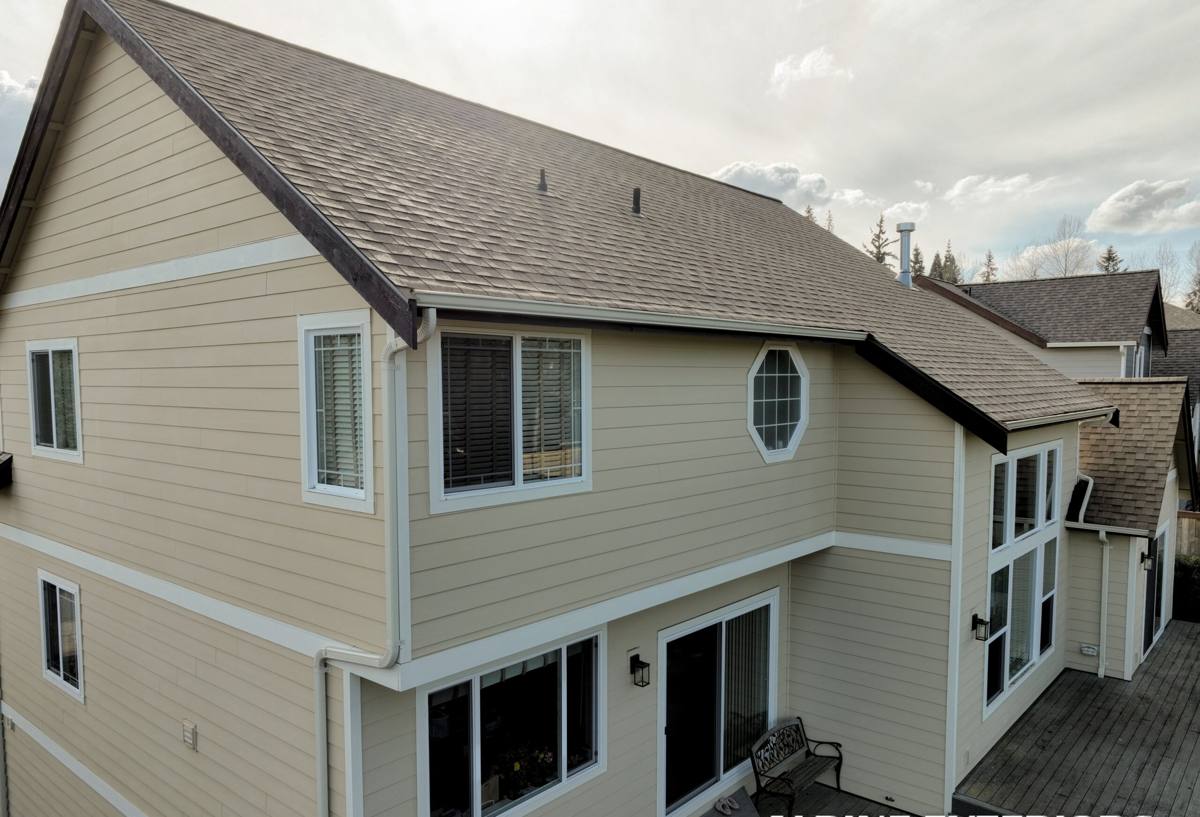
What This Climate Actually Does to Siding
It helps to understand the specific stresses at play before talking about the fix. Whatcom County's proximity to the water means siding is exposed to airborne salt that accelerates corrosion on fasteners and metal trim, and slowly degrades finishes that aren't formulated to resist it. Add in driving rain — wind-driven moisture that gets pushed sideways into seams, laps, and joints rather than simply running off — and any weak point in the water-management details behind the siding becomes a slow leak waiting to happen.
Then there's moss. Constant dampness combined with shaded north- and east-facing walls (common on lots with mature trees, which much of this area has) creates ideal conditions for moss and algae to colonize a wall surface. On some materials that's just a cosmetic problem you pressure-wash away. On others, trapped moisture under moss growth accelerates rot, swelling, or delamination underneath.
The Three Things Sumas Siding Has to Get Right
- Moisture management: proper flashing, house wrap integration, and drainage gaps so wind-driven rain doesn't get trapped behind the cladding
- Dimensional stability: a material that doesn't swell, shrink, or cup as it cycles through wet winters and drier summers
- Surface resilience: a finish that resists moss staining, salt exposure, and UV without chalking or fading within a few years
Why We Only Install James Hardie
We made a deliberate decision as a company to install one product line: James Hardie fiber cement, in the HZ5 formulation engineered for the Pacific Northwest's wet-climate zone. We don't install vinyl, LP SmartSide, primed wood, cedar, or other fiber cement brands, and we're upfront about why. Fiber cement itself isn't a marketing gimmick — it's cement, sand, and cellulose fiber, which means it doesn't rot, doesn't feed insects, and doesn't warp the way wood-based products can when they take on moisture over and over across a wet season. It's also non-combustible, which matters for wildfire-adjacent risk and insurance considerations even in a region that isn't primarily known for wildfire.
What separates Hardie from the rest of the fiber cement field, in our experience, is manufacturing consistency and the ColorPlus factory-applied finish system. Field-applied paint on any siding material is only as good as the prep, the weather on install day, and the number of coats — and it's the first thing to fail under salt air and UV exposure. ColorPlus is baked on at the factory under controlled conditions, backed by its own finish warranty, and it holds color and resists fading in ways site-painted siding generally can't match over the same number of years.
What a Correct Installation Looks Like
Fiber cement siding is only as good as the install behind it. A huge share of the siding failures we get called out to inspect aren't material failures — they're installation shortcuts that let water in behind a perfectly good product. For Sumas homes specifically, given the driving rain exposure, we pay particular attention to:
| Detail | Why It Matters Here |
|---|---|
| Weather-resistive barrier + drainage gap | Lets any wind-driven moisture that gets past the siding drain out instead of pooling against the sheathing |
| Flashing at windows, doors, and penetrations | The most common leak point on any home, worse where rain hits at an angle |
| Proper fastener type and spacing | Corrosion-resistant fasteners matter more this close to salt air; loose or over-driven nails create entry points |
| Butt joint and caulking practice | Sealed, staggered joints keep water from tracking into seams during sustained rain |
| Clearance from grade, decks, and roof lines | Keeps the bottom edge of the siding out of splash-back and standing moisture |
Hardie publishes detailed installation specifications for exactly this reason, and following them is what actually determines whether a homeowner gets the warranty performance the product is capable of. We install to spec, not to whatever's fastest.
Our Process for a Sumas Siding Project
1. On-Site Assessment
We start by walking the exterior with you, looking at current siding condition, moisture staining, moss patterns, and any trouble spots around windows, trim, or grade level. This tells us whether we're dealing with a straightforward re-side or whether there's underlying sheathing or framing damage that needs to be addressed first.
2. Product and Profile Selection
James Hardie's lineup includes lap siding, board-and-batten (vertical), shingle-style panels, and trim products, all available in factory ColorPlus finishes or as primed for field painting if a homeowner has a specific reason to go that route. We'll walk through which profiles suit the home's style and which colors hold up best against Sumas's particular light and moisture conditions.
3. Tear-Off and Prep
Old siding comes off, the wall is inspected for hidden rot or water damage, and the weather-resistive barrier and flashing details are installed or repaired before a single piece of new siding goes up. This is the step that gets rushed on cut-rate jobs, and it's the step that determines how the house performs in ten years, not two.
4. Installation to Manufacturer Spec
Siding, trim, and joints go in following Hardie's fastening, clearance, and sealing requirements — the details in the table above.
5. Final Walkthrough
We go over the finished work with you, confirm caulking and paint touch-ups are complete, and make sure you understand basic care and what the warranty covers going forward.
Why Hire a Crew That Already Works This Area
Installation quality is only half the equation — the other half is knowing what a given lot and orientation actually needs before the first board goes up. A crew that regularly works Whatcom County lots understands which walls sit in permanent shade and will need extra attention to drainage and moss resistance, how far wind-driven rain typically travels up a wall in an open exposure versus a treed lot, and how salt air exposure varies depending on how close a property sits to open water versus inland. That local pattern recognition shows up in small decisions — flashing details, fastener choices, where drainage gaps matter most — that a crew unfamiliar with the area might not think to prioritize.
Maintenance Once It's Installed
One of the practical advantages of correctly installed Hardie siding in a climate like this is how little ongoing maintenance it asks for compared to wood or vinyl. It won't need repainting on the same cycle site-painted wood does, and it won't crack or warp from repeated wet-dry cycling. That said, a few simple habits go a long way:
- Rinse the exterior annually with a garden hose to keep moss and algae from establishing on shaded walls
- Avoid pressure washing directly into seams or at close range — it can force water past caulked joints
- Keep gutters clear so overflow doesn't run down the wall face and accelerate moss growth in one spot
- Re-caulk visibly cracked or gapped joints promptly rather than waiting for a full recaulk cycle
- Trim back vegetation that keeps a wall section shaded and damp longer than the rest of the house
What It Comes Down To
Sumas homes deal with a specific combination of salt air, sideways rain, and extended damp, shaded conditions that push cheaper siding systems and shortcut installations to their limits faster than in a drier climate. James Hardie fiber cement, installed to the manufacturer's actual specifications, is built to handle exactly that combination — and it's why we don't offer alternatives we don't believe hold up as well here. If you're planning a re-side or building new in Sumas, we're happy to walk your property, look at your specific exposure, and give you a straight assessment of what it needs.
Reach out for a free, no-pressure estimate — we'll take a look at your home and talk through options with no obligation.