 Blaine Siding
 Why Grandview Decks Wear Out Faster Than the Brochure Says
If you own a deck in the Grandview area of Blaine, you already know it doesn't age the way a deck would in a drier inland town. Whatcom County sits right on the water, and that means your deck is dealing with salt-laden air, long stretches of driving rain, and a moss season that can run from October clear through April. None of that is exotic or rare — it's just the normal cost of living this close to the Salish Sea. But it does mean a deck built to a generic national standard, with generic hardware and no plan for moisture, will show problems years before it should.
Most of the repair calls we get in this neighborhood aren't about dramatic failures. They're about slow, quiet damage — a soft spot near the house, a post that's gone spongy at the base, boards that stay slick with green film long after the rain stops. Caught early, these are straightforward repairs. Left alone, they turn into structural work. This page is about what deck repair actually looks like when it's done right in this climate, not a generic overview.
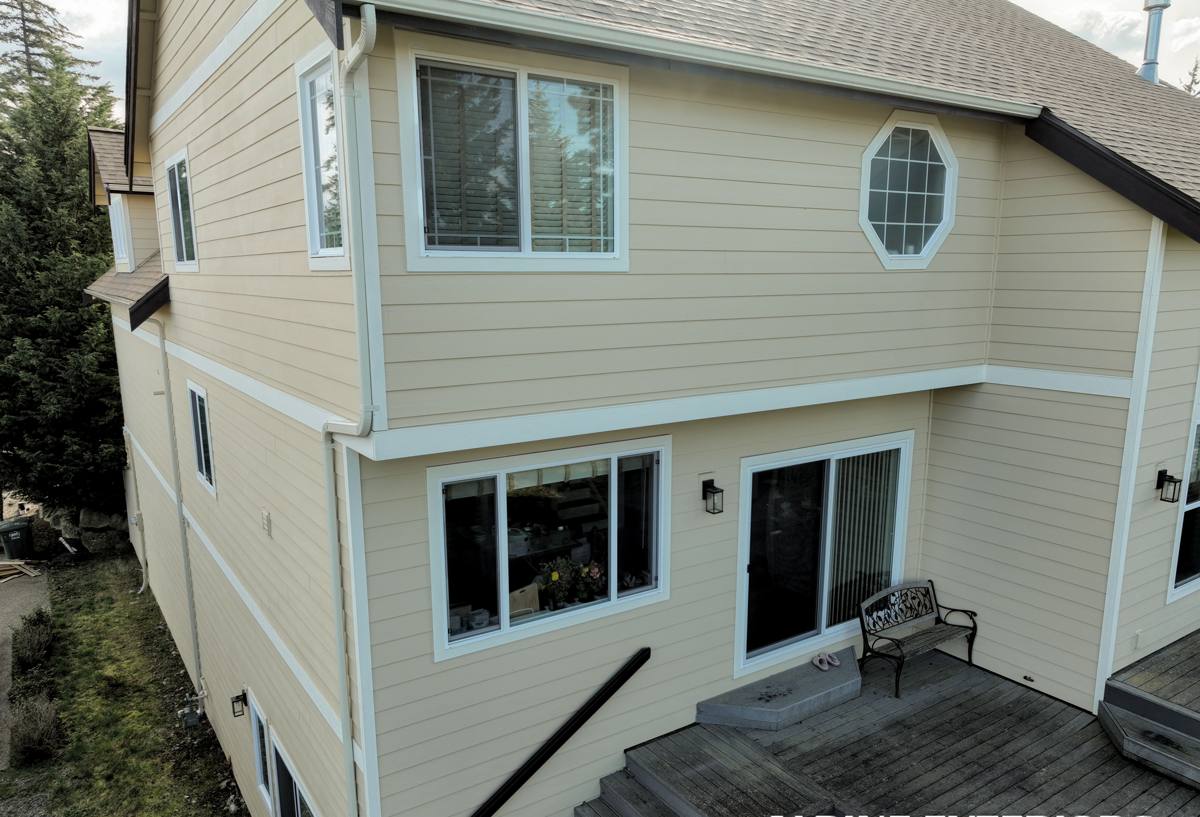
What Salt Air, Rain, and Moss Actually Do to a Deck
Salt Air and Metal Fasteners
Airborne salt from Drayton Harbor and the surrounding coastline accelerates corrosion on anything metal — nails, screws, joist hangers, bolts. Standard electro-galvanized hardware that might hold up fine 30 miles inland can start rusting and losing strength in a fraction of the time here. Once a fastener corrodes, it loses grip on the wood around it, and that's often the real reason a board feels loose or a railing wiggles — not because the wood itself failed, but because the connection did.
Driving Rain and Water Intrusion
Rain that comes in sideways off the water finds its way into places a light, straight-down rain never would — behind ledger boards, under poorly lapped flashing, into end-grain cuts that were never sealed. Once water gets behind the deck's connection to the house, rot starts where you can't see it, which is exactly why ledger board failures are one of the more serious problems we find on older decks in this area.
Moss and Algae
A long, damp shoulder season means moss and algae have months to establish themselves on horizontal surfaces — deck boards, stair treads, and anywhere shade keeps things from drying out. Beyond looking bad, moss holds moisture against the wood constantly, which speeds up rot, and a mossy board is a genuine slip hazard, especially on stairs.
Signs Your Deck Needs Repair — And What They Usually Mean
- Soft or spongy decking near the house: Often points to moisture trapped at the ledger board connection, not just a worn-out board.
- A post that flexes or feels soft at the bottom: Usually rot at or below grade, where the post meets its footing or concrete base.
- Rust streaks below screw heads or hardware: A sign the fasteners are corroding and losing their grip on the wood.
- Persistent green or black film on boards and stairs: Moss or algae holding moisture against the surface — a maintenance issue that can become a rot issue if ignored.
- Railings that wiggle or stair stringers that feel bouncy: Often a connection problem rather than a full-replacement problem, but it needs to be looked at before it's a safety issue.
- Gaps or separation where the deck meets the house: A strong signal that water is getting behind the structure.
Repair or Replace? How We Make That Call
Not every deck problem means a full tear-off, and not every deck is worth patching. The honest answer depends on how much of the structure — the framing, posts, and ledger connection — is still sound versus how much of the damage is cosmetic or limited to the decking boards themselves.
| Factor | Usually Repairable | Usually Needs Replacement |
|---|---|---|
| Framing & posts | Isolated rot at one or two points, otherwise solid | Widespread soft or rotted framing throughout |
| Ledger board | Flashing failed but wood behind it is still sound | Rot has spread into the house's rim joist |
| Decking surface | A handful of cupped, cracked, or stained boards | Most boards are weathered, splintering, or moss-stained throughout |
| Fasteners & hardware | Localized corrosion, easy to swap out | Hardware corroded structure-wide, connections compromised |
| Railings & stairs | Loose but structurally intact | Baluster spacing or height doesn't meet current code, or stringers are rotted |
In practice, a large share of the decks we're called out to in Grandview fall into the repairable column — the framing is sound, and the problem is concentrated at the ledger, a few posts, or the surface boards. Full replacement tends to make sense when rot has been left unaddressed for years and has spread into the framing itself.
What a Correct Deck Repair Actually Involves
Structural Assessment First
Before any boards come off, we check the parts of the deck that actually hold it up: the ledger board connection to the house, the posts and their footings, and the main framing. A deck can look fine on the surface and still have a compromised ledger connection underneath — that's the piece that matters most for safety.
Fixing the Ledger and Flashing
When a ledger board is the source of moisture problems, the fix isn't just caulking the gap — it's pulling the board, addressing any rot in the framing behind it, and reinstalling proper flashing that actually sheds water away from the house rather than trapping it against the wall.
Post and Footing Repair
Rotted post bases get cut back to sound wood or replaced outright, and we make sure posts are properly isolated from standing water and set on a footing that's still doing its job. A deck is only as stable as its weakest post.
Fastener and Hardware Upgrades
Where corrosion is the underlying issue, we replace failing hardware with fasteners rated for the exposure — stainless steel or hot-dip galvanized, not the lighter-duty coated hardware that struggles in salt air over time. This is one of the cheapest parts of a repair and one of the most important for longevity.
Decking and Railing Work
Individual boards get replaced where they're cracked, cupped, or rotted; railings and stair components are reinforced or rebuilt to be solid and, where relevant, brought in line with current guardrail and baluster spacing requirements.
Materials: Wood vs. Composite for Repairs
Whether we're replacing a few boards or rebuilding a section, the same trade-offs apply here as they would on a new deck, just at a smaller scale.
Wood decking is easier to patch in small sections and blends more naturally with an existing wood deck, but it needs regular sealing or staining to hold up against this area's rain and moss cycle, and it's more prone to splintering as it ages.
Composite decking resists moisture absorption and won't rot, which matters in a wet climate, but it comes with its own maintenance note: composite surfaces can still grow surface algae or moss film in shaded, damp spots and need occasional cleaning to stay slip-safe. It's also a heavier, less forgiving material to spot-repair — usually best replaced by the full board rather than patched.
For repairs, we'll tell you honestly which approach fits your situation rather than pushing one material as a blanket answer — it depends on the age of the existing deck, how much is being replaced, and your maintenance appetite going forward.
Our Deck Repair Process
- On-site inspection: We check the ledger, posts, framing, decking, and railings, and probe any soft or suspect areas rather than guessing from the surface.
- Honest scope and estimate: You get a clear picture of what's structural, what's cosmetic, and what your repair-versus-replace options actually are, with a written estimate before any work starts.
- Repair work: Framing, ledger flashing, posts, hardware, decking, and railings are addressed in the order that matters for structural safety first, then finish work.
- Cleanup and walk-through: We clear debris and walk the deck with you so you know what was fixed and what to watch going forward.
Keeping Your Deck in Good Shape After the Repair
A repaired deck stays repaired a lot longer with a little seasonal attention, especially given how much moss pressure this area gets.
- Sweep leaves and debris off the deck surface regularly in fall, before they trap moisture underneath.
- Treat moss and algae growth on boards and stairs as soon as it appears rather than waiting for spring.
- Check that gaps between boards stay clear so water can drain instead of pooling.
- Reseal or restain wood decking on the manufacturer's recommended schedule, not just when it looks faded.
- Look at the ledger board area once a year for gaps, staining, or soft spots — it's the connection that causes the most serious problems if ignored.
- Tighten or replace any hardware showing rust streaks before it spreads to the surrounding wood.
Why It Matters to Hire a Crew That Already Works Grandview
Deck repair isn't a one-size-fits-all trade, and a crew that mostly works drier inland areas can miss the specific patterns that show up here — where rot concentrates first, how fast hardware corrodes near the water, and how much moss pressure a north-facing deck deals with compared to one that gets more sun. We work on decks throughout Blaine and this stretch of Whatcom County regularly, so we're not guessing at how the coastal climate affects a repair — we're accounting for it from the first inspection.
We also know what Whatcom County's permitting and inspection expectations look like for structural deck work, so repairs that touch framing, footings, or guardrails get done in a way that holds up to scrutiny, not just in a way that looks finished.
Get a Straight Answer About Your Deck
If your deck has soft spots, rusting hardware, a stubborn moss problem, or just doesn't feel as solid as it used to, we're happy to come take a look. We'll give you an honest read on what's cosmetic, what's structural, and what it actually takes to fix it — no pressure, no inflated scope. Reach out using the form below for a free estimate on deck repair in Grandview.