 Blaine Siding
 Storm Damage Roof Repair in Grandview
Grandview is one of the residential areas in and around Blaine that takes the same weather this whole corner of Whatcom County deals with — salt-laden air off the water, storms that come ashore near the Canadian border with real force, and a moss season that barely lets up most years. When a windstorm rolls through, it doesn't always announce itself with a collapsed roof. More often it's a handful of lifted shingles, a piece of flashing that got worked loose, or a branch strike that punches a small hole nobody notices from the ground. By the time a stain shows up on a ceiling, water has usually been finding its way in for a while.
We already work in Grandview and the surrounding Blaine area regularly, which matters after a storm. A roof that's just taken wind or impact damage needs someone who can look at it honestly, tell the homeowner what's actually wrong versus what's cosmetic, and repair it to hold up through the next storm — not just patch the visible problem and move on to the next call. This page covers what storm damage actually looks like here, what a correct repair involves, and how we handle a storm call from the first inspection through the finished repair.
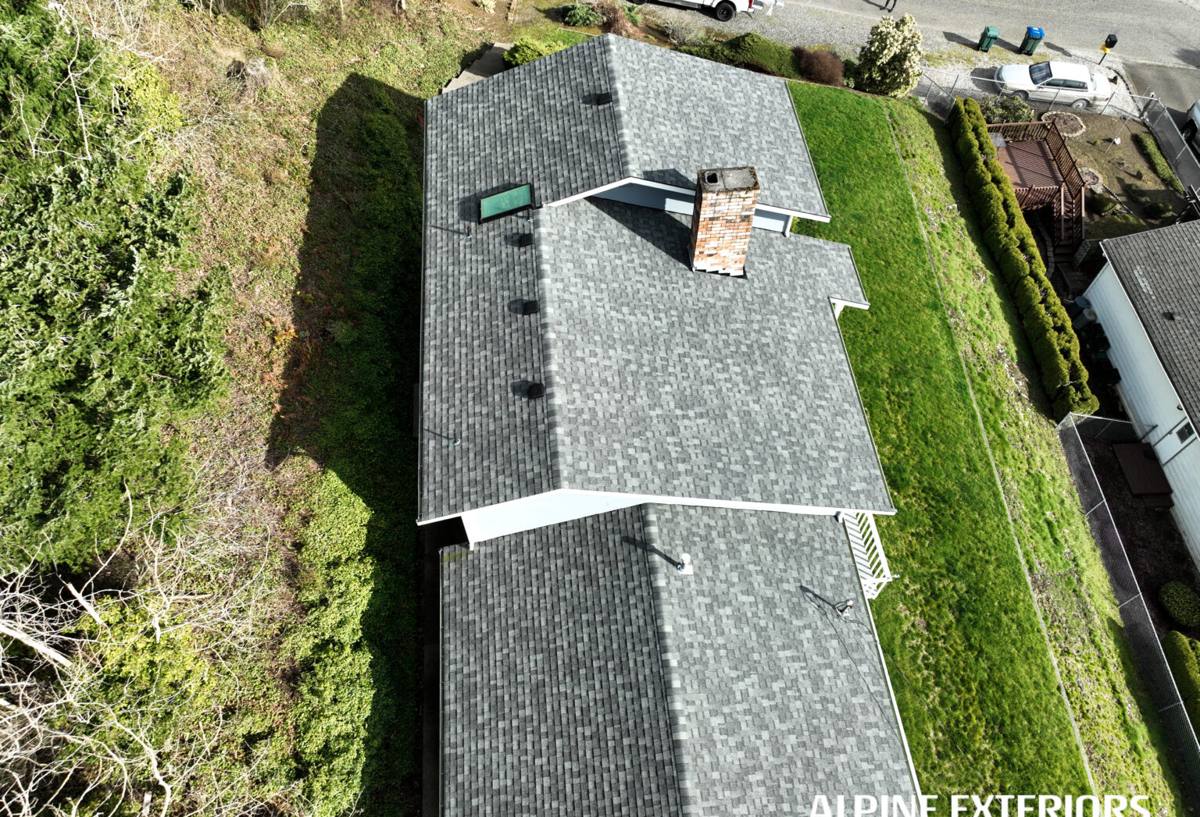
What Blaine's Storm Pattern Does to a Grandview Roof
Wind Off the Water and the Border
Blaine's position on the water, close to where Pacific storm systems make landfall near the border, means wind speeds during a storm event are often higher and more sustained than they are further inland in the county. That wind gets under shingle edges, ridge caps, and loosely fastened flashing, and it doesn't take a major storm to do real damage — a single hard gust at the wrong angle can lift a shingle that a slower, weaker wind would have left alone.
Wind-Driven Rain, Not Just Rainfall Totals
The rain that comes with a Blaine-area storm rarely falls straight down. It gets pushed sideways into roof valleys, around vent pipes and chimneys, and under any flashing that's already been compromised by wind. That's a heavier, more directional load than a simple rainfall number suggests, and it's exactly the kind of moisture that finds a gap a straight-down rain would have missed entirely.
A Moss Season That Never Fully Ends
Mild temperatures and near-constant humidity give moss a long growing season on shaded and north-facing roof planes around Grandview. That matters after a storm because moss holds water directly against roofing material, and a roof that already has moss buildup is more likely to have soft, weakened spots underneath right where storm damage tends to concentrate. Storm damage and moss damage often overlap on the same roof, and a repair that only addresses one of them doesn't actually fix the problem.
What Actually Counts as Storm Damage
Not every roof problem that shows up after a windy week is genuinely storm damage, and it's worth understanding the difference before assuming a repair should be covered by insurance. Sudden, identifiable damage — shingles torn loose in a specific windstorm, a branch or debris strike, flashing ripped free by a gust — is generally treated as storm damage. Gradual problems — granule loss from age, shingles that have simply reached the end of their service life, moss-related deterioration that's built up over several seasons — usually aren't, even if a storm is what finally makes the damage visible.
If you suspect storm damage, document it with photos as soon as it's safe to get a look, and note roughly when the storm happened. That timeline matters if you end up filing an insurance claim, and it also helps us give you a straight answer about whether what you're looking at is new damage or an older problem the storm just exposed.
What a Correct Storm Damage Repair Involves
Emergency Mitigation First
If a roof has active leaking or an open section after a storm, the first priority is stopping water from getting further into the structure — a temporary cover over the damaged area, not a rushed permanent fix done under pressure. Getting that step right matters more than getting to the permanent repair fast, because a sloppy emergency tarp job can trap moisture just as easily as an open roof can let it in.
Matching Materials and Proper Tie-In
A storm repair should tie into the surrounding roof correctly, with shingles and flashing that match the existing material closely enough to shed water the way the rest of the roof does. A patch that's just nailed over the damaged section without proper lapping into the surrounding courses tends to become the next leak point rather than a real fix.
Flashing and Underlayment, Not Just Shingles
Wind damage often takes flashing and underlayment with it, even when the visible damage looks like it's limited to a few shingles. A repair that replaces shingles but leaves compromised flashing or underlayment underneath is a repair that's likely to fail again in the next storm, sometimes within the same season.
Checking for Damage You Can't See From the Ground
Wind and impact damage isn't always where it looks like it is from the driveway. We check the full roof plane, valleys, and penetrations near the reported damage, because storms rarely damage just the one spot a homeowner happened to notice.
Repair, Partial Re-Roof, or Full Replacement
Most storm calls don't need a full new roof, and we don't default to recommending one. What actually makes sense depends on how much of the roof is affected, the roof's age, and whether the damage exposed problems that were already developing underneath.
| Situation | What It Usually Looks Like | Typical Approach |
|---|---|---|
| Isolated wind or impact damage | A handful of missing or lifted shingles, one damaged flashing point | Targeted repair with proper tie-in to surrounding material |
| Concentrated damage on one slope | An entire section exposed to direct wind or a fallen limb | Section repair or partial re-roof of the affected plane |
| Storm damage on an aging roof | Damage plus granule loss, moss buildup, or a roof already near end of service life | Honest conversation about repair versus full replacement |
| Repeated storm damage over time | Multiple past patch jobs, recurring leaks in different spots | Full replacement usually more cost-effective than continued patching |
We'll walk the roof, explain what we find in plain terms, and give you the honest version of which category your situation actually falls into rather than steering toward whichever option pays better.
Our Process for a Grandview Storm Call
- Prompt inspection. We look at the roof, document what we find with photos, and note whether the damage lines up with a specific storm event.
- Safety-first mitigation. If there's active water intrusion, we address that first with a proper temporary cover before anything else.
- Honest scope conversation. We explain what's storm damage, what's pre-existing wear, and what your realistic repair options are — including if a claim looks like a reasonable fit for what we found.
- Correct repair, not a patch. Matching materials, proper flashing and underlayment work, and a tie-in that actually sheds water the way the rest of the roof does.
- Follow-up. We'll tell you honestly if there's anything else on the roof worth watching, rather than disappearing once the invoice is paid.
Signs Your Grandview Roof Needs a Storm Damage Look
- Missing, curling, or visibly lifted shingles after a windy stretch
- Granules collecting in gutters or at the base of downspouts following a storm
- Flashing that looks bent, lifted, or missing around chimneys and vent pipes
- New water staining on interior ceilings or walls, especially near exterior corners
- Visible daylight through the roof deck from inside the attic
- Debris or branch impact marks on the roof surface
- Moss-heavy sections that seem softer or spongier than the rest of the roof
Any one of these is worth a professional look sooner rather than later. A storm-damaged roof left unaddressed through the next wet stretch tends to turn a repair into a much bigger job.
Why a Crew That Already Works Grandview Matters
Bad windstorms tend to bring a wave of unfamiliar contractors going door to door in the days after, and it's worth being cautious about anyone you haven't heard of who shows up offering a fast, cheap fix right after a storm hits the news. A crew that already works Grandview and the rest of Blaine year-round has a reputation to protect here beyond a single storm season, and that shows up in practical ways — we're not guessing at how wind off the water tends to hit a particular roof orientation, or how much a given valley or flashing detail actually needs versus what's just an upsell. We're also still around next season if something about the repair needs a second look, which isn't something you can count on with a crew that was only in town for the storm.
Get a Free, No-Pressure Estimate
If your Grandview home has storm damage, or you're just not sure whether what you're seeing after a windy stretch is worth worrying about, we're glad to come take an honest look. Reach out using the form below to schedule a free, no-pressure estimate.