 Blaine Siding
 Nooksack Roofs Take a Different Kind of Beating
Homes in and around Nooksack sit in one of the more demanding roofing environments in Whatcom County. You've got salt-laden air moving in off the Strait of Georgia and Semiahmoo Bay, driving rain that comes in sideways during winter storms, and enough tree cover and damp shade to grow moss on almost any north-facing slope. None of these factors alone is unusual for western Washington. Together, on the same roof, year after year, they shorten the useful life of a roofing system that wasn't specified or installed with this climate in mind.
A new roof installation here isn't just about picking a shingle color and nailing it down. It's about choosing materials and installation details that hold up to wind-driven moisture, resist corrosion, and don't turn into a moss farm within a few years of being installed. That's the lens we bring to every new roof we put on in this area.
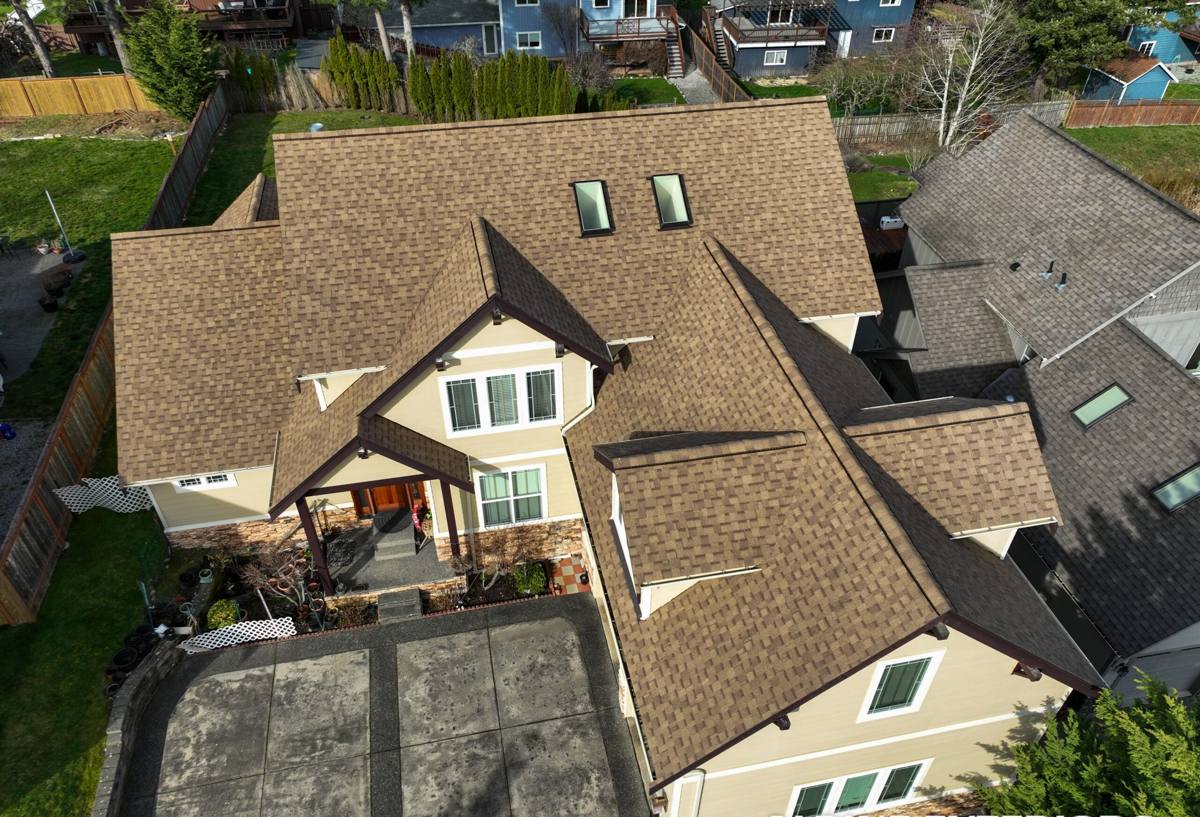
What Salt Air, Rain, and Moss Actually Do to a Roof
Salt Air and Metal Corrosion
Being close to the water means airborne salt settles on every exterior surface, including your roof. Over time it accelerates corrosion on exposed metal — flashing, fasteners, drip edge, vent caps, and any exposed metal roofing panels. Cheaper or mismatched metal components can start showing rust streaks and pitting years before they should. The fix isn't complicated: use corrosion-resistant metals and fastener coatings rated for coastal exposure, and don't cut corners on flashing details just because they're less visible than the shingles.
Driving Rain and Wind-Driven Moisture
Whatcom County storms don't always drop rain straight down. Wind pushes it sideways and up under laps, edges, and penetrations that would stay dry in a calmer climate. This is where a lot of roof leaks actually start — not from a failed shingle in the middle of a slope, but from water finding its way under an edge, around a vent pipe, or into a valley that wasn't flashed deep enough. A roof built for this area needs extra attention at every transition point, not just good shingles in the field.
Moss, Shade, and a Long Wet Season
Wooded lots and a wet season that stretches well beyond winter give moss plenty of opportunity to take hold, especially on north- and west-facing slopes that don't get much sun exposure. Moss isn't just cosmetic. As it grows, it holds moisture against the roofing surface, lifts shingle edges, and works its way into laps and fastener lines. Left unmanaged for a few seasons, it can shave real years off a roof's service life. Good installation practices — proper ventilation, the right underlayment, and in some cases zinc or copper strips at the ridge — make an ongoing moss problem much easier to manage.
Signs Your Roof Is Telling You It's Time
Most roofs don't fail all at once. They give warning signs first, and catching them early is usually the difference between a planned replacement and an emergency one.
- Granules collecting in gutters or at downspout outlets, showing bare or shiny patches on shingles
- Shingles that are curling, cupping, or cracking, especially on south- and west-facing slopes
- Soft or spongy decking underfoot, or visible sagging along a roof plane
- Daylight visible through the attic roof deck, or water stains on interior ceilings
- Heavy, persistent moss or algae growth that keeps returning after cleaning
- Flashing that's rusted, lifted, or separating from the roof surface around chimneys and vents
- A roof approaching or past 20-25 years old for asphalt composition, or showing wear well before that timeline
If several of these apply, it's worth having the roof evaluated before the next storm cycle rather than after a leak shows up inside the house.
Choosing the Right Roofing System for This Climate
There's no single "best" roof for every Nooksack home — it depends on your roof's exposure, slope, tree cover, and budget. What matters is understanding the real trade-offs for this specific climate rather than picking based on price alone.
| Roofing Material | How It Handles This Climate | Maintenance Considerations |
|---|---|---|
| Architectural asphalt shingle | Good wind rating when properly installed and nailed; wide range of moss-resistant options available | Periodic moss and debris cleaning recommended; typical lifespan 25-30 years in this climate |
| Standing seam metal | Excellent shedding of driving rain and moss resistance on steep slopes; needs coastal-rated fasteners and coatings | Low ongoing maintenance if installed with proper corrosion protection; higher upfront cost |
| Synthetic/composite shingle | Resists moisture absorption and impact well; performs consistently in wet, shaded conditions | Moderate maintenance; product warranty and installer experience both matter |
| Cedar shake | Traditional look but requires diligent maintenance to manage moisture retention and moss in a wet, shaded climate | Higher maintenance burden here than in drier regions; we'll walk you through the trade-offs honestly |
We'll talk through these options based on your roof's actual sun exposure, pitch, and how much tree cover surrounds your home — not just what's cheapest to install today.
What a Correct New Roof Installation Involves
A roof is only as good as what's underneath the visible layer. Here's what we consider non-negotiable on every new roof installation, especially in a climate that punishes shortcuts.
- Full tear-off of old roofing material and inspection of the deck underneath — never installing new material over old
- Repair or replacement of any soft, rotted, or delaminated decking before new material goes down
- Ice-and-water shield membrane at eaves, valleys, and around all roof penetrations, where wind-driven rain is most likely to find a way in
- Synthetic underlayment across the full roof deck, rated for the wind and moisture exposure of this area
- Corrosion-resistant flashing and fasteners at chimneys, skylights, vent pipes, and wall intersections
- Balanced intake and exhaust ventilation so the attic can dry out between storms instead of trapping moisture
- Proper nailing pattern and fastener count matched to the manufacturer's wind rating for this region
- Moss-resistant shingle selection or zinc/copper strip installation on slopes with heavy shade exposure
Skip any one of these and you haven't saved money — you've just moved the cost of the leak, the rot repair, or the early replacement a few years down the road.
Our Installation Process
- On-site inspection and estimate. We walk the roof, check the attic where accessible, and note exposure, pitch, tree cover, and any existing damage before recommending a system.
- Material selection. We go over the honest trade-offs for your specific roof and budget, not a one-size-fits-all pitch.
- Site protection and prep. Landscaping, gutters, and the areas around the house are protected before tear-off begins.
- Tear-off and deck inspection. Old material comes off completely, and we address any deck damage we find before moving forward.
- Underlayment, flashing, and installation. Ice-and-water shield, underlayment, flashing, and the roofing material go on in that order, with attention to every valley, edge, and penetration.
- Ventilation check. We confirm intake and exhaust ventilation is balanced for the finished roof.
- Cleanup and walkthrough. We do a magnetic sweep for stray fasteners, haul away debris, and walk the finished roof with you.
Ventilation and Moisture Control — the Overlooked Half of the Job
Homeowners often focus entirely on the shingles when they think about a new roof, but ventilation is what determines whether that roof performs long-term in a wet climate. Without balanced intake at the eaves and exhaust at the ridge, moisture from daily living — showers, cooking, laundry — gets trapped in the attic. Combined with the humidity already in the outside air here, that trapped moisture condenses on the underside of the deck, encourages rot, and can void material warranties that require adequate ventilation. Every new roof installation should include a real ventilation assessment, not an assumption that the existing setup is fine.
What Affects the Cost of a New Roof Here
Every roof is priced based on its own specifics, but these are the main factors that move the number up or down for homes in this area.
| Factor | Why It Matters |
|---|---|
| Roof size and number of planes | More square footage and more valleys, hips, and dormers mean more material and labor |
| Deck condition | Rotted or soft decking found during tear-off requires repair before new material can go down |
| Material choice | Asphalt, metal, and composite systems carry different material and labor costs |
| Roof pitch and access | Steeper roofs and difficult access require additional safety equipment and labor time |
| Existing layers | Removing multiple layers of old roofing adds disposal and labor cost versus a single layer |
| Ventilation upgrades | Adding or correcting intake/exhaust ventilation is a smart long-term investment, not just an upsell |
We provide a written estimate that breaks these factors down clearly, so you know what you're paying for and why — no vague lump-sum numbers.
Why Hiring a Crew That Already Works in Nooksack Matters
A roofing crew that works regularly in the Blaine and Nooksack area already knows what this climate does to a roof over time — where moss tends to build up first, how wind-driven rain behaves on a given roof orientation, and which flashing details actually hold up near the coast. That local pattern recognition matters. It's the difference between a roof that's technically installed to code and one that's actually built to handle what Whatcom County weather will throw at it over the next 25-plus years.
We're also familiar with the permitting and inspection expectations for roofing work in this part of the county, so there are no surprises mid-project.
If your roof is showing its age or you just want an honest opinion on where it stands, we're happy to take a look. Use the form below to request a free, no-pressure estimate — we'll walk the roof, talk through your options, and give you a straight answer, not a sales pitch.