 Blaine Siding
 Windows Built for Lynden's Wet, Mossy Climate
Lynden sits inland from Blaine and the Salish Sea, but that distance doesn't buy much protection from Whatcom County's weather. Homes here still take on months of driving rain, heavy fog off the Nooksack lowlands, and long stretches of gray, damp air that never quite dries out between storms. That combination is hard on windows — not just the glass, but the frames, the flashing, and the wood or trim around every opening. When a window is installed correctly for this climate, it holds up for decades. When it's not, you see it within a year or two: fogged glass, soft trim, moss creeping into corners, and drafts that show up right when the weather turns.
We work on homes throughout Lynden and the surrounding Whatcom County countryside, and the patterns repeat from house to house. Older farmhouses with original wood windows that have finally given out. Mid-century homes with aluminum-frame single-pane windows that were never efficient to begin with. Newer construction where a builder-grade window was installed fast and cheap, without the flashing detail this climate actually demands. Custom windows solve all three, but only if the sizing, material, and installation are handled right for where the house sits.
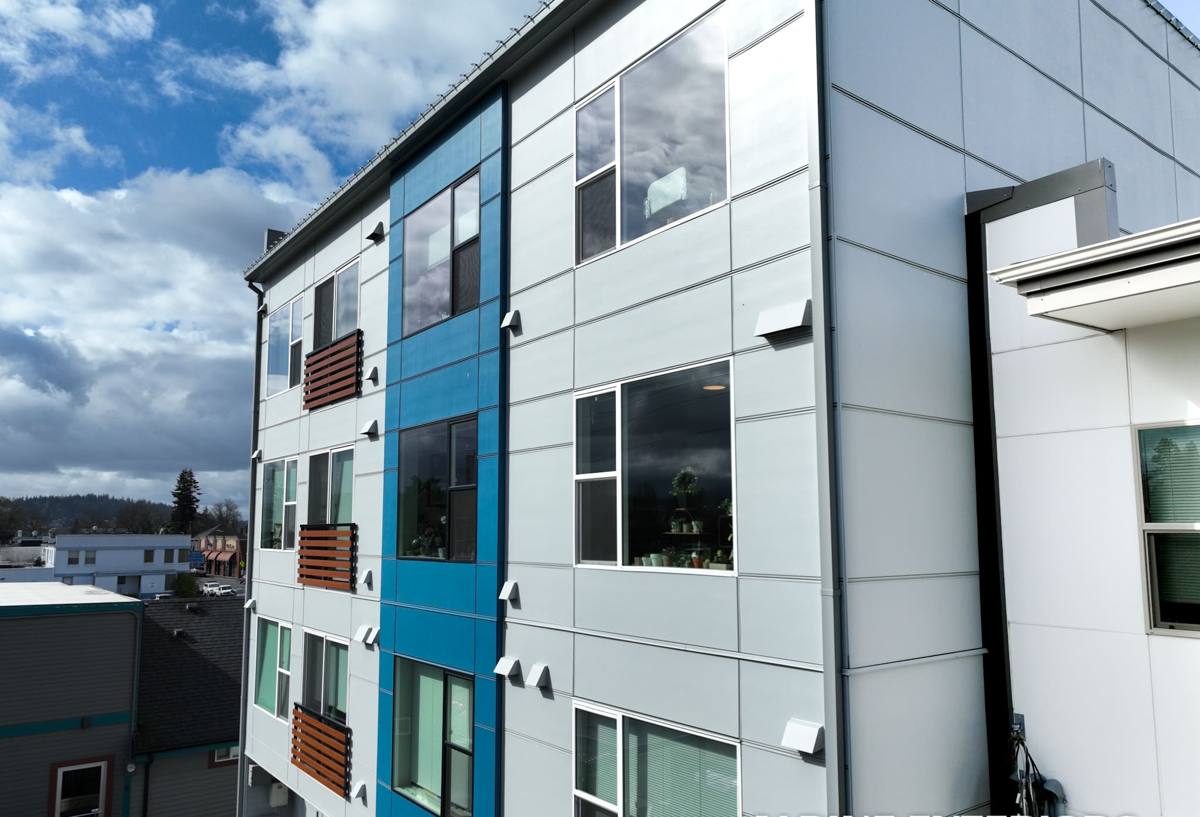
What "Custom" Actually Means Here
Custom windows aren't just about odd shapes or oversized openings, though we do plenty of that — bay windows, arched transoms, and wider openings that don't match anything off a standard size chart. More often, "custom" means the window is built to fit an opening exactly, instead of forcing a stock size into a rough opening and packing the gaps with shims and caulk. That precision matters more in a wet climate than a dry one, because every gap is a place water can find its way in.
Common Reasons Lynden Homeowners Go Custom
- Replacing an original window in an older farmhouse where openings were framed before modern standard sizes existed
- Matching a specific grid pattern or trim profile to keep a home's character consistent
- Widening or reshaping an opening during a remodel or kitchen/living room update
- Upgrading to a larger glass area for daylight without losing structural support
- Replacing failed aluminum or single-pane windows from a 1970s–90s build with something efficient and properly flashed
Materials That Hold Up Against Rain and Moss
We don't push one material on every job — the right choice depends on the home, the budget, and how exposed the wall is to weather. But we're honest about trade-offs, because in this climate the wrong material shows its weaknesses fast.
| Material | How It Handles Whatcom Weather | Maintenance |
|---|---|---|
| Vinyl | Good moisture resistance, won't rot; performs well in most Lynden applications | Low — occasional cleaning, no painting |
| Fiberglass | Excellent dimensional stability in temperature and humidity swings; holds paint well | Low — very durable finish |
| Wood-clad | Strong look for farmhouse and traditional styles; cladding protects the exterior face | Moderate — interior wood still needs care, and any cladding breach invites rot |
| Aluminum | Prone to condensation and thermal transfer in our cool, damp winters | Higher — we generally steer clients away from it for this reason |
Solid wood windows with no protective cladding are the one option we're cautious about recommending on exposed walls here. They can look great, but bare wood exposed to Whatcom County's rain volume and moss-friendly humidity needs consistent upkeep to avoid swelling, checking, and rot at the joints. If a homeowner wants that look, we'll talk through cladding options or protected placements — like a covered porch elevation — where it holds up better.
Where Most Window Failures Actually Start
In our experience, it's rarely the window unit itself that fails first — it's the installation around it. Flashing is the part homeowners never see and contractors sometimes rush, and it's the single biggest factor in whether a window stays dry for 20 years or starts leaking in three.
What Correct Installation Looks Like
- Sill pan flashing installed under the window to direct any water that gets past the frame back outside, not into the wall cavity
- Weather-resistant barrier integrated with the flashing in the correct shingle-lap order, so water always sheds downward and outward
- Proper head flashing above the window to break up water running down the siding before it reaches the top of the frame
- Backer rod and quality sealant at the right joints — not sealant as a substitute for correct flashing
- Shimming and squaring the unit so it operates smoothly and seals evenly, without racking that stresses the frame over time
Skip any one of those steps and the window can look fine for a year or two while moisture quietly works into the wall behind it. That's how you end up with soft sheathing, stained interior trim, or a musty smell in a room that no amount of cleaning fixes — and by the time it's visible, the fix is bigger than a window replacement.
Moss, Mildew, and the Long Wet Season
Whatcom County's moss season isn't a minor annoyance — it's a near-constant condition for a large part of the year. On windows, that shows up as green growth in frame corners, sash tracks, and anywhere water sits instead of draining. A few design choices make a real difference:
- Sloped sills that shed water instead of holding a puddle against the frame
- Smooth, tight seams with minimal texture for moss and algae to grip onto
- Weep holes kept clear and functional so trapped condensation and rain can drain out of the frame
- Low-maintenance finishes on vinyl and fiberglass that don't need repainting to stay sealed
None of this eliminates cleaning entirely — nothing does in this climate — but it cuts down how often moss gets a foothold and how much scrubbing it takes to keep frames looking right.
Energy Performance for Lynden's Temperature Swings
Lynden winters bring damp cold that settles in for weeks at a time, and summers can get warmer than the coast thanks to the inland exposure. Good window glass handles both ends of that.
What to Look For
- Low-E coatings that reflect heat back in during winter and out during summer
- Double or triple-pane construction with an insulating gas fill between panes
- A warm-edge spacer system that reduces condensation risk at the glass edge — a common complaint we hear about older windows in this climate
- A U-factor and Solar Heat Gain Coefficient (SHGC) suited to a west-facing wall versus a north-facing one — orientation matters more than most homeowners expect
Condensation on the inside of glass in winter is one of the most common calls we get from Lynden homeowners with older windows. It's usually a sign the seal has failed or the glass package is outdated, not a sign something is wrong with the house itself — but it's also a comfort and mold-risk issue worth fixing.
Our Process for a Lynden Window Project
- On-site assessment — we look at existing window condition, framing, siding type, and any signs of past water intrusion before recommending anything
- Measuring and custom sizing — exact opening measurements, not assumptions based on standard sizes
- Material and style selection — walking through options honestly, including cost and maintenance trade-offs for your specific walls and exposure
- Proper removal — checking the opening for hidden rot or damage once the old window is out, before anything new goes in
- Flashing and installation — sill pan, weather barrier integration, and sealing done in the correct order, every time
- Final check — operation, seal, and trim finish confirmed before we call the job done
That hidden-rot check in step four matters more than it sounds. Pulling an old window sometimes reveals sheathing damage that's been building for years behind a failed seal. Finding it during replacement means it gets fixed as part of the job — not discovered later as a bigger, separate repair.
Why Local Experience Matters
A window that performs well in a drier climate can underperform here, and a crew that mostly works inland or in milder markets may not think twice about details that matter in Whatcom County — sill pan flashing, weep hole placement, material choice on a rain-exposed gable wall. Working Lynden and the surrounding area regularly means we've seen how different window types actually hold up after a few wet seasons, not just how they look on installation day. That's the difference between a window that needs attention again in five years and one that's still tight and clear in twenty.
If you're weighing a window replacement or a custom opening for a remodel, we're happy to take a look and walk you through honest options for your home. Reach out for a free, no-pressure estimate using the form below.