 Blaine Siding
 Deck Repair Built for Lynden's Climate
A deck in Lynden lives a harder life than most homeowners realize. It's a horizontal surface exposed to the sky, which means it takes the full brunt of Whatcom County's driving rain, catches salt-tinged air moving in off the coast, and stays shaded and damp long enough most years to grow a steady crop of moss. That combination is exactly why decks in this area tend to show problems earlier than decks in drier parts of the state, and why a repair that doesn't account for the local climate often just buys a homeowner a year or two before the same issue comes back.
We repair decks throughout the Lynden area, and the approach we take is shaped by what we actually see on tear-outs and inspections here, not by a generic checklist. That means paying close attention to drainage, fastener corrosion, and the framing underneath the boards, because those are the places this climate does its damage first.
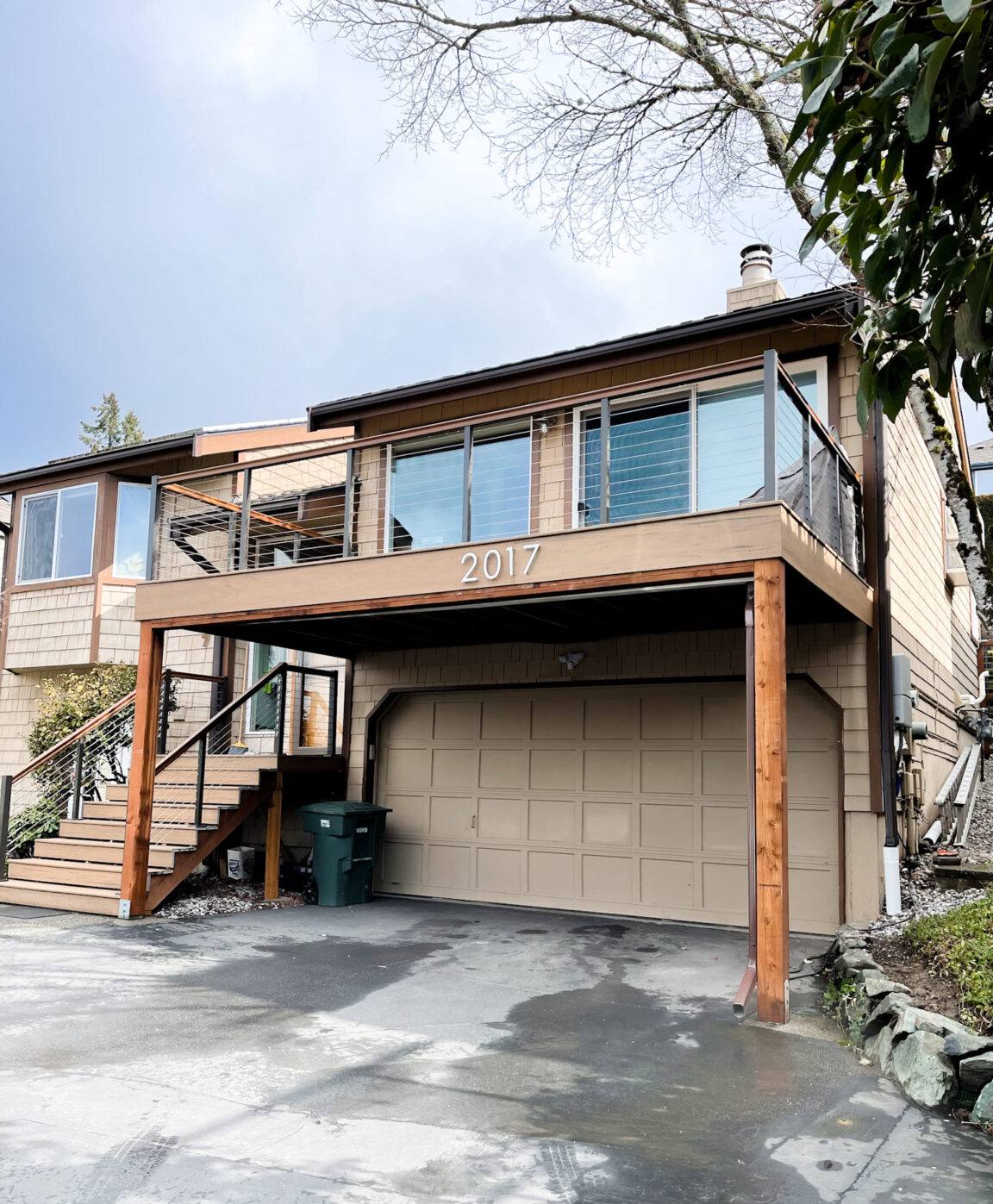
What This Climate Does to a Deck
Driving Rain and Standing Moisture
Rain in this region rarely falls straight down. Wind pushes it sideways and underneath railings and ledger boards, and on a deck, that moisture doesn't run off the way it does on a steep roof or vertical wall. It pools in low spots, sits between boards that are set too tight, and works its way into end grain and fastener holes. Over time, that sustained dampness is what turns a sound deck into a soft, spongy one.
Salt Air and Fastener Corrosion
Homes in and around Lynden get a steady dose of salt-laden marine air, even at some distance from open water. Salt accelerates corrosion in screws, nails, joist hangers, and other hardware faster than it would in a drier inland climate. A deck that looks fine on the surface can have rusted-out fasteners underneath, and that's a structural problem, not a cosmetic one.
Moss, Algae, and a Long Growing Season
Mild temperatures and consistent moisture give moss and algae a long season to work with here, often stretching across most of the year on shaded decks under trees or on the north side of a house. Beyond the slip hazard, moss and algae hold moisture against the wood or composite surface, which speeds up rot in wood decking and can dull or stain composite boards if it's left to build up.
Common Deck Problems We Find in Lynden
- Soft, spongy, or spring-loaded decking boards, usually near the house or in shaded corners
- Rust staining around fastener heads or visibly corroded joist hangers
- Ledger board separation or moisture staining where the deck meets the house
- Loose, wobbly, or leaning railings and posts
- Persistent moss or algae that returns quickly after cleaning
- Gaps or cupping in boards from repeated wetting and drying cycles
- Stair stringers or support posts showing rot at ground contact points
What a Correct Deck Repair Actually Involves
Deck repair done right starts underneath the decking, not with the boards themselves. A board that looks fine can be sitting on a joist that's rotted from years of trapped moisture, and replacing the board without addressing the framing underneath just hides the problem for a while.
Inspection Before Anything Else
We start by checking the structural framing, ledger board attachment, posts, and footings, in addition to the visible decking and railings. That's where the real damage usually lives, especially on older decks that have been through a few decades of this climate.
Framing and Structural Repairs
Any rotted joists, beams, or posts get replaced, not patched. We also look at fastener choice during this stage, since corroded original hardware is often part of why a deck is failing in the first place.
Fastener and Hardware Upgrades
Given how hard salt air is on standard hardware, we use corrosion-resistant fasteners and connectors suited to this climate rather than defaulting to whatever's cheapest. It's a small cost difference upfront that matters a lot over the life of the repair.
Drainage and Ventilation
Where possible, we address the drainage and airflow underneath and around the deck, since a deck that can't shed water or dry out between rains will keep having the same problems no matter how many boards get replaced.
Decking Surface Repair or Replacement
Depending on the extent of the damage, this can mean replacing individual boards, resurfacing sections, or, in some cases, recommending a full rebuild if the framing damage is extensive enough that patch repairs wouldn't hold up.
Repair, Resurface, or Rebuild: How We Decide
| Approach | When It Makes Sense | Climate Consideration |
|---|---|---|
| Spot repair | Isolated soft boards or minor hardware corrosion, sound framing overall | Best when moisture hasn't reached the structural members |
| Resurface | Decking is worn or weathered but framing and posts are still solid | A chance to upgrade fasteners and improve drainage at the same time |
| Full rebuild | Widespread rot in framing, ledger, or posts, or repeated repairs on an aging deck | Addresses moss-prone low spots and poor drainage at the source |
We walk the deck in person before recommending one of these paths. A deck that looks like it needs a full rebuild sometimes only needs targeted framing repair, and one that looks like a simple board swap sometimes has rot running much deeper. Guessing from a phone description isn't a substitute for actually getting under the deck.
Materials: What Holds Up Here and What Doesn't
Material choice matters more on a Lynden deck than it would in a drier climate, because everything gets tested by sustained moisture and salt exposure. Composite decking generally handles moisture and moss growth better than untreated or lower-grade wood, and it doesn't need the periodic sealing that wood decking does. Pressure-treated wood framing and decking can still perform well, but it depends on the fasteners, the detailing at ledger and post connections, and how consistently the homeowner keeps up with maintenance like cleaning and resealing.
We don't push one material as the only right answer for every homeowner. What we do insist on is matching the fastener hardware, flashing, and structural details to the actual demands of this climate, regardless of which decking material a homeowner chooses. A good material choice paired with corner-cut installation details will still fail early here.
Maintenance That Actually Extends a Deck's Life in Lynden
- Clear leaves, needles, and debris from between boards and along the perimeter regularly, especially in fall
- Clean moss and algae off the surface before it builds up, rather than after it's established
- Check railings and stair connections for looseness at least once a year
- Look underneath the deck periodically for staining, soft wood, or rust at fastener points
- Keep gutters and downspouts near the deck clear so runoff isn't dumping extra water onto it
- Reseal or refinish wood decking on the schedule the product actually calls for, not just when it looks faded
How Our Deck Repair Process Works
We start with an in-person inspection of the deck, including the framing and connections underneath, not just a visual pass over the decking surface. From there, we explain what we found in plain terms: what's cosmetic, what's structural, and what our honest recommendation is, whether that's a targeted repair, a resurface, or a rebuild. We give a written estimate based on that actual scope rather than a generic price per square foot, and we schedule the work around what the homeowner needs, not a one-size-fits-all timeline. Once the work is done, we walk the homeowner through what we repaired and what to keep an eye on going forward.
Why Hiring a Crew That Already Works in Lynden Matters
A contractor who works decks across Whatcom County regularly has already seen how salt air, driving rain, and a long moss season play out on real decks over years, not just how a product performs on a spec sheet. That experience shows up in the details: which fastener types actually hold up here, where moisture tends to collect on a given deck orientation, and how much drainage and ventilation matters compared to a deck built in a drier region. Lynden's mix of open, exposed lots and tree-sheltered properties means moisture and shade patterns can vary from one yard to the next, and a crew with local repair experience accounts for that instead of applying the same fix to every deck regardless of its actual conditions.
If your deck in Lynden has soft spots, persistent moss, loose railings, or you're just not sure how much life it has left, we're glad to take a look and give you a straightforward, no-pressure assessment. Reach out using the form below to schedule a free estimate.