 Blaine Siding
 Siding Replacement Built for Lynden's Climate
Lynden sits inland from the coastline we work along every day, but that distance doesn't buy a home much protection. The marine air that moves through Whatcom County off the Strait of Georgia and the Salish Sea still finds its way into the Nooksack lowlands, bringing damp, mild winters, long stretches of overcast skies, and driving rain that comes in sideways more often than people expect. Add the tree cover and low-lying, shaded lots common around Lynden, and you get an extended moss and mildew season that can start earlier and last longer than homeowners moving here from drier climates are used to.
None of that is dramatic on its own. What it does is quietly stack up. Siding on a Lynden home isn't fighting one bad storm — it's fighting years of cycles: soak, dry, soak again, freeze on the occasional cold snap, and repeat. Products that aren't built for that cycle show it early, usually in ways that are cosmetic at first and structural later. That's the whole reason siding replacement here is a different job than siding replacement in a dry inland climate, and why the material and the installation details matter as much as the labor.
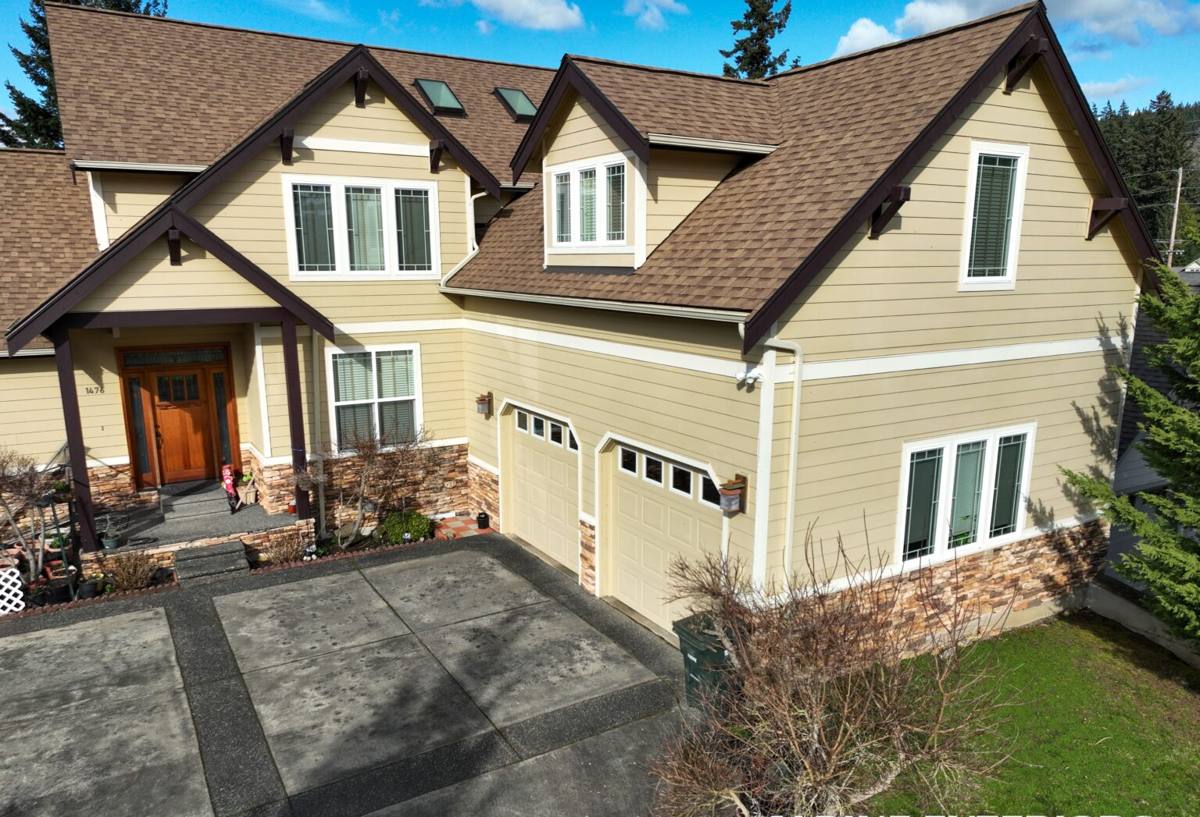
Signs a Lynden Home Needs Siding Replacement, Not Just a Patch
Homeowners often call us after noticing something small — a soft spot near a downspout, a section that never seems to dry out, paint that won't hold. By the time those signs show up, the underlying material has usually been compromised for a while. Here's what we tell people to watch for:
- Boards or panels that feel soft, spongy, or give slightly when pressed near the bottom edges or around window trim
- Persistent moss or dark streaking that comes back within weeks of being cleaned off
- Paint that's bubbling, peeling, or chalking heavily, especially on north- and west-facing walls
- Visible gaps, warping, or cupping in lap siding, particularly wood or engineered wood products
- A musty smell in an adjacent room, or interior wall discoloration that lines up with an exterior problem area
- Caulk lines that have cracked or pulled away from trim and corner boards
Any one of these can be a minor repair. Several together, especially on a home more than 15-20 years old with its original siding, usually means the material has reached the end of what it can do, and a patch just buys a little time before the same failure shows up somewhere else on the same wall.
What a Correct Siding Replacement Actually Involves
Full siding replacement is not simply pulling off old material and nailing up new panels. In a climate like Whatcom County's, the work that happens before the new siding goes on matters more than the siding itself. A correct job includes:
Tear-off and inspection
Removing the old siding down to the sheathing lets us actually see the wall, not guess at it. This is where hidden rot, compromised sheathing, or old flashing failures get found and dealt with — not covered over.
Water management
A weather-resistive barrier installed correctly, with proper overlaps and sealed penetrations, is what actually keeps a wall dry over the long run. Flashing at windows, doors, and roof intersections has to be detailed to shed water down and out, not trap it behind the cladding.
Proper fastening and clearances
Fiber cement siding has manufacturer-specified nailing patterns, gaps, and clearances from grade, roof lines, and decks. Skipping these is one of the most common ways a siding job fails early, regardless of how good the material is.
Trim, caulking, and finish details
Corner boards, trim, and caulking are where a lot of water intrusion actually starts. These details get the same attention as the field siding, not treated as an afterthought.
Why We Install Only James Hardie Fiber Cement
We don't install vinyl, LP SmartSide, Cemplank, Allura, or raw wood siding, and that's a deliberate standard, not a limitation of what we're capable of doing. Vinyl expands and contracts with temperature swings and can crack or warp over time; engineered wood products need their cut edges and seams meticulously sealed or they're vulnerable to the exact moisture cycle Whatcom County puts them through; and untreated or primed wood siding demands a maintenance schedule most homeowners don't realize they've signed up for until the paint starts failing.
James Hardie fiber cement is non-combustible, dimensionally stable across our wet-to-dry seasonal swing, and holds its factory-applied ColorPlus finish far longer than field-painted alternatives. Hardie also engineers specific product lines (HZ5 and HZ10) for different climate zones, so the siding going on a Lynden home is matched to the moisture and temperature conditions it will actually face, not a one-size-fits-all product. That's the difference between siding that looks good at installation and siding that still looks good in year fifteen.
How the Job Works, Start to Finish
| Stage | What Happens |
|---|---|
| Estimate | On-site walkthrough, condition assessment, and a written scope with product and cost detail — no pressure, no obligation |
| Product selection | Choosing plank profile, color, and trim from the Hardie lineup based on your home's style and exposure |
| Scheduling | Work is planned around weather windows — we don't tear off more wall than we can dry-in and protect the same day |
| Tear-off and prep | Old siding removed, sheathing inspected and repaired as needed, water-resistive barrier and flashing installed |
| Installation | Hardie siding, trim, and accessories installed to manufacturer spec for fastening, clearance, and joint treatment |
| Final walkthrough | Punch-list review with the homeowner before the job is considered complete |
Weather sequencing matters more here than in drier climates. We plan sections of a job so a wall isn't left exposed overnight or ahead of a rain system, which protects both the sheathing underneath and the schedule itself from turning into a multi-week delay.
What Drives the Cost of Siding Replacement
Every Lynden home is different, so a real number only comes from an on-site look. But the factors that move the price are consistent:
| Factor | Why It Matters |
|---|---|
| Home size and wall complexity | More corners, gables, and dormers mean more cutting, trim, and labor time |
| Condition of existing sheathing | Hidden rot found during tear-off adds repair scope that can't be priced sight unseen |
| Product selection | Lap width, panel style, and trim detail all carry different material costs within the Hardie lineup |
| Accessibility | Two-story walls, tight side yards, or landscaping close to the house affect labor and staging |
| Existing siding type | Tear-off and disposal of certain materials, like old wood or stucco-over-wood systems, takes more time than others |
Be cautious of any estimate that skips a real inspection or quotes a firm number over the phone — on an older Lynden home, the sheathing condition behind the siding is often the biggest unknown, and it's not something anyone can price accurately without seeing it.
Why It Matters That We Already Work in Lynden
A crew that already works this part of Whatcom County isn't guessing at how the local weather affects a schedule or a wall assembly. We know to plan tear-off around the wetter stretches of the year, we're familiar with the permitting expectations in the county, and we've seen how homes here — from older farmhouses to newer builds near town — hold up over time depending on how they were originally sided and flashed. That local pattern recognition is part of what a homeowner is paying for when they hire a contractor who works the area regularly instead of one passing through.
Caring for Your Siding After Installation
James Hardie siding is low-maintenance, not no-maintenance. A simple annual routine keeps it performing the way it's designed to:
- Rinse the exterior yearly with a garden hose and soft brush to keep moss and mildew from taking hold, especially on shaded walls
- Keep gutters clear so overflow doesn't run down the siding face or pool at the base of a wall
- Trim back vegetation and tree limbs that hold moisture against the siding or block airflow
- Inspect caulking at trim and penetrations every year or two, and have gaps resealed before they widen
- Address any impact damage or fastener issues promptly rather than letting a small spot become an entry point for water
If you're weighing whether your current siding still has years left in it, or you already know it's time for a replacement, we're happy to take a look and walk you through what we see — no pressure, no obligation. A free estimate is the easiest way to find out where your home actually stands.