 Blaine Siding
 New-Construction Windows for Lynden Homes
Building a new home or outbuilding in Lynden means making window decisions once and living with them for decades. Unlike a replacement job, where an installer is working around an existing rough opening, new construction gives you the chance to get the window, the flashing, and the wall assembly right from the studs out. That matters more here than in a lot of places. Whatcom County's marine climate — long stretches of wind-driven rain, humid air off the water, and a moss season that seems to start earlier every year — puts steady pressure on every seam in a building envelope. A window installed correctly the first time barely thinks about that weather. A window installed carelessly starts leaking, fogging, or staining the siding around it within a few winters.
We install new-construction windows on homes and additions throughout Lynden and the surrounding Whatcom County area, working directly with builders, GCs, and owner-builders to get windows set correctly before the siding goes on — because once the siding's up, most window mistakes are hidden until they fail.
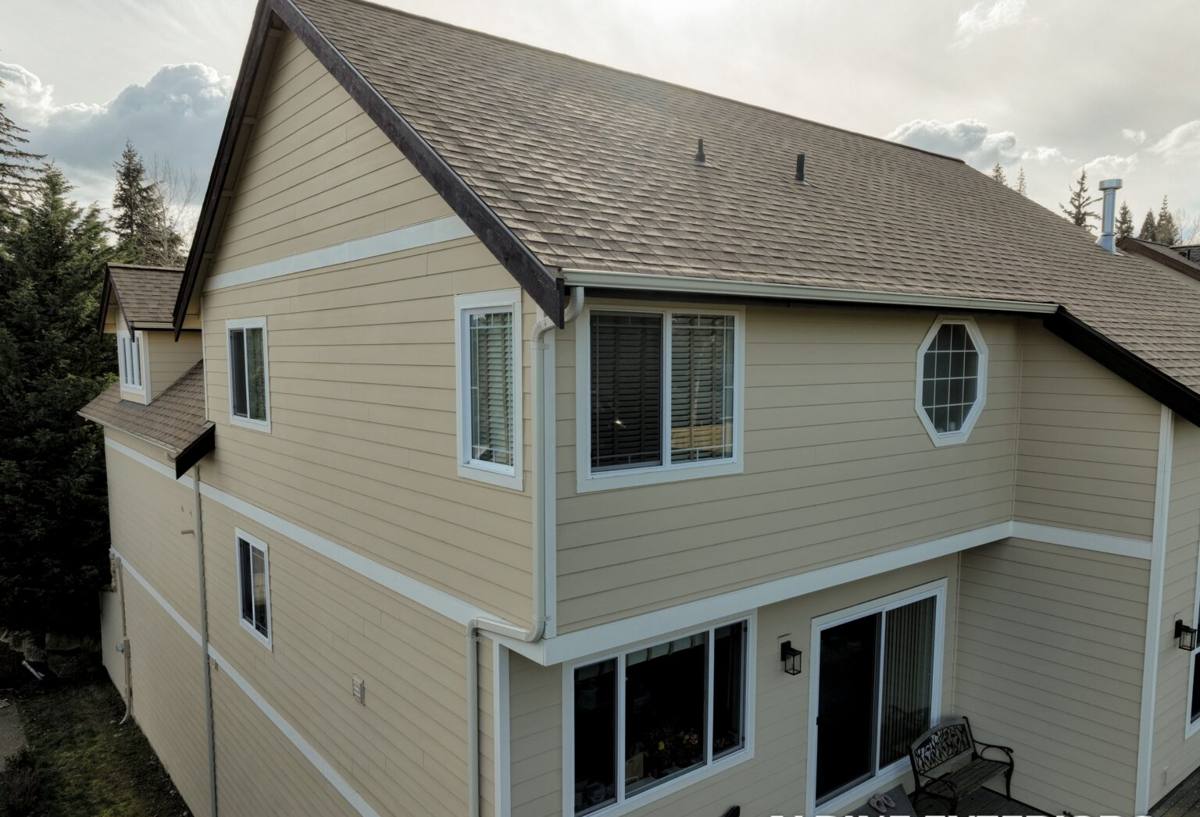
New Construction vs. Replacement Windows
These are two different products and two different jobs, and mixing them up leads to problems.
New-construction (flange) windows
These windows have a nailing flange around the perimeter that gets fastened directly to the sheathing, then integrated into the weather-resistive barrier (WRB) and flashing system before siding or trim covers it. This is the standard approach for new builds and full wall-to-stud remodels, and it gives the most reliable, long-term water management because the flashing laps correctly with the house wrap in the right order — top to bottom, like shingles.
Replacement (pocket) windows
These are designed to fit inside an existing frame without disturbing exterior trim or siding. They're the right tool for a like-for-like swap on a finished house, but they're not what you want on new construction — they skip the deep flashing integration a flanged window gets, and using one where a flanged window belongs is a shortcut that shows up later as moisture problems.
On new builds we install flanged, new-construction windows exclusively, flashed into the wall assembly per manufacturer instructions and current code.
What Lynden's Climate Demands From a Window Install
Wind-driven rain
Whatcom County gets rain that doesn't fall straight down — storms off the Georgia Strait and Pacific push it sideways into walls, and window openings are the weak point in any wall assembly. A window that's caulked instead of properly flashed will pass a dry-day inspection and still leak the first time a real storm hits it sideways.
Humidity, condensation, and moss
The same damp air that keeps moss growing on roofs and north-facing siding also drives interior condensation on cheap or poorly sealed windows. Double- or triple-pane units with a decent U-factor and correctly sealed frames cut down on that fogging and the black mold spotting that follows it on sills and trim.
Sustained exposure over decades
New construction is a one-shot chance to get this right. Nobody wants to re-flash a window three years after move-in because the original install skipped a step. We treat every opening on a new build like it has to survive thirty Whatcom County winters without maintenance beyond normal caulk touch-ups.
Window Materials: What We Recommend and Why
Material choice affects maintenance, cost, and how the window performs in a wet, mild climate like ours. Here's how the common options compare for a Lynden new build:
| Material | Moisture Behavior | Maintenance | Typical Cost Position |
|---|---|---|---|
| Vinyl | Doesn't rot or corrode; seals can degrade with age | Low — occasional cleaning, no painting | Lower |
| Fiberglass | Very stable in wet/dry cycling, minimal expansion | Low — paintable if desired, holds finish well | Mid to upper |
| Wood-clad | Exterior clad protects wood from rain; interior wood needs the cladding intact | Higher — cladding seams and sills need periodic checks | Upper |
| Aluminum | Prone to condensation without thermal breaks; not our default for this climate | Moderate | Lower to mid |
For most Lynden new-construction projects we recommend vinyl or fiberglass units with a solid warranty and a proven track record in Pacific Northwest conditions. Wood-clad is a legitimate choice for a specific look, but it comes with a maintenance commitment we make sure owners understand up front — it's not a lower-effort option just because it costs more.
Our Installation Process
- Rough opening check. We verify the opening is square, level, and sized correctly before the window ever shows up on site — catching framing issues now is far cheaper than after siding is on.
- Sill pan flashing. A sloped, sealed sill pan goes in first so any water that ever gets past the window has a way out, not a place to pool.
- Window set and shim. The unit is set plumb, level, and square, shimmed at the manufacturer's specified points — not just at the corners — so the frame doesn't rack or bind when it's fastened.
- Flange fastening and flashing integration. The nailing flange is fastened per spec, then flashed with tape or self-adhered membrane in the correct shingle-lap order with the WRB — sides first, then head flashing lapped over the top.
- Interior and exterior air sealing. Low-expansion foam or backer rod and sealant around the frame closes air gaps without bowing the frame inward.
- Final inspection. Operation, seal continuity, and flashing laps get checked before the wall gets closed up behind siding.
Coordinating Windows With Siding and the Weather Barrier
Windows don't perform in isolation — they're one layer in a system that includes the WRB, the flashing, and the siding itself. On a new build, we time window installation to land correctly in that sequence: WRB goes on first, windows get flashed into it, then siding trim and cladding lap over the flanges in the right order. Get the sequence wrong — siding installed before flashing is properly lapped, for instance — and water gets a path behind the cladding with nowhere to drain. This is one of the most common places we see corners cut on new builds by crews unfamiliar with the coordination, and it's invisible until the siding comes off years later for an unrelated repair.
Common New-Construction Window Mistakes We See
- Caulk used as the primary water seal instead of proper flashing tape and shingle-lapped WRB integration
- Sill pans skipped or installed flat instead of sloped to drain
- Nailing flange fastened but not sealed to the WRB, leaving a gap water can track behind
- Windows set out of square, causing operational problems and uneven weatherstripping contact
- Head flashing installed under the WRB instead of over it, reversing the drainage path
- Foam sealant overfilled around the frame, bowing it and affecting how the sash seals
- Interior air sealing skipped, leading to drafts and condensation at the frame even with a good window
Cost Factors on a New-Construction Window Job
Pricing on new-construction windows depends on a handful of variables more than any single line item:
| Factor | Why It Matters |
|---|---|
| Window count and size | Larger openings and more units mean more material and labor hours |
| Material (vinyl vs. fiberglass vs. wood-clad) | Directly affects unit cost and long-term maintenance |
| Glazing package | Double-pane vs. triple-pane, low-E coatings, and gas fill change performance and price |
| Opening complexity | Bays, corner windows, and odd shapes take more flashing detail and time |
| Build schedule | Coordinating install timing with framing, WRB, and siding crews affects labor efficiency |
We don't quote a new-construction window package without walking the plans or the framed opening first — too much of the cost depends on details that don't show up on a materials list alone.
Why Hire a Crew That Already Works in Lynden
A crew that installs windows across Whatcom County knows what this climate does to a wall assembly over time, not just on install day. We know which flashing details actually hold up through a wet Lynden winter, which product lines have a track record in this region, and how to sequence window install with siding so nothing gets closed up wrong. That local experience is the difference between a window that's watertight on inspection day and one that's still watertight in year fifteen.
If you're framing a new home or addition in Lynden and want windows installed right the first time, we're glad to take a look at your plans or your framed openings and talk through options. Reach out for a free, no-pressure estimate using the form below.