 Blaine Siding
 New Roofs Built for Everson's Weather, Not Just Its Look
Everson sits inland from the coast, but it doesn't escape what Whatcom County throws at a roof. Marine air pushes up the Nooksack Valley, driving rain comes in sideways during winter storms, and the shaded, damp stretches of the county keep roof surfaces wet for days at a time. That combination is what wears out a roof early — not one big storm, but months of moisture sitting where it shouldn't. A new roof installed here has to be built with that in mind from the decking up, not just the shingles down.
We install roofs throughout Whatcom County, including Everson, and the systems that hold up best are the ones where every layer — underlayment, ventilation, flashing, and the field material itself — is chosen and installed to move water off the house instead of letting it linger.
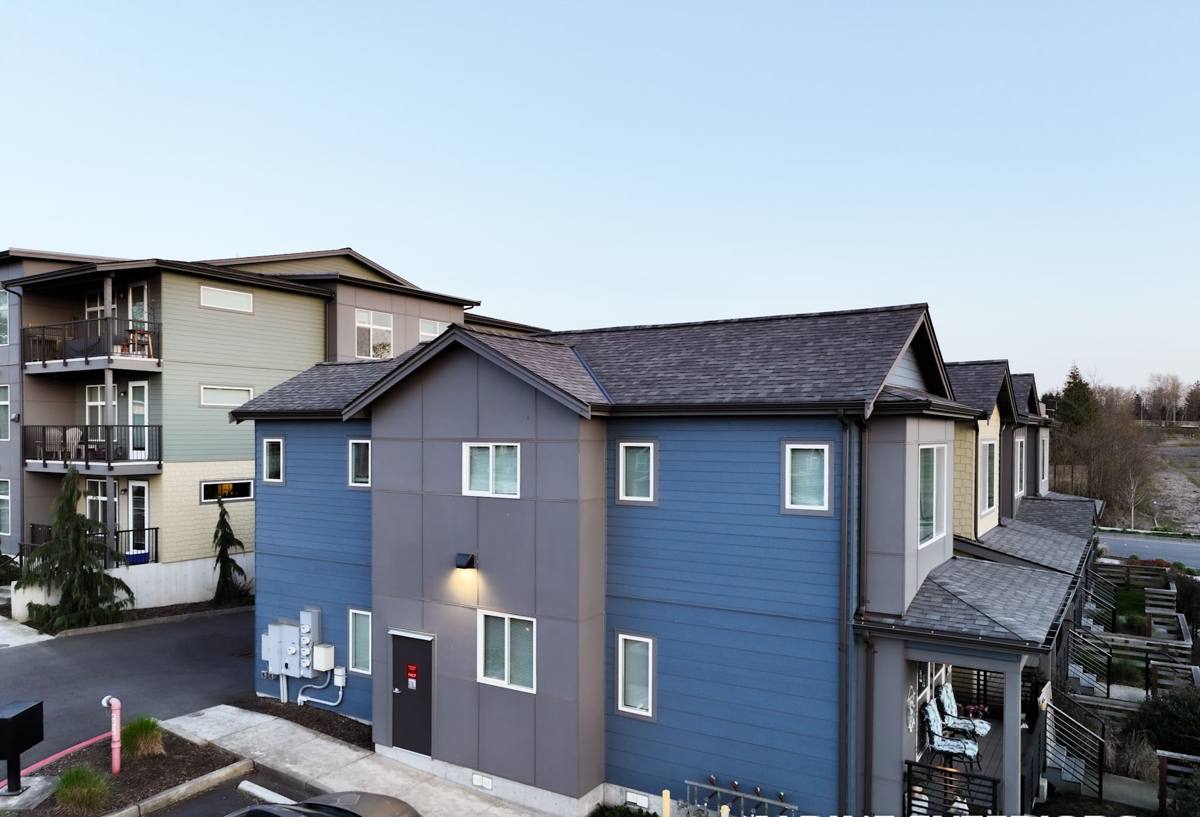
What the Local Climate Does to a Roof Over Time
Three things stand out when we look at roofs coming due for replacement in this area:
- Driving rain and wind-driven moisture works its way under shingles at edges, valleys, and low-slope transitions if underlayment and flashing weren't installed correctly the first time.
- Long moss and algae seasons — shaded roof sections and north-facing slopes stay damp long after the rest of the roof dries, which is exactly where moss takes hold and starts lifting shingle edges.
- Marine air humidity keeps roof decks and attic spaces damp longer than drier inland climates, which is why ventilation is not optional here — it's part of what makes a roof last its full warranty life.
None of this means Everson homes need anything exotic. It means the basics — done right, with the right materials in the right places — matter more here than they would in a dry climate.
Signs a Roof Needs Replacing, Not Patching
Not every roof problem calls for a full replacement, and we'll tell you honestly when a repair is the smarter move. A new roof usually makes sense when we see:
- Granule loss heavy enough that shingles look bald or patchy, especially on south- and west-facing slopes
- Curling, cupping, or cracked shingles across multiple sections, not just one isolated spot
- Soft or spongy decking found during inspection, which signals moisture has already gotten past the surface layer
- Repeated leaks in different locations rather than one recurring spot
- A roof approaching or past its material's realistic service life, especially if it was installed with minimal underlayment or ventilation
- Heavy moss growth that keeps returning even after cleaning, which usually points to a ventilation or shading issue underneath
If a roof only needs flashing repair, a few replaced shingles, or better ventilation, we'll say so. Replacement is the right call when the underlying system — not just the surface — is failing.
What a Correct New Roof Installation Actually Includes
A roof that holds up in this climate is built in layers, and each one has a job:
Full Tear-Off and Deck Inspection
We remove the existing roofing down to the deck rather than layering over old material. That's the only way to actually see the deck condition, catch soft spots from long-term moisture, and confirm the framing underneath is sound before anything new goes on.
Ice and Water Barrier at Vulnerable Points
Eaves, valleys, and roof-to-wall transitions get a self-adhering waterproof membrane underneath the main underlayment. These are the spots where wind-driven rain and ice damming (during the occasional hard freeze) find their way in first.
Synthetic Underlayment Across the Full Field
A quality synthetic underlayment sheds water that gets past the field material and holds up to the wet installation conditions common here far better than older felt products.
Proper Flashing at Every Penetration
Chimneys, vents, skylights, and wall intersections are where most leaks actually originate — not the open field of the roof. New step flashing, counter-flashing, and vent boots go in at every one of these points, not just wherever the old flashing happened to be reused.
Balanced Attic Ventilation
Intake at the eaves and exhaust at the ridge keep air moving through the attic space, which controls moisture buildup, extends shingle life, and reduces the damp, shaded conditions moss needs to take hold.
Drip Edge and Edge Metal
Proper drip edge at eaves and rakes directs water away from the fascia and into the gutter system instead of behind it, which is a small detail that prevents a lot of long-term rot.
Choosing a Roofing Material for an Everson Home
There's no single "best" material — the right choice depends on your roof's exposure, your budget, and how much long-term maintenance you're willing to do. Here's how the common options actually compare for this climate:
| Material | Moss/Moisture Resistance | Typical Lifespan | Maintenance |
|---|---|---|---|
| Architectural asphalt shingle | Good, with proper ventilation and periodic cleaning | 25–30 years | Occasional moss treatment on shaded slopes |
| Standard 3-tab asphalt shingle | Fair — more prone to early granule loss | 15–20 years | Regular inspection recommended |
| Metal (standing seam or panel) | Excellent — sheds moisture quickly, resists moss | 40–50+ years | Low; occasional fastener/seam check |
| Synthetic composite shingle | Good — engineered for moisture resistance | 30–50 years | Low to moderate |
We'll walk through these trade-offs honestly during your estimate. Asphalt remains the most common choice because it balances cost and performance well when installed correctly. Metal costs more upfront but shifts long-term maintenance and moss issues almost entirely off your plate. We don't push any one product — we tell you what fits your roof's exposure and your budget.
Our Installation Process
- On-site inspection — we walk the roof (or use a drone where access is limited), check the deck, ventilation, flashing points, and any current leak history.
- Written estimate — a clear breakdown of material choice, scope of work, and price, with no vague allowances or surprise line items later.
- Scheduling around weather — we plan tear-off and dry-in for windows with the best realistic weather, and stage materials so an open roof is never left exposed longer than necessary.
- Tear-off and deck repair — old roofing removed, deck inspected, and any damaged sheathing replaced before anything new goes down.
- Dry-in — ice and water barrier and underlayment installed the same day the deck is exposed whenever possible, so your home isn't sitting open overnight.
- Flashing, ventilation, and field installation — new flashing, vents, and the roofing material itself installed to manufacturer specification.
- Final walkthrough and cleanup — magnetic sweep for debris, gutter check, and a walkthrough so you know exactly what was done and where.
Why It Matters That the Crew Already Works This Area
A roofing crew that only works dry inland climates or hot, low-moisture regions doesn't think about ventilation and moss the same way we do here. Working Whatcom County roofs regularly — including homes in and around Everson — means we already know which slopes tend to hold moisture, which valleys need extra attention, and how to schedule a tear-off around our actual weather patterns instead of a generic install timeline. It also means we're not learning local permitting requirements or driving distance on your project — we're already set up to be responsive if something needs a follow-up visit after the job is done.
Keeping a New Roof Performing Long-Term
A correctly installed roof still benefits from basic upkeep, especially in a climate that stays damp for long stretches. A simple homeowner checklist:
- Keep gutters clear so water doesn't back up under the roof edge, particularly during fall leaf drop
- Trim back overhanging branches to reduce shade and debris buildup on north-facing slopes
- Have moss growth treated early rather than letting it spread and lift shingle edges
- Schedule a roof check after any major windstorm to catch lifted shingles or flashing before they become leaks
- Watch for granule buildup in gutters, which can signal accelerating shingle wear
- Confirm attic ventilation isn't blocked by insulation or debris, since restricted airflow shortens roof life
None of this requires a maintenance contract — just periodic attention, which we're happy to help with if you'd rather have a second set of eyes on it once a year.
What a New Roof Costs to Think About Beyond the Estimate
Price depends on roof size, pitch, current layer count, material choice, and how much deck repair is needed once tear-off is underway. Rather than quote a number that won't fit your specific roof, we give a firm written estimate after inspection — and we flag any deck repair as a clear, itemized cost rather than folding it into a vague total. The factors that move price the most are material selection, roof complexity (valleys, dormers, multiple pitches), and access.
If your roof in Everson is showing wear, growing moss it shouldn't, or you're just planning ahead, we're glad to take a look and walk you through what we see — no pressure, no obligation. Use the form below to request a free estimate and we'll get back to you to schedule a time that works.