 Blaine Siding
 Deck Replacement in Nooksack: Built for Whatcom County Weather
A deck in the Nooksack area doesn't fail the way a deck in a dry climate fails. It doesn't crack apart from sun exposure or dry out and split. It fails from the bottom up and from the inside out, because Whatcom County gives a deck months at a time of standing moisture, driving rain that gets pushed sideways under railings and flashing, and a moss season that can run from fall through spring. Add in the salt-laden air that moves through this part of Whatcom County off the Strait of Georgia and Puget Sound, and you have a combination that accelerates corrosion on fasteners and hardware faster than most manufacturers' warranty language accounts for.
None of that means a deck here can't last. It means a deck built or replaced for this area has to be built with drainage, ventilation, and corrosion resistance treated as core requirements, not upgrades. That's the standard we hold every deck replacement to, whether it's a small platform deck off a kitchen slider or a large multi-level deck built for entertaining.
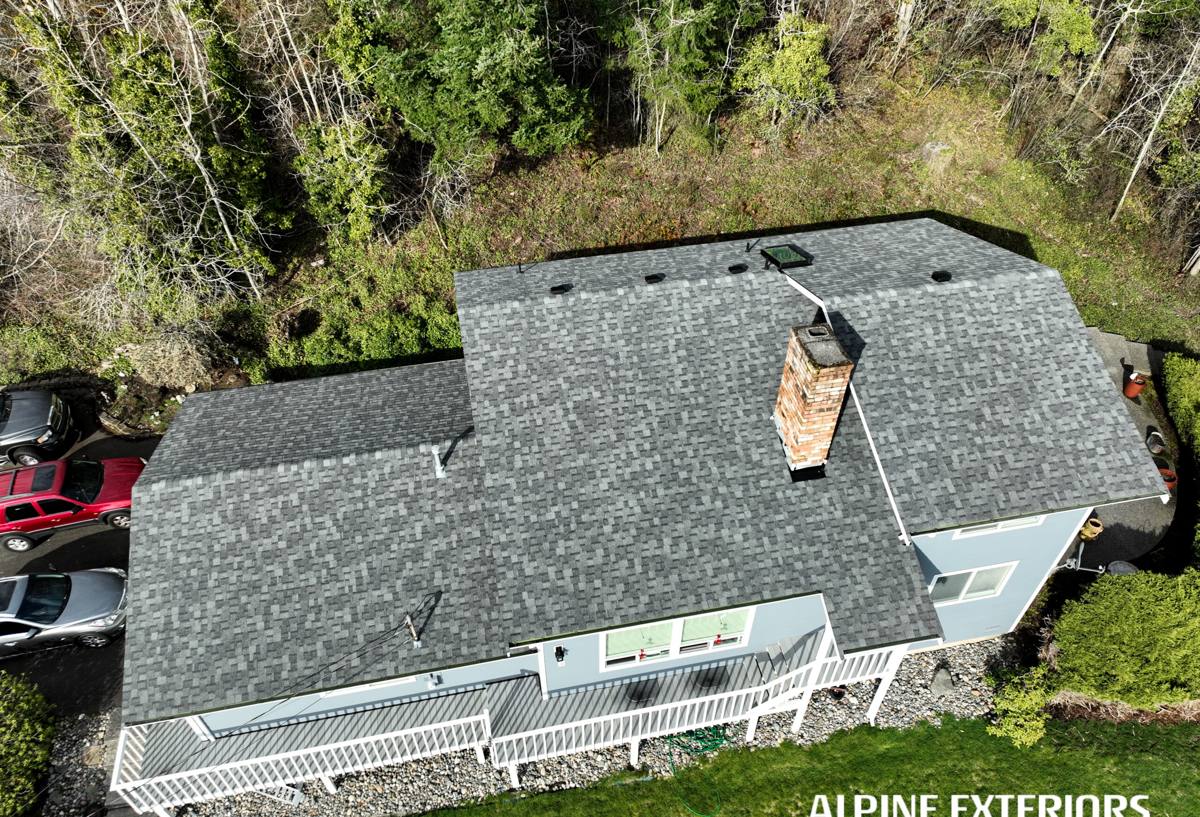
Signs a Nooksack Deck Needs Replacement, Not Just Repair
Homeowners often call us wanting a few boards swapped out, and sometimes that's genuinely all that's needed. But there's a point where patching a board or two is just delaying a bigger, more expensive problem. Here's how we tell the difference on a site visit.
- Soft or spongy decking in more than one area, not just a single board
- Moss or black-green staining that returns within weeks of cleaning
- Ledger board (where the deck attaches to the house) showing soft wood, rust streaks, or gaps at the flashing
- Posts or joists that feel spongy when probed with a screwdriver, especially near ground contact or under planters
- Railings that flex or wobble at the post base, which usually points to a rotted post bottom, not a loose screw
- Fasteners that are heavily rusted, bleeding orange-brown streaks down the wood
- A deck more than 15-20 years old that has never had the substructure inspected
If the problems are limited to the decking boards themselves and the framing underneath is sound, a resurface can make sense. Once the framing, ledger, or posts are involved, replacement is almost always the more honest recommendation, because you're paying for labor either way, and reusing compromised framing under new boards just hides the problem for another year or two.
Why Moisture-Related Damage Hides Well
The tricky part about deck failure in this climate is that the top surface can look fine while the framing underneath is already compromised. Moss holds moisture against the wood grain, driving rain gets pushed under top rails and post caps by wind, and ground-contact posts wick moisture up from below. By the time a board feels soft to the foot, the framing beneath it has often been wet for a season or more. That's why we always inspect from underneath, not just from the walking surface, before quoting a repair versus a full replacement.
What a Correct Deck Replacement Involves
Replacing a deck properly is more than pulling old boards and screwing down new ones. In a climate that pushes water and moss into every gap, the parts you don't see matter more than the decking itself.
Ledger and Flashing
The ledger board attaches the deck to the house and is the single most common point of hidden rot, because it sits directly against the wall where water runs down. A correct replacement includes new flashing that directs water away from the house framing, not just a fresh ledger bolted to the same spot.
Footings and Posts
Footings need to sit below frost depth and bear on solid, undisturbed soil. Posts should be set to avoid standing ground contact where possible, and any hardware in contact with treated lumber needs to be rated for it, since treated wood's chemicals accelerate corrosion in standard fasteners.
Joists, Beams, and Airflow
Framing lumber should be sized and spaced for the actual load and span, not just matched to what was there before. Just as important in this region: joists and beams need airflow underneath them. A deck built low to the ground with no ventilation traps moisture and speeds up rot no matter what decking material sits on top.
Fasteners and Hardware
Every joist hanger, post base, and structural screw should be corrosion-resistant hardware rated for outdoor and treated-lumber use. This is where a lot of budget replacements cut corners, because standard hardware is cheaper and the difference doesn't show up for a few years.
Decking and Drainage
The decking surface itself should be installed with proper gapping for drainage and expansion, and any picture-frame or border boards need to allow water to escape rather than pool at the perimeter.
Decking Material Options for This Climate
There's no single "best" decking material for every home. The right choice depends on your budget, how much upkeep you want to take on, and how exposed the deck is to moisture and shade. Here's how the common options actually perform once they're living outside in Whatcom County weather.
| Material | Upfront Cost | Maintenance | Moss/Moisture Behavior | Typical Lifespan |
|---|---|---|---|---|
| Pressure-treated wood | Lowest | Annual cleaning and periodic re-sealing | Absorbs moisture; needs airflow and regular cleaning to resist moss | 10-15 years with upkeep |
| Cedar | Moderate | Sealing every 1-2 years to hold color and resist moisture | Naturally moisture-resistant but still needs cleaning in shaded, damp spots | 15-20 years with upkeep |
| Composite (capped) | Higher | Occasional washing, no sealing or staining | Won't rot, but can still grow surface moss/mildew in shaded areas without cleaning | 25-30 years |
| PVC decking | Highest | Occasional washing | Fully moisture-resistant surface; best resistance to staining and moss buildup | 25-30+ years |
We install all of these depending on what a homeowner wants, but we're upfront about trade-offs. Composite and PVC cost more up front and the framing underneath still needs to be built and vented correctly, since those materials protect the walking surface, not the structure. Wood costs less up front but only holds up long-term if it's cleaned and sealed on a real schedule, which not every homeowner wants to commit to.
Our Deck Replacement Process
We keep the process straightforward because homeowners are usually losing the use of their deck for the duration of the project and want to know what to expect.
- On-site evaluation — we inspect the decking, framing, ledger, and posts from above and below, and identify what's driving the failure
- Honest scope and estimate — we tell you what actually needs replacing versus what's cosmetic, with material options at different price points
- Permit handling — we pull the required permits and coordinate any inspections so you don't have to manage that process
- Demolition and disposal — old decking and framing removed and hauled off
- Structural rebuild — ledger, flashing, footings, posts, beams, and joists rebuilt to current code with corrosion-resistant hardware
- Decking installation — your chosen material installed with proper gapping and drainage
- Final walkthrough — we check railings, stairs, and fastening with you before calling the job done
Permits and Local Code Considerations
Deck replacement in the Nooksack area typically requires a building permit once the project involves structural work like footings, framing, or railings above a certain height, and requirements can differ depending on whether your property falls under Whatcom County or a local municipal jurisdiction. Guardrail height, stair rise and run, and footing depth all have specific code minimums, and inspectors check these details closely because they're the parts of a deck that keep people safe. We handle the permit application and inspection scheduling as part of the job so you're not stuck deciphering local code requirements yourself.
What Affects the Cost of a Deck Replacement
Every deck is different, so we don't quote sight-unseen prices, but these are the factors that move the number up or down most.
| Cost Factor | Why It Matters |
|---|---|
| Deck size and number of levels | More square footage and multiple levels mean more framing, more decking, and more labor |
| Decking material chosen | Composite and PVC cost more per square foot than wood but need less upkeep over time |
| Extent of substructure damage | Rotted ledger, posts, or footings add rebuild scope beyond the visible decking |
| Height and access | Elevated decks or decks with limited access take longer to demo and rebuild safely |
| Railing and stair complexity | Custom railings, multiple stair sets, or code upgrades to older railings add cost |
| Permit and inspection requirements | Structural scope typically requires permitting, which adds time but protects the homeowner |
Keeping a New Deck Ahead of the Moss and Moisture
A properly built deck reduces how much maintenance you need, but no decking material in this climate is maintenance-free. A short seasonal routine goes a long way toward protecting the investment.
- Sweep debris and standing leaves off the deck surface regularly, especially in fall
- Rinse or wash the surface at least once a year to remove early moss and algae growth before it takes hold
- Check that gaps between boards are clear of debris so water can drain through, not pool on top
- Inspect railings and stair connections annually for looseness or rust streaking
- Trim back overhanging vegetation that keeps sections of the deck shaded and damp
- Re-seal wood decking on the schedule recommended for that specific wood species
Why Hire a Crew That Already Works in Nooksack and Blaine
A deck built to a generic national standard isn't necessarily built for what this area actually does to a structure over a full year. Crews who work regularly in Whatcom County know to spec corrosion-resistant hardware as standard rather than an upsell, to build in the airflow a low deck needs to resist moss, and to flash a ledger the way it needs to be flashed for months of driving rain rather than the occasional shower. We've built and replaced decks throughout this region long enough to know which details actually matter here versus which ones are just marketing on a materials label. That local experience is what keeps a rebuilt deck from having the same rot problems show up again in five or six years.
If your deck in the Nooksack area is showing soft spots, moss that won't stay gone, or a substructure you're not confident in anymore, we're happy to take a look. Reach out for a free, no-pressure estimate using the form below — we'll tell you honestly whether you're looking at a repair or a full replacement, and what it would take to do it right for this climate.