 Blaine Siding
 Roofing in Nooksack: A Different Set of Problems Than Inland Homes Face
Homes in and around Nooksack sit in a stretch of Whatcom County that gets hit from two directions: salt-laden air moving in off the Strait of Georgia and Boundary Bay, and heavy, sustained rain that can run for days without a real break. Add in the shade from mature conifers that lines a lot of properties out here, and you've got the three things that age a roof faster than almost anything else — corrosion, water intrusion, and moss. A roof replacement done right in this area isn't just about swapping old shingles for new ones. It's about choosing materials and details that are specifically suited to hold up against what this climate actually does to a roof, year after year.
We've replaced roofs throughout Blaine and the surrounding Whatcom County communities long enough to know which shortcuts show up as callbacks two winters later. This page walks through what a Nooksack roof replacement should actually involve, so you know what to expect and what to ask for.
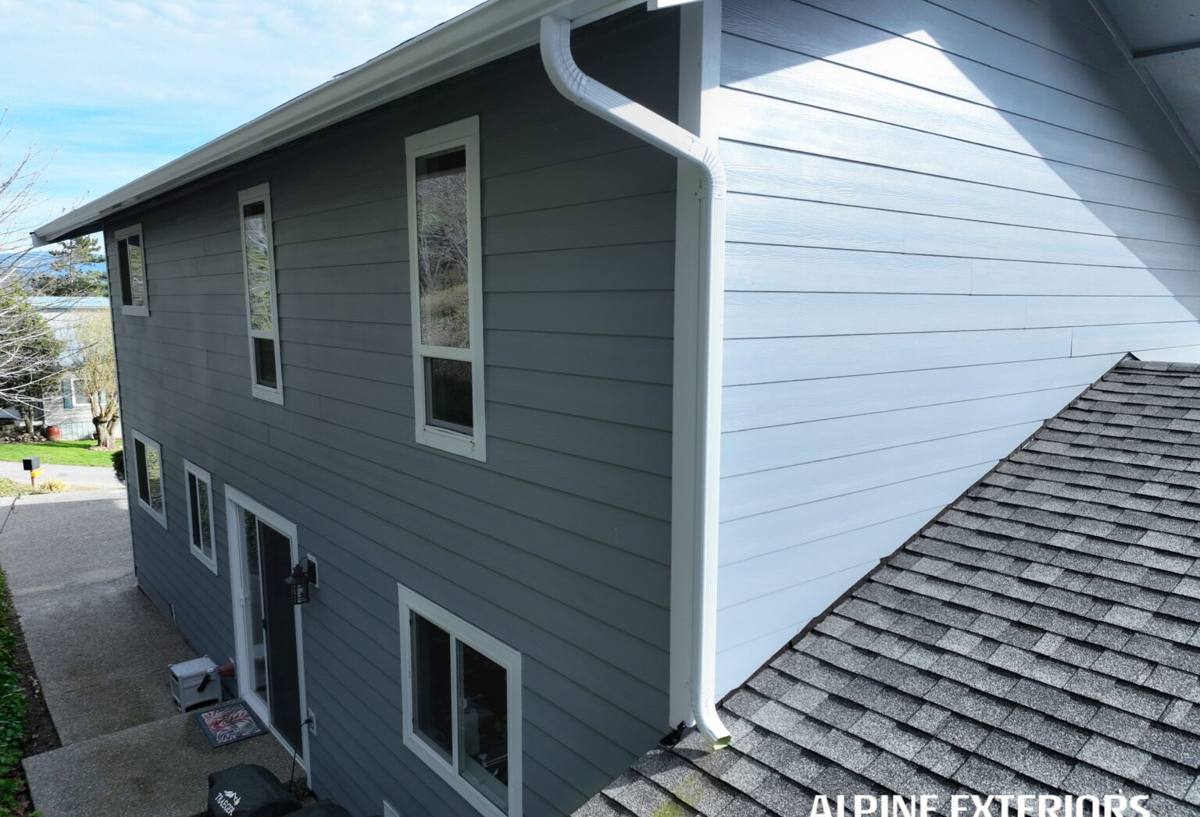
What This Climate Does to a Roof Over Time
Salt Air and Metal Fatigue
Even a few miles inland from the water, airborne salt settles on roofing surfaces and accelerates corrosion on anything metal — flashing, fasteners, gutters, and vents. Standard galvanized fasteners can start rusting years before the shingles around them are due for replacement, and once a fastener corrodes, it loses its grip and stops sealing properly. That's a slow leak waiting to happen, usually discovered only after water has already found its way into the decking.
Driving Rain and Wind-Driven Water
Rain here doesn't always fall straight down. Storms off the Strait push rain sideways, which means water gets forced up under shingle edges, around vent boots, and into any flashing gap that wouldn't be a problem in a calmer climate. A roof system built for occasional light rain isn't built for this. Underlayment choice, flashing detail, and shingle sealing all matter more here than they would in a drier region.
Moss and Shade
Whatcom County's long, wet moss season is hard on roofs with any amount of shade, and a lot of Nooksack lots have real tree cover. Moss holds moisture against the roofing surface long after the rest of the roof has dried out, which softens shingles, lifts edges, and works its way under laps over time. Left unmanaged, moss growth alone can cut years off a roof's service life — independent of whatever's causing the corrosion or leaks.
Signs a Nooksack Roof Needs Replacing, Not Just Patching
- Granule loss showing up in gutters or at downspout outlets, especially after a windy rain
- Moss or algae streaking that comes back within a season of cleaning
- Shingles that are cupping, curling, or cracking at the edges
- Rusted or discolored fasteners and flashing visible from the ground or attic
- Daylight visible through the roof deck from inside the attic
- Soft spots or sagging when walked, or staining on interior ceilings
- A roof original to a home built more than 20-25 years ago, especially with shaded, north-facing slopes
Not every one of these means full replacement is the only option — some are repairable. But when several show up together, or the roof is already past its expected lifespan, patching usually ends up costing more over time than doing the job once, correctly.
What a Correct Roof Replacement Involves Out Here
Full Tear-Off, Not Overlay
Installing new shingles over old ones is sometimes offered as a cheaper option, but it hides the condition of the deck underneath and traps moisture between layers — a real liability in a climate this wet. We tear off down to the deck on every replacement so we can actually inspect and, if needed, repair the sheathing before anything new goes down.
Deck Inspection and Repair
Any soft, delaminated, or water-stained decking gets replaced before new underlayment goes on. Skipping this step is one of the most common ways a "new roof" fails early — the surface looks fine while the structure underneath is already compromised.
Underlayment Built for Wet Climates
We use synthetic or ice-and-water-type underlayment in the areas most exposed to wind-driven rain — eaves, valleys, and around penetrations — rather than relying on shingles alone to keep water out. This is the layer that saves a roof when wind pushes rain past the shingle edge, which happens regularly here.
Corrosion-Resistant Metal and Fasteners
Given the salt exposure this close to the water, we spec flashing and fasteners rated for coastal or marine-adjacent conditions rather than standard galvanized hardware. It costs a little more up front and saves the callback five years later when standard fasteners would already be rusting through.
Ventilation That Actually Balances
Trapped heat and moisture in the attic accelerate shingle failure from underneath, which is easy to miss since it doesn't show up on the surface right away. Balanced intake and exhaust ventilation is part of every replacement, not an upsell — it's what keeps the new roof performing the way the material is rated to.
Moss-Conscious Detailing
On shaded roofs, we talk through options like zinc or copper strip installation at the ridge, which discourages moss regrowth as rain washes trace metal ions down the roof surface. It's not a guarantee against moss forever, but it meaningfully slows regrowth on the roofs that need it most.
Material Options for Nooksack Homes
| Material | Typical Lifespan Here | How It Handles This Climate |
|---|---|---|
| Architectural asphalt shingle | 20-30 years | Good all-around choice; needs quality underlayment and corrosion-resistant fasteners to hit its full lifespan in salt air and heavy rain |
| Standing seam metal | 40-50+ years | Sheds wind-driven rain and moss well due to steep, smooth surface; requires marine-grade fastener and coating specs this close to the water |
| Synthetic/composite shingle | 30-50 years | Resists moisture absorption better than organic-mat shingles; good option on heavily shaded, moss-prone slopes |
| 3-tab asphalt shingle | 15-20 years | Lower upfront cost but less wind resistance; not our first recommendation for exposed or coastal-adjacent lots |
There's no single right answer for every home — roof pitch, shade exposure, and budget all factor in. We'll walk through the honest trade-offs for your specific roof rather than pushing one product across the board.
What Drives the Cost of a Roof Replacement
Every roof is different, but a few factors consistently move the price up or down on Nooksack-area jobs:
- Roof size and pitch — steeper roofs take longer and require more safety setup
- Number of layers being removed — tear-off of two or more existing layers adds labor and disposal cost
- Deck condition — any sheathing replacement is priced once we can see what's underneath the old roofing
- Material choice — asphalt, metal, and synthetic options carry different material costs
- Number of penetrations — chimneys, skylights, and multiple vents each need proper flashing
- Access — tree cover and driveway access can affect equipment staging
We give a firm, itemized quote after an on-site inspection rather than a rough number over the phone — too many of these variables can't be judged from a description alone.
Our Process for a Nooksack Roof Replacement
- On-site inspection — we get on the roof (or use elevated equipment where access requires it) and check the deck, ventilation, and flashing condition, not just the shingle surface
- Written estimate — a clear breakdown of materials, scope, and price, with the trade-offs of each material option explained
- Scheduling around weather — we plan tear-off days around Whatcom County's forecast so your home isn't left exposed mid-job
- Tear-off and deck repair — full removal, deck inspection, and any necessary sheathing replacement before underlayment goes down
- Installation — underlayment, flashing, ventilation, and roofing material installed to manufacturer spec and local climate needs
- Final walkthrough — we go over the finished roof and cleanup with you before calling the job done
Why Hire a Crew That Already Works This Area
A roofing crew that mostly works drier, inland climates will often spec the same underlayment, fasteners, and ventilation they'd use anywhere else — and that's exactly where problems start showing up two or three years later on a coastal Whatcom County home. Working regularly in Blaine and communities like Nooksack means we already know which details matter here: where wind-driven rain tends to find gaps, which fasteners hold up against salt air, and which roofs need moss-specific planning from the start. That's not something you can fully substitute with a generic install, no matter how good the crew's work is elsewhere.
If your roof is showing its age, or you just want an honest read on how much life it has left, we're glad to come take a look. Reach out for a free, no-pressure estimate using the form below.