 Blaine Siding
 Decks Built for Peace Arch's Coastal Climate
Peace Arch sits close enough to the water and the border that its homes take a steady beating from marine weather most of the year. Salt-laden air off the bay works into fasteners and framing hardware, driving rain drives moisture sideways into places a deck was never designed to shed it, and a moss season that can run from late fall well into spring keeps every horizontal surface damp for weeks at a time. A deck built with inland assumptions — standard hardware, minimal drainage slope, tight board spacing — tends to show problems here years before it would somewhere drier and further from the coast.
Building decks specifically for this stretch of Whatcom County means treating the climate as a design input from the start, not something to patch around later. That shapes everything from the fasteners we spec to how we frame the substructure underneath.
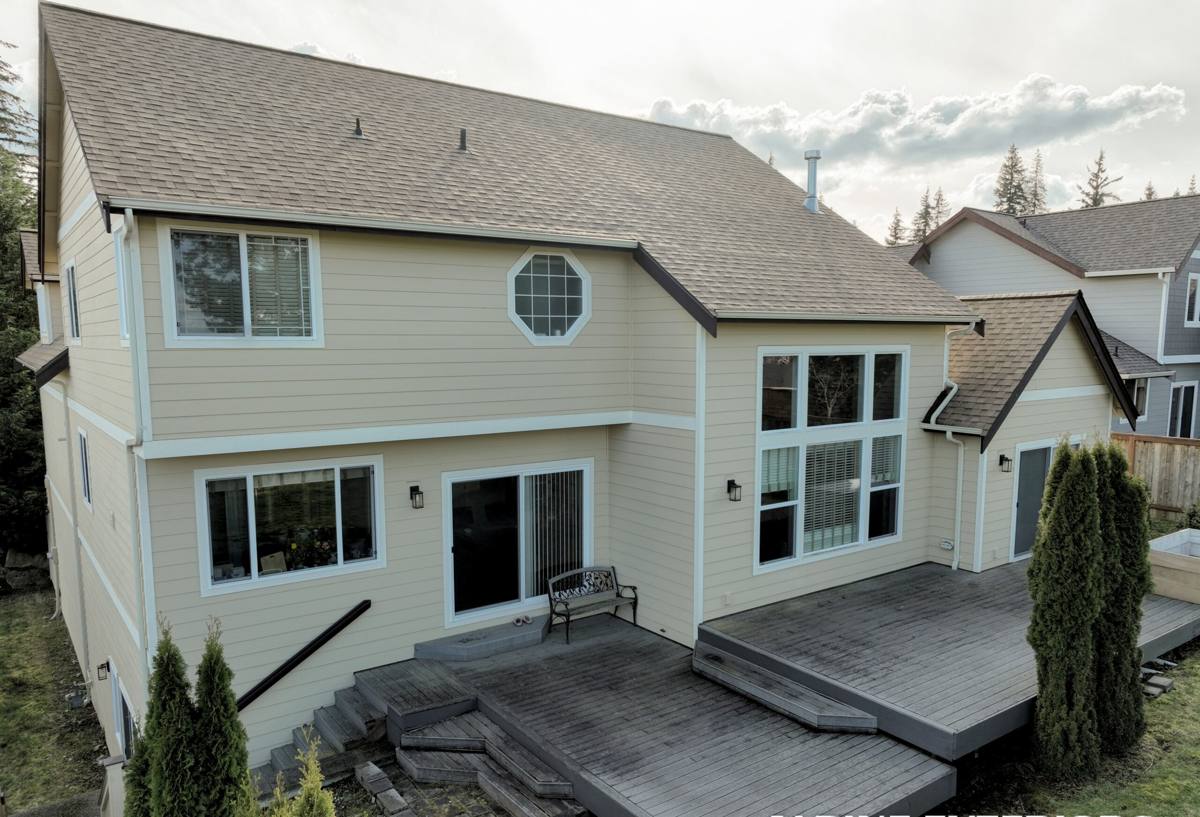
What a Peace Arch Deck Actually Needs
Every deck we build here has to answer to the same set of conditions, whether it's a small entry landing or a full-width outdoor living space off the back of the house.
Corrosion Resistance, Not Just Weather Resistance
"Weather resistant" and "corrosion resistant" are not the same thing, and the difference matters most in coastal air. Standard electro-galvanized screws and joist hangers can start showing rust streaks on a Peace Arch deck within a season or two. We build with fasteners and connectors rated for coastal or marine exposure, because replacing hidden structural hardware later means tearing into a finished deck.
Drainage That Actually Moves Water Off
Driving rain doesn't fall straight down here — it comes in at an angle and finds any low spot, tight seam, or flat run of decking to sit in. A deck surface needs enough slope away from the house, and enough gap between boards, to let water pass through rather than pool. Standing water is what feeds the moss and algae that make boards slick and start breaking down wood fiber from the surface in.
Airflow Underneath the Deck
A deck that traps moist air underneath stays damp longer after every rain, which is exactly what moss, mildew, and early wood rot need to take hold. Proper joist spacing, ventilation gaps, and keeping vegetation and debris clear of the underside all matter more here than they would in a drier inland climate.
Choosing Decking Material for This Climate
There's no single "best" decking material for every Peace Arch home — it depends on budget, how much upkeep you want to take on, and how the deck will be used. Here's how the common options actually perform under salt air, driving rain, and a long moss season.
| Material | Moisture & Salt Air Behavior | Moss/Algae Tendency | Maintenance |
|---|---|---|---|
| Pressure-treated wood | Resists rot when properly sealed; fasteners must be coastal-rated | Higher — porous surface holds moisture | Annual cleaning and resealing |
| Cedar | Naturally rot- and insect-resistant; still needs sealing near the coast | Moderate — benefits from airflow and periodic cleaning | Sealing every 1–2 years |
| Composite decking | Won't rot or absorb water like wood; check hardware corrosion resistance separately | Lower, but still needs periodic washing in shaded, damp spots | Occasional washing, no sealing |
| Capped composite / PVC | Best moisture resistance of the group; fully sealed surface | Lowest of the group | Occasional washing |
We install all of these depending on what the homeowner wants, but we're honest about the trade-offs. Wood costs less up front and can look excellent, but it asks for a real maintenance commitment in this climate — skip a season of sealing and a Peace Arch deck can start showing weathering fast. Composite and capped composite cost more initially but shift that maintenance burden almost entirely off your plate, which is a big part of why we see more homeowners in this area choosing them for decks that see year-round weather.
Where Coastal Decks Fail First
When we're called out to look at an older deck in this area, the damage almost always shows up in the same few spots — which is exactly where we put extra attention when we build.
The Ledger Board Connection
The ledger board — where the deck attaches to the house — is the single most important flashing detail on the whole structure. If water gets behind it, it doesn't just damage the deck; it can work into the house's wall framing and sheathing. Proper flashing and a small air gap behind the ledger keep driving rain from tracking inward.
Fasteners and Hardware
This is where salt air does its most damage, and it's often invisible until a board or a hanger fails. Under-spec'd fasteners corrode from the inside of the connection outward, so a deck can look fine on the surface while its hardware is quietly failing underneath.
Footings and Post Bases
Constant ground moisture from a long rainy season means footings need to be set below frost depth and post bases need to keep wood posts fully off the concrete and out of standing water. Wood-to-concrete contact is one of the fastest ways to start rot at the base of a post.
How We Build a Deck for Peace Arch Homes
1. On-Site Assessment
We start at the property, not with a generic quote. We look at sun and rain exposure, existing drainage patterns, how close the site is to prevailing weather, and what the ground and any existing structure are telling us before we design anything.
2. Design and Material Selection
We walk through material options honestly, including the maintenance and cost trade-offs above, so the choice fits your budget and how much upkeep you actually want to do — not just what looks best in a showroom.
3. Permitting
We handle the permit process with the local jurisdiction, including the structural details that matter for approval — footing depth, ledger attachment, guard and stair requirements.
4. Framing and Hardware
This is where climate-appropriate building happens: coastal-rated fasteners and connectors, correctly flashed ledger, footings set to proper depth, and framing spaced to allow airflow underneath.
5. Decking, Railing, and Finish
Board spacing, fastening pattern, and any sealing or finishing are done to shed water and resist moss growth from day one, not just to look good at handoff.
6. Final Walkthrough
We go over the finished deck with you, including what maintenance it will actually need on the schedule your climate demands — not a generic care sheet.
Permits and Local Requirements
Most new decks and many deck replacements in Blaine and Whatcom County require a building permit, particularly once a deck is attached to the house or built above a certain height off grade. Requirements can also touch on setbacks from property lines and guard/handrail specifications for elevated decks. We handle this as part of the build rather than leaving it for the homeowner to sort out, since getting it wrong can mean a failed inspection or a deck that has to be partially rebuilt.
Maintenance Checklist for a Coastal Deck
Whatever material you choose, a few habits go a long way toward keeping a Peace Arch deck safe and good-looking through the wet season.
- Sweep leaves and debris off the deck surface regularly, especially in fall — trapped organic matter is what feeds moss and mildew
- Check for standing water after heavy rain and clear anything blocking gaps between boards
- Inspect the ledger board area for staining or soft wood, which can signal a flashing problem
- Look for rust streaking around visible fasteners or hardware
- Reseal wood decking on the schedule appropriate to the product — don't wait for it to look weathered
- Wash composite or capped composite decking periodically in shaded areas prone to algae film
- Keep vegetation and stored items clear of the space underneath the deck to maintain airflow
Why a Peace Arch-Familiar Crew Matters
A deck builder who mainly works drier, inland areas can still build something that looks right on the day it's finished. The problems show up later — in the fasteners that were never spec'd for salt air, the ledger flashing that wasn't quite tight enough, the board spacing that didn't account for how long moss season really runs here. Working this specific stretch of Whatcom County repeatedly means we've seen how these decks actually age, not just how they photograph at handoff, and we build accordingly from the first framing member.
If you're planning a new deck or replacing one that's showing its age, we're happy to come take a look and talk through what makes sense for your home and budget. Reach out for a free, no-pressure estimate using the form below.