 Blaine Siding
 Why Peace Arch Needs Siding Built for the Water
The Peace Arch area sits about as close to saltwater and the Canadian border as a Whatcom County neighborhood gets. That location is what makes it a great place to live, and it's also exactly why siding here takes more punishment than siding twenty miles inland. Homes in this part of Blaine deal with a near-constant mix of salt-laden air off Semiahmoo Bay and Drayton Harbor, wind-driven rain that comes in sideways off the Strait, and long stretches of gray, low-sun weather where painted wood and OSB-based products simply don't get enough drying time between soakings.
None of that is exotic weather. It's just persistent. And persistent is what wears siding out — not one big storm, but months eight and nine of a wet winter when a marginal product or a slightly wrong installation detail finally shows itself as a soft corner, a bubbled seam, or a streak of green moss creeping up from the ground.
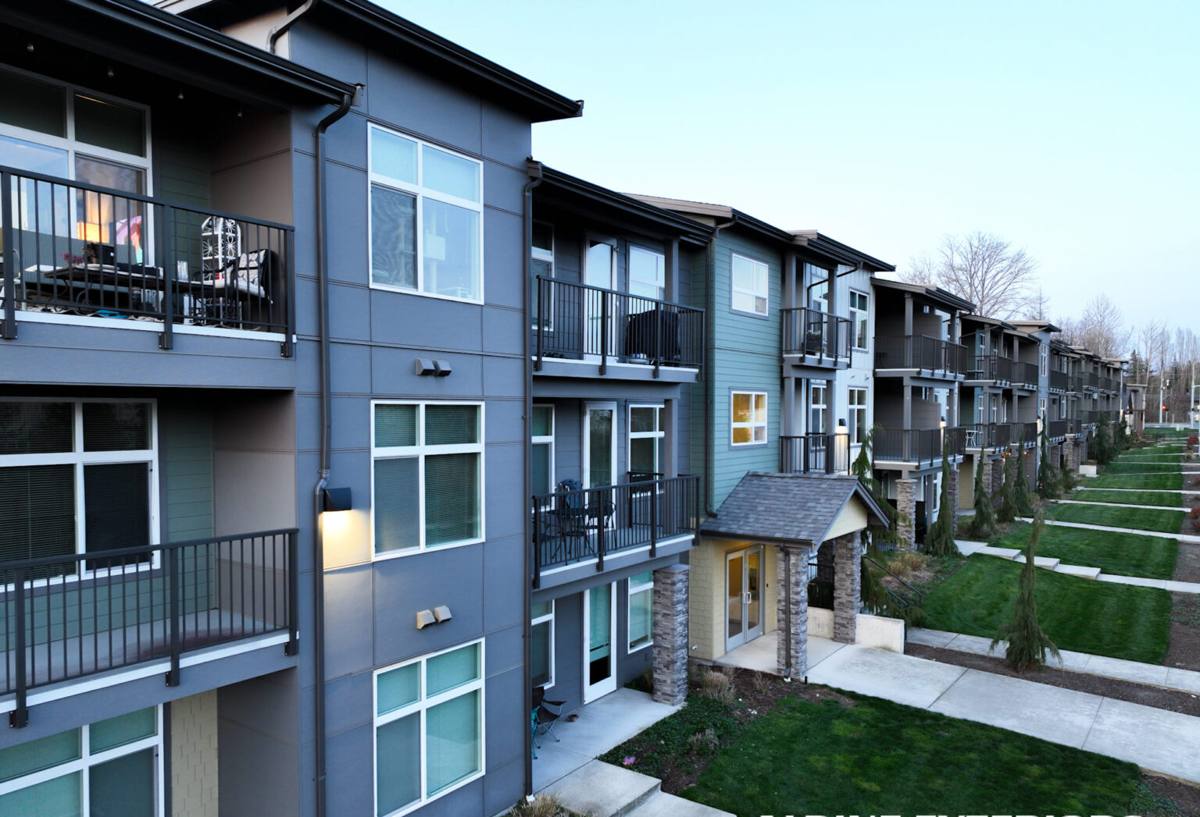
What Salt Air and Long Winters Actually Do to Siding
It helps to be specific about the mechanisms, because "coastal climate" is a vague phrase that hides three very different problems:
- Salt air corrosion. Airborne salt accelerates corrosion of exposed metal — fasteners, flashing, trim edges. Siding systems that rely on unprotected staples or the wrong fastener spec will show rust streaks and loosening well before the siding material itself fails.
- Wind-driven rain intrusion. Rain that hits a wall at an angle, rather than falling straight down, finds every gap in flashing, every unsealed penetration, and every place where siding was nailed too tight against trim. Water doesn't need a big opening — it needs a consistent one.
- Extended moss and algae season. Whatcom County's cool, wet, low-light months give moss and algae a long runway on north-facing walls, shaded siding, and anywhere air doesn't circulate well. Porous or absorbent siding materials hold moisture longer and give organic growth more to grip onto.
Fiber cement doesn't eliminate these forces — nothing does — but it responds to them differently than wood, OSB-based siding, or vinyl, and that difference is the whole reason we standardized on James Hardie products for homes in this climate.
Why James Hardie Fiber Cement Fits This Climate
James Hardie manufactures its siding in climate-specific formulations, and the versions rated for the Pacific Northwest (HZ5) are engineered specifically for repeated wet-dry cycling and high moisture exposure — the exact conditions Peace Arch homes see for roughly half the year. Fiber cement is non-combustible, doesn't swell or delaminate the way wood-based products can when they take on water, and holds its shape through the freeze-thaw and soak-dry cycles that are normal here.
Just as important is the factory-applied ColorPlus finish. Baking the color and finish onto the board in a controlled factory environment produces a more consistent, better-adhered coating than field-applied paint ever will, and it's backed by its own finish warranty separate from the substrate warranty. In a climate where field-painted surfaces are fighting rain almost year-round, starting with a finish that was cured indoors — not painted on a wall in October — matters more than it does in a drier region.
What This Means Day to Day
In practice, correctly installed Hardie siding on a Peace Arch home should mean fewer repaint cycles, less caulk maintenance at trim joints, and siding that isn't visibly absorbing water at the bottom courses after a wet winter. It does not mean zero maintenance — nothing on a coastal home is maintenance-free — but it shifts the maintenance burden from "structural repair" toward "occasional cleaning."
What a Correct Installation Actually Involves
Fiber cement performs the way it's engineered to perform only when it's installed to spec. This is the part homeowners often don't get to see, and it's where most of the real-world siding failures we get called to diagnose actually originate — not in the product, but in the install.
Fastening and Flashing
Hardie's install specs call for corrosion-resistant fasteners, and in a marine air environment that's not optional — it's the difference between fasteners that hold for decades and ones that streak and loosen within a few winters. Flashing at windows, doors, and every horizontal trim transition has to be layered correctly so water sheds outward rather than getting trapped behind the board, which is exactly what wind-driven rain will exploit if given the chance.
Gapping and Clearances
Fiber cement needs proper gaps at butt joints, trim, and inside/outside corners, plus the correct clearance above rooflines, decks, and grade. Too tight, and the board has nowhere to move seasonally and traps moisture at the joint. Too far off spec in the other direction, and you get gaps that let wind-driven rain punch straight through. Getting this dialed in on every course of a full home is what separates a clean install from a fast one.
Ground and Roof Clearance
Because moss and algae take hold fastest where moisture lingers, keeping siding clearance correct at grade, decks, and roof-to-wall intersections isn't cosmetic — it's what keeps the lowest courses drying out between rains instead of sitting damp against soil, mulch, or a low deck ledger.
Our Process for Peace Arch Homes
| Stage | What We're Checking |
|---|---|
| Site assessment | Wind exposure, sun/shade pattern, existing moisture damage, current flashing condition, grade clearance |
| Prep and tear-off | Sheathing condition underneath old siding, water barrier integrity, any hidden rot before it gets covered up again |
| Installation | Correct HZ5 product line, factory ColorPlus finish, spec-correct fastening and gapping, corrosion-resistant hardware throughout |
| Flashing and trim detail | Every window, door, and horizontal transition layered to shed wind-driven rain outward |
| Final walkthrough | Fastener pattern, joint spacing, clearance at grade and roofline, finish consistency |
A house near the water gets assessed differently than one set back from it, and a crew that works this neighborhood regularly already knows which walls take the worst of the wind and which corners tend to hold moisture longest. That local knowledge shapes where we pay extra attention before a single board goes up, not just how we install once we're on the wall.
Living With Fiber Cement Siding Here: Realistic Maintenance
Correctly installed Hardie siding is low-maintenance, not no-maintenance. In Peace Arch's climate, the realistic upkeep looks like this:
- Periodic gentle rinsing of north-facing and shaded walls to keep moss and algae from establishing before they take hold
- Visual check of caulking at trim joints and penetrations every couple of years, since caulk ages faster than the siding itself
- Keeping gutters clear so overflow isn't running down the wall face repeatedly in the same spot
- Trimming back vegetation that shades a wall and keeps it from drying out between rains
- Watching grade and mulch lines so they don't creep up over time and reduce the siding's clearance from soil
None of that is unusual homeowner work — it's the same kind of upkeep any coastal Whatcom County home needs, regardless of siding brand. The difference with a correctly installed Hardie system is that skipping a season of it doesn't put the siding itself at structural risk the way it can with more moisture-sensitive materials.
Why We Only Install James Hardie — Even Here
We get asked from time to time about lower-cost alternatives — vinyl, engineered wood siding, other fiber cement brands. Each of those has legitimate uses in the right climate and budget. But we've made a professional decision not to install them on homes in this region, because in a climate defined by salt air, driving rain, and a long wet season, the trade-offs of those products — moisture sensitivity at cut edges, field-finish upkeep, or long-term warranty structure — show up faster here than they would somewhere drier. James Hardie's climate-engineered fiber cement, factory finish, and installation system are what we're willing to put our name behind on a Peace Arch home, and it's the only system we install.
Before You Hire: A Peace Arch Homeowner's Checklist
- Confirm the crew is installing the correct HZ5 (or equivalent Pacific Northwest-rated) Hardie product line, not a generic version meant for drier climates
- Ask what fastener type they use and whether it's rated for coastal/marine exposure
- Ask how they handle flashing at windows, doors, and horizontal trim transitions specifically
- Confirm the ground, deck, and roofline clearances they plan to hold to
- Ask whether they'll inspect and address sheathing condition before new siding goes up, not just install over what's there
- Get a clear understanding of what's covered under the product warranty versus the installer's own workmanship warranty
If a contractor can't answer these clearly, that's worth pausing on — the questions above are exactly where coastal siding jobs succeed or fail.
If you're weighing a siding project for a home in the Peace Arch area, we're happy to walk the property, look at your current siding condition, and talk through what James Hardie fiber cement would involve for your specific exposure and budget. Reach out below for a free, no-pressure estimate.