 Blaine Siding
 Storm Damage Roof Repair for the Peace Arch Area
The stretch of Blaine near Peace Arch sits right where Pacific storm systems make landfall after crossing the Strait of Georgia and Boundary Bay. Homes here take a different kind of beating than roofs even a few miles inland. Wind-driven rain comes off the water at an angle, salt air works into fastener heads and flashing seams, and the shade and moisture that keep this corner of Whatcom County green also keep roofs damp longer after every storm passes. If you've had a wind event, a heavy rain cycle, or just noticed granules in the gutter after the last blow, it's worth having someone look before the next system rolls through.
We work storm damage roof calls in this neighborhood regularly, not as a once-a-year drive-by. That matters more than it sounds like it should — a roof near Peace Arch that's been through a few winters here shows patterns a crew that doesn't work this area won't recognize on sight.
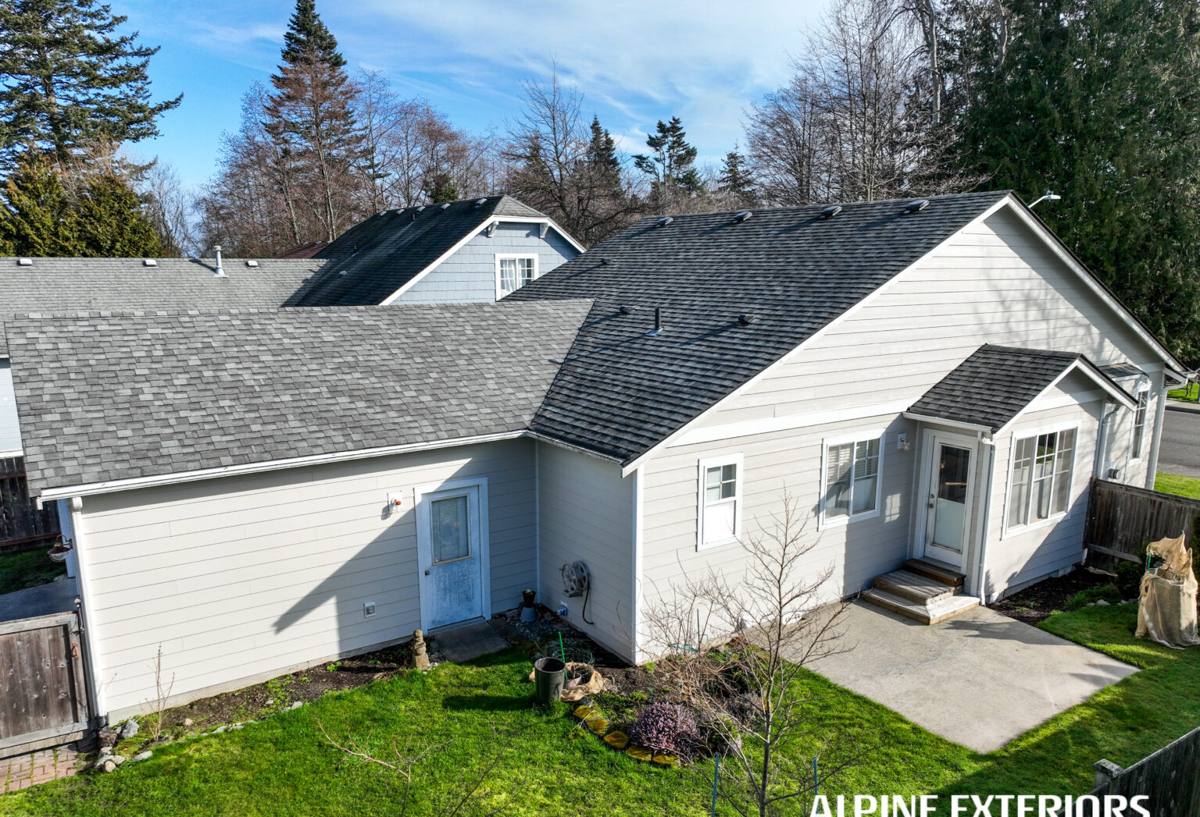
Why Storms Hit This Area's Roofs Differently
Wind Exposure Off the Water
Properties closer to Semiahmoo Bay and the border get wind that hasn't been broken up by tree cover or terrain the way it has been a few miles south or east. That means uplift on ridge caps, lifted or cracked shingle tabs along exposed edges, and flashing that gets worked loose a little more each storm rather than failing all at once. A lot of storm damage here isn't one dramatic event — it's cumulative.
Salt Air and Metal Fatigue
Salt-laden air corrodes exposed fasteners, flashing, and any unpainted metal faster than it would inland. A nail that backs out slightly or a flashing seam that starts to separate is often a corrosion story as much as a wind story. We check fastener condition and flashing metal specifically for this, not just shingle surface damage.
Moss and Trapped Moisture
Blaine's long damp season keeps north-facing and shaded roof sections wet for extended stretches, and moss takes hold in that environment. Moss holds moisture against the roofing material, lifts shingle edges as it grows, and can mask the early signs of storm damage underneath it. After a storm, we're often clearing moss growth just to see what we're actually dealing with.
What Counts as Storm Damage
Homeowners often assume storm damage means missing shingles or an obvious leak. Most of what we find is less dramatic and easier to miss:
- Lifted or creased shingle tabs that haven't torn off yet but no longer seal
- Cracked or bent flashing around chimneys, vents, and roof-to-wall transitions
- Granule loss concentrated on wind-exposed slopes
- Loosened or backed-out fasteners along ridges and edges
- Gutter and downspout damage that redirects water onto fascia or siding
- Moss-driven lifting that opens gaps a storm then drives water into
- Soft spots in decking found only once the covering is pulled back
Some of these won't show up as a leak for months. That's the frustrating part of storm damage on the Blaine coast — the visible symptom and the actual event that caused it can be separated by a whole rainy season.
Our Repair Process
1. Ground and Roof-Level Assessment
We start with a visual inspection from the ground and, where it's safe to do so, on the roof itself. We're looking at slope-by-slope wind exposure, flashing condition, gutter function, and any moss or debris that's hiding damage. We photograph what we find so you have a record, separate from whatever an insurance adjuster documents.
2. Identifying the Actual Cause
We don't just patch the symptom. If shingles are lifting because moss has worked under the edges, moss removal and treatment come first — otherwise the repair fails again in a season or two. If flashing is corroded from salt exposure, we replace it with material suited to that exposure rather than a like-for-like patch that will corrode the same way.
3. Repair Scope and Options
Most storm repairs fall into one of three scopes: spot repair (replacing individual shingles, resealing tabs, fixing a flashing section), section repair (a full wind-exposed slope or the area around a chimney or valley), or a recommendation to consider full replacement if the roof was already near the end of its service life and the storm accelerated that timeline. We'll tell you honestly which category your roof falls into — we don't upsell a full replacement when a targeted repair will hold.
4. The Repair Itself
We match materials to what's already on the roof where possible, secure and reseal shingle tabs, replace damaged flashing with corrosion-resistant material, and check that gutters and downspouts are moving water away from the structure correctly. Fastener choice matters here more than people expect — in a salt-air environment, using corrosion-resistant fasteners on a repair is the difference between a fix that lasts and one that starts backing out again in a couple of winters.
5. Follow-Up Check
After the first significant rain following a repair, it's worth a quick look to confirm everything is sealing and draining as expected. We'll tell you what to watch for so you can catch anything early yourself.
Repair vs. Replacement: What Drives the Decision
| Factor | Points Toward Repair | Points Toward Replacement |
|---|---|---|
| Age of roofing material | Under 12-15 years, otherwise sound | Nearing or past typical service life for the material |
| Extent of damage | Isolated to one slope or section | Widespread across multiple slopes |
| Decking condition | Solid, no soft spots found | Soft or delaminating decking discovered |
| Moss/moisture history | Managed with periodic cleaning | Long-term moss damage affecting multiple areas |
| Storm frequency | Single event, otherwise stable roof | Repeated storm damage in recent years |
None of these factors decide it alone — we look at the whole picture and give you a straight recommendation, including telling you when a repair is the right call even if replacement would be the bigger job for us.
Insurance and Documentation
Wind and storm damage is often covered under homeowner's policies, but coverage details vary and we're not adjusters or agents. What we can do is document the damage clearly — photos, a written description of what we found and why we believe it's storm-related, and a repair scope — so you have solid information to bring to your insurer. If an adjuster wants to meet on-site, we're glad to walk the roof with them and point out what we found.
Preventing Repeat Damage in This Climate
A repair that ignores the local climate just resets the clock on the same problem. A few things that make a real difference for homes in this part of Whatcom County:
- Keeping moss under control on shaded and north-facing slopes rather than letting it establish
- Using corrosion-resistant flashing and fasteners given the salt air off the bay
- Making sure gutters are clear before the fall storm season starts, not after the first big rain
- Having ridge and edge shingles checked after any named storm or high-wind advisory, even without a visible leak
- Addressing lifted tabs and minor flashing gaps promptly, since driving rain finds small openings fast
Why a Local Crew Matters for This Kind of Repair
Storm damage repair on a coastal roof isn't the same trade as general roof repair inland. A crew that works Blaine and the Peace Arch area regularly already knows which slopes take the worst of the wind, how fast moss reestablishes in this microclimate, and what corrosion actually looks like at six months versus three years in this air. That local pattern recognition is what keeps a repair from being a short-term patch. We're not driving in from out of the area to look at your roof once — we're back in this neighborhood on other jobs regularly, and we stand behind what we install here.
What to Do After a Storm
If you've had a wind event or heavy rain and you're unsure whether you have real damage, a few practical steps: check gutters and downspouts from the ground for granules or debris, look for anything visibly lifted or missing along roof edges and ridges using binoculars rather than climbing up yourself, and note any new water stains on ceilings or in the attic. None of that requires getting on the roof, and any of it is a good reason to have it looked at professionally.
If you're dealing with possible storm damage on your roof near Peace Arch, we're happy to come take a look and give you a straight, no-pressure assessment of what we find. Use the form below to request a free estimate and we'll get back to you to schedule a time.