 Blaine Siding
 Building Decks in a Place That Sits Right on the Water
Point Roberts is about as exposed to the marine environment as a Whatcom County property can get. It's a small peninsula surrounded on three sides by the Salish Sea, which means almost every home there deals with some combination of salt-laden air, wind-driven rain, and the kind of persistent shade and dampness that grows moss on anything that holds still long enough. A deck built here works harder than a deck built twenty miles inland, and it needs to be built differently from day one.
We're a Blaine-based crew, and Point Roberts is part of our regular service area. We're not guessing at what holds up out there — we've seen what salt air does to the wrong fastener, what standing water does to the wrong ledger flashing, and what a shaded north-facing deck looks like after a few moss seasons with no maintenance. This page is about what a deck actually needs to survive that environment, not a generic overview of deck building.
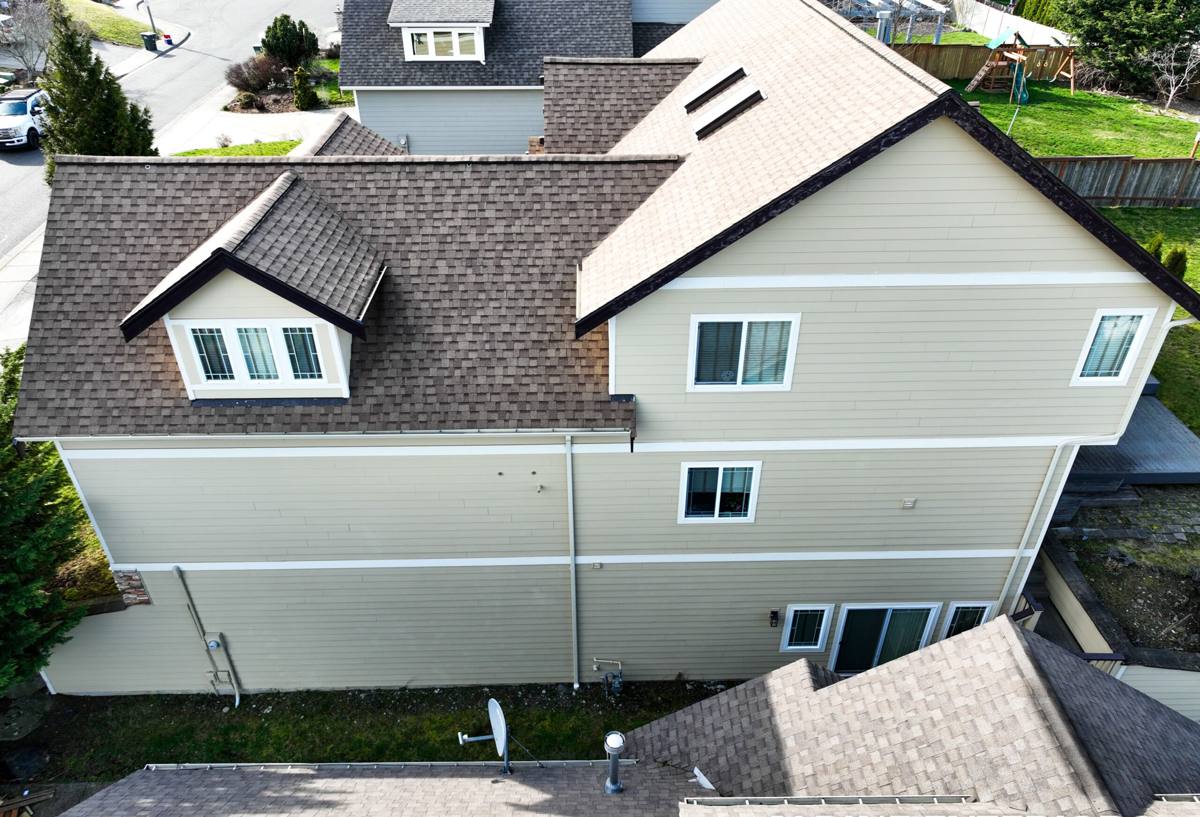
What Salt Air, Rain, and Moss Actually Do to a Deck
Each of these factors attacks a deck in a different way, and a deck built for a dry inland lot usually fails against at least one of them within a few years.
Salt Air
Airborne salt accelerates corrosion on any exposed metal — screws, joist hangers, bolts, railing brackets. Standard zinc-galvanized hardware that's fine forty miles inland can start rusting and staining the wood around it within a couple seasons this close to the water. Once a fastener starts to corrode, it loses holding strength long before it looks obviously bad, which is the real danger.
Driving Rain
Wind-driven rain doesn't just fall on a deck, it gets pushed sideways and up under things — ledger boards, rim joists, stair stringers, the underside of railings. Any place water can get in but can't easily drain or dry out becomes the spot where rot starts. This is almost always a flashing and drainage problem, not a wood-quality problem.
Moss and Persistent Moisture
A long moss season means long stretches where deck boards, especially in shaded areas, stay damp instead of drying between rains. Moss and algae hold moisture against the wood surface, make boards slick and unsafe, and on painted or sealed surfaces they trap water under the coating instead of on top of it. Untreated, this shortens the life of almost any decking material, though some hold up to it far better than others.
Choosing the Right Decking Material for This Location
There's no single "best" decking material — there's a best material for this climate and this budget. Here's how the common options actually perform in a salt-air, high-moisture environment, based on what we see holding up (and what doesn't) on decks we build and maintain in this area.
| Material | Moisture/Salt Resistance | Moss & Algae Behavior | Maintenance Burden |
|---|---|---|---|
| Pressure-treated wood | Good if properly detailed and finished; treatment protects against rot but not surface weathering | Needs periodic cleaning and re-sealing or it holds moss | Higher — annual inspection, refinishing every 2-4 years |
| Cedar | Naturally rot- and insect-resistant; still needs sealing near salt air | Prone to graying and moss if left unsealed | Moderate to high — regular sealing to hold its look |
| Composite decking | Excellent — doesn't absorb moisture or rot | Can still grow surface moss/algae in shaded, damp spots; cleans off, doesn't damage the board | Lower — periodic washing, no sealing or staining |
| PVC/capped polymer decking | Excellent — fully moisture-sealed | Same surface-growth consideration as composite | Lowest — wash as needed |
Composite and capped polymer decking generally make the most sense for exposed, shaded, or hard-to-maintain decks in this area — the material itself isn't feeding rot or absorbing salt-laden moisture. That said, plenty of homeowners want the look and feel of real wood, and a well-detailed wood deck with the right finish schedule holds up fine here too. The honest tradeoff is maintenance time versus upfront cost, and we'll walk through that plainly during your estimate rather than push one product.
What We Don't Recommend for This Climate
We steer away from decking products with a track record of trapping moisture between the board and a solid backing, or fastening systems that rely heavily on exposed face screws in a salt environment. It's not that these products are bad everywhere — it's that our professional standard for a Point Roberts deck accounts for the moisture load and salt exposure this specific site sees, and we'd rather spec a system that matches that reality than one that looks fine on install day and causes callbacks in three years.
Framing and Substructure: The Part Nobody Sees
The visible decking gets all the attention, but the framing underneath is what actually determines how long a deck lasts in this climate. This is where we spend real time getting the details right.
- Ledger flashing: where the deck attaches to the house is the single most common source of hidden rot. Proper flashing, correctly lapped and sealed, keeps driving rain from working its way behind the ledger board into the house framing.
- Joist protection: joist tape or a comparable moisture barrier on top of framing lumber keeps deck screws from creating a wicking point where water sits against the wood.
- Footings and post bases: post bases that hold the post above the concrete, not embedded in it, prevent the post from sitting in standing water after heavy rain.
- Drainage slope: decking needs a slight pitch away from the house so water sheds instead of pooling, especially under railings and near stair landings where debris collects.
- Airflow underneath: enough clearance and ventilation below the deck lets framing dry out between rain events instead of staying damp for weeks at a time.
None of this is visible once the deck is finished, which is exactly why it matters — a deck that looks identical on day one can behave completely differently five years later depending on whether these details were done right.
Railings, Fasteners, and Hardware Built for Salt Exposure
Hardware choice matters as much as decking choice this close to the water. We spec stainless steel or coated/corrosion-resistant fasteners and structural hardware for Point Roberts decks rather than standard galvanized, particularly for anything holding the ledger, the joist hangers, and the railing posts. The cost difference is modest; the difference in long-term holding strength and staining around the fastener heads is significant.
Railing systems also need to be picked with the same eye toward corrosion — cable railing, aluminum, and composite rail systems generally outperform bare steel components in salt air. If a design calls for steel accents, we make sure they're properly coated and detailed so water doesn't sit against the metal.
Our Deck Building Process
The process is straightforward, but the sequence matters — skipping or rushing any of these steps is where problems start.
- On-site assessment: we look at sun/shade exposure, drainage patterns, house connection point, and existing structure if it's a rebuild, and talk through what you actually want to use the space for.
- Material and layout plan: we walk through decking, hardware, and railing options with honest tradeoffs for this specific site, then finalize a layout and footprint.
- Permitting: we handle the Whatcom County permit application and inspection scheduling so you're not chasing paperwork.
- Demo and framing: old structure removal if applicable, then footings, framing, ledger flashing, and structural hardware installed to code.
- Decking, railing, and stairs: surface installation, railing systems, and any stairs or landings, with attention to drainage and fastener placement throughout.
- Final walkthrough and inspection: county inspection where required, plus our own walkthrough with you before we call the job done.
Permitting and Access Considerations for Point Roberts
Point Roberts is part of Whatcom County, but it's a geographic exclave — the only road access is through Canada. That doesn't change the building code or permitting process, which still runs through Whatcom County like any other project in the county, but it does affect scheduling and logistics. Material deliveries, equipment, and crew travel all need to account for the border crossing, and we build that into project timelines from the start rather than treating it as a surprise mid-project. This is one of the practical reasons it helps to hire a crew that already works this area regularly instead of one pricing the job without having accounted for it.
Maintenance Checklist to Extend Deck Life in This Climate
Whatever material you choose, a few habits make a real difference in how long a deck lasts in a salt-air, high-moss environment:
- Sweep debris off the deck surface regularly, especially in shaded corners where moss and leaves collect
- Rinse or wash the surface a few times a year to remove salt residue and slow moss/algae growth
- Check railing post bases and stair connections annually for looseness or corrosion staining
- Reseal or restain wood decking on the schedule the finish product calls for — don't wait until it visibly fails
- Keep gutters and downspouts near the deck clear so runoff isn't dumping extra water onto or under the structure
- Look underneath the deck once a year for standing water, soft framing, or gaps in flashing
Why a Local Blaine Crew That Already Works Point Roberts Matters
A deck built for this stretch of Whatcom County needs decisions made correctly at every step — material selection, fastener grade, flashing detail, drainage slope — because the marine climate doesn't forgive shortcuts the way a dry inland lot might. A crew that hasn't built here before is learning those lessons on your project. We've already learned them, we already know how to plan around the border-crossing logistics that come with working in Point Roberts, and we're close enough to Blaine that follow-up visits and warranty work aren't a hassle to schedule.
If you're planning a new deck or need to replace one that's showing its age, we're happy to come take a look and give you a straightforward, no-pressure estimate. Fill out the form below and we'll get in touch.