 Blaine Siding
 Point Roberts Is a Different Kind of Exposure
Point Roberts sits on its own peninsula at the bottom of the Tsawwassen headland, cut off from the rest of Whatcom County by the international border. That geography isn't just a quirk for homeowners driving through Canada to get home — it also means almost every property here is exposed to open water on multiple sides. Boundary Bay and the Strait of Georgia surround the point, so wind-driven rain and salt-laden air reach homes here with almost nothing to slow them down first.
That exposure adds up over the years. Salt air accelerates corrosion on fasteners and trim, driving rain finds every gap in flashing and caulking, and the shaded, moisture-heavy conditions on north and west-facing walls feed a long moss and algae season that many other Whatcom County neighborhoods simply don't deal with to the same degree. Siding on a Point Roberts home works harder than siding almost anywhere else in the county, and it shows on products that weren't built for this kind of punishment.
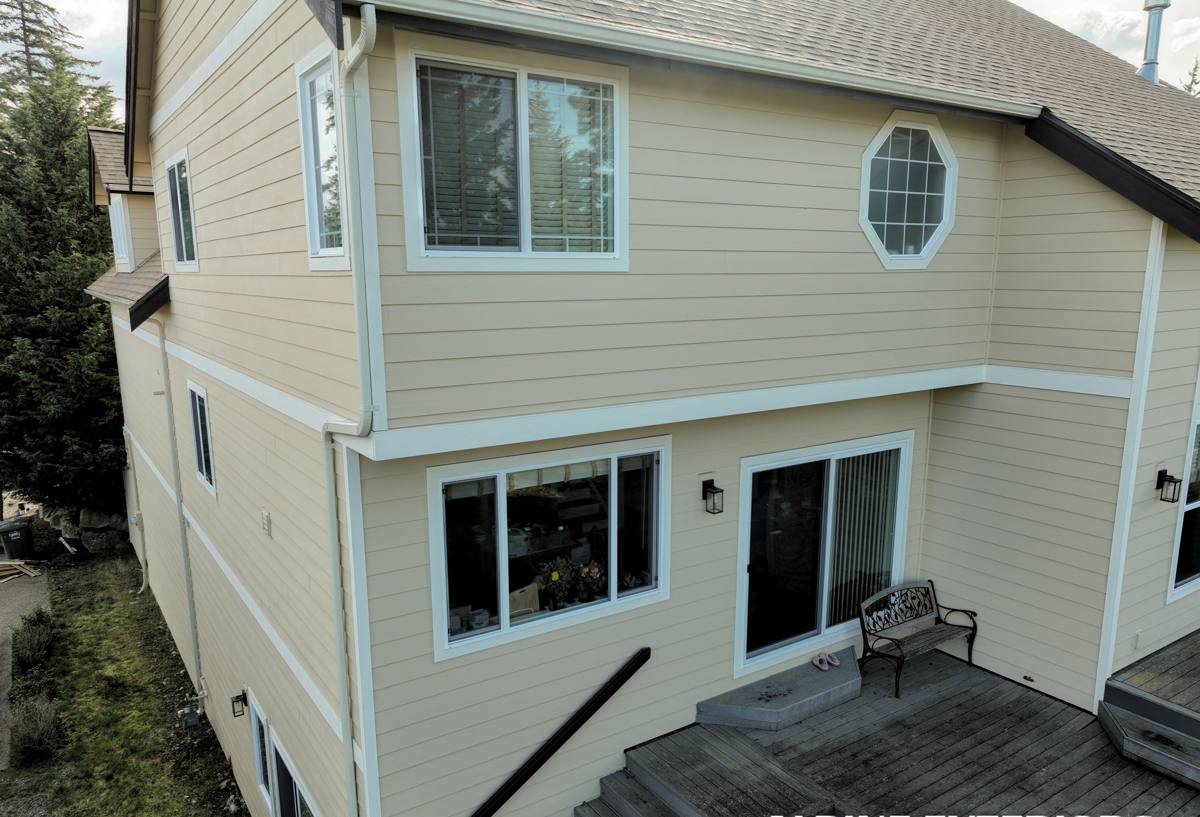
What This Climate Actually Demands From Siding
A lot of siding failures we see on the peninsula aren't installation mistakes — they're the predictable result of a material meeting conditions it was never rated for. Three things matter most here:
- Moisture rejection over time. Wood-based products absorb water at seams and cut edges; once that starts, rot follows even under paint that still looks fine.
- Corrosion resistance in fasteners and trim. Salt air is hard on unprotected metal, so fastener choice and flashing detail matter more here than in an inland install.
- Resistance to sustained damp and shade. Moss and algae need moisture and low light to establish, and Point Roberts has both for a good part of the year, especially on shaded elevations and under overhangs.
Any siding product can look good on install day. The real test is what it looks like after five winters of onshore weather.
Why We Install Only James Hardie Fiber Cement
We made a deliberate decision to stop installing vinyl, LP SmartSide, primed spruce, cedar, and other fiber cement brands, and to install James Hardie exclusively. That's not a marketing position — it's a response to what we've seen happen to homes in this exact climate over time. Wood-based siding, no matter how well it's primed, is an organic material in a region that stays wet for much of the year; it will eventually take on moisture at joints, fastener heads, and cut ends. Vinyl expands and contracts with temperature swings and can warp or crack under wind-driven rain and impact. Other fiber cement brands may perform reasonably, but we don't have the volume of field experience with them here to stand behind them the way we can with Hardie.
James Hardie's fiber cement is non-combustible, doesn't support moss growth the way wood substrates do, and its ColorPlus factory finish is baked on and warranted separately from the substrate itself. For a peninsula environment with constant marine exposure, that combination is the reason we standardized on one product line instead of offering several.
The Hardie Product Lines That Fit This Peninsula
James Hardie makes several siding profiles, and part of doing this job right is matching the right one to the home and the exposure it actually faces. For Point Roberts, we lean heavily on Hardie's HZ5 climate-engineered formulation, which is built for regions with more moisture and freeze-thaw cycling than the HZ10 formulation used in drier, warmer climates.
| Product | Best Use on Point Roberts Homes | Why It Fits |
|---|---|---|
| HardiePlank lap siding | Most homes, waterfront and inland lots alike | Traditional look, HZ5 formulation resists moisture absorption in high-exposure walls |
| HardiePanel vertical siding | Modern builds, accent walls, gable ends | Fewer horizontal seams for water to track along on wind-exposed elevations |
| HardieTrim boards | Corners, fascia, window and door trim | Resists the swelling and splitting that salt-air exposure causes in wood trim |
| HardieShingle siding | Accent gables, cottage-style homes | Textured look without the moisture uptake of cedar shingle |
ColorPlus factory-finished color options also matter more here than in a dry inland climate. A factory-applied finish is more consistently cured than a field-applied coat, and it comes with its own finish warranty — worth asking about directly if a color is being considered, since coverage terms vary by finish and application.
What Correct Installation Involves in a Marine Environment
Fiber cement siding is only as good as the installation behind it, and that's especially true on a peninsula where wind-driven rain tests every seam. A correct install here means:
- Proper weather-resistive barrier and flashing at every window, door, and penetration, lapped so water sheds outward and down rather than behind the cladding
- Rain-screen or drainage gap detailing on walls that take the brunt of onshore weather, so any moisture that does get behind the siding can drain and dry
- Correction fastener spacing and type, following Hardie's published installation instructions rather than generic fastening schedules
- Caulking only where Hardie's instructions call for it — over-caulking traps moisture just as often as under-caulking lets it in
- Proper clearance from grade, decks, roof lines, and other siding to keep bottom edges from sitting in standing water or trapped debris
Hardie's warranty coverage assumes the product was installed to their published specifications. Skipping steps to save time on a job doesn't just risk premature failure — it can also affect warranty standing if something does go wrong down the line.
Our Process for Point Roberts Projects
Working on the peninsula comes with logistics that don't exist on a typical Blaine or Whatcom County job. Point Roberts is only reachable by land through Canada, so we plan crew scheduling, material delivery, and equipment staging around that reality rather than treating it as an afterthought. That means:
- An on-site assessment of the home's exposure — which elevations take direct wind and rain, where moss and algae are already established, and where existing trim or siding shows corrosion or rot
- A materials and color plan built around HZ5 Hardie products and matched trim, with delivery and border logistics scheduled up front so the job isn't held up mid-project
- Removal of old siding and inspection of the sheathing underneath — this is often where hidden moisture damage shows up, and it needs to be addressed before new siding goes on, not covered over
- Installation following Hardie's published fastening, flashing, and clearance specifications, with attention to the drainage detailing that matters most on wind-exposed walls
- A final walkthrough covering what routine maintenance looks like for this specific home and its exposure
Maintenance in a Moss-Prone, Salt-Air Environment
James Hardie siding needs less upkeep than wood or vinyl, but "less" isn't "none" — especially in a climate that grows moss on shaded walls for much of the year. A simple annual routine goes a long way:
- Rinse siding with a garden hose (not a pressure washer aimed directly at seams) once or twice a year to clear salt residue and organic buildup
- Check caulking at trim joints and penetrations annually for cracking or separation
- Trim back vegetation and clear gutters so water and debris aren't sitting against the siding or dripping onto shaded walls
- Look at north- and west-facing walls specifically for early moss or algae growth, since these areas stay damp longest
- Watch fastener heads and metal trim for early corrosion, particularly on homes closest to the waterline
Because many Point Roberts properties are second homes or aren't occupied year-round, small maintenance items can go unnoticed longer than they would on a full-time residence. Building a simple seasonal check into a property management routine, or having it looked at during a periodic visit, catches problems while they're still small.
Why a Crew That Already Works Point Roberts Matters
A contractor who hasn't worked the peninsula before will often underestimate two things: the exposure the homes actually face, and the logistics of getting crews and materials there consistently. We've priced and scheduled around the border crossing, we know which elevations on peninsula homes tend to take the worst of the weather, and we know what HZ5 Hardie products and correct flashing detail actually look like once they've been through a few winters here — not just on install day.
If you're weighing a siding replacement or repair on a Point Roberts home, we're happy to come take a look and walk you through what we'd recommend and why, with no pressure to commit. Reach out for a free estimate using the form below.