 Blaine Siding
 Siding Built for a Peninsula, Not Just a Zip Code
Point Roberts sits on its own patch of ground — a small peninsula connected to the rest of Whatcom County only by driving through Canada, with saltwater on three sides. That geography isn't just a quirk of the map. It's the reason siding on a Point Roberts home takes a beating that a house twenty miles inland in Blaine never sees. Salt-laden air, wind-driven rain coming off the water, and a moss season that runs longer than most homeowners realize all work on the exterior of a house year-round, not just during a storm.
This page is about one job, done right, in one place: siding installation for homes in Point Roberts. Not a general overview of siding, and not a sales pitch — just what this specific stretch of coastline does to exterior materials, what a correct installation has to account for, and why the crew you hire should already understand this environment before they ever show up with a truck.
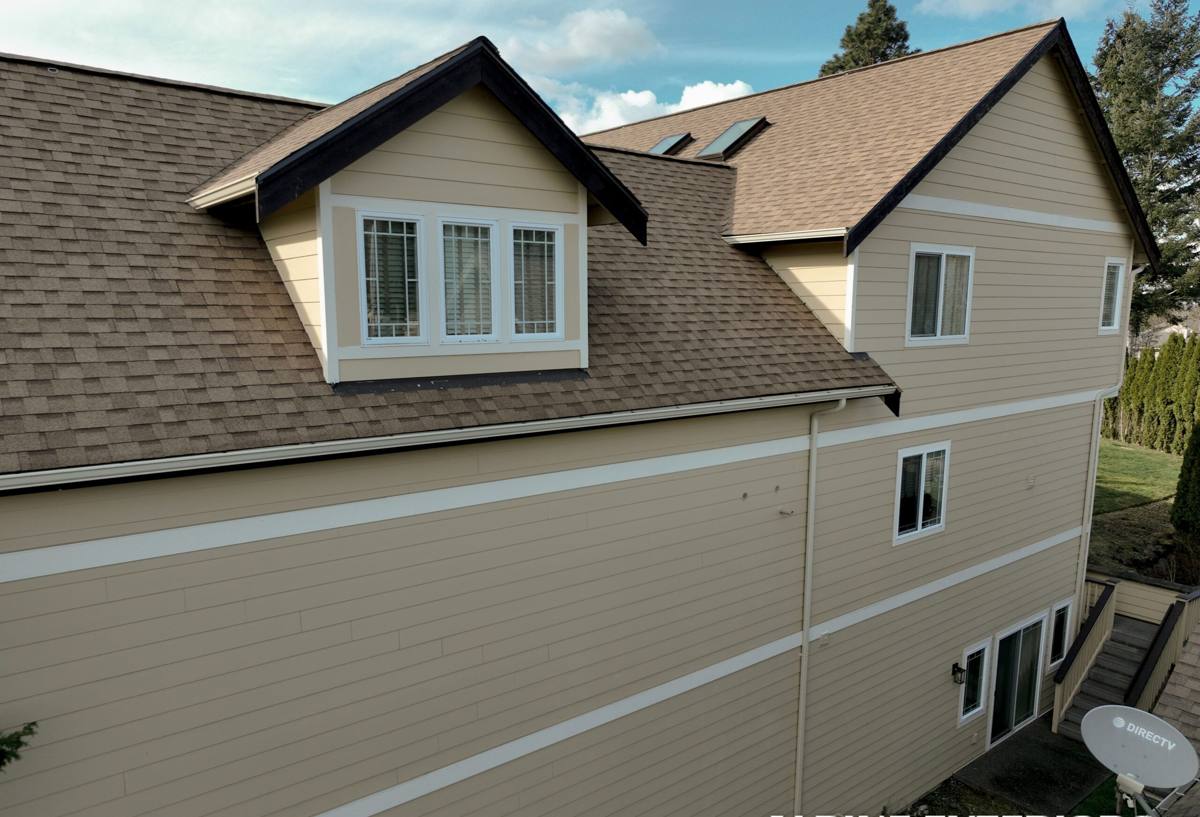
What the Point Roberts Climate Actually Does to a House
Salt air and corrosion
Being surrounded by water means airborne salt is a constant, low-grade presence, even on days without a storm. Salt accelerates corrosion on anything metal — fasteners, flashing, trim screws — and it can degrade certain paints and finishes faster than the same product would wear inland. Siding installed here needs corrosion-resistant fasteners and flashing as a baseline, not an upgrade.
Driving rain and wind exposure
Storms coming off the Strait of Georgia and Boundary Bay don't fall straight down — they come in sideways. Wind-driven rain finds every gap, lap, and penetration in a wall assembly that vertical rain would never reach. That means the water-management details behind the siding (not just the siding itself) matter more here than in a sheltered inland lot.
A long, damp moss season
Mild temperatures combined with extended fall-through-spring dampness give moss and algae a long runway to establish themselves, especially on north- and shade-facing walls. Once organic growth takes hold on a porous or textured surface, it holds moisture against the wall longer, which compounds the problem instead of just sitting there looking bad.
Why a Generic Siding Job Doesn't Hold Up Here
A lot of siding installation problems in coastal Whatcom County aren't failures of the siding material itself — they're failures of installation details that would have been fine somewhere drier and calmer. Skipped flashing at a window head, a fastener pattern that's too tight or too loose, caulk used in place of proper flashing, or a drainage plane that doesn't actually drain — none of these show up as a problem in year one. They show up in year five or six, usually as rot at a bottom edge, staining, or siding that's cupping and separating from the wall.
On a peninsula where every wall is essentially a coastal wall, there's very little margin for those shortcuts. That's the case for treating siding installation here as its own discipline, not a scaled-down version of an inland job.
What Correct Installation Involves
The drainage plane comes first
Before a single siding board goes up, the wall needs a properly lapped weather-resistive barrier and a drainage gap that lets any water that gets behind the siding find its way back out instead of sitting against the sheathing. This is the part of the job nobody sees once it's finished, and it's the part that determines whether the wall stays dry for the next thirty years.
Flashing and clearances
Every window, door, and horizontal trim break needs flashing that actually sheds water downward and outward, not just a bead of sealant covering the gap. Siding also needs the correct clearance off grade, decks, and roof lines so that splashback and standing water don't sit against the bottom course — one of the most common places we see damage on older homes in wet coastal areas.
Fastening for wind and corrosion
Fastener type, length, and spacing need to match both the product manufacturer's specifications and the wind exposure of the specific wall. Undriven or overdriven fasteners are a common cause of premature siding failure, and in salt air, using the wrong fastener metal accelerates the problem instead of just being a minor defect.
Why We Install James Hardie Fiber Cement — and Only That
We standardized on James Hardie fiber cement siding across every job we take, including here in Point Roberts, and we don't install vinyl, LP SmartSide, cedar, primed spruce, or other fiber cement brands. That's a deliberate professional standard, not a marketing preference.
Fiber cement is non-combustible, which matters anywhere but carries extra weight in a region where wildfire smoke seasons have become a normal part of Pacific Northwest summers. Hardie's ColorPlus factory-applied finish is baked on under controlled conditions rather than sprayed or brushed on site, which gives it more consistent adhesion and color retention than field-applied paint, especially in a salt-air environment that's hard on ordinary coatings. And Hardie's HZ5 product line is engineered specifically for climates with prolonged moisture exposure and freeze-thaw cycling — which describes this stretch of coastline well.
None of that means fiber cement is maintenance-free or immune to bad installation. It means that, of the products on the market, it's the one whose performance profile actually matches what a Point Roberts wall has to survive, and it's backed by a transferable warranty that holds up if the home changes hands.
Comparing How Siding Materials Hold Up in This Environment
| Material | Salt Air / Moisture Behavior | Moss & Algae Resistance | Typical Maintenance |
|---|---|---|---|
| Vinyl siding | Doesn't corrode, but can warp or fade under UV and temperature swings; seams are a moisture entry point | Smooth surface resists some growth, but joints and laps can trap moisture | Periodic washing; replacement of warped or faded panels over time |
| Cedar / wood siding | Absorbs moisture readily; prone to swelling, checking, and rot without diligent upkeep | Organic material is naturally more susceptible to moss and mildew | Regular refinishing, caulking, and spot repair; highest ongoing maintenance |
| LP SmartSide (engineered wood) | Treated to resist moisture, but edge and cut-end sealing is critical; failure points concentrate at seams | Moderate; depends heavily on coating maintenance | Recoating and edge sealing on a schedule to maintain warranty coverage |
| James Hardie fiber cement (HZ5) | Engineered for high-moisture climates; doesn't rot, swell, or support combustion | Dense, factory-finished surface resists organic growth better than porous materials | Occasional washing; finish holds up without a recoating cycle |
Our Process for a Point Roberts Job
Planning around logistics
Point Roberts' access situation is a real scheduling factor, not an afterthought. Materials and crew equipment generally have to be staged and routed in advance, and weather windows for tear-off and dry-in matter more when a return trip isn't a quick errand. A crew that's worked this area before builds that into the plan up front — ordering complete, coordinating delivery timing, and sequencing the job so the wall isn't left open longer than it needs to be.
Permitting through Whatcom County
Even though Point Roberts is geographically cut off from the rest of Whatcom County, it's still governed by the same county permitting and inspection process. We handle that coordination as part of the job rather than leaving it for the homeowner to sort out.
Sequencing for the weather
We plan tear-off and dry-in around realistic weather windows rather than a fixed calendar date, because an open wall during a driving rain event is exactly the kind of exposure this coastline doesn't forgive. That sometimes means a job takes a few days longer than the same scope would inland — it's a trade-off worth making.
What Point Roberts Homeowners Should Watch For
Between full siding replacements, a homeowner can catch problems early with a periodic walk-around. A few minutes twice a year, especially after the wet season, can be the difference between a small repair and a wall that needs to be opened up.
- Dark streaking, green tint, or fuzzy growth on north- or shade-facing walls
- Soft or spongy spots near the bottom edge of siding, especially close to grade or decks
- Rust staining running down from fasteners or trim pieces
- Gaps opening up at butt joints, corners, or around window and door trim
- Paint or finish that's chalking, peeling, or losing color unevenly
- Siding that feels loose or flexes when pressed near seams
Why the Crew Matters as Much as the Product
Even the right siding product installed by a crew unfamiliar with this specific coastline can underperform — wrong fastener choice, missed flashing detail, or a schedule that leaves a wall exposed to a storm it didn't need to see. A crew that already works Point Roberts and the greater Blaine area knows the wind exposure, the moisture patterns, and the logistics of getting materials to this peninsula without treating it as an inconvenience or an afterthought. That familiarity shows up in the details that don't get noticed until they've been done wrong somewhere else.
If you're planning a siding project for a home in Point Roberts, we're happy to take a look and walk you through what your walls actually need — no pressure, no obligation. Use the form below to request a free estimate.