 Blaine Siding
 Roofing in Grandview Has to Answer to the Weather, Not Just the Calendar
Grandview sits close enough to the water that Blaine's coastal weather shapes almost every roofing decision homeowners here make. It's not just about age — a 15-year-old roof on a well-vented, well-flashed house can outlast a 10-year-old roof that was installed without much thought for wind-driven rain or moss buildup. When we talk about roof replacement in Grandview, we're really talking about matching the roof system to the specific punishment this part of Whatcom County hands out year-round: salt-laden wind off the water, long stretches of driving rain, and a moss season that can run from fall through spring.
A roof replacement done right here isn't just "new shingles on the same deck." It's an opportunity to correct whatever weaknesses let the old roof fail early — usually ventilation, flashing, or underlayment gaps — so the next roof actually earns its full expected lifespan.
Why Local Climate Wears Roofs Down Faster Than People Expect
Salt Air
Homes near Blaine's shoreline and open exposures deal with airborne salt that accelerates corrosion on exposed metal — nails, flashing, vent caps, and gutter hardware. Standard galvanized fasteners and thin-gauge flashing that might last decades inland can start showing rust streaks and pinholes in a fraction of that time this close to the water.
Driving Rain
Storms here rarely come straight down. Wind pushes rain sideways and up under shingle tabs, around chimney flashing, and into any gap where the underlayment or step flashing was cut short. A roof that would perform fine in a calmer climate can leak here simply because it wasn't detailed for wind-driven water.
Moss Season
Whatcom County's damp, shaded conditions give moss and algae a long window to establish themselves — often eight or nine months out of the year on north-facing slopes or roofs under tree cover. Moss holds moisture against the shingle surface, lifts tabs as it grows, and works its way under flashing over time. It's less dramatic than a leak but does just as much long-term damage.
Signs a Grandview Roof Needs Replacement, Not Another Repair
- Granule loss heavy enough that you're finding grit in the gutters every time it rains
- Shingles that are cupping, curling at the edges, or cracking when touched
- Moss or algae established across large sections rather than isolated patches
- Soft spots in the decking when walked on, or sagging visible from the ground
- Repeated leaks in different spots after past patch repairs
- Flashing around chimneys, skylights, or vent pipes that's rusted, lifted, or missing sealant
- A roof older than 18-20 years for asphalt shingle, even if it "looks okay" from the street
Any one of these on its own might still be repairable. Two or three together, especially on a roof already past its expected midpoint, usually means repair costs start approaching what a replacement would run — and a replacement resets the clock with correct materials and detailing.
What a Correct Roof Replacement Involves
Tear-Off and Deck Inspection
We remove the old roofing down to the deck rather than layering over it. This is the only way to actually see what's underneath — rot, soft plywood, or old damage that's been hidden for years. Any compromised decking gets replaced before anything new goes down; skipping this step is one of the most common ways a "new" roof fails early.
Underlayment Built for Wind-Driven Rain
Given how much of the damage here comes from rain being pushed sideways and under the shingle line, we use synthetic underlayment across the field and self-adhering ice-and-water shield at the eaves, valleys, and any roof penetration — the spots where wind-driven water actually gets in.
Flashing That's Sized for Corrosion Resistance
Because of the salt air issue, we don't treat flashing as an afterthought. Chimney flashing, step flashing along walls, and vent boots get materials and fasteners chosen to resist corrosion, not just whatever's cheapest to install quickly.
Ventilation That Actually Balances
Intake at the soffits and exhaust at the ridge need to work together, not just exist. Poor balance traps moisture in the attic, which shortens shingle life from underneath and feeds the exact moss and mildew problems that thrive in this climate.
Choosing the Right Roofing Material for a Grandview Home
There's no single "best" material for every house — it depends on budget, roof pitch, tree cover, and how long you plan to own the home. Here's how the common options stack up against Whatcom County's coastal conditions specifically:
| Material | Salt Air / Corrosion | Moss Resistance | Typical Lifespan | Notes |
|---|---|---|---|---|
| Architectural asphalt shingle | Good, with corrosion-resistant flashing | Moderate — benefits from zinc/copper strips | 25-30 years | Best balance of cost and performance for most Grandview homes |
| 3-tab asphalt shingle | Fair | Lower — thinner profile holds moisture longer | 15-20 years | Lower upfront cost, shorter service life in this climate |
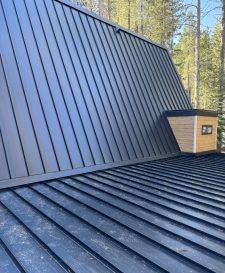
| Standing seam metal | Excellent with coated/marine-grade fasteners | High — moss struggles to grip smooth panels | 40-60 years | Higher upfront cost, longest-term value near the water |
| Composite/synthetic shake | Good | Moderate to good | 30-40 years | Good option where a wood-shake look is wanted without wood's maintenance |
We're honest about trade-offs rather than pushing one product for everyone. Metal costs more up front but shrugs off moss and salt corrosion better than anything else on this list — a real consideration if you're planning to stay in the home long-term. Asphalt remains the practical choice for most budgets, and architectural-grade shingle is worth the modest upgrade over 3-tab given how much moisture this area sees.
Our Roof Replacement Process
- On-site inspection and estimate. We walk the roof, check the attic for ventilation and moisture issues, and give you a written estimate with no pressure to decide on the spot.
- Material selection. We go over the options above against your budget and how long you plan to stay in the house, and land on a spec that fits.
- Scheduling around weather. Roof replacement needs a dry window. We plan the job to avoid starting a tear-off with rain in the forecast — a bare deck exposed to a storm is a problem we don't create.
- Tear-off and deck repair. Old roofing comes off, decking is inspected, and anything soft or rotted is replaced before moving forward.
- Underlayment, flashing, and ventilation install. This is where most of the long-term performance gets decided, and where we spend the extra care given the local climate.
- Final shingle or panel installation. Installed to manufacturer spec so the warranty stays intact.
- Cleanup and walkthrough. Site is cleared of debris and nails, and we walk the finished roof with you.
Ventilation and Moss: Prevention Built Into the Replacement
Moss doesn't have to be an annual battle if the roof is set up correctly from the start. Zinc or copper control strips near the ridge release trace metal ions with every rain, which discourages moss growth across the whole roof plane over time. Combined with balanced attic ventilation — which keeps the roof deck closer to outdoor temperature and reduces the condensation moss and algae feed on — a new roof can go years longer between cleanings than one installed without these details in mind.
We'll also talk through simple maintenance that extends any roof's life here: keeping gutters clear so water doesn't back up under the shingle line, and trimming back branches that shade sections of roof and keep them damp longer than the rest.
Cost Factors Homeowners Should Understand
Every roof replacement estimate depends on a handful of variables, and understanding them helps you compare quotes accurately instead of just comparing bottom-line numbers:
- Roof size and pitch — steeper roofs take longer and require more safety setup
- Number of layers to remove — tearing off two old layers costs more than one
- Deck condition — hidden rot found during tear-off adds material and labor
- Material choice — asphalt, metal, and composite carry different price points as shown above
- Roof complexity — valleys, dormers, skylights, and chimneys all add flashing work
- Ventilation upgrades — adding intake or exhaust vents where the current setup is inadequate
A trustworthy estimate breaks these out rather than handing you a single lump number, so you can see exactly what you're paying for and why two bids might differ.
Why a Crew That Already Works Grandview Matters
A roofing crew that regularly works in Blaine and elsewhere in Whatcom County already knows which flashing details hold up against wind-driven rain here, which fastener grades resist the salt air, and how aggressive to be with ventilation given the moss season. That's not something you get from a general contractor working a coastal job for the first time — it comes from having seen what fails and what doesn't, on roofs exposed to this exact climate.
It also means realistic scheduling. We know how unpredictable weather windows can be here and plan tear-offs accordingly, rather than leaving a roof exposed and hoping for the best.
Get a Straightforward Estimate
If your Grandview roof is showing its age — moss buildup, granule loss, or a repair history that's starting to add up — we're happy to take a look and give you an honest read on repair versus replacement. The estimate is free, there's no pressure, and you'll get a clear breakdown of what the job actually involves. Use the form below to get started.