 Blaine Siding
 Sandy Point's Waterfront Setting Puts Extra Stress on Decks
Sandy Point sits right up against the water, and that location is exactly why decks out there don't age like decks a few miles inland. Homes here catch wind and spray coming off the water almost year-round, and that salt-laden air settles into wood fibers, metal fasteners, and finishes in a way that inland Whatcom County homes simply don't deal with. Add in Blaine's long stretch of driving rain and a moss season that can run from fall through spring, and a deck out here is working harder than most homeowners realize.
None of this means a deck in Sandy Point is doomed to constant problems. It means the repair work has to account for the actual conditions the deck lives in, not just the symptoms sitting on the surface. That's the difference between a repair that lasts and one you're redoing again in two or three years.
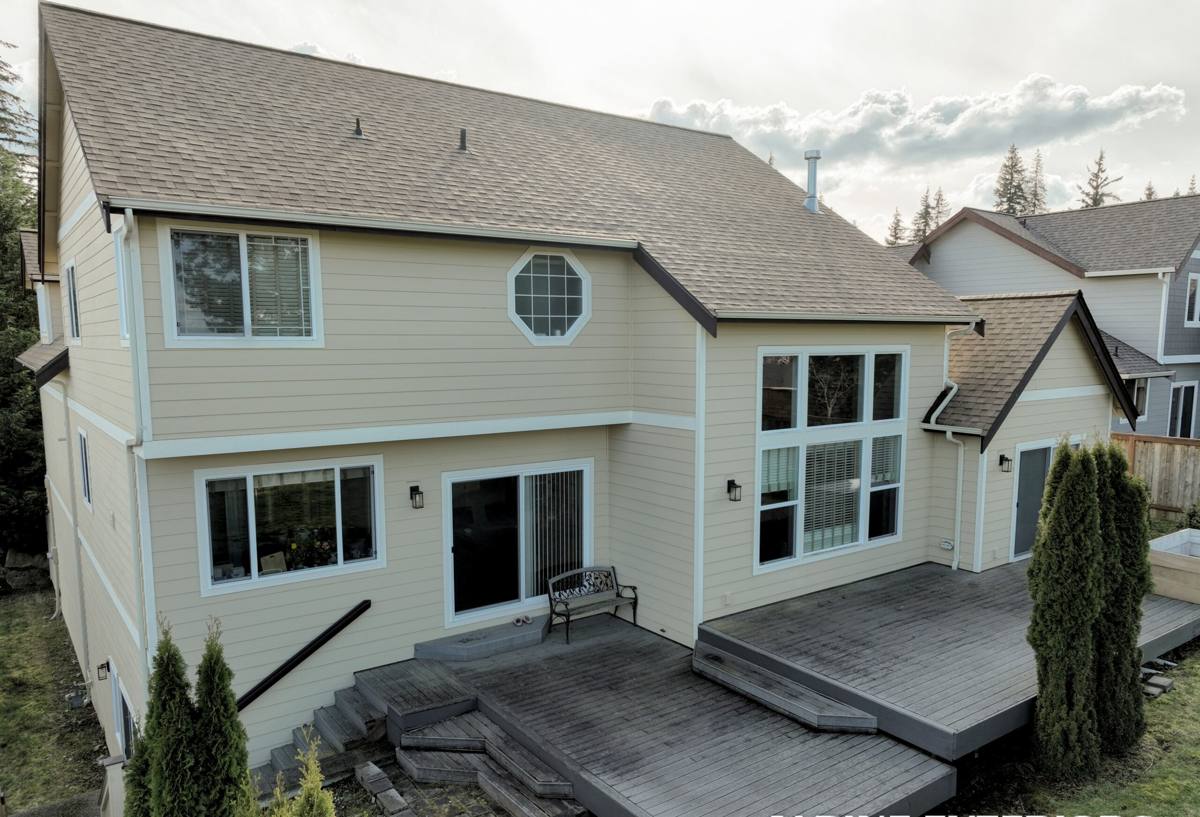
What Salt Air and a Long Moss Season Actually Do to a Deck
Fasteners, Framing Hardware, and Metal Connectors
Salt air accelerates corrosion on anything metal — nails, screws, joist hangers, post bases, and railing brackets. On a coastal property, standard galvanized fasteners can start showing rust streaks and losing holding strength well before the wood around them shows any obvious wear. Once a fastener corrodes, it stops doing its job even if the board it's holding still looks fine, which is why hardware condition matters just as much as the decking surface during any real inspection.
Ledger Boards and the House Connection
The ledger board — where the deck attaches to the house — is one of the most important structural points on any deck, and it's also one of the most common failure points near the water. Wind-driven rain gets pushed sideways against the house, and if flashing or sealing at that connection has aged or was installed with gaps, moisture works its way behind the ledger and sits there. Because it's hidden behind the decking, ledger rot often isn't visible until it's already significant.
Decking Boards, Railings, and Moss Growth
Whatcom County's moss season is long, and Sandy Point's mix of moisture and shade from surrounding trees gives moss and algae plenty of time to establish themselves on horizontal surfaces. Moss doesn't just look bad — it holds water against the wood surface, keeps boards from drying between rain events, and breaks down finishes faster than plain weathering would. Railings and stair treads that stay shaded are usually the first places we see it take hold.
Signs a Sandy Point Deck Needs Repair
Some damage is obvious. A lot of it isn't, especially when the deck still looks structurally sound from a distance. Here's what we look for, and what homeowners can check themselves before calling anyone out:
- Boards that feel soft, spongy, or flex more than they used to when you walk across them
- Rust staining bleeding out around screws or nail heads
- Railings or posts that wiggle or feel less solid than they should
- A visible gap, dark staining, or a soft spot where the deck meets the house
- Moss or black-green growth that keeps coming back within weeks of cleaning
- Any noticeable sag, especially near the middle of the deck or at stair stringers
If you're seeing more than one of these, it's worth getting the framing looked at, not just the surface boards. Surface problems are often the visible end of a framing issue that started underneath.
Repair or Rebuild? What Actually Drives the Decision
This is the question most homeowners actually want answered, and it depends less on the age of the deck and more on how much of the structure underneath is still sound. A deck with rotten boards but solid framing is usually a straightforward repair. A deck with a compromised ledger, rotted posts, or undersized/corroded framing hardware is a different conversation, even if the surface boards still look decent.
| Factor | Leans Toward Repair | Leans Toward Rebuild |
|---|---|---|
| Framing and joists | Solid, no soft spots when probed | Soft, crumbling, or widespread rot |
| Ledger board | Dry, properly flashed, secure | Water-damaged or improperly attached |
| Posts and footings | Stable, no movement or settling | Shifting, undersized, or rotted at grade |
| Extent of damage | Isolated to a few boards or one area | Spread across most of the deck |
| Age of original build | Newer construction, good materials used | Older deck built to outdated standards |
We'll walk you through where your deck actually falls on this table before recommending anything — not before, based on a guess from the driveway.
What a Correct Deck Repair Involves
Structural Inspection First
Before we touch a single surface board, we check the framing, the ledger connection, the posts, and the footings. Repairing decking on top of a compromised structure just hides the real problem under new wood — it doesn't fix it, and it usually costs more in the long run once that structure fails anyway.
Fastener and Flashing Upgrades
Given Sandy Point's exposure, we don't just replace corroded fasteners with the same grade that failed. Coastal-rated stainless fasteners and proper ledger flashing cost more up front but hold up dramatically longer against salt air, and that's a trade-off worth making on a waterfront property.
Matching Materials the Right Way
New boards need to match the thickness, species, and treatment of what's around them — not just be "close enough." Mismatched boards expand and contract at different rates, which shows up as uneven gaps and inconsistent wear within a season or two.
Our Deck Repair Process in Sandy Point
- On-site assessment. We walk the full deck, probe suspect areas, and check the ledger, posts, and visible framing before forming any opinion on scope.
- Straight explanation of what we find. You'll know what's cosmetic, what's structural, and why — in plain terms, not trade jargon.
- Written scope and estimate. No guessing after the fact about what's included.
- Repair work. Structural fixes first, then decking, railings, and finish work, using fasteners and materials suited to a coastal environment.
- Cleanup and final walkthrough. We show you the completed work and flag anything worth keeping an eye on going forward.
Choosing Materials for a Salt-Air, High-Moss Environment
There's no single "best" decking material for every Sandy Point home — it depends on your budget, how much upkeep you're willing to do, and how the deck is used. Our standard is to be honest about the trade-offs rather than push one product as a cure-all.
Pressure-treated lumber is the most affordable option and performs well when properly fastened and finished, but it needs more regular sealing in a coastal, moss-prone setting to keep moisture from working its way in at cut ends and fastener points.
Cedar has natural resistance to decay and looks good against a waterfront setting, but it's softer and shows wear from moss and moisture faster than treated lumber if it isn't maintained on a consistent schedule.
Composite decking resists moisture absorption and won't rot, which is genuinely useful near the water — but it still needs cleaning to keep moss and algae from building up on the surface, and not all composite products handle UV and moisture the same way, so installation quality and product selection both matter.
Whatever material you choose, we'll size and fasten it for the exposure your deck actually gets, not a generic inland install.
Keeping a Sandy Point Deck Ahead of the Damage
A little regular attention goes a long way toward stretching the life of a repair, especially in this climate. This is the routine we'd recommend to any homeowner out here:
- Sweep debris and standing moss off the deck surface at the start and end of moss season
- Rinse salt residue off railings and boards periodically, especially after storms
- Check fasteners and hardware for rust staining once or twice a year
- Look at the ledger board connection for gaps, staining, or soft wood
- Reseal or refinish wood decking on the schedule the product actually calls for, not "when it looks bad"
- Give railings and stair posts a firm push test to catch loosening early
Why Hiring a Crew That Already Works in Sandy Point Matters
A contractor who mostly works inland properties can still do competent general carpentry, but they won't necessarily know how fast salt air chews through standard fasteners here, or which corners of a Sandy Point deck tend to hold moss the longest, or how driving rain off the water tends to find its way behind ledger boards that would be fine a few miles inland. That local pattern recognition is what keeps a repair from becoming a repeat job.
It also matters for scheduling and realistic timelines — knowing how weather windows actually work along this stretch of Whatcom County means fewer surprises about when work can start and how long it'll take to finish properly, rather than rushing a job between storms.
If you're dealing with a soft spot, a wobbly railing, or a deck that just doesn't feel as solid as it used to, we're happy to take a look and give you an honest read on what it needs. Reach out for a free, no-pressure estimate using the form below.