 Blaine Siding
 Why Sandy Point Roofs Don't Age Like Inland Roofs
Sandy Point sits close to the water, and that changes what a roof has to deal with year after year. Homes just a few miles inland in Whatcom County still get plenty of rain, but they don't get the same steady dose of salt-laden marine air, the same wind-driven rain coming off the water, or the same shaded, damp conditions that let moss take hold early and spread fast. A roof built or replaced without accounting for that will often need attention years before a roof of the same material would inland.
That's the core reason a "roof replacement" page for Sandy Point needs to be different from a general one. The shingles, the flashing details, the ventilation strategy, and the maintenance rhythm all shift a little when a home sits this close to the Strait. None of it is exotic or complicated — it just has to be done with the local conditions in mind instead of copying a spec sheet written for a drier, more sheltered part of the county.
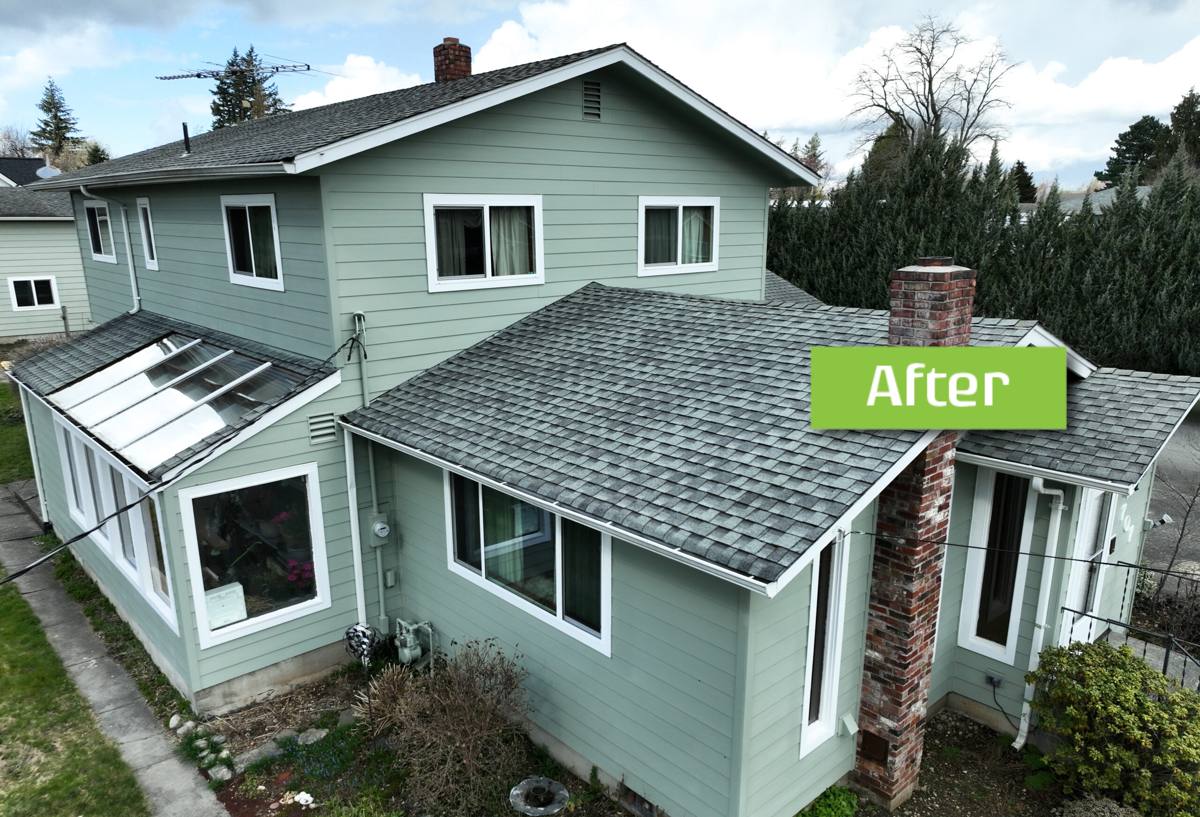
What Salt Air, Driving Rain, and Moss Actually Do to a Roof
Salt Air
Airborne salt doesn't just sit on a roof — it works its way into metal fasteners, flashing, and drip edge over time. Standard galvanized fasteners corrode faster near the water than they do inland, and once a fastener starts to weaken, the shingle or panel it's holding loses grip exactly when wind loads are highest. This is a slow process, which is what makes it easy to miss until a roof is already older than it should be.
Driving Rain
Storms coming off the water tend to push rain sideways instead of straight down. That matters at every horizontal lap, every valley, and every penetration — a roof detail that sheds water fine in a calm, vertical rain can still let water in when it's being driven sideways under pressure. Underlayment quality and flashing technique matter more here than they do on a more sheltered lot.
Moss
Whatcom County's long wet season is tough on any roof, but shaded, north-facing, and low-slope sections near the water hold moisture longer and grow moss faster. Moss isn't just cosmetic — it holds water against the roofing material, lifts shingle edges as it grows, and can work its way under laps over a few seasons, creating small leak paths that are hard to spot from the ground.
Signs a Sandy Point Home Needs Replacement, Not Another Repair
Repairs make sense when a roof has isolated damage and years of usable life left. Replacement makes sense when the roofing material itself is worn out system-wide, even if it's not actively leaking yet. In a coastal setting like this, that line often gets crossed earlier than homeowners expect, because granule loss, fastener corrosion, and moss damage all show up sooner than they would on a comparable inland roof.
- Granules collecting in gutters or at downspout outlets, or shingles that look noticeably thinner or patchier than when they were installed
- Moss or dark algae staining that comes back within a season or two of cleaning, especially on shaded or low-slope sections
- Nail heads, flashing edges, or exposed fasteners showing rust or white corrosion streaks
- Curling, cupping, or cracked shingles, particularly on the sides of the roof that face prevailing weather off the water
- Soft spots in the decking, staining on interior ceilings, or daylight visible in the attic near flashing points
- A roof that's approaching or past the low end of its expected material lifespan, even without visible leaks
If a roof is only showing one or two of these signs in a small area, targeted repair is often still the right call. When several show up together, or the roof is already past the age where a coastal home should expect trouble, replacement is usually the more honest recommendation — patch work on a roof that's failing systemically just spends money without solving the underlying problem.
What a Correct Roof Replacement Involves Here
A roof replacement done right for a Sandy Point property isn't just "new shingles on the old deck." The details underneath and around the shingles matter more in this environment than the shingles themselves.
Deck Inspection and Repair
Once the old roofing is off, the deck gets inspected for soft or delaminated spots, especially near valleys, chimneys, and any area that showed staining from inside. Any compromised sheathing gets replaced before anything new goes down — covering a weak deck with new roofing just hides the problem for another few years.
Underlayment
Given the amount of wind-driven rain this area sees, a synthetic underlayment with strong water resistance is the baseline, with self-adhered membrane at eaves, valleys, and any low-slope transitions where water is most likely to be pushed backward under wind pressure.
Flashing
Step flashing at walls, proper counter-flashing, and correctly lapped valley metal matter enormously near the water. This is where most driving-rain leaks actually originate, not in the field of the roof itself. Corrosion-resistant flashing material is worth the small upcharge over standard galvanized in a salt-air setting.
Fasteners
Using corrosion-resistant fasteners rated for coastal or marine exposure, rather than standard galvanized, is one of the simplest ways to add years to a roof's working life here. It's a small material cost difference that pays for itself many times over.
Ventilation
Balanced intake and exhaust ventilation keeps the attic dry and temperature-stable, which reduces condensation, extends shingle life from underneath, and helps prevent the kind of moisture buildup that encourages moss and mildew even before it reaches the exterior surface.
Material Options for a Coastal Whatcom County Home
There's no single "best" roofing material for every Sandy Point home — it depends on the home's style, slope, budget, and how much long-term maintenance the owner wants to take on. Here's an honest comparison of the main options we install, specifically weighed against salt air, moss, and driving rain.
| Material | Salt Air / Corrosion Resistance | Moss Resistance | Typical Lifespan Here | Maintenance Load |
|---|---|---|---|---|
| Architectural asphalt shingle | Good, with coastal-rated fasteners and flashing | Moderate; benefits from algae-resistant granules | 20-25 years | Periodic moss and gutter cleaning |
| Standing seam metal | Excellent with proper coating and fastener spec | Very good; sheds moisture, little for moss to grip | 40-50+ years | Low; occasional inspection of seams and fasteners |
| Synthetic/composite shingle | Good | Moderate to good depending on product | 25-40 years | Periodic cleaning, similar to asphalt |
Standing seam metal tends to perform the best long-term in this exact environment because it gives moss very little to hold onto and handles wind-driven rain well when installed with the right seam and fastener details. Architectural asphalt remains a solid, more budget-friendly choice as long as coastal-grade fasteners, flashing, and algae-resistant shingles are used rather than a standard inland spec. We'll walk through the honest trade-offs — upfront cost, expected lifespan, appearance, and maintenance — for your specific roof rather than pushing one product across every home.
Our Process for a Sandy Point Roof Replacement
- On-site assessment — we inspect the existing roof, decking, ventilation, and flashing details in person, noting anything specific to the home's exposure to wind and water.
- Straightforward estimate — a clear, written scope covering materials, underlayment, flashing, ventilation, and any deck repair contingencies, with no vague allowances.
- Tear-off and deck inspection — full removal of old roofing, with the deck checked and repaired before anything new is installed.
- Underlayment and flashing — installed to the coastal-appropriate spec described above, with extra attention at valleys, walls, and penetrations.
- Roofing installation — installed to manufacturer spec plus the fastener and detail upgrades appropriate for this environment.
- Final walkthrough — we review the finished roof with you, including what routine maintenance will look like given the home's specific exposure.
Why Local Experience in Sandy Point Matters
Roofing crews who mostly work drier, more sheltered neighborhoods can do fine work and still under-spec a roof for a place like Sandy Point, simply because it's not what they see every day. A crew that already works this stretch of Whatcom County knows which sides of a roof take the worst of the weather off the water, which details tend to fail first in salt air, and how aggressive the moss season really gets on shaded or low-slope sections here. That familiarity shows up in small decisions — where to add extra underlayment, which fastener grade to spec, how much roof ventilation is actually enough — that add years to a roof's life but rarely show up on a basic estimate.
It also matters when something needs attention after the fact. A crew that already knows the property and the neighborhood's conditions can diagnose a problem faster and more accurately than one starting from zero.
Keeping a New Roof Performing in This Climate
A correctly installed roof still benefits from a little routine attention in a coastal environment like this one:
- Clear gutters and downspouts at least twice a year so water isn't backing up under the eaves during heavy rain
- Remove moss buildup promptly rather than letting it establish, especially on shaded or north-facing sections
- Have flashing and fastener points checked every few years, since corrosion is gradual and easy to miss from the ground
- Keep overhanging branches trimmed back where they shade the roof and slow drying after storms
- Address any small leak or staining sign quickly — in this climate, small issues don't stay small for long
None of this is a substitute for a properly built roof in the first place, but it's what keeps a well-installed roof reaching the upper end of its expected lifespan instead of the lower end.
If your Sandy Point roof is showing its age, or you just want an honest read on how many years it has left, we're glad to come take a look. The estimate is free, there's no pressure attached, and you'll get a straight answer about repair versus replacement either way — just fill out the form below to get started.