 Blaine Siding
 Board & Batten Siding Built for Semiahmoo's Waterfront Exposure
Semiahmoo sits out on its own, a peninsula community tucked into the northwest corner of Blaine, hard against the Canadian border. That location is what makes it beautiful, and it's also what makes it hard on a house. Homes here catch wind and moisture straight off the water, with fewer trees and buildings to break up the weather than you'd find a mile or two inland. Board and batten siding — with its clean vertical lines and strong shadow pattern — is a natural fit for the coastal and craftsman-style homes common in this part of Whatcom County. But the look only holds up long-term if what's underneath it is built to handle what Semiahmoo throws at it.
We install board and batten in one material: James Hardie fiber cement. This page covers what that means specifically for a board and batten project in Semiahmoo — the climate factors that matter most here, what a correct installation actually involves, and why hiring a crew that already works this peninsula changes the outcome ten years down the road, not just on install day.
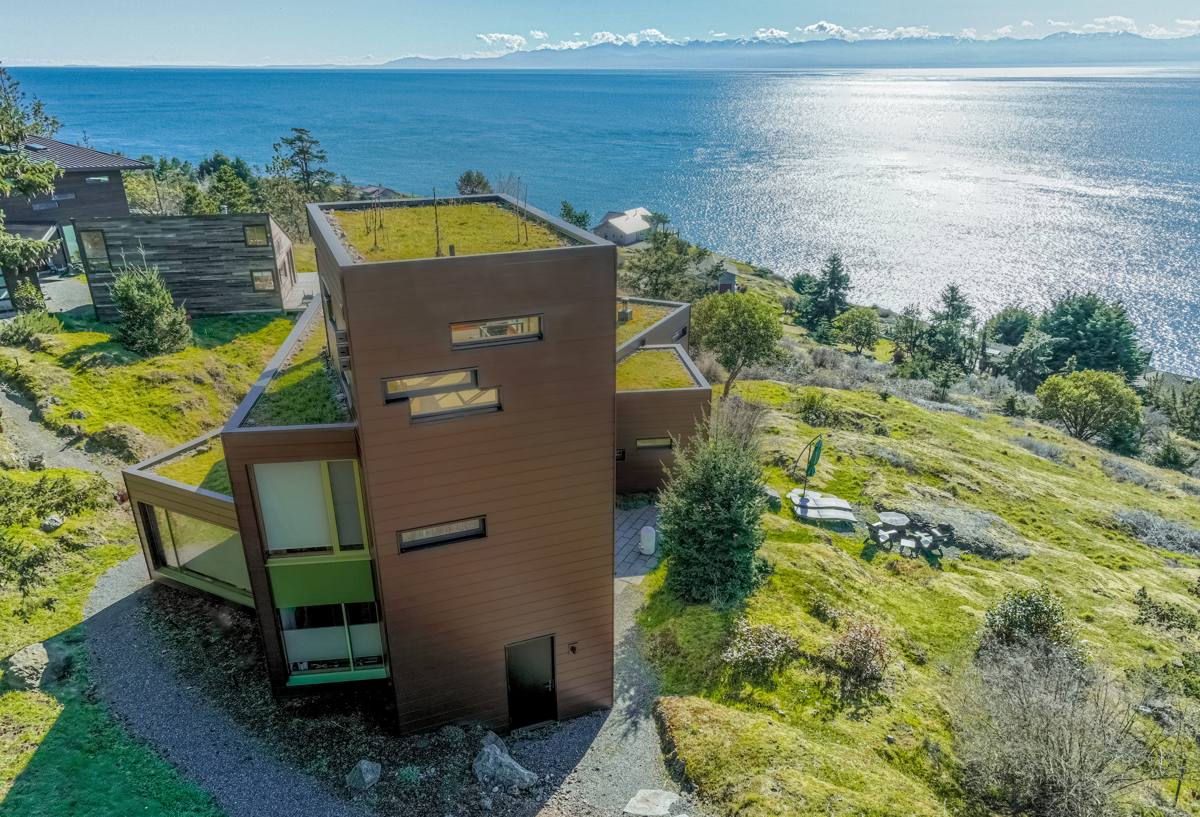
What Semiahmoo's Climate Does to Siding
Three conditions define the wear pattern on homes out on the Semiahmoo peninsula, and they compound each other more than homeowners usually expect.
Salt Air
Airborne salt off the water accelerates corrosion on anything metal — fasteners, flashing, trim edges — and it settles into porous or absorbent siding materials over years of exposure. Board and batten has more vertical seams and more visible fastener lines than plain lap siding, so the materials and hardware behind those seams matter more here than they would on a typical inland wall.
Driving Rain
Wind off open water doesn't just drop rain straight down — it pushes it sideways into walls, under trim, and into any gap that isn't properly lapped or flashed. Board and batten depends entirely on correct water-shedding sequence — which layer overlaps which — at every batten, corner, and window opening. Get that sequence wrong and wind-driven rain will eventually find the mistake, usually in the exact spot that's hardest to spot from the ground.
A Long Moss Season
Blaine's marine climate keeps things damp for a large share of the year, and shaded or north-facing walls on Semiahmoo properties stay wet longer than they would on a more open, sun-exposed inland lot. Moss and algae need very little to get established — a shaded batten edge that never fully dries between rain events is often enough. Once moss takes hold, it holds moisture against the siding surface, which is a slow but steady threat to any material that isn't inherently resistant to rot and moisture absorption.
None of these three conditions is unique to Semiahmoo on its own, but together, at this intensity and this close to open water, they add up to a tougher environment than most of Whatcom County's more sheltered inland neighborhoods see.
Why We Only Install Board & Batten in James Hardie Fiber Cement
Board and batten can be built from engineered wood, vinyl, or fiber cement. We standardized on James Hardie fiber cement for every board and batten job we take on, in Semiahmoo and everywhere else we work, for reasons that carry more weight here than they would in a sheltered inland yard:
- Non-combustible core — fiber cement doesn't feed a fire the way wood-based siding products can.
- Engineered for Pacific Northwest moisture — Hardie's HZ5 product line is formulated for climates with sustained damp exposure, which describes Semiahmoo for a large part of the year.
- ColorPlus factory finish — color is baked on under controlled factory conditions, which resists the fading and moss-friendly surface breakdown that field-applied paint is more prone to over time.
- Dimensionally stable — fiber cement doesn't swell and shrink with moisture the way wood-based products do, which matters at every batten seam and fastener point on a board and batten wall.
- Backed by a strong, transferable warranty — meaningful when a product has to survive decades of salt air and driving rain, not just a handful of mild seasons.
We don't install LP SmartSide, vinyl board and batten, or cedar on our projects. Each of those products has legitimate uses somewhere, but for this climate and this style, we've made Hardie fiber cement our standard, and we stand behind that choice on every home we side — not just the ones on the water.
What a Correct Board & Batten Installation Involves
Board and batten looks simple from the street — vertical panels, battens covering the seams — but the assembly behind that look has more failure points than most homeowners expect. A batten that's face-nailed instead of blind-nailed, a seam that laps the wrong direction, or a missing rainscreen gap will all look identical on install day and only show themselves as problems two or three winters later.
What we build into every board and batten job
- A drainage plane and rainscreen gap behind the panels, so any moisture that does get past the surface has somewhere to drain instead of sitting against the wall sheathing
- Correct panel and batten spacing per Hardie's engineering specifications — not just whatever looks even from the sidewalk
- A batten fastening pattern that avoids restricting the panel, so the assembly can move slightly with temperature and moisture changes without cracking at the seams
- Stainless or coated corrosion-resistant fasteners appropriate for salt-air exposure, not standard hardware pulled from a general-purpose bin
- Proper flashing and kick-out details at every window, door, roofline, and horizontal transition
- Factory-cut and factory-finished panel edges wherever possible, with any field cuts sealed to manufacturer specification
- Correct, minimal caulking — used only at joints designed to move, never as a substitute for proper flashing and lapping
Skip any one of these steps and the siding can still look right for a while. The failures that show up from cut corners on board and batten tend to surface as staining below a batten, soft spots near the base of the wall, or moss colonies that keep coming back no matter how often they're power-washed off.
Design Considerations Specific to Semiahmoo
Batten spacing and reveal width change the entire character of a board and batten elevation, and the right choice depends on the home's scale and style, not just personal taste. Wider reveals read as more contemporary; tighter, evenly spaced battens lean traditional or craftsman. On a peninsula where homes sit close to open sightlines and water, color and reveal choices tend to be more visible from a distance than they would be on a tree-lined inland street, which is worth factoring in before you commit to a look.
Board & Batten Material Comparison
| Factor | Vinyl Board & Batten | Engineered Wood | James Hardie Fiber Cement |
|---|---|---|---|
| Moisture resistance | Sheds surface water; seams can trap it | Depends on resin seal staying intact | Engineered for sustained damp climates (HZ5) |
| Salt air / corrosion behavior | Panel material is stable; fasteners still exposed | Edge swelling risk in coastal humidity | Stable core; paired with corrosion-resistant fasteners |
| Fire resistance | Can soften or deform under heat | Combustible | Non-combustible |
| Finish durability | Color molded in; can fade and chalk over time | Field or factory paint, needs periodic upkeep | ColorPlus factory-baked finish |
| Typical lifespan when correctly installed | 20-30 years | 15-25 years | 30-50+ years |
This is a general comparison, not a claim about every product on the market — quality varies by manufacturer within each category, and installation quality matters as much as the material itself. It's meant to show why, given the exposure Semiahmoo homes face, we settled on one material rather than offering all three.
Our Process for a Semiahmoo Board & Batten Project
- On-site assessment — we look at wall orientation, existing moisture damage, shade patterns, and how exposed the home is to wind off the water before we spec anything.
- Moisture management plan — drainage plane, rainscreen, and flashing details get planned before a single panel is ordered, not figured out on the fly during install.
- Material and color selection — Hardie panel profile, batten spacing, and ColorPlus color, matched to the home's style and to any design guidelines that may apply to the property.
- Removal and prep — old siding comes off, sheathing gets inspected and repaired where needed, and the water-resistive barrier goes on correctly before anything else happens.
- Installation to spec — panels, battens, flashing, and fasteners installed to Hardie's engineering requirements, with no shortcuts on the details that don't show.
- Final walkthrough — we go over the finished work with you in person before calling the job complete.
Why a Crew That Already Works Semiahmoo Matters
Semiahmoo isn't a typical inland Whatcom County lot. Wind exposure varies noticeably from block to block depending on how close a home sits to open water and which direction it faces. Some Semiahmoo properties fall under planned-community or design-review guidelines that affect exterior color and material choices, which is worth checking before you settle on a specific look. Permitting runs through the City of Blaine and Whatcom County depending on the property, and a crew that's pulled those permits before doesn't have to learn the process on your job.
More than paperwork, though, it comes down to knowing what actually fails first on this peninsula. A crew that's only worked sheltered inland neighborhoods will build a technically correct wall assembly by the book. A crew that's worked Semiahmoo specifically knows which elevations take the worst of the driving rain, which walls stay shaded and damp the longest, and where the extra care in flashing and fastener choice actually pays off a decade later instead of just looking good at the walkthrough.
Maintenance and Longevity in This Climate
Board and batten in James Hardie fiber cement is low-maintenance, not no-maintenance, especially in a climate like this one. A few habits go a long way toward protecting the investment:
- Rinse shaded, moss-prone walls once or twice a year rather than waiting for growth to establish and spread
- Keep gutters clear so overflow doesn't run down wall sections the siding and flashing weren't designed to handle
- Re-caulk designed movement joints if you ever notice gaps opening up, rather than assuming they'll seal themselves over time
- Have flashing and trim checked periodically at windows, doors, and rooflines — these are the first places a developing problem shows itself
- Trim back vegetation and landscaping that keeps a wall section shaded and damp longer than the rest of the house
Done right, a Hardie board and batten installation is built to handle decades of Semiahmoo's salt air, driving rain, and moss season with minimal upkeep beyond that short list.
If you're considering board and batten siding for a home in Semiahmoo, we're happy to walk the property, talk through what your specific exposure calls for, and put together a straightforward, no-pressure estimate.