 Blaine Siding
 Decking in Semiahmoo Isn't the Same Job as Decking Inland
Semiahmoo sits right on the water, and that changes what a deck has to survive. Homes a few miles inland in Whatcom County deal with plenty of rain, but they don't get the steady salt air coming off the water, the wind-driven rain that hits decks sideways instead of straight down, or the long stretch of gray, damp months that let moss and algae take hold on anything that stays wet too long. A deck built here needs to be planned around those three things from the start, not patched for them later.
We work on homes in this area regularly, and the pattern is consistent: decks that were built with inland assumptions — standard fastener coatings, tight board spacing, ledger details borrowed from a drier climate — start showing problems years before they should. That's the gap this page is about. Not a general composite decking overview, but what actually matters when the deck is going on a home near Semiahmoo.
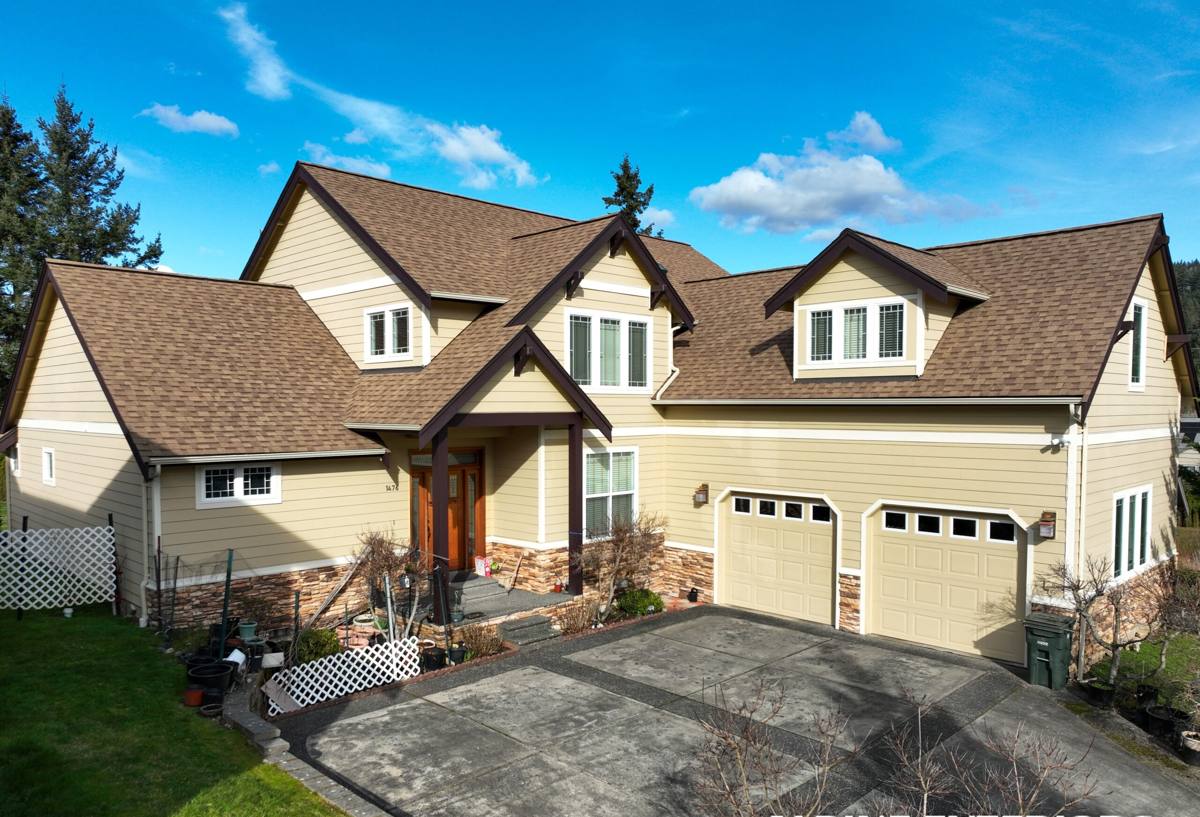
What Salt Air, Driving Rain, and Moss Actually Do to a Deck
Salt Air
Salt-laden air corrodes metal faster than plain moisture does. Fasteners, joist hangers, and post hardware that aren't rated for coastal exposure can start rusting and staining the decking around them well before the boards themselves show any wear. This is one of the most common shortcuts we see on older coastal decks — the wood or composite looks fine, but the hardware underneath is failing.
Driving Rain
Wind off the water pushes rain sideways and up under railings, fascia, and board ends — areas that a deck built for a sheltered inland yard was never really flashed or sealed for. Water finds gaps at butt joints, around post bases, and where decking meets the house, and it doesn't take a downpour to do it; a steady onshore breeze during a normal rain is enough.
Moss and Algae
Whatcom County's damp season runs long, and shaded or low-airflow sections of a deck stay wet for days at a time. That's exactly what moss and algae need to establish. Once they get a foothold in board grooves or between boards, they hold moisture against the surface and make the deck slicker and harder to keep clean — a maintenance and safety issue as much as a cosmetic one.
Why Composite Decking Fits This Climate — and Where It Doesn't Solve Everything
Composite decking doesn't rot, splinter, or need annual staining, which is a real advantage in a climate that keeps wood wet more often than it dries it out. Modern capped composite boards resist moisture absorption far better than wood, and they don't provide the same food source for the mold and mildew that develop on untreated or aging wood surfaces.
What composite decking does not do on its own is stop moss and algae from growing on the surface, and it doesn't fix a poorly built substructure. Composite is a surface material — the framing underneath, the fasteners holding it down, and the airflow beneath the deck still have to be handled correctly, or you end up with a low-maintenance deck sitting on a structure that's quietly having problems.
Composite vs. Wood vs. PVC — How They Hold Up Near the Water
| Material | Moisture Behavior | Maintenance | Typical Lifespan Here |
|---|---|---|---|
| Pressure-treated wood | Absorbs water, swells and shrinks seasonally, prone to splinter and rot at fastener points | Annual cleaning, sealing/staining every 1-2 years | 10-15 years before major repair or replacement |
| Capped composite | Low water absorption, resists rot; surface can still hold moss/algae if not cleaned | Periodic washing, no staining or sealing | 25-30+ years, manufacturer-dependent |
| Cellular PVC | Effectively impervious to moisture absorption | Periodic washing; generally lowest maintenance | Comparable to or longer than composite, higher material cost |
We install composite for most Semiahmoo homeowners because it hits the balance point between upfront cost, low maintenance, and how it looks — but PVC is a legitimate option worth discussing where budget allows, especially for decks with heavy sun and spray exposure. We'll walk through the honest trade-offs for your specific spot rather than push one product across the board.
What a Correct Installation Looks Like in This Climate
Framing and Fasteners
Joists, ledgers, and posts get hardware rated for coastal or marine-grade exposure, not standard galvanized. It costs a little more up front and prevents the rust staining and premature hardware failure that shows up on decks built with inland-grade fasteners.
Ventilation Underneath
The space under the deck needs to actually breathe. Skirting, planter boxes, or low clearance that trap still, damp air underneath a deck create the exact conditions that speed up hardware corrosion and encourage mildew on the underside of boards. We plan clearance and airflow paths as part of the layout, not as an afterthought.
Board Spacing and Drainage
Gapping between boards needs to account for composite's expansion and contraction and still shed water fast. Too tight, and water and debris sit in the grooves — which is where moss gets started. Too loose, and the deck feels sloppy underfoot. We follow manufacturer spacing specs and adjust slightly for how exposed or sheltered the deck is.
Flashing at the House
Where the deck meets the siding, proper ledger flashing keeps driven rain from working its way behind the house's water barrier. This is one of the most consequential — and most commonly rushed — details on any deck attached to a home, and it matters more here given how often rain comes in sideways off the water.
Our Process for a Semiahmoo Deck Project
- Site walk and assessment — we look at sun/shade pattern, prevailing wind and spray exposure, drainage slope, and the condition of any existing structure being replaced.
- Material and layout discussion — honest comparison of composite lines, board profiles, and railing options based on your budget and how exposed the site is.
- Permitting — Whatcom County and City of Blaine permitting requirements depend on deck height, size, and proximity to property lines or shoreline setbacks; we handle what applies to your project.
- Demolition and framing — old decking and any compromised framing removed, new substructure built with coastal-rated hardware.
- Decking, railing, and finish work — boards installed to spec, railing and fascia completed, site cleaned up.
- Walkthrough — we go over basic care and answer questions before we consider the job done.
Keeping a Composite Deck Clean in a Long Moss Season
Composite decking near Semiahmoo still needs periodic attention — it just doesn't need staining or sealing. A checklist that covers most of what a homeowner here needs to stay ahead of:
- Sweep debris out of board grooves regularly, especially under trees or in shaded corners where moss gets started first.
- Rinse or wash the deck surface a few times a year, more often on shaded or north-facing sections that stay damp longer.
- Keep gutters and downspouts clear so runoff isn't dumping extra water onto the deck surface.
- Check railing posts and fastener points annually for any rust staining, which can signal hardware that needs attention.
- Trim back overhanging branches or shrubs that keep sections of the deck shaded and slow to dry.
- Address any moss or algae promptly with a mild cleaner rather than letting it spread across the boards.
Cost Factors for a Semiahmoo Composite Deck
| Factor | Why It Affects Price |
|---|---|
| Deck size and shape | More linear footage of board and railing, more complex cuts around angles or curves |
| Height off grade | Taller decks need more substantial framing, stairs, and often code-required railing |
| Composite tier | Entry-level capped composite vs. premium multi-tone or PVC boards varies significantly per square foot |
| Substructure condition | Replacing failed framing or footings on an existing deck adds cost beyond the surface material |
| Exposure level | Fully exposed, water-facing decks may warrant upgraded hardware and railing systems |
We'll never throw out a number without seeing the site — a flat quote before knowing your layout, exposure, and existing structure isn't an honest one.
Why a Crew That Already Works Semiahmoo Matters
A contractor who mostly builds decks inland is going to default to inland assumptions — standard hardware, standard flashing, standard ventilation clearance — unless they specifically know to adjust for a coastal site. That's not a knock on their general skill; it's just not their normal environment. We work this stretch of Whatcom County regularly enough to know which corners of a deck near the water take the worst of the weather, which hardware upgrades are worth the cost here, and how the county's permitting process runs for shoreline-adjacent properties. That local familiarity is the difference between a deck that's built to spec on paper and one that's actually built for where it sits.
If you're planning a new deck or replacing one that's showing its age, we're happy to walk the site with you and give you a straight answer on what it needs. Reach out below for a free, no-pressure estimate.