 Blaine Siding
 Decks on Semiahmoo Take a Different Kind of Beating
A deck built a mile inland ages differently than one built out on Semiahmoo. The combination of salt-laden air, wind-driven rain off the water, and a moss season that can run from October clear through April puts a specific kind of stress on wood, fasteners, and finishes. We've repaired enough decks in this stretch of Whatcom County to know that "generic deck maintenance" advice usually misses what's actually happening here.
This page covers what deck repair actually involves for a Semiahmoo-area home, what we look for, and how we approach the job so the repair holds up rather than becoming a yearly chore.
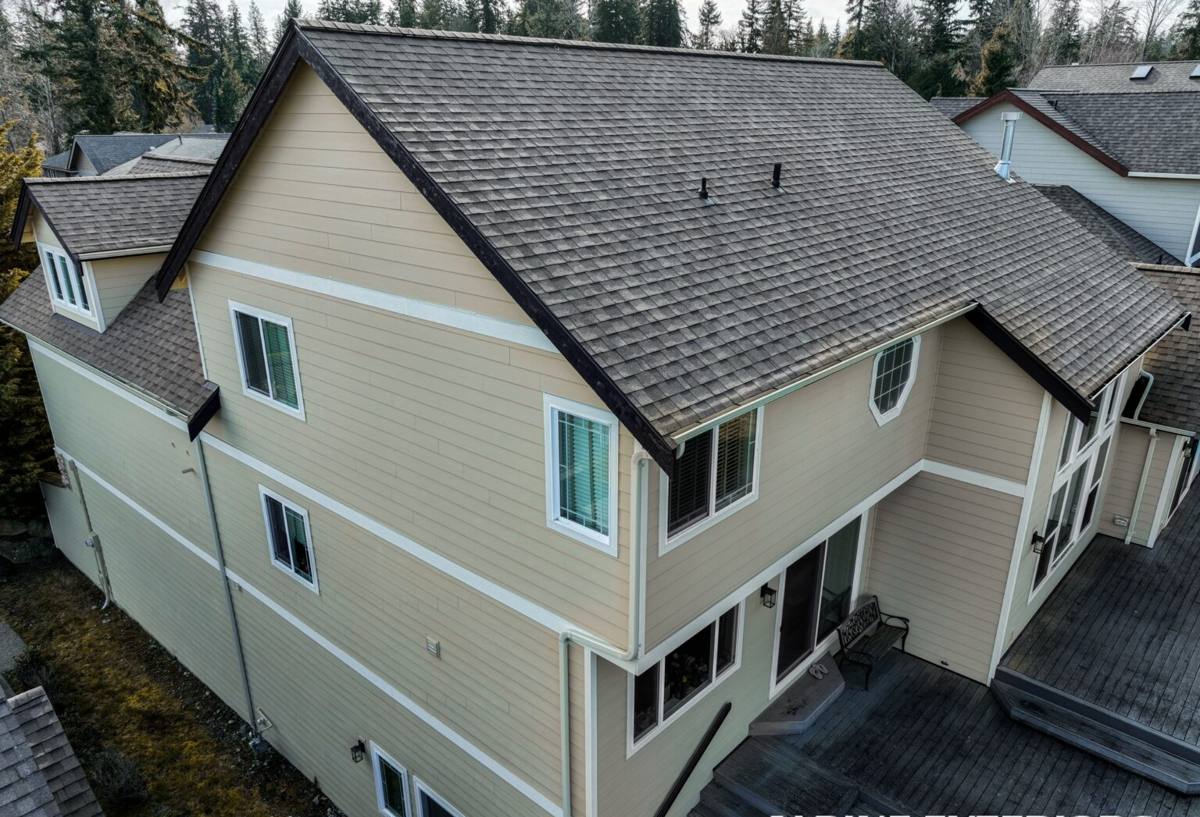
What the Semiahmoo Climate Does to a Deck
Salt Air and Metal Fasteners
Proximity to salt water accelerates corrosion on anything metal — screws, joist hangers, structural bolts, and railing hardware. Standard zinc-coated fasteners that would last two decades in a drier, inland part of Whatcom County can start showing rust streaks and pitting in a fraction of that time here. Once a fastener corrodes, it loses holding strength long before it looks obviously bad, which is why a lot of "surprise" deck failures aren't really surprises — they were building for years, hidden under a board.
Driving Rain and Water Intrusion
Wind off the water doesn't just fall straight down — it drives rain sideways and up under railings, ledger boards, and stair stringers. That means water finds its way into joints and end grain that a calmer rain would never reach. Ledger board connections (where the deck attaches to the house) are especially vulnerable, because that's also where flashing failures cause hidden rot behind the siding, not just in the deck itself.
Moss and Trapped Moisture
Blaine's moss season is long, and moss doesn't just look bad on a deck surface — it holds moisture against the wood far longer than open air would, which is exactly the condition that lets rot and mildew take hold. Moss also grows in the gaps between boards and around fastener heads, holding water right where it does the most damage.
Signs a Semiahmoo Deck Needs Repair, Not Just Cleaning
- Soft or spongy spots when you walk across the decking, especially near the house or stair landing
- Rust streaks bleeding out from screw heads or around joist hangers
- Railings that flex or feel loose when you lean on them
- Gaps opening up at the ledger board where the deck meets the house
- Persistent moss or dark staining that comes right back within weeks of cleaning
- Stair stringers that feel bouncy or show splitting at the notches
- Popped or backed-out fastener heads across multiple boards
- A grayed, silvery look to boards paired with splintering — a sign the wood's natural oils and finish are long gone
Any one of these can be a simple fix. Several at once, especially near the ledger or stairs, usually means it's worth having someone look at the structure underneath, not just the visible boards.
What a Correct Deck Repair Actually Involves
A repair that's done right starts below the decking, not on top of it. Here's the order we work in on most Semiahmoo jobs:
1. Structural Inspection First
Before replacing a single board, we check the framing underneath — joists, beams, ledger connection, and post bases. Replacing a rotted deck board over a compromised joist just moves the problem, it doesn't solve it.
2. Ledger Board and Flashing Check
Given how much of Whatcom County's rain comes in sideways, the ledger connection gets specific attention. If flashing is missing, cracked, or was never installed correctly to begin with, water has likely been getting behind it for a while — that's addressed as part of the repair, not left for later.
3. Fastener Upgrade Where It Matters
Where corrosion is the underlying issue, we don't just replace like-for-like. Stainless steel or heavy hot-dip galvanized fasteners cost more up front but hold up far better against salt air than standard coated screws — on a deck this close to the water, that difference in fastener grade is often the single biggest factor in how long a repair actually lasts.
4. Board and Structural Member Replacement
Any board, joist, stringer, or post showing rot, splitting, or insect damage gets replaced rather than patched. Sistering a new joist alongside a failing one is sometimes the right call structurally; other times full replacement is the honest answer. We'll tell you which and why.
5. Drainage and Airflow
Where moss and standing moisture are part of the problem, we look at whether the deck has enough gap between boards and enough airflow underneath. Sometimes a repair includes small adjustments to spacing or grading nearby so water actually sheds instead of sitting.
Repair vs. Replacement: How We Help You Decide
| Factor | Repair likely makes sense | Replacement worth considering |
|---|---|---|
| Framing condition | Joists and beams are sound, isolated soft spots | Widespread rot in multiple joists or the ledger |
| Age of deck | Under 12-15 years, built with treated lumber | Older deck nearing the end of typical service life |
| Extent of damage | Limited to a few boards, stairs, or railing sections | Damage spread across decking, framing, and posts |
| Fastener condition | Localized corrosion, easily upgraded | Corrosion throughout, hardware failing structurally |
| Budget goal | Extend usable life a number of years affordably | Want a long-term reset and possibly a design change |
We'll always give you the honest read on which side of this table your deck falls on — a repair that's really a stopgap on failing framing isn't a service we're going to sell you as a long-term fix.
Materials: What Holds Up Out on Semiahmoo
Material choice matters more here than in a drier inland spot. A few honest notes on trade-offs:
- Pressure-treated lumber is the standard, cost-effective choice for framing and is what most Semiahmoo decks are built on — it needs a properly maintained finish to keep performing near salt air.
- Composite decking resists moisture and moss growth better than wood on the surface, but it's not maintenance-free — it still needs cleaning, and lower-quality composites can be sensitive to how they're installed (fastening pattern, ventilation, thermal movement) in a marine climate.
- Cedar has natural rot resistance and a look a lot of homeowners want, but it requires more consistent finish maintenance in driving rain and salt air than it would further inland.
- Stainless or heavy-galvanized hardware costs more than standard fasteners but is the difference-maker for anything within easy reach of salt air — we treat this as the standard for Semiahmoo repairs, not an upsell.
None of these is universally "right" — the right call depends on your existing deck, your budget, and how much upkeep you want to do. We'll walk through the actual trade-offs for your situation rather than push one material across the board.
Our Process for a Semiahmoo Deck Repair
- Free on-site inspection. We look at the decking, railings, stairs, and — critically — the framing and ledger connection underneath.
- Honest scope and estimate. You get a clear breakdown of what needs repair now, what's worth watching, and what your options are, in plain language.
- Repair work. Framing and fastener issues get addressed first, then decking, railings, and stairs.
- Clean finish. Cut edges get sealed, hardware gets set properly, and the deck is left ready for whatever finish or stain schedule fits the material.
- Maintenance guidance. We'll tell you what to watch for given your deck's exposure — especially moss buildup and fastener condition — so small issues get caught before they're big ones.
Why Local Experience with Semiahmoo Decks Matters
A contractor who mostly works drier, inland jobs can still do competent deck work — but they may not default to stainless fasteners, may not think to double-check ledger flashing for wind-driven rain, and may not recognize how fast moss reclaims a deck out here if drainage and airflow aren't right. Crews who regularly work this stretch of Blaine and the surrounding Whatcom County waterfront build those checks into the job automatically, because they've seen what happens when they're skipped.
That familiarity also means fewer surprises during the work itself — knowing what's typically hiding under a Semiahmoo deck's ledger board, or how a particular framing style from a certain era tends to hold up, saves time and keeps the estimate accurate.
Get a Straight Answer on Your Deck
If your deck is showing soft spots, rust, loose railings, or moss that won't quit coming back, it's worth having it looked at before those small issues turn into a structural repair. We offer a free, no-pressure estimate for Semiahmoo-area homes — we'll tell you honestly what's wrong, what it'll take to fix it right, and what it'll cost. Use the form below to get started.