 Blaine Siding
 What Lynden Homes Need From Their Siding
Lynden sits inland from the coast, in the farm country of Whatcom County near the Nooksack River and the Canadian border, but the siding on a Lynden home still has to survive the same marine-influenced weather that shapes the rest of the county. Long wet seasons, driving rain off the Salish Sea, and stretches of damp, low-light weather that keep moss and algae going for much of the year all add up to a tougher job for exterior cladding than most homeowners realize. A siding installation done right here isn't just about appearance — it's about managing water, movement, and organic growth for decades, not years.
We install siding across Whatcom County, and Lynden's mix of older farmhouses, newer developments, and larger rural lots each present their own version of the same core problem: how do you keep water out and moss off, year after year, without repainting or patching every other season?
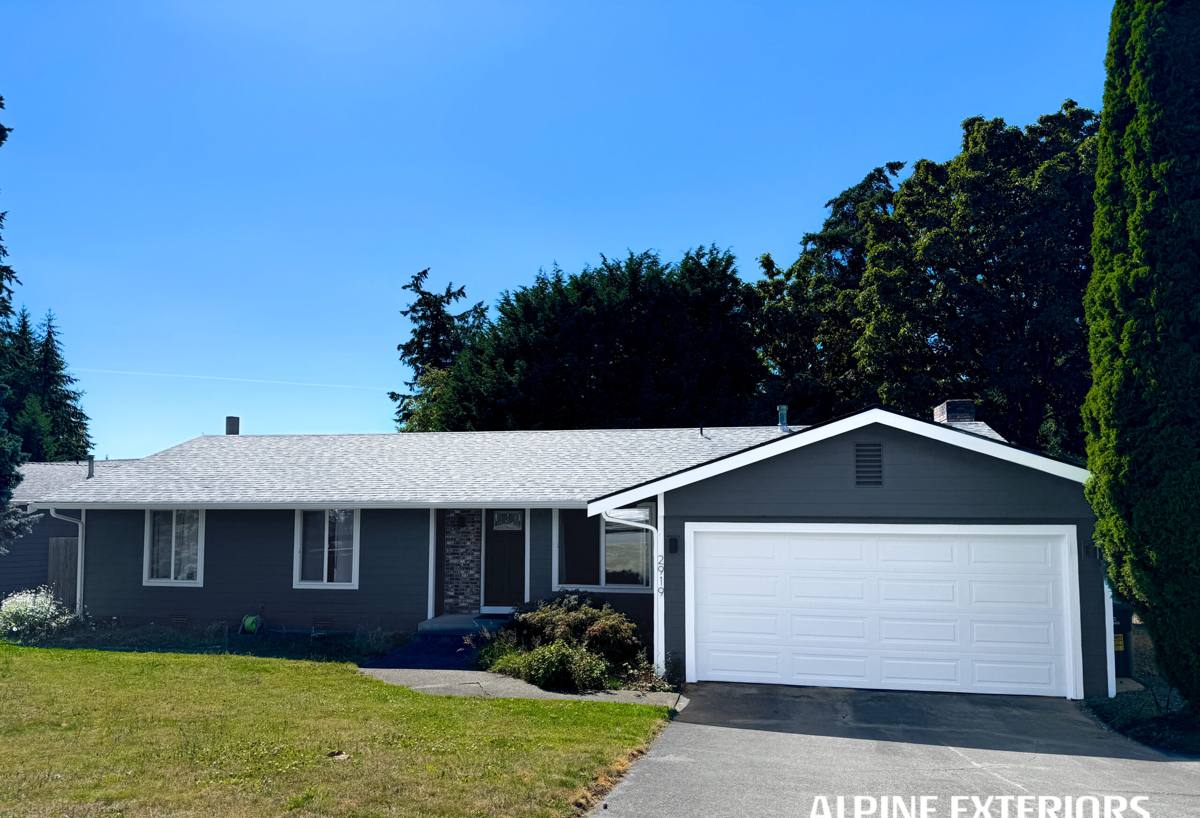
The Regional Climate Lynden Siding Has to Handle
Whatcom County's weather doesn't stay at the coastline. Salt-tinged marine air moves inland on the same wind systems that bring the region's heaviest rain, and Lynden gets its share of both. A few specific stressors show up again and again on siding jobs in this area:
- Driving rain: wind-driven storms push water sideways into wall assemblies, not just down, which punishes any siding system with weak flashing or poor drainage detailing.
- Extended moss and algae season: shaded, north-facing, and tree-adjacent walls can stay damp for months, giving moss and mildew a long runway to take hold on porous or poorly finished siding.
- Humidity swings: wet winters followed by drier summers put repeated expansion and contraction stress on siding materials and their joints.
- UV and moisture combined: even with the Pacific Northwest's relatively mild sun, the one-two punch of UV exposure and constant moisture accelerates fading, peeling, and swelling on lower-grade products.
None of this is unique to Lynden — it's the reality across this part of Whatcom County — but it's exactly why the siding choice and the installation quality matter more here than in a drier climate.
Why We Install Only James Hardie Fiber Cement Here
We standardized on James Hardie fiber cement siding for every home we work on, including Lynden, because it's engineered specifically for climates like this one.
Built for the HZ5 Climate Zone
Hardie's HZ5 product line is formulated for the Pacific Northwest's wet, moderate climate — it resists moisture absorption far better than wood-based products and won't rot, swell, or delaminate the way engineered wood siding can when it stays damp for long stretches. It's also non-combustible, which matters as wildfire smoke and dry-season fire risk have become a bigger concern even in traditionally wet parts of Washington.
ColorPlus Factory Finish vs. Field-Painted Siding
Most siding failures we see in this region aren't the fiber cement substrate failing — they're the paint failing first. Hardie's ColorPlus finish is baked on in a factory-controlled process, which gives it far better adhesion and UV resistance than siding painted on-site after installation. That matters directly in Lynden's climate: less peeling, less chalking, and a color that holds up through repeated wet-dry cycles, backed by a transferable finish warranty separate from the product warranty.
What a Correct Siding Installation Actually Involves
Fiber cement siding is only as good as the wall assembly behind it. In a high-rainfall region, the details that never get seen once the siding is up are the ones that determine whether the wall stays dry for the next 30 years.
- A continuous, properly lapped water-resistive barrier over the sheathing, with no gaps at seams or penetrations.
- Correct flashing at every window, door, and roof-to-wall intersection — this is the single most common failure point on poorly installed siding.
- A rainscreen gap or drainage plane behind the siding so any moisture that does get past the cladding can drain and dry instead of sitting against the sheathing.
- A level, properly fastened starter strip — the foundation for every course above it.
- Fastener spacing and placement that follow Hardie's published installation instructions exactly, not "close enough."
- Correct gapping and sealant at butt joints and trim, per manufacturer spec, to allow for material movement without letting water in.
- Proper clearance from grade, decks, and roof lines so siding never sits in standing water or constant splash-back.
Skipping or rushing any one of these steps is how a homeowner ends up with moisture damage behind brand-new siding — the material gets blamed, when the installation was the actual problem.
Our Installation Process for Lynden Homes
- On-site assessment: we walk the exterior, check existing siding and sheathing condition, and look at how water currently moves around the home — gutters, grading, roof lines, and problem walls.
- Removal and sheathing inspection: old siding comes off and we inspect the sheathing underneath for rot or moisture damage before anything new goes up, replacing any compromised wood.
- Weather barrier and flashing: a new water-resistive barrier is installed with correct flashing at every window, door, and penetration.
- Hardie installation to spec: starter strips, fastening pattern, and joint gapping follow James Hardie's published requirements — this is what protects the product warranty and keeps the wall performing.
- Trim, caulking, and touch-up: trim details are finished and any factory-cut edges are sealed and touched up per Hardie guidelines.
- Final walkthrough: we go over the finished work with the homeowner and clean the site fully before we leave.
Comparing Siding Options for a Whatcom County Climate
| Material | Moisture & Moss Resistance | Maintenance | Typical Lifespan |
|---|---|---|---|
| James Hardie fiber cement | Strong — non-porous substrate, factory finish resists mildew staining | Occasional wash-down; no repainting on ColorPlus finish for years | 30+ years with correct installation |
| Vinyl siding | Doesn't rot, but seams and panels can trap moisture and warp in heat or impact | Low, but fading and brittleness increase over time | 15–25 years |
| Cedar or wood siding | Vulnerable to rot and moss without diligent upkeep in wet climates | High — regular staining, sealing, and moss treatment required | Varies widely with maintenance |
| Engineered wood (e.g. LP SmartSide) | Improved over raw wood, but still moisture-sensitive at cut edges and seams | Moderate — edge sealing and monitoring for swelling | 20–30 years, installation-dependent |
Every product on that list has a place in the market. We simply don't install the others — not because they can't be made to work somewhere, but because we've standardized on the one system that consistently holds up to this specific climate with the least long-term risk to the homeowner.
Why a Crew That Already Works in Lynden Matters
Siding installation is a local trade in every sense that matters. A crew that regularly works in Lynden and the surrounding Whatcom County towns knows which wall orientations take the worst weather on a typical lot out here, how older farmhouse construction differs from newer builds when it comes to sheathing and framing, and what permitting looks like for exterior work in the area. That familiarity shows up in small decisions on the job — where extra flashing attention is worth it, how to sequence work around the region's rain patterns, and how to plan a project so it isn't derailed by a wet week in the forecast.
It also means faster response if something needs a follow-up look after installation, since we're not driving in from out of the area for every visit.
Signs Your Lynden Home May Need New Siding
- Persistent moss, algae, or dark staining that comes back soon after cleaning
- Soft spots, warping, or bubbling, especially near the bottom of walls or under windows
- Paint that's peeling, chalking, or failing faster than it should
- Visible cracking, gaps opening at seams, or boards pulling away from the wall
- Rising heating or cooling bills that suggest the wall assembly is no longer performing
- Interior signs like musty smells or discoloration on walls that back up to exterior siding
Any one of these on its own might not mean full replacement, but a few together are usually a sign the siding and the wall assembly behind it are losing the fight against the climate.
If you're seeing any of these signs, or you're simply planning ahead for a Lynden home that could use a siding upgrade, we're happy to take a look. Reach out for a free, no-pressure estimate using the form below — we'll walk the property, answer your questions honestly, and give you a clear picture of what correct James Hardie installation would look like for your home.