 Blaine Siding
 Storm Damage Roof Repair for Nooksack Homes
Nooksack sits close enough to the water that a roof here takes a different kind of beating than a roof forty miles inland. Wind off the Strait of Georgia, long stretches of driving rain, salt-laden air, and a moss season that never really ends all work on a roof at the same time. When a storm rolls through, the damage isn't always obvious from the ground. A missing shingle is easy to spot. A lifted seal, a bruised mat, or a slow leak starting under a valley is not — and those are the ones that turn into interior damage if they sit through the next few storms.
This page covers what storm damage roof repair actually means for homes in and around Nooksack, what a correct repair looks like, and how we handle it from the first inspection to the final walkthrough.
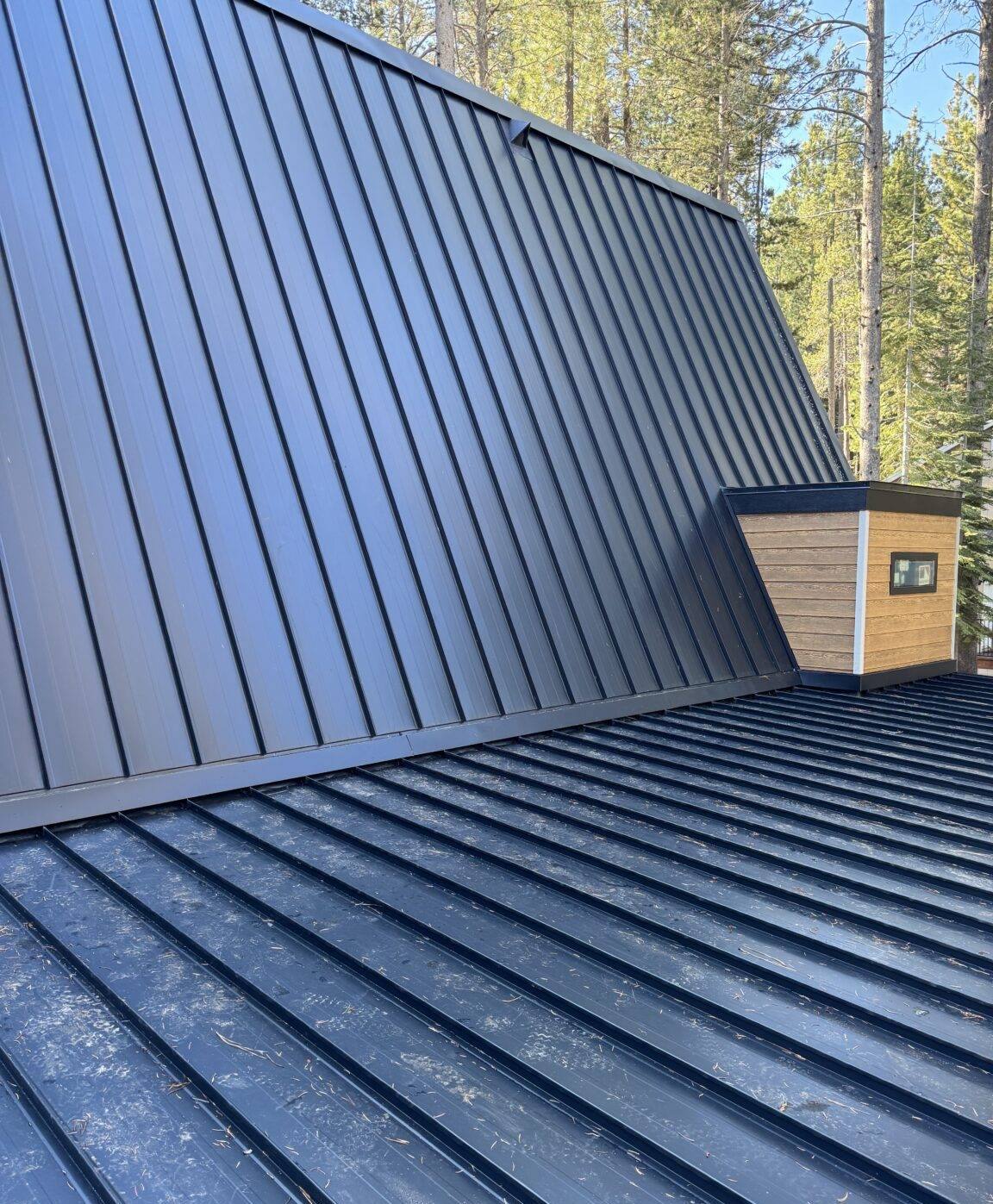
What Whatcom County Storms Do to a Roof
Wind and Gusts
Storms coming through Whatcom County often bring sustained wind with sharper gusts riding on top. Gusts are what do the damage — they get under a shingle tab or a ridge cap edge, work it loose, and once one section lifts, the wind has a foothold to peel more. Roofs that were installed with proper nailing patterns and sealant activation hold up far better than roofs where corners were cut on fastening.
Driving Rain
Rain that falls straight down is rarely the problem. Rain that's being pushed sideways by wind is. Driving rain finds every gap in flashing, every lifted shingle edge, and every spot where sealant has aged out, and it pushes water uphill under laps that were never designed to handle water moving against gravity. That's why storm damage often shows up as a leak nowhere near where the actual roof damage is — water travels along the deck before it finds a way through.
Salt Air
Being close to the water means metal components on the roof — flashing, fasteners, vent caps, gutter hardware — are exposed to salt-laden air that accelerates corrosion compared to homes further inland. Corroded fasteners lose their grip. Corroded flashing seams open up. It's a slow process, but it's constant, and it means metal detailing needs more attention here than on a roof further from the coast.
Moss and the Long Wet Season
Whatcom County's wet season runs long, and shaded, north-facing roof slopes stay damp for weeks at a time. That's ideal moss growth conditions. Moss holds moisture against the roof surface, works its way under shingle edges, and lifts them slightly over time — which is exactly the kind of small gap that turns into a real leak the next time a storm pushes rain sideways across that section.
Signs Your Nooksack Roof Has Storm Damage
Some storm damage is visible from the ground with binoculars. Some isn't. After any significant wind or rain event, it's worth checking for the following:
- Shingles that look curled, cracked, or visibly out of alignment with the rest of the field
- Granules collecting in gutters or at downspout outlets
- Bent, lifted, or missing flashing around chimneys, vents, and roof-to-wall transitions
- Sagging or discolored ceiling patches inside the home, especially after a storm
- Debris — branches, needles, moss clumps — built up in valleys where water is meant to flow freely
- Gutters pulling away from the fascia or holding standing water
- Daylight visible through the roof deck from inside an attic or crawlspace
Any one of these on its own might be minor. Several together, or any sign of active water intrusion inside the home, means it's time for an actual inspection rather than a wait-and-see approach.
What a Correct Storm Damage Repair Involves
A correct repair starts with figuring out how far the damage actually extends — not just patching the spot that's visibly failing. Wind and water damage rarely stay contained to one shingle. The table below outlines the difference between a surface-level patch and a repair that actually addresses the cause.
| Approach | What It Covers | Risk If Skipped |
|---|---|---|
| Spot shingle replacement | Visible missing or cracked shingles only | Misses lifted or compromised shingles nearby that will fail next |
| Flashing and valley check | Chimney, vent, and roof-to-wall flashing; valley debris and seam condition | Water re-enters through the same failure point during the next storm |
| Deck inspection | Sheathing condition under the damaged area, checking for soft spots or rot | New shingles installed over a compromised deck fail again quickly |
| Ventilation and moisture check | Attic airflow, insulation condition, signs of trapped moisture | Moss and mold conditions persist even after visible damage is fixed |
Skipping straight to a spot patch is sometimes fine for very minor, isolated damage. But storm damage on a coastal roof is rarely isolated — that's why the assessment matters as much as the repair itself.
Our Storm Damage Repair Process
1. Inspection
We walk the roof (or use elevated equipment when pitch or safety calls for it) and check the full field, not just the area you reported. Storm damage tends to cluster on the windward slope and around penetrations, so we pay close attention there.
2. Temporary Protection
If there's active or likely leak exposure — an open spot in the deck, missing shingles ahead of more forecasted rain — we get it covered and protected before we do anything else. In Whatcom County's wet season, the gap between "damaged" and "leaking" can be a single storm.
3. Documentation
We photograph and document what we find, section by section. This matters both for our own repair planning and for any insurance claim you're pursuing — clear before-photos of storm damage are often the difference between a smooth claim and a disputed one.
4. Repair Plan and Materials Match
We tell you plainly what needs to be replaced versus what can be repaired, and we match materials as closely as possible to what's already on the roof. Full replacement is sometimes the more honest recommendation if the roof is old enough that patch repairs won't hold — we'll tell you that directly rather than stringing along a series of repairs on a roof that's past the point of patching.
5. Repair and Walkthrough
We complete the work, then walk the roof and the interior with you (attic access included, when applicable) so you can see the finished repair and ask questions before we consider the job done.
Materials and Cost Factors
Every storm repair is different, so we don't quote blind. What we can tell you is what actually drives the cost of a repair:
| Factor | Why It Matters |
|---|---|
| Extent of damage | A few shingles versus a full slope changes both material and labor scope |
| Deck condition | Rotted or soft sheathing under the damage adds replacement, not just patching |
| Roof pitch and access | Steeper or harder-to-reach roofs take longer and need more safety setup |
| Flashing complexity | Chimneys, skylights, and multiple roof planes mean more flashing detail work |
| Material match | Matching existing shingle profile and color affects sourcing and cost |
Straightforward repairs on accessible roofs often run in the low hundreds to low thousands of dollars; larger sections with deck replacement cost more. We'll give you an actual number after inspection, not a guess over the phone.
Insurance Claims and Storm Damage
Many storm damage repairs qualify for a homeowner's insurance claim, particularly when the damage is tied to a specific wind or rain event rather than gradual wear. We're not your insurance adjuster and won't promise a claim outcome, but we can provide the documentation — photos, a written scope of damage, and an honest assessment of cause — that your adjuster will need to evaluate the claim fairly. If the damage turns out to be more about age and gradual wear than a specific storm, we'll tell you that too, since that distinction usually affects how a claim gets handled.
Why a Crew That Already Works Nooksack Matters
A roof repair crew that regularly works in Blaine and the Nooksack area already knows what this climate does to a roof — where moss tends to build up first, which flashing details fail earliest in salt air, and what wind-driven rain does on a roof facing the water versus one that's more sheltered. That's not something you get from a general contractor passing through the county once. It shows up in where we check first, what we flag before it becomes a bigger problem, and how we prioritize repairs when a roof has more than one issue at once.
Get an Estimate
If a recent storm left you with damage — or you're just not sure whether what you're seeing needs attention — we're happy to take a look and give you a straight answer. Fill out the form below for a free, no-pressure estimate on storm damage roof repair for your Nooksack home.