 Blaine Siding
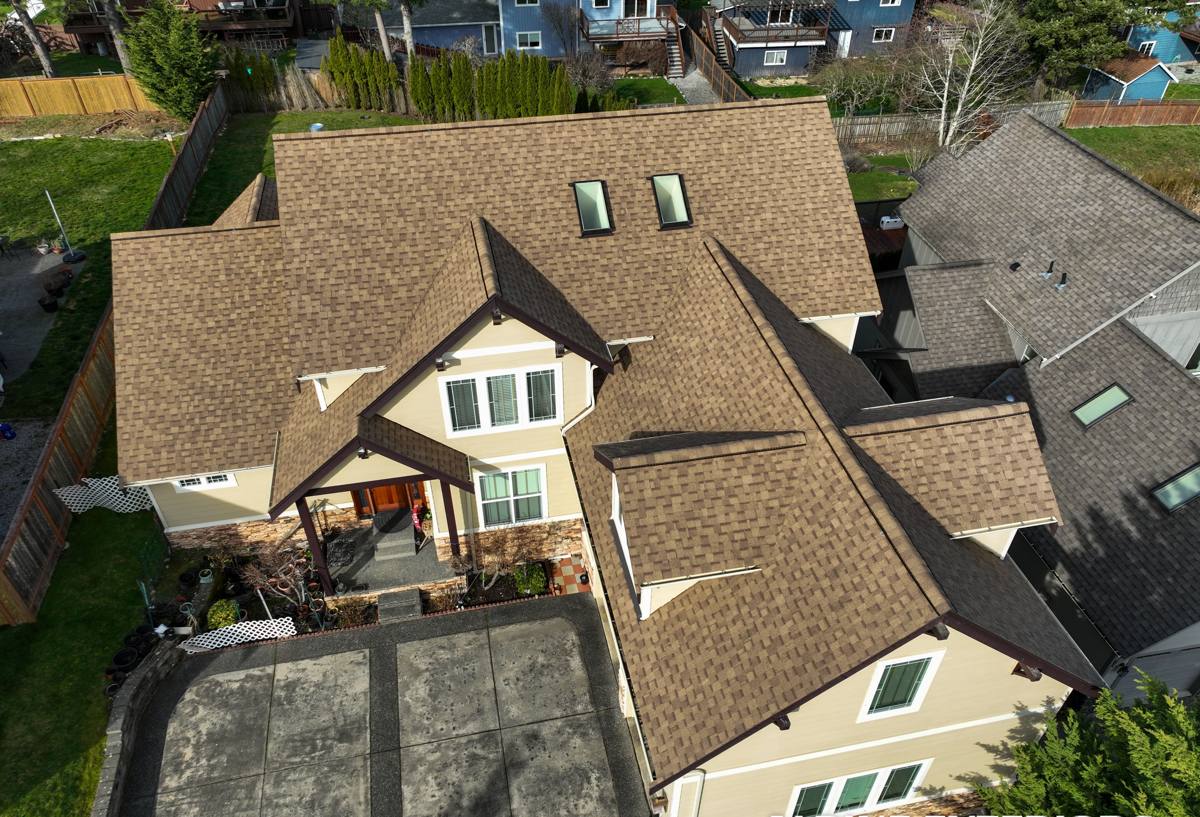
 New Roof Installation for Sumas Homes
Sumas sits in a part of Whatcom County that gets weather from two directions at once — Pacific storm systems rolling in off the coast near Blaine, and the cooler, damper air that settles into the valley along the Sumas River. A roof out here does more work than people expect. It's not just shedding rain; it's shedding rain that falls for days at a time, drying slowly under tree cover, and cycling through freeze-thaw stretches most winters. When a roof in Sumas fails, it's rarely one dramatic leak. It's usually years of small compromises — a shortcut on flashing, underlayment that wasn't rated for how long this roof actually stays wet, ventilation that was never sized for the house — finally catching up at once.
A correct new roof installation here starts with understanding that context, not just swapping old shingles for new ones. That means paying close attention to the roof deck underneath, the flashing at every transition, and how air moves through the attic — details that matter more in this climate than in drier parts of the state.
Why Whatcom County Weather Changes How We Build a Roof
Moss and Trapped Moisture
Shaded, north-facing slopes in Sumas — especially on lots with mature trees, which is most of them — stay damp far longer after a storm than a roof would in a sunnier location. That extended dampness is exactly what moss needs to take hold. Once moss establishes itself, it holds water directly against the roofing material, works its way under shingle edges, and slowly lifts them. A roof that looks fine from the driveway can have moss doing real damage underneath long before a leak shows up inside the house.
Driving Rain and Underlayment
The same storms that bring salt-laden air across Blaine push heavy, wind-driven rain inland toward Sumas. Rain that's moving sideways, not just falling straight down, finds its way into gaps a calm-weather roof would never expose — under shingle tabs, around vent boots, at the edges of skylights and chimneys. That's why underlayment selection and flashing detail work matter as much as the shingle or metal panel on top. A roof built for this area needs a water-resistive layer underneath that's doing real work, not just sitting there as a formality.
Signs a Sumas Roof Needs Replacement, Not Another Repair
Homeowners often ask us to patch a leak, and sometimes that's the right call. But a patch on a roof that's already past its service life just delays a bigger job and risks water getting into the deck, insulation, or framing in the meantime. Here's what we look for when deciding whether repair still makes sense:
- Granule loss heavy enough that you can see bare, shiny patches on asphalt shingles, especially on south- and west-facing slopes
- Shingles that are cupping, curling at the edges, or cracking when touched
- Moss or dark algae streaking across more than a small section of the roof, not just isolated spots
- Soft or spongy decking felt underfoot in the attic, or daylight visible through the roof boards
- Flashing around chimneys, skylights, or valleys that's rusted, separated, or was never properly step-flashed
- A roof that's already had multiple repairs in the same area within a few years
- Interior water stains on ceilings that reappear after every heavy rain, even after a "fix"
If a roof is showing two or more of these at once, replacement is usually the more honest recommendation — and often the more affordable one over time, since repeated repairs add up without solving the underlying problem.
Roofing Materials That Actually Hold Up Here
Whatcom County's combination of prolonged dampness, moss pressure, and driving rain narrows down what makes sense on a Sumas home. We install a range of materials, but we're straightforward with homeowners about how each one performs in this specific climate.
| Material | How It Handles Local Climate | Maintenance Reality |
|---|---|---|
| Architectural asphalt shingle | Solid performance when paired with proper underlayment and ventilation; widely used in this area for good reason | Periodic moss treatment and gutter clearing; typical 25-30 year product life when installed correctly |
| Standing seam metal | Sheds driving rain and moss buildup better than any other option; performs very well under sustained damp conditions | Low ongoing maintenance; higher upfront cost, longer expected service life |
| Cedar shake | Traditional look, but holds moisture longer than other options in shaded, damp settings unless meticulously maintained | Requires the most active upkeep of the common options — periodic treatment and closer inspection for rot |
| Composition/laminate shingle (budget tier) | Adequate on well-ventilated, sun-exposed roofs; struggles more on shaded, north-facing slopes | Shorter lifespan than architectural shingle in this climate; more prone to early granule loss |
We don't push homeowners toward the most expensive option by default. On a sun-exposed, well-ventilated Sumas roof, a good architectural asphalt shingle with proper underlayment is a perfectly sound, cost-effective choice. On a heavily shaded lot with a history of moss problems, we're more likely to steer the conversation toward metal or at least a premium shingle line, because that's where the maintenance burden and long-term cost actually land.
Our New Roof Installation Process
Inspection and Honest Estimate
We start on the roof, not in a sales pitch. That means checking the deck, the flashing, the attic ventilation, and the slope orientation before we recommend a material or a scope of work. You get a written estimate that reflects what your roof actually needs — not a generic package.
Tear-Off and Deck Assessment
Old roofing comes off completely so we can see the deck underneath. In this climate, it's common to find soft or delaminated sheathing in spots where moss or old flashing let water sit for years. We flag any deck repairs before proceeding, so there are no surprises mid-project.
Underlayment, Flashing, and Ventilation
This is where a roof built for Whatcom County weather earns its keep. We install underlayment rated for extended wet exposure, step-flash and counter-flash every wall, chimney, and valley by hand, and confirm intake and exhaust ventilation are balanced — not just present. Poor ventilation is one of the most common hidden causes of premature roof failure we see in this area.
Final Walkthrough
Before we consider the job done, we walk the roof and the property with you, confirm cleanup is complete, and go over what routine maintenance — if any — the new roof will need going forward.
Ventilation and Moisture Control: The Part You Don't See
A new roof is only as good as the airflow underneath it. In a climate this damp, an attic that can't breathe traps humidity against the underside of the deck year-round, which shortens the life of even a well-installed roof and can lead to mold or rot that has nothing to do with the shingles themselves. We size and balance intake vents (usually at the eaves) against exhaust vents (ridge or roof-mounted) so air actually moves through the space, rather than just installing vents to check a box. This is a detail that's easy to skip and hard to notice until years later — which is exactly why we treat it as part of every installation, not an upsell.
Permits, Timing, and What to Expect During the Project
Depending on scope, a new roof installation in this part of Whatcom County typically requires a local building permit, which we handle as part of the project so you're not navigating that process alone. Most straightforward tear-off-and-replace jobs on a single-family home take a few days of active work, weather permitting — and weather is the real variable here. We watch the forecast closely and won't leave a roof exposed to a coming storm; if conditions turn, we sequence the work to keep the house protected at every stage, not just at the end.
Why a Crew That Already Works This Area Matters
A roofing crew based near Blaine and working regularly in Sumas isn't guessing about how this climate behaves — we're accounting for it in every underlayment choice, every flashing detail, and every ventilation calculation, because we see what happens when those details get skipped on homes throughout this stretch of Whatcom County. That's different from a crew that installs roofs the same way regardless of whether the house is in a dry inland climate or a damp, moss-prone valley. It shows up in fewer callbacks, fewer surprise leaks two winters later, and a roof that's actually built for the conditions it has to survive.
If your Sumas home needs a new roof — or you're just not sure whether repair or replacement makes more sense — we're happy to take a look and give you a straightforward, no-pressure estimate. There's no obligation, and no upsell script. Just an honest read on what your roof needs.