 Blaine Siding
 Siding Repair Built for Sumas Weather, Not Just Sumas Homes
Sumas sits in a corner of Whatcom County where weather doesn't behave politely. Storm systems roll in off the water and get funneled up the valley, dumping driving rain that hits siding at an angle instead of falling straight down. That rain finds every gap, every failed caulk joint, and every spot where old siding has started to separate from the wall. Add in a moss season that can stretch from fall through spring, and you have a climate that is genuinely hard on exterior walls — harder than a lot of homeowners realize until they're already dealing with soft trim, bubbling paint, or a patch of siding that flexes when you press on it.
We repair siding in Sumas the way we'd want it done on our own homes: diagnose the actual cause before touching a nail gun, fix the water path first, then match the repair to the surrounding material so it doesn't look like a patch job. This page walks through what that looks like in practice.
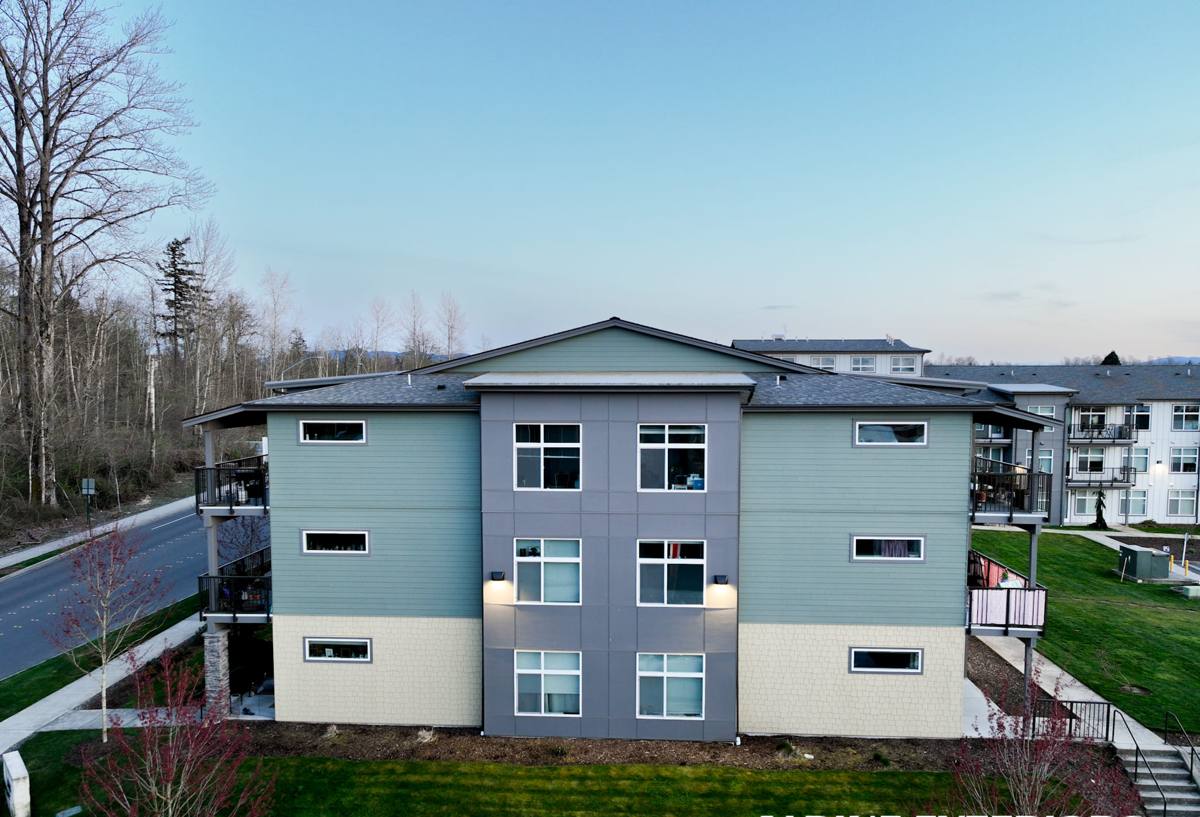
Why Local Homes Take the Damage They Do
Whatcom County's proximity to open water means weather systems arrive loaded with moisture, and by the time they reach inland communities like Sumas they're often still dropping heavy, wind-driven rain. That combination — sustained moisture plus wind pressure — is a specific kind of stress on siding that a drier climate simply doesn't produce. A few consequences we see repeatedly on repair calls:
- Driving rain forces water sideways into seams, corner joints, and anywhere caulking has shrunk or cracked, rather than just running down the face of the wall.
- Long damp stretches feed moss and algae, which hold moisture against the siding surface for weeks at a time instead of letting it dry between rains.
- Shaded and north-facing walls dry slower, so damage often shows up first on the sides of the house that get the least sun — not necessarily the side that takes the worst weather.
- Freeze-thaw cycles in colder stretches can widen small cracks in caulking or trim into real gaps by the time spring arrives.
None of this means Sumas homes are poorly built. It means the siding envelope has to do more work here than it would in a milder, drier region, and repairs need to account for that — not just patch the visible symptom.
What "Correct" Siding Repair Actually Involves
A lot of siding repair in this region is done fast and cheap: caulk over the crack, slap on some paint, call it done. That approach almost always fails within a season or two because it treats the symptom, not the cause. A correct repair follows a sequence:
1. Find the Water Path, Not Just the Damage
Visible rot or a warped panel is where water ended up, not necessarily where it got in. We trace the path back — often to a failed flashing detail, a gap where trim meets siding, or a seam that was never properly lapped or sealed during the original install.
2. Check What's Behind the Siding
If water has been getting in for a while, sheathing or framing underneath may be affected. Repairing the visible siding without checking behind it just seals the problem back up. This is the step that separates a real repair from a cosmetic one.
3. Match Material and Method, Not Just Color
Patched siding that doesn't match the surrounding panel's profile, reveal, or finish stands out immediately — and worse, it can create a new water path if the patch isn't integrated correctly into the existing lap and flashing system.
4. Address the Cause, Not Just the Hole
If a corner trim detail failed once, it will fail again unless the underlying flashing or sealant detail is corrected as part of the repair — not just re-caulked and repainted.
Common Repair Scenarios We See in Sumas
| Issue | Likely Cause | What the Repair Involves |
|---|---|---|
| Soft or spongy siding near the bottom edge | Splash-back moisture, poor grade slope, or failed caulk at the base | Remove affected panels, inspect sheathing, correct water path, replace with matched material |
| Bubbling or peeling paint in patches | Moisture trapped behind the surface, often from a failed seam above | Trace the leak point, dry out the area, repair the seam, repaint or replace as needed |
| Moss or algae buildup on north-facing walls | Extended shade and moisture retention | Clean surface, inspect for underlying damage, address any moisture-holding gaps |
| Cracked or separated caulk joints | Age, sun exposure, freeze-thaw movement | Remove old sealant, inspect substrate condition, reseal with proper joint prep |
| Warped or bowed panels | Moisture absorption over time (common with wood-based or improperly installed products) | Assess extent of affected area, replace panels, correct any contributing water intrusion |
Our Repair Process, Start to Finish
We keep the process straightforward because homeowners deserve to know exactly what's happening to their house and why.
Inspection and Diagnosis
We walk the exterior, identify every problem area — not just the one you called about — and explain what we find in plain terms. If there's a chance moisture has reached the sheathing, we tell you before any work starts, not after we've already opened up the wall.
Written Scope Before Any Work Begins
You get a clear explanation of what needs to be repaired, what's driving the damage, and what the fix involves — no vague line items.
Repair Execution
We remove only what needs to come out, protect the surrounding siding and landscaping, and rebuild the water management detail — flashing, house wrap integration, sealant — correctly before the new siding goes back on.
Match and Finish
Repaired sections are matched to the existing siding as closely as the material allows. On Hardie fiber cement in particular, factory-finished ColorPlus panels hold color consistency far better than field-painted repairs on other materials, which makes matching older sections more predictable.
Final Walkthrough
We show you what was done, what caused it, and what — if anything — is worth keeping an eye on going forward.
What to Check Before You Call for a Repair
A quick walk around your home can tell you a lot before you even pick up the phone. Look for:
- Soft spots when you press firmly on the siding, especially near the bottom of walls or under windows
- Paint that's bubbling, peeling, or cracking in a localized patch rather than evenly across a wall
- Visible gaps or cracks in caulking around trim, corners, and window/door edges
- Moss or dark streaking that's thick enough to hold visible moisture after a dry day or two
- Panels that look slightly bowed, warped, or separated from the wall at the edges
- Musty smells or visible staining on interior walls that back up to exterior siding
Any one of these on its own might be minor. Several together, or damage that's spreading year over year, usually means the underlying water management detail needs attention, not just the surface.
Repair vs. Replacement: An Honest Read
Not every damaged section needs full replacement, and we're not going to tell you it does. Repair usually makes sense when the damage is isolated, the underlying sheathing is sound, and the surrounding siding still has useful life left. Replacement becomes the more honest recommendation when damage has spread across multiple sections, when the siding material itself has an inherent moisture problem (common with older wood-based or engineered wood products that have absorbed water over years), or when repeated repairs to the same area suggest the original installation had a systemic flaw rather than a one-time failure. We'll tell you which situation you're in and why, including when repair is genuinely the right call and full replacement would be overkill.
Why Local Experience Matters for This Kind of Work
Siding repair looks straightforward from the outside — cut out a bad piece, put in a new one. Done wrong, though, a repair can trap moisture behind the new material and make the underlying problem worse while looking fine from the curb for a season or two. Crews that work this specific region regularly, dealing with Whatcom County's rain patterns, moss cycles, and seasonal temperature swings, recognize the difference between damage that's cosmetic and damage that's structural faster than a crew unfamiliar with the area. We've traced enough water paths on homes near Sumas to know where installers typically cut corners on flashing and sealant details, and we check those spots first.
Why We Only Repair and Replace With James Hardie Fiber Cement
When a repair calls for new material, we use James Hardie fiber cement — the only siding product we install. It's a decision built on how this specific climate treats exterior walls. Fiber cement doesn't absorb and swell with moisture the way wood-based products can, and it doesn't degrade under UV and rain exposure the way some vinyl products do over a long enough timeline. Hardie's ColorPlus factory finish holds up to sustained damp weather better than field-applied paint, which matters directly for repair work: a patched section finished in the field will often weather differently than the factory-finished panels around it. Hardie's HZ5 product line is engineered for wetter, harsher climates specifically, which lines up with what this region asks of exterior materials. It's also backed by a strong transferable warranty when installed to spec — something that carries real value if you sell the home down the line.
We don't install LP SmartSide, vinyl, Cemplank, Allura, or primed wood siding. Each has legitimate uses in the right application, but none of them match Hardie's combination of moisture resistance, factory-finish durability, and non-combustible material makeup for the way homes in this region take on weather year after year. When we repair a home that currently has one of these other products, we'll tell you honestly what we're seeing and what your options are — including whether a targeted repair in matching material still makes sense, or whether it's worth planning a longer-term switch to fiber cement.
Ready to Get Your Siding Looked At?
If you're seeing soft spots, peeling paint, moss buildup, or damage that seems to be spreading, it's worth getting eyes on it before another rainy season adds to the problem. We offer free, no-pressure estimates for siding repair in Sumas and the surrounding area — walk us through what you're seeing, and we'll give you a straight assessment of what's actually going on and what it'll take to fix it right. Reach out using the form below to get started.