 Blaine Siding
 Storm Damage Roof Repair in Sumas: What This Valley Sees and Why It Matters
Sumas sits at the far northeastern edge of Whatcom County, pressed against the Canadian border where the Nooksack River valley opens up below Sumas Mountain. It doesn't get the same salt-laden marine air that coastal towns like Blaine deal with, but it makes up for that with a different kind of exposure: wind that funnels down out of the Fraser Valley in British Columbia, driving rain that comes in sideways rather than straight down, and a moss and moisture season that runs long across most of the year. When a real storm moves through, that combination is exactly what turns a healthy roof into one with lifted shingles, torn flashing, or a slow leak that doesn't show up inside the house until weeks later.
Storm damage roof repair is its own category of work, separate from a routine repair or a scheduled replacement. It starts with an event — wind, hail, a fallen branch, a sustained downpour — and it usually comes with a time pressure that ordinary roof maintenance doesn't: water is getting in, or is about to, and every day that goes unaddressed adds to the damage underneath. We handle storm damage repair for homes in Sumas and across Whatcom County, and the approach is built around that urgency without cutting corners on the part that actually matters — putting the roof back together correctly so it doesn't fail again at the next storm.
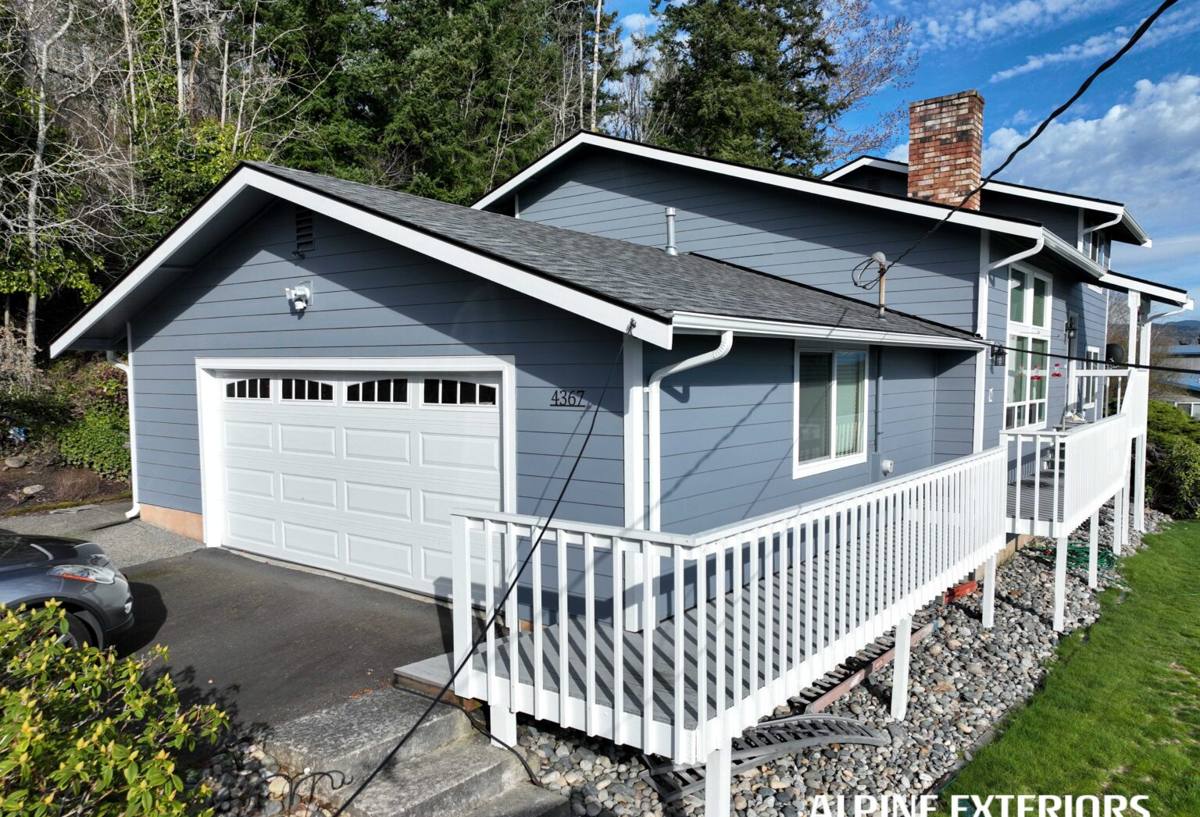
What Storm Damage Looks Like on a Sumas Roof
Wind Damage From the Fraser Valley Corridor
Sumas sits near the mouth of the corridor that channels cold air and wind down from the Fraser Valley into Whatcom County, and homes here can see stronger gusts during winter storm systems than towns farther south or west in the county. That wind gets under shingle tabs that have started to loosen with age, peels back ridge caps, and can strip shingles entirely off a roof edge or corner where wind pressure concentrates. Metal flashing around chimneys, vents, and skylights takes a similar beating, and a flashing seam that was holding fine before a windstorm can be bent, lifted, or torn loose by the time it passes.
Wind-Driven Rain and Hidden Leaks
Rain that comes in at an angle during a windstorm doesn't behave like rain on a calm day. It can work its way up and under shingle edges, into valleys, and around penetrations that were never designed to handle water moving sideways or slightly uphill. That's how a storm can cause a leak that shows up nowhere near where the actual damage is — water tracks along the underlayment or roof deck before it finds a gap to drip through, so the stain on a ceiling is often several feet from the point where the storm actually broke the roof's seal.
Debris and Impact Damage
Branches, and in the wrong storm a whole limb or small tree, are a real risk on properties with mature trees close to the house, which describes a lot of lots in and around Sumas. Impact damage can range from a few cracked or knocked-loose shingles to punctured decking, and the damage is not always proportional to how big the debris looks from the ground.
Moss and Trapped Moisture After the Storm
Sumas's valley setting holds humidity and fog longer after a storm passes than higher, more exposed ground does, and a roof that's already carrying moss or organic buildup dries out even slower. Once wind or impact damage opens a gap in the shingle layer, that lingering dampness gives water more time to work its way into the decking before anyone notices a problem. In this climate, storm damage and ordinary moss-driven wear often compound each other rather than staying separate issues.
Why Storm Damage Isn't Always Visible From the Ground
Most homeowners' first instinct after a bad windstorm is to walk the yard and look up at the roof, and that's a reasonable first step — but it only catches the obvious problems. A lot of real storm damage is small enough, or high enough on the roof plane, that it doesn't register from ground level at all. Here's what's worth checking, without getting on a ladder or the roof itself:
- Shingle pieces, granules, or flashing fragments in the yard, gutters, or downspouts after a storm
- Visible gaps, curling, or discoloration on any roof slope you can see clearly from the ground or a neighboring vantage point
- New or worsening water stains on ceilings or upper interior walls, even faint ones
- Damp, musty smell in the attic, or visible light coming through the roof deck if you can safely check the attic
- Sagging gutters, dented downspouts, or debris buildup that could be trapping water against the roof edge
- Any tree limb damage or contact with the roofline, even if it looks minor
None of that replaces an actual roof inspection. It's just enough to know whether a call is worth making sooner rather than later — and after a significant wind event, sooner is almost always the better call, since a small gap left open through another round of rain gets worse, not better, on its own.
What a Correct Storm Damage Repair Actually Involves
A rushed storm repair and a correct one can look similar from the driveway and behave very differently two winters later. The difference is almost always in the steps that aren't visible once the job is done.
- Emergency mitigation first: If there's an active leak or exposed decking, that gets tarped or otherwise protected immediately, before any permanent repair work starts.
- Full inspection, not just the obvious spot: Wind and impact damage often extends beyond the area the homeowner noticed, so the whole roof gets checked, not just the section with the visible problem.
- Decking condition check: If water has been getting in for any length of time, the roof deck underneath needs to be checked for soft spots or rot before new material goes down over it.
- Underlayment and flashing repaired to spec, not patched over: Torn or displaced underlayment and flashing get properly replaced and integrated with the surrounding roof system, not just sealed with caulk or roofing cement as a shortcut.
- Shingle matching where possible: On a partial repair, we match the existing shingle profile and, where the product line allows it, the color as closely as the market allows.
- Ventilation left intact: Repairs are done in a way that doesn't block or compromise existing roof ventilation, which matters even more in a valley climate where trapped moisture doesn't dry out quickly.
Our Storm Damage Repair Process
- Call and initial assessment: We ask what happened and what you're seeing — active leaks get prioritized for a faster response than cosmetic damage.
- On-site inspection: We walk the roof and the attic where accessible, documenting the damage with photos before anything is touched.
- Emergency tarping if needed: If the roof is actively letting water in, we stabilize it first to stop further damage while the repair is planned.
- Written scope and estimate: You get a clear explanation of what's damaged, what needs to be repaired versus replaced, and what it will cost — before work begins, not after.
- Repair or replacement: The work is carried out to the standard above, whether that's a targeted patch or a full slope replacement.
- Final walkthrough: We go over what was done and answer questions before considering the job complete.
Repair or Replace? What Actually Determines the Right Call
Not every storm-damaged roof needs full replacement, and not every roof with a few missing shingles can be safely patched and called done. The right answer depends on the extent of the damage, the roof's age going into the storm, and how it holds up structurally once we're actually up there.
| Factor | Leans Toward Repair | Leans Toward Replacement |
|---|---|---|
| Extent of damage | Limited to one section or slope | Widespread across multiple slopes |
| Roof age | Roof is well within its expected service life | Roof was already nearing the end of its lifespan |
| Decking condition | Deck is sound and dry underneath | Soft, rotted, or water-stained decking found during inspection |
| Shingle availability | Matching shingles are readily available | Existing product is discontinued or an exact match isn't possible |
| Prior damage history | First significant storm event for this roof | Roof already carried moss, wear, or previous unrepaired damage |
We give you a straight answer on which side of that table your roof falls on, along with the reasoning, rather than defaulting to the option that's more or less profitable for us to sell.
Working With Insurance on a Storm Damage Claim
Many storm damage repairs get filed as insurance claims, and the documentation from the inspection matters for that process. We provide clear photos, a written description of the damage, and a scope of work that a homeowner can hand to their insurance adjuster or claims process. We're not a public adjuster and we don't negotiate your policy on your behalf, but a thorough, honest inspection report is usually the single most useful thing a homeowner can bring to that conversation. If you're not sure whether damage is significant enough to file a claim at all, that's a fair question to bring to the inspection — we'll tell you what we see, plainly, and let you decide how to proceed from there.
Why a Crew That Already Works Sumas Matters
Storm damage repair rewards local knowledge in a way routine roofing work doesn't always require. Knowing that wind funneling down from the Fraser Valley tends to hit certain roof orientations harder, or that a valley setting like Sumas holds moisture and fog longer after a storm passes than more exposed ground, changes what an inspector looks for and how urgently a given problem needs to be addressed. A crew that's already working roofs across Whatcom County, rather than one that only shows up after a big regional storm makes the news, is also more likely to still be around in two or three years if a repair needs a warranty follow-up. That matters more with storm work than with almost any other kind of exterior project, because storm damage has a way of resurfacing if the first repair wasn't done right.
Get a Free, No-Pressure Estimate
If a recent storm has left your Sumas roof with missing shingles, a new leak, or damage you're not sure how serious it is, we're glad to come take a look and give you an honest read on what you're dealing with. Reach out using the form below to schedule a free estimate — no pressure, no upsell, just a straight answer about what your roof actually needs.