 Blaine Siding
 Why Windows Near Blaine Harbor Wear Out Faster
Homes clustered around Blaine Harbor sit closer to open water than almost anywhere else in Whatcom County. That proximity to Drayton Harbor and Semiahmoo Bay means every window on the west and south faces of a house is doing double duty: holding back wind-driven rain off the Strait of Georgia and standing up to a steady drift of salt-laden air. Vinyl gaskets dry out faster here. Aluminum hardware pits and corrodes sooner. Wood sashes that aren't properly sealed pick up moisture and start to swell or rot from the inside out, often before any problem is visible from the street.
None of this means windows near the harbor are doomed to fail early. It means the installation has to account for conditions that a window going into a home ten miles inland simply doesn't face. That's the difference between a window that looks fine going in and one that's still performing in fifteen years.
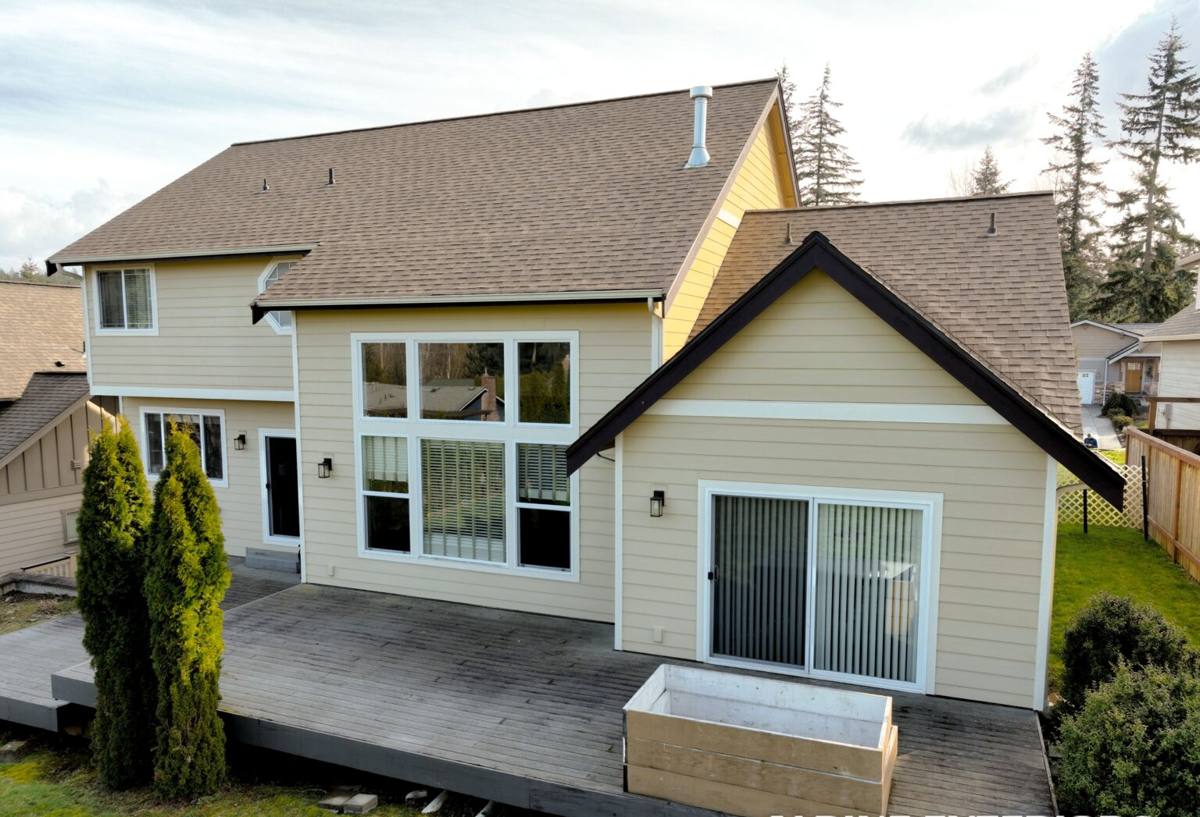
What Salt Air and Driving Rain Actually Do to a Window
Salt Air
Salt doesn't just sit on the glass and wash off in the next rain. It settles into hardware, tracks, and any exposed fasteners, where it accelerates corrosion far beyond what you'd see in a typical inland install. Cheaper hinges, cranks, and locks show pitting and stiffness years before a comparable window set back from the water. This is why hardware finish and material grade matter more here than the marketing brochures usually let on.
Driving Rain
Wind off open water doesn't just fall on a window — it pushes against it, forcing water sideways and upward into gaps that would stay dry in calmer conditions. A window with a marginal seal or flashing detail that would hold up fine in a sheltered inland yard can leak within a few storm seasons out here. Most window leaks we find on service calls near the harbor aren't failed glass units — they're failed flashing or sealant at the perimeter, which is an installation issue, not a product issue.
Long Moss Season
Whatcom County's wet stretch runs long, and anywhere moisture lingers — window sills, the top of trim boards, shaded north-facing walls — moss and algae get a foothold. Left alone, that growth holds water against wood and paint far longer than open exposure would, which is exactly the kind of slow, unnoticed moisture problem that leads to rot around a window opening.
Signs a Blaine Harbor Home Needs New Windows
- Fogging or a permanent haze between panes — the seal on the insulated glass unit has failed
- Visible gaps, soft spots, or paint bubbling in the trim or sill around the window
- Windows that are hard to open, close, or lock — often corrosion or swollen framing
- A cold draft at the frame even with the window fully latched
- Condensation forming on the inside of the glass regularly, especially in winter
- Visible corrosion or white staining on aluminum or vinyl hardware
- Moss or dark staining building up on the sill or bottom trim year over year
Any one of these can be a minor fix. Several at once, especially on a wall facing the water, usually means the window's original seal or flashing has been compromised for a while.
What a Correct Installation Actually Involves
A window installation near the harbor isn't just "pull the old one out, set the new one in." The steps that get skipped on a rushed job are exactly the ones that matter most in this climate.
1. Opening Inspection
Before anything new goes in, we check the rough opening for hidden rot, soft sheathing, or old flashing that's already failed. This is often where we find the real reason a window was leaking in the first place — and it's the point where it's cheapest to fix.
2. Flashing and Weather Barrier
Proper flashing tape and a correctly lapped weather-resistant barrier around the opening are what actually keep wind-driven rain out — not caulk alone. Water needs a planned path down and out, not just a sealed gap. This detail matters more on a harbor-facing wall than almost anywhere else in the county.
3. Setting the Window
The window gets shimmed level, plumb, and square, then fastened per the manufacturer's schedule. A window that's slightly out of square will bind, won't seal evenly under wind pressure, and will wear its hardware unevenly over time.
4. Sealing and Insulation
Low-expansion foam or backer rod and sealant fill the gap between the frame and the rough opening — enough to insulate and control air movement without bowing the frame. Perimeter sealant on the exterior gets matched to the siding material and rated for UV and marine exposure.
5. Hardware and Finish Check
Every lock, crank, and latch gets operated and adjusted before we consider the job done. On a harbor-facing install we pay particular attention to hardware finish, since this is the first thing salt air attacks.
Choosing Materials for a Harbor-Exposed Home
Not every window line marketed for the Pacific Northwest is actually built for direct salt exposure. Here's how the common options hold up specifically for a home near Blaine Harbor:
| Material | Salt Air Performance | Maintenance | Best Use |
|---|---|---|---|
| Vinyl (quality-grade) | Good — won't corrode, UV-stable frames resist chalking | Low — occasional wash-down | Most harbor-area homes, budget-conscious replacements |
| Fiberglass | Very good — dimensionally stable, resists pitting and swelling | Low | Homes with heaviest direct wind and spray exposure |
| Aluminum-clad wood | Fair to good — depends heavily on cladding quality and seams | Moderate — watch seams and joints for water intrusion | Homes prioritizing a wood-frame interior look |
| Bare wood | Poor without diligent upkeep — swells, rots, and needs frequent repainting | High | Historic or character homes willing to commit to upkeep |
| Standard aluminum | Poor — pits and corrodes quickly this close to salt water | Moderate to high | Generally not our recommendation this near the water |
We don't push one brand or material on every job. The right call depends on which wall the window sits on, how much direct spray or wind exposure that wall gets, and what the homeowner wants to be doing — or not doing — five and ten years from now.
Glass Packages Worth Considering
Double-pane, low-E glass with argon fill is standard for this climate and handles both our wet winters and the Northwest's temperature swings well. On homes with a direct view or wind exposure off the water, a laminated or impact-resistant outer pane adds a layer of protection against wind-blown debris during storm events, at a modest cost premium over standard glass.
Cost Factors for a Blaine Harbor Window Project
Every home is different, so we won't quote a number without seeing the job, but these are the variables that actually move the price:
| Factor | Why It Matters |
|---|---|
| Number and size of openings | Larger and more numerous windows mean more material and labor |
| Frame material chosen | Vinyl, fiberglass, and clad-wood carry different material costs |
| Condition of the rough opening | Rot or old flashing failures found during removal add repair scope |
| Wall exposure | Direct west/south harbor-facing walls may call for upgraded flashing or sealants |
| Access and site conditions | Second-story or hard-to-access openings take more time and equipment |
| Trim and finish work | Matching existing exterior trim or repainting affects total scope |
Broadly speaking, homeowners near the harbor should budget somewhat above what a sheltered inland home would spend on comparable windows, mainly because we specify upgraded flashing details and marine-rated sealants as a baseline, not an upsell.
Living With Blaine's Long Wet Season
Even a well-installed window benefits from a little seasonal attention in a climate like this. A short annual routine keeps small issues from becoming big ones:
- Rinse sills and tracks periodically to clear salt residue and organic buildup before it holds moisture
- Clear moss or algae from sills and trim promptly rather than letting it accumulate over winter
- Check exterior caulk lines each fall for cracking or separation before the wet season sets in
- Operate locks and cranks a few times through the year so hardware doesn't seize
- Watch for paint or finish changes on wood-framed windows, which usually signal moisture getting in
None of this is a substitute for a correct installation — it's what protects that installation over the long run.
Why Local Experience With Blaine Harbor Homes Matters
A crew that mostly works inland can install a window that looks perfect and still underperforms here, because the details that matter — flashing sequence, sealant selection, hardware grade — are different this close to open salt water. Working regularly in and around Blaine Harbor means we've seen which failure points show up first on homes exposed to this specific mix of salt air, wind-driven rain, and a long wet season, and we build the installation around avoiding them from the start rather than fixing them later.
We also know this isn't a one-size-fits-all corner of Whatcom County — a home tucked back from the water needs less aggressive detailing than one facing open bay directly, and part of doing this job right is not overselling protection a given wall doesn't need.
Get a Straightforward Estimate
If you're noticing drafts, fogged glass, sticking hardware, or just want a professional read on what your windows near Blaine Harbor actually need, we're glad to take a look. Fill out the form below for a free, no-pressure estimate — we'll tell you honestly what we find, what your options are, and what we'd do if it were our own home.