 Blaine Siding
 Windows on Semiahmoo Bay Take a Different Kind of Beating
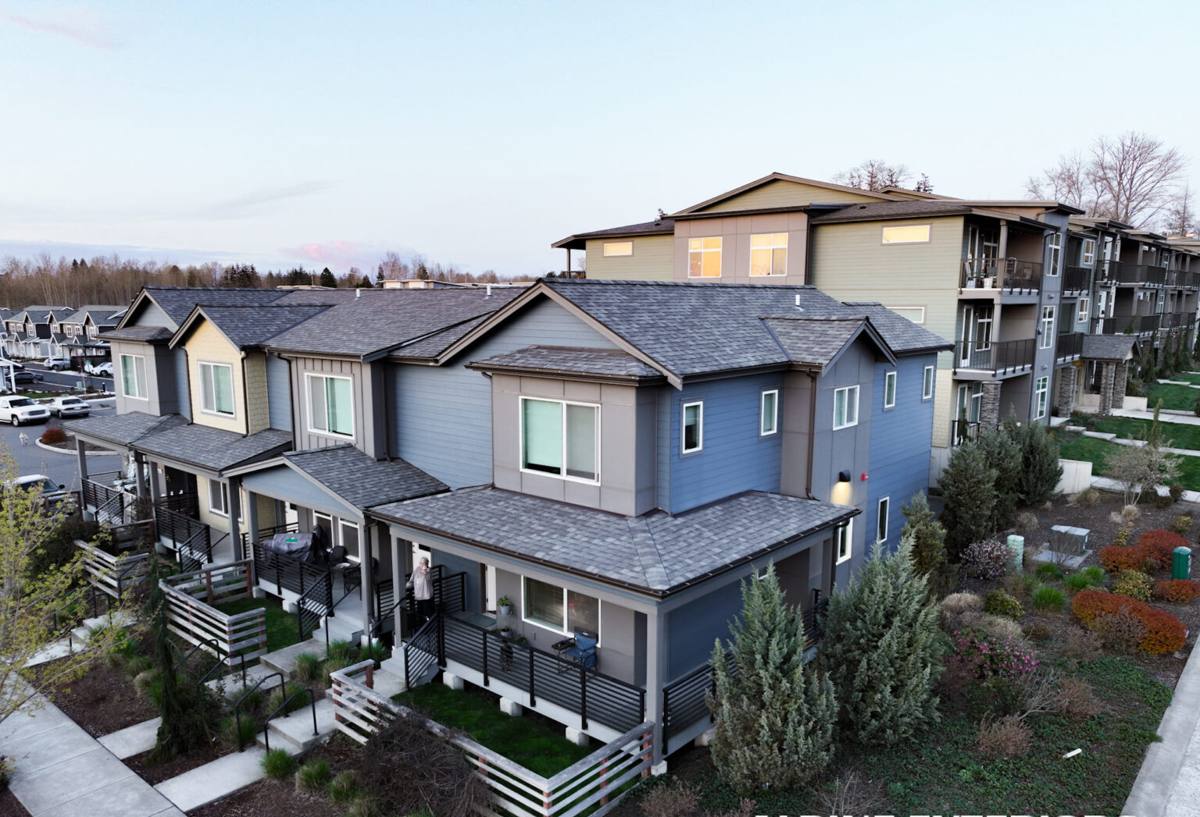
Sandy Point sits right up against the water, and that changes what a window has to survive. Homes a few miles inland in Blaine deal with plenty of rain, but Sandy Point properties also get salt-laden air off the bay, wind-driven rain that hits window walls almost horizontally during winter storms, and long stretches of gray, damp weather that keep wood, trim, and seals wet for days at a time. Add in Whatcom County's moss season, which can run from fall through spring, and you've got an environment that's genuinely harder on window assemblies than most of the interior county.
None of that means Sandy Point homes need exotic products. It means the installation details that get glossed over inland — flashing sequence, sealant choice, frame material, drainage paths — actually matter here, and skipping them shows up faster in the form of fogged glass, soft sills, and windows that stick or won't seal.
How Salt Air, Rain, and Moss Actually Damage Windows
Salt Air and Metal Components
Salt in the air accelerates corrosion on anything metal — hinges, cranks, balance systems, and unprotected fasteners. Over years, this shows up as hardware that gets stiff or gritty to operate, or as pitting and discoloration on aluminum frames and trim that aren't rated for coastal exposure.
Wind-Driven Rain and Water Intrusion
Standard rain falls straight down and most siding and flashing details handle it fine. Wind-driven rain off the water gets pushed sideways and even slightly upward under trim and siding laps, which is exactly where a lot of older or poorly flashed window installations fail. Water finds its way behind the window flange, into the rough opening, and eventually into wall framing where it can sit unseen for a long time.
Moss, Algae, and Prolonged Moisture
Moss and algae growth on north-facing walls and around window trim isn't just cosmetic. It holds moisture against wood surfaces for extended periods, which is what actually causes rot — not the rain itself, but rain that never gets a chance to dry. Wood sills and trim in shaded, damp corners of a Sandy Point property are the most common spot we find soft or delaminating material during a window inspection.
Signs a Sandy Point Window Needs Attention
- Glass that fogs or has a visible haze between panes — the seal has failed and the insulating gas has escaped
- Soft, spongy, or discolored wood at the sill, jambs, or corners of the trim
- Windows that are hard to open, close, or lock, or that no longer sit flush
- Visible gaps, cracked caulk, or daylight around the frame from the interior
- A cold draft or noticeable temperature difference near the window on a windy day
- Paint that's bubbling or peeling specifically around the window opening, not the whole wall
- Musty smell or staining on interior drywall below or beside a window
Any one of these on its own might not mean immediate replacement, but two or more on the same window — especially fogging combined with soft wood — usually means the window and its flashing have been letting water in for a while.
What a Correct Installation Involves Here
Flashing and Water Management First
The window itself is often not the weak point — the flashing around it is. A proper installation builds a drainage plane so any water that gets past the exterior finish is directed back out, not into the wall cavity. That means self-adhered flashing membrane at the sill pan (sloped so water runs out, not pools), correctly lapped head and jamb flashing, and a sill pan detail under the window itself rather than relying on caulk alone. On a Sandy Point wall exposed to driving rain, this sequence is not optional — it's the difference between a window that sheds water for decades and one that quietly rots the framing behind it.
Sealant and Fastener Choices
We use sealants and fasteners rated for marine/coastal exposure rather than standard interior-grade hardware. Stainless or coated fasteners resist the corrosion that plain steel screws suffer near the water, and a quality exterior-grade sealant holds flexibility through temperature swings instead of cracking after a season or two.
Insulation and Air Sealing
Gaps around the rough opening get filled with low-expansion foam or backer rod and sealant — never packed tight with fiberglass alone, which does little to stop air movement. A tight, correctly insulated gap also reduces condensation risk on the interior frame during cold, damp stretches.
Choosing a Window Material for a Coastal Whatcom County Home
Material choice matters more here than in a sheltered inland location. Here's how the common options hold up against salt air, moisture, and Sandy Point's exposure specifically:
| Frame Material | Coastal/Salt Air Performance | Maintenance | Notes for Sandy Point |
|---|---|---|---|
| Vinyl | Very good — won't corrode or rust | Low; occasional cleaning | Our default recommendation for most Sandy Point replacements; consistent performance without upkeep |
| Fiberglass | Excellent — very stable, resists warping and corrosion | Low | Strong option where budget allows; handles temperature and moisture swings well |
| Wood (unclad) | Poor without diligent upkeep — vulnerable to the same rot risk as trim | High; refinishing and vigilance required | We're honest with clients that unclad wood is a hard sell this close to the water unless upkeep is a firm commitment |
| Wood with aluminum or fiberglass cladding | Good — cladding protects the wood core | Moderate | Reasonable if the interior wood look is a priority; cladding quality and seams matter |
| Aluminum (uncoated/standard) | Fair to poor — prone to pitting and corrosion in salt air over time | Moderate to high | We generally steer coastal clients away from standard aluminum frames unless it's a marine-rated, coated product |
There's no single "best" window for every Sandy Point home — it depends on your siding, your budget, and how much upkeep you want to take on. We'll walk through the honest trade-offs for your specific house rather than push one product line.
Our Window Installation Process
- On-site assessment. We look at existing windows, sills, and surrounding siding/trim to check for hidden water damage before quoting anything.
- Measurement and product selection. Exact rough opening measurements and a conversation about frame material, glass package, and style based on your home's exposure.
- Removal. Old windows and any damaged trim or sheathing are removed carefully to expose the rough opening for inspection.
- Rot and damage repair. Any soft framing, sheathing, or trim found during removal gets repaired or replaced — this is the step that gets skipped by installers who just swap the window and reuse compromised material underneath.
- Sill pan and flashing installation. Sloped sill pan, then correctly lapped jamb and head flashing, integrated with your existing water-resistive barrier.
- Window installation and leveling. Set, shimmed, and fastened per manufacturer specification so the sash operates smoothly and the frame stays square.
- Insulation, sealing, and trim. Low-expansion foam or backer rod at the gap, exterior sealant at the perimeter, and trim reinstalled or replaced.
- Walkthrough. We check operation, locks, and seals with you before we call the job done.
What Affects the Cost
| Factor | Why It Matters |
|---|---|
| Number and size of windows | Bigger openings and more units mean more material and labor |
| Frame material | Vinyl generally costs less than fiberglass or clad-wood options |
| Glass package | Double vs. triple pane, low-E coatings, and impact-rated glass all shift price |
| Hidden damage | Rotted framing or sheathing found during removal adds repair time and material |
| Access and exposure | Second-story or hard-to-reach windows on wind-exposed walls take longer to install correctly |
| Trim and siding condition | Old or damaged exterior trim that needs replacing alongside the window adds cost |
We're not going to quote a number here that doesn't mean anything until we've seen your windows — every Sandy Point home is different, and a house with prior water damage costs more to do right than one that's been well maintained. What we can tell you is that a proper flashing and sill pan detail is not an "upgrade" we upsell — it's baseline on every install we do near the water.
Keeping New Windows Performing Through the Moss Season
A correctly installed window still benefits from basic upkeep in this climate:
- Rinse salt residue off frames and glass periodically, especially after windy weather off the bay
- Keep gutters and downspouts clear so roof runoff doesn't sheet down over window heads
- Trim back vegetation and clean moss or algae off nearby siding and trim before it spreads onto window surfaces
- Check and re-caulk any cracked exterior sealant lines once a year, ideally before the wet season starts
- Operate hardware occasionally through the winter so cranks, locks, and balances don't seize up
- Watch for condensation on interior glass — persistent condensation can signal a ventilation or seal issue worth checking
Why Local Installation Experience Matters
Window installation isn't just a product install — it's a water management problem specific to your wall assembly, and Sandy Point's exposure to Semiahmoo Bay makes that problem more demanding than average. A crew that already works this area knows which wall orientations take the worst of the wind-driven rain, what moss and rot patterns to expect in shaded corners, and which flashing details actually hold up here rather than in a drier, more sheltered part of Whatcom County. That experience shows up in fewer callbacks and windows that are still sealing properly ten and fifteen years out, not just on install day.
We also pull the appropriate permits and follow current building code requirements for window replacement in Blaine, so you're not left with a job that creates problems at resale or insurance time.
If you're seeing fogged glass, soft trim, or drafts around your windows, or you're planning ahead for a replacement, we're glad to take a look and give you a straightforward, no-pressure estimate — just fill out the form below.