 Blaine Siding
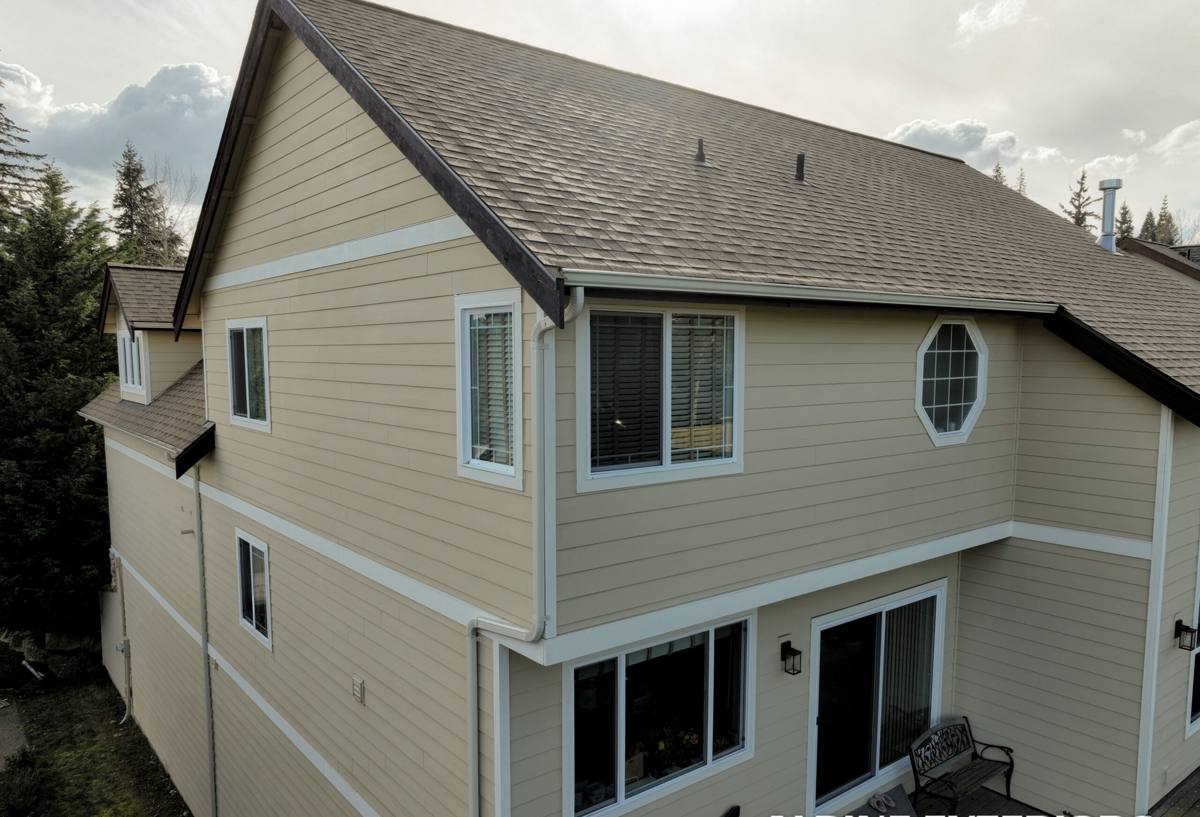
 Windows Built for Birch Point's Coastline, Not a Showroom
Birch Point sits close enough to the water that its windows live a different life than windows ten miles inland in Blaine or Custer. Salt-laden air off Semiahmoo Bay and the Strait works into seals, hardware, and finishes year-round. Add Whatcom County's long, wet winters and the moss and mildew season that follows, and you've got a set of conditions that will find every weak point in a window within a few years — not a few decades. We've replaced windows on homes in this stretch of Blaine long enough to know which failures are climate-driven and which are just bad installs, and this page is about doing the job right for this specific location.
What Salt Air and Driving Rain Actually Do to Windows
It helps to understand the mechanism, not just the symptom, before you spend money on a fix.
Salt Air
Airborne salt is corrosive to metal hardware — hinges, locks, balance mechanisms, and screen frames — even when a home isn't directly waterfront. It also degrades some sealant formulations faster than inland exposure, which shows up as failed seals (fogged glass) years ahead of a manufacturer's stated lifespan. Vinyl and fiberglass frames hold up better against salt corrosion than bare aluminum, which is one reason we steer clients away from uncoated aluminum frames in this specific location.
Driving Rain
Storms coming off the water don't just fall straight down — wind-driven rain pushes horizontally against west- and north-facing walls. That means water testing at the window-to-wall junction matters more here than in a sheltered inland lot. A window can be top-quality and still leak if the flashing and sill pan underneath it weren't detailed for wind-driven exposure.
Moss and Sustained Moisture
Whatcom County's long wet season keeps humidity high against north-facing exteriors for months at a time. Moss and algae on siding near a window opening hold moisture against the wall assembly, and if the window's flashing isn't doing its job, that moisture finds its way behind the trim and into the framing before anyone notices a problem inside.
Signs Your Birch Point Home Needs Windows Replaced, Not Repaired
- Fogging or a visible haze between panes — the seal has failed and the gas fill is gone
- Hardware that's stiff, corroded, or won't latch fully closed, especially on ocean-facing rooms
- Soft or discolored trim and sill wood around the frame, a sign moisture is getting behind it
- Noticeable draft or cold spot near the window even when it's shut and locked
- Condensation forming on the inside of the glass regularly, not just on the coldest mornings
- Visible daylight or gaps at the frame corners
- Windows that are original to a home built decades ago and have never been replaced
Some of these are repairable — a failed balance spring or a worn weatherstrip doesn't always mean a full replacement. But once moisture has reached the framing or a seal has failed, repair is usually a short-term patch, not a fix.
Window Materials: What Holds Up Here
We install a range of materials, but not all of them make sense a few blocks from saltwater. Here's how the common options compare specifically for Birch Point's exposure.
| Frame Material | Salt Air Performance | Maintenance | Notes for This Location |
|---|---|---|---|
| Vinyl | Good — won't corrode | Low; occasional cleaning | Solid value option; check the weld quality on corners |
| Fiberglass | Excellent — stable and corrosion-proof | Low | Handles temperature swings and salt exposure well; higher upfront cost |
| Wood (clad) | Fair to good, depending on cladding | Higher — cladding gaps invite rot | Only worth it here if the exterior cladding is fully sealed and detailed correctly |
| Bare Aluminum | Poor — corrodes and pits over time | Moderate to high | We generally don't recommend uncoated aluminum this close to the water |
Hardware finish matters too. Standard mill-finish or lower-grade coated hardware corrodes visibly within a few seasons in this environment. We spec corrosion-resistant hardware on Birch Point jobs by default, not as an upsell.
What a Correct Install Looks Like Here
The window unit itself is maybe half the job. The other half is how it's integrated into the wall, and that's where most leak call-backs actually originate — not from a defective window.
Sill Pan and Flashing
Every opening should get a sloped sill pan and properly lapped flashing tied into the home's water-resistive barrier, so any water that gets past the window sheds outward instead of pooling at the sill. This is standard practice, but it's also the step that gets skipped when a crew is moving fast — and it's the step that determines whether a window leaks in five years or twenty.
Sealant Selection and Placement
Not all exterior sealants are rated for the same UV and moisture exposure, and using the wrong bead in the wrong place (or sealing a spot that should be left open to drain) can trap water instead of keeping it out. We match sealant to substrate and leave designed weep paths open.
Fastening and Shimming
A window that's shimmed square and fastened per the manufacturer's schedule operates smoothly and seals evenly for the life of the unit. One that's racked slightly out of square during install will bind, wear its hardware faster, and often won't seal tight even when new.
Interior and Exterior Trim Detail
Trim isn't just cosmetic — it's the last line of defense directing water away from the opening. We rebuild trim details to shed water properly rather than just re-using whatever was there if it wasn't doing its job.
How We Approach a Birch Point Job
- On-site assessment. We look at each opening individually — orientation to wind and water, existing flashing condition, sill and trim state — because a west-facing window and a sheltered one on the same house often need different solutions.
- Honest scope and options. We tell you which windows need full replacement, which could be repaired, and what materials make sense for the budget and the exposure.
- Removal and prep. We check the wall opening for hidden moisture damage before anything new goes in — a new window over rotten framing is a wasted install.
- Correct flashing and sealing. Sill pans, flashing laps, and sealant placement done to the wall assembly's actual needs, not a generic checklist.
- Install and adjust. Shimmed square, fastened to spec, hardware tested and adjusted before we call it done.
- Cleanup and walkthrough. We show you the finished work and how to maintain it.
Maintenance That Actually Extends Window Life Here
- Rinse salt film off frames and glass a few times a year, especially after storms
- Keep weep holes at the bottom of the frame clear of debris and moss so water can drain out
- Check and lightly lubricate hardware annually — corrosion is easier to prevent than reverse
- Inspect exterior caulk lines each fall before the wet season sets in, and have gaps resealed early
- Trim back vegetation or moss buildup on nearby siding so moisture isn't sitting against the wall
Cost Factors to Expect
Exact pricing depends on window count, size, material, and how much trim and flashing rework is needed, but a few things move the number more than homeowners expect:
| Factor | Why It Matters |
|---|---|
| Frame material | Fiberglass and higher-grade vinyl cost more upfront but last longer in salt exposure |
| Existing damage | Rotted framing or sheathing found during removal adds repair scope |
| Flashing condition | Openings with failed or missing flashing need more rebuild work than a straightforward swap |
| Window size and type | Large or custom-shaped openings cost more than standard double-hung sizes |
| Number of openings | Doing a whole elevation or the whole house at once typically has a lower per-window cost than one-offs over time |
We give a written, itemized estimate before any work starts, so you know exactly what you're paying for and why.
Why Hire a Crew That Already Works This Area
A contractor who mostly works dry, inland jobs can install a perfectly good window and still get a callback in Birch Point, because the failure points here are different. Flashing that would be adequate in a sheltered subdivision isn't necessarily adequate a few blocks from open water with wind-driven rain hitting it directly. We work windows across Blaine and Whatcom County regularly, including homes with this level of coastal exposure, so the flashing details, sealant choices, and hardware specs we use are chosen for what this location actually does to a house — not a generic install checklist.
If your windows are fogging, drafting, sticking, or just original to a home that's been standing through a lot of wet Blaine winters, we're happy to take a look. Reach out for a free, no-pressure estimate — we'll walk the openings with you, tell you honestly what needs replacing versus what doesn't, and give you a clear number before anything starts.