 Blaine Siding
 Window Replacement Built for Grandview's Coastal Climate
Grandview sits close enough to the water that homes here take a different kind of weathering than houses further inland in Whatcom County. Salt-laden air corrodes hardware and finishes faster than dry-climate air does. Driving rain, pushed sideways by wind off the Strait, finds every weak seal and gap around a window frame. And the long moss season that runs through fall, winter, and much of spring keeps north-facing walls and window trim damp for weeks at a stretch. Windows in this kind of environment don't fail because they're old — they fail because they were never detailed for this climate in the first place.
A window replacement in Grandview isn't just a cosmetic upgrade. Done right, it's a chance to correct flashing and sealing details that should have been right the first time, and to pick materials and hardware that can actually hold up to salt, wind-driven rain, and constant moisture.
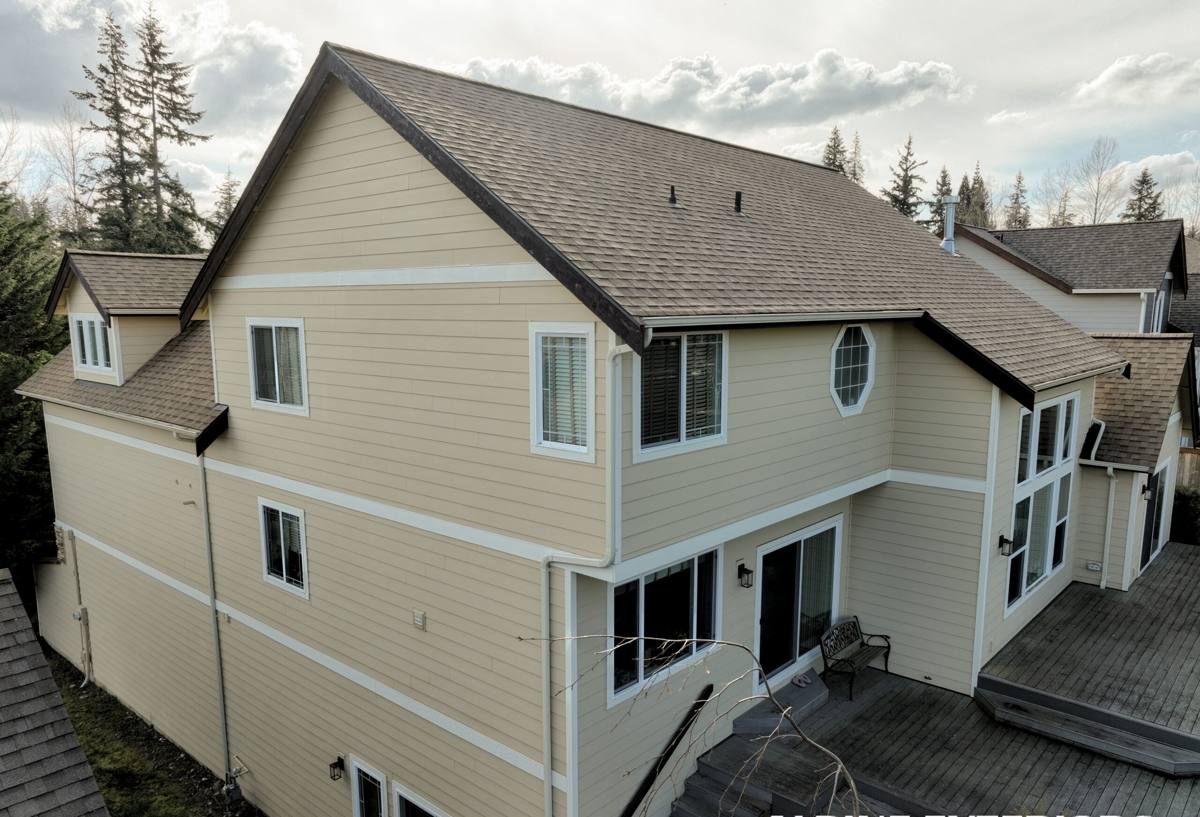
Signs a Grandview Home Needs New Windows
Some of these show up slowly, which is exactly why a lot of homeowners wait longer than they should:
- Fogging or a permanent haze between glass panes — the seal has failed and the insulating gas is gone
- Corroded or stiff hardware (latches, cranks, balances) that used to move smoothly
- Soft or discolored wood at the sill or lower frame corners, a common entry point for driving rain
- Drafts you can feel near the frame on windy days, even with the window fully latched
- Visible moss or dark streaking on trim below or beside the window, a sign moisture is sitting there longer than it should
- Difficulty opening or closing the sash, often from swelling in the frame
Any one of these on its own might just need a repair. Several of them together, especially on the weather-facing side of the house, usually mean the window and its surrounding flashing have reached the end of their useful life.
What a Correct Window Replacement Job Actually Involves
It's Not Just the Window Unit
Swapping in a new window without addressing the opening around it is one of the most common ways window replacements fail early in a place like Grandview. The window itself is only part of the system — the flashing, the water-resistive barrier behind the siding, and the sealant joints all have to work together to keep wind-driven rain out.
The Details That Matter Here
- Proper sloped sill pan flashing so any water that does get past the window sheds outward, not into the wall cavity
- Integration with the house wrap or building paper in the correct shingle-lap order, so water is always directed down and out
- Backer rod and high-quality exterior sealant at the right joints — not sealant used as a substitute for flashing
- Corrosion-resistant fasteners and hardware, since standard steel components degrade quickly this close to salt air
- Insulation packed correctly around the frame, without over-compressing it, to avoid both drafts and moisture traps
Skipping any of these steps is how a brand-new window ends up with rot in the wall behind it within a few years — the window looks fine while the real damage happens out of sight.
Choosing Window Materials for Whatcom County's Coast
There's no single "best" window material for every home, but some options handle salt air, rain, and moss-season dampness better than others. Here's how the common choices generally compare for a Grandview property:
| Material | Salt Air / Corrosion Resistance | Moisture Behavior | Maintenance |
|---|---|---|---|
| Vinyl | Good — won't corrode or rust | Doesn't absorb water; seams need quality welding | Low; occasional cleaning |
| Fiberglass | Very good — stable and non-corroding | Minimal expansion/contraction, holds seals well | Low |
| Aluminum | Fair — needs marine-grade coatings to resist pitting | Can conduct condensation without a thermal break | Moderate |
| Wood / Wood-Clad | Poor to fair without diligent upkeep | Prone to swelling and rot if finish fails | High |
We don't install painted wood-frame windows on exposed, weather-facing walls in this area as a matter of professional standard — not because wood windows are bad everywhere, but because keeping their finish intact against year-round salt spray and moss-season dampness takes upkeep most homeowners don't want to sign up for. Vinyl and fiberglass carry warranty structures and hardware options that better match what this climate demands with less ongoing maintenance.
Our Window Replacement Process in Grandview
- On-site assessment — we look at each window individually, checking framing condition, current flashing, and which walls take the worst weather exposure
- Material and glass selection — we walk through frame material, glass package (including options for added wind and rain performance), and hardware, matched to your home's exposure and budget
- Removal and opening inspection — old windows come out carefully so we can inspect the framing, sheathing, and existing flashing for hidden moisture damage before anything new goes in
- Repair as needed — any soft framing or compromised sheathing gets addressed before a new window goes in, not covered over
- Correct flashing and sealing — sill pan, house wrap integration, and sealant applied in the right sequence so water sheds away from the wall
- Install and adjust — the new window is set, shimmed, and adjusted so it operates smoothly and seals evenly on all sides
- Interior and exterior finish work — trim, caulking, and touch-up so the finished job looks clean inside and out
- Final walkthrough — we test every operable window with you before we consider the job done
What Affects the Cost of a Window Replacement
Every home is different, but these are the main factors that move the price up or down on a typical Grandview project:
| Factor | Why It Matters |
|---|---|
| Number and size of windows | More or larger openings mean more material and labor |
| Frame material | Vinyl is typically the most budget-friendly; fiberglass costs more upfront but often needs less long-term upkeep |
| Extent of hidden damage | Rot or soft framing found during removal adds repair time before the new window can go in |
| Wall exposure | Weather-facing walls may call for upgraded sealing details or reinforced flashing |
| Glass package | Upgraded glass for wind and noise performance costs more but pays off on exposed sides of the house |
| Access and site conditions | Second-story or hard-to-reach windows can add labor time |
We give straightforward, itemized estimates so you can see exactly what you're paying for and where, rather than a single lump number.
Why It Matters to Hire a Crew That Already Works in Grandview
A contractor who mostly works inland doesn't always think about sill pan flashing the same way, or budget extra time for hardware that has to survive salt exposure. Crews who regularly work Grandview and the surrounding Blaine coastline already know which walls on a typical local home take the worst of the wind-driven rain, which hardware finishes actually hold up here, and how long moss season really runs in a given year. That local knowledge shows up in small decisions — sealant choice, flashing lap direction, hardware grade — that determine whether a window replacement lasts fifteen years or needs revisiting in five.
It also matters for accountability. A local crew is easy to reach if a question comes up after the job, and has a reputation in the area worth protecting.
Keeping New Windows Performing Through Whatcom County's Weather
New windows still need a little seasonal attention, especially this close to the water. A short annual routine goes a long way:
- Wipe down frames and hardware periodically to clear salt residue, especially after storms
- Check and clean weep holes so water can drain out rather than pool in the frame
- Inspect exterior caulk lines each fall before the rainy season sets in, and touch up any cracked or separated sealant
- Clear moss or debris from nearby trim and sills so moisture doesn't sit against the window frame
- Test locks and operating hardware once or twice a year and lubricate as needed
- Watch for condensation between panes — it's an early sign a seal is starting to fail
None of this takes long, but skipping it is how even a well-installed window ends up needing attention years before it should.
Ready for an Honest Look at Your Windows?
If you're dealing with drafts, fogged glass, stiff hardware, or windows that just don't feel right anymore, we're happy to take a look and tell you honestly what's going on — no pressure, no upsell. Fill out the form below to schedule a free estimate for your Grandview home.