 Blaine Siding
 Roofing in Bellingham and Blaine Isn't the Same Job as Roofing Somewhere Dry
A roof installed in Bellingham or Blaine has to survive a different set of conditions than a roof installed inland or in a drier climate. Whatcom County sits right on the Salish Sea, which means salt-laden air moving off Bellingham Bay and the Strait of Georgia, long stretches of driving rain that comes in sideways during winter storms, and a moss season that can run eight months or more out of the year on north-facing slopes and shaded roof planes. None of that is exotic information to anyone who has lived here a while, but it matters a great deal when you're choosing materials, underlayment, ventilation, and installation details for a new roof. A roof spec that works fine in Spokane or Eastern Oregon will underperform here. This page walks through what a correctly installed roof in Bellingham actually needs, what our process looks like, and why the details matter more than the brand name on the shingle wrapper.
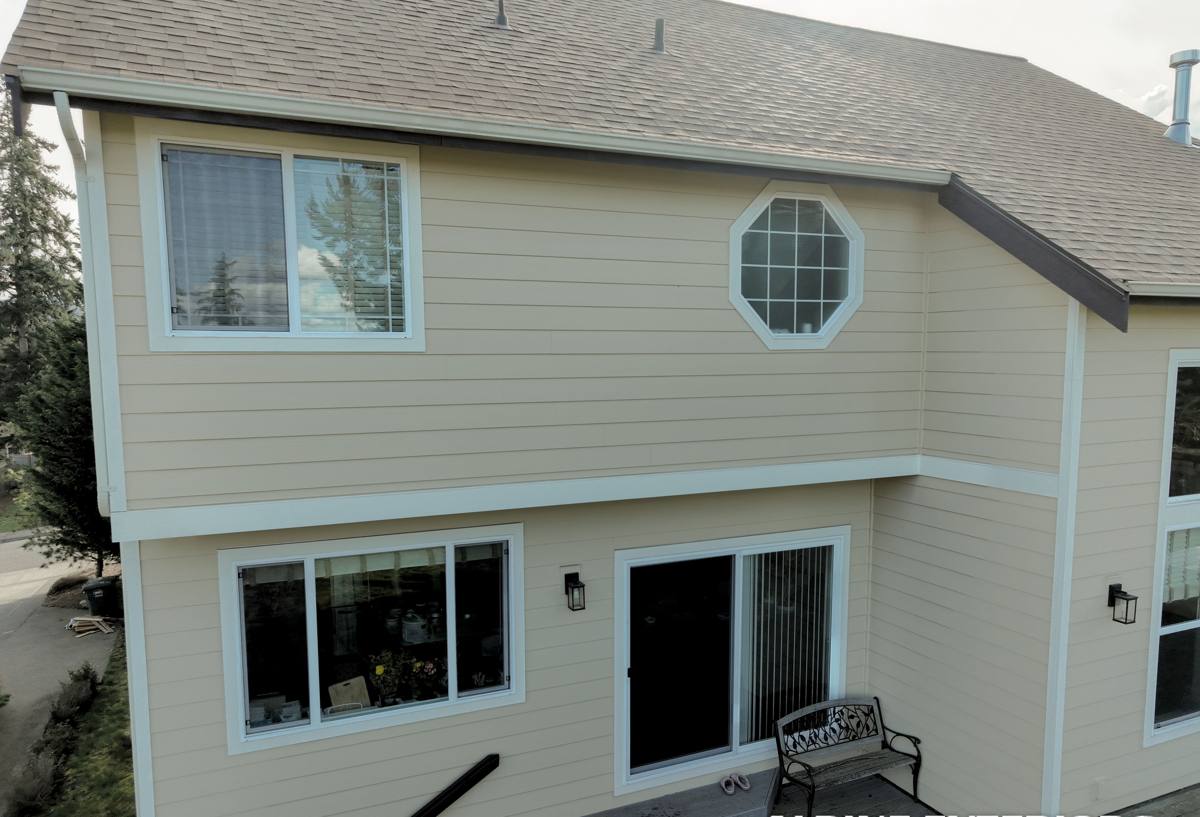
What Salt Air, Rain, and Moss Actually Do to a Roof
Salt Air and Corrosion
Homes closer to the water in Blaine and along Bellingham's shoreline take on airborne salt that settles on metal flashing, fasteners, vents, and gutter hardware. Over years, that accelerates corrosion on lower-grade metal components. It's not usually dramatic — it's slow pitting and rust that eventually shows up as streaking, leaks at flashing seams, or fastener failure long before the shingles themselves are worn out.
Driving Rain and Wind-Driven Water
Pacific Northwest winter storms don't just drop rain straight down — wind pushes it sideways and up under laps, especially at eaves, valleys, and roof-to-wall transitions. A roof system that relies on gravity alone to shed water, without proper underlayment and flashing detail, will eventually let water find its way in through those transitions.
Moss and Prolonged Moisture
Shade, overhanging trees, and our long damp season give moss and moss-forming algae an unusually long window to establish on a roof surface. Moss holds moisture against the roofing material, lifts shingle edges as it grows, and can shorten the useful life of a roof surface significantly if it's left unmanaged. It's one of the most common reasons we get called out to look at roofs that are otherwise not that old.
Signs a Bellingham Roof Needs Replacement, Not Just Repair
Not every roof problem means a full tear-off. But there are signs that point toward replacement being the more honest recommendation rather than another round of patching:
- Granule loss heavy enough that you can see bare asphalt on multiple slopes, not just one worn spot
- Moss growth that has already lifted shingle tabs, not just surface staining
- Soft spots or visible sag in the roof deck when walked
- Repeated leaks in different locations each winter, rather than one recurring spot
- Flashing that's rusted through or pulling away at chimneys, skylights, and wall intersections
- A roof already past or near the end of its material's realistic service life for our climate
If a roof is showing one or two of these in isolation, repair is often the right call and we'll say so. When several show up together, patching becomes a short-term fix on a roof that's already telling you it's done.
What a Correct Installation Involves in This Climate
Deck Inspection and Repair
Before anything new goes down, the existing roof deck gets inspected once the old roofing is stripped. Any sheathing that's soft, delaminated, or water-stained gets replaced rather than covered over — a new roof over a compromised deck is a warranty and performance problem waiting to surface later.
Ice and Water Barrier at Vulnerable Areas
Self-adhering waterproof membrane goes down at eaves, valleys, and around roof penetrations. This is the backup layer that keeps wind-driven rain and any ice-dam-related backup from reaching the deck, and it's a detail that matters more here than in drier regions.
Synthetic Underlayment Across the Field
A high-quality synthetic underlayment covers the rest of the roof, giving a second layer of water resistance under the shingles or panels themselves and standing up better to the extended exposure our installation windows sometimes require between dry stretches.
Proper Ventilation
Balanced intake and exhaust ventilation keeps the attic space at a consistent temperature and moisture level. In a climate with this much ambient humidity, poor ventilation traps moisture under the roof deck from the inside, which contributes to premature deck rot and worsens moss and mildew conditions from below as well as above.
Flashing Detail at Every Transition
Chimneys, skylights, dormers, and wall-to-roof intersections are where the vast majority of leaks originate — not in the open field of the roof. Correctly stepped and counter-flashed transitions, with corrosion-resistant metal given the salt-air exposure, are non-negotiable details rather than places to save time.
Fasteners and Hardware Rated for Coastal Exposure
We use fasteners and exposed metal components suited to coastal air rather than the cheapest available option, since fastener corrosion near the water is a real and avoidable failure point.
Comparing Roofing Material Options for Whatcom County Homes
| Material | Typical Lifespan Here | Moss/Algae Resistance | Notes for Coastal Whatcom County |
|---|---|---|---|
| Standard asphalt composition shingle | 18-25 years | Moderate; benefits from algae-resistant granules | Cost-effective, widely used, needs periodic moss management on shaded slopes |
| Algae-resistant asphalt shingle | 20-28 years | Improved over standard shingle | Worthwhile upgrade for shaded or north-facing roof planes |
| Metal roofing (standing seam or panel) | 40-60+ years | High; sheds moss more readily due to smooth surface and slope shedding | Higher upfront cost, strong performance in driving rain, needs corrosion-rated fasteners near salt air |
| Synthetic/composite shingle | 25-40 years | Good to high, varies by product | Middle-ground option; confirm manufacturer's moisture and algae warranty terms |
There's no single "correct" material for every home — a lot depends on roof pitch, how much shade the property gets, the look you want, and budget. What we won't do is recommend a material or installation shortcut that we know performs poorly against moss and driving rain just because it's cheaper up front. We'll walk through the honest trade-offs for your specific roof before you decide.
Our Installation Process, Step by Step
- On-site inspection and estimate. We look at the existing roof, attic ventilation, deck condition where visible, and any moss or water-damage history you can tell us about.
- Written scope and material selection. You get a clear breakdown of what's being removed, what's being installed, and why, with material options explained rather than a single take-it-or-leave-it price.
- Tear-off and deck inspection. Old roofing comes off, the deck is inspected, and any needed sheathing repair is priced and completed before new roofing goes down.
- Underlayment and ice/water membrane installation. Waterproofing layers go in at all the vulnerable areas first.
- Ventilation correction if needed. If intake or exhaust ventilation is inadequate, we address it as part of the install rather than leaving a known problem in place.
- Roofing material installation and flashing. Shingles or panels go on with correct fastening patterns and exposure, and all flashing is formed and installed at transitions.
- Cleanup and final walkthrough. Site is cleaned, magnetic sweep for stray fasteners is done, and we walk the finished roof with you.
What Affects the Cost of a New Roof in Bellingham
| Factor | Why It Matters |
|---|---|
| Roof size and number of planes | More square footage and more valleys/hips mean more material and labor |
| Roof pitch and accessibility | Steeper or harder-to-access roofs require more safety setup and time |
| Existing deck condition | Sheathing replacement adds material and labor cost discovered during tear-off |
| Material choice | Standard asphalt, algae-resistant shingle, metal, and composite carry different price points |
| Ventilation upgrades | Adding or correcting intake/exhaust vents adds scope but improves long-term performance |
| Layers to remove | Multiple existing roof layers increase tear-off time and disposal cost |
We don't publish a flat per-square price because these factors genuinely swing the number, and quoting a number without seeing the roof isn't honest. What we can tell you is that a proper estimate will break down labor, material, and any deck or ventilation repair separately so you can see where the money is going.
Why a Crew That Already Works Bellingham and Blaine Matters
Roofing crews that work primarily in drier or inland climates sometimes under-spec underlayment, skip ice-and-water membrane in areas that don't strictly require it by code, or use standard-grade fasteners without accounting for salt exposure. None of that shows up as a problem on day one — it shows up two, five, or ten years later as a leak or premature failure. A crew that works Whatcom County roofs regularly builds in the extra waterproofing and moss-conscious details as standard practice, not an upsell, because we're the ones who get the call when a roof installed without them starts leaking.
Local experience also means familiarity with the permitting process through the City of Bellingham or Whatcom County depending on where your property sits, realistic scheduling around our wetter months, and knowing which roof details tend to cause problems on homes in this specific area versus a generic textbook installation.
Keeping a New Roof Performing Once It's Installed
A correctly installed roof still benefits from basic upkeep, especially given how long our moss season runs. A short annual maintenance routine goes a long way toward protecting the investment:
- Keep gutters and downspouts clear so water isn't backing up under the eave line
- Trim back overhanging branches that keep roof sections shaded and damp
- Address early moss growth before it spreads and lifts shingle edges
- Have flashing and roof penetrations visually checked after major storms
- Confirm attic ventilation isn't blocked by insulation or debris
None of this requires a contractor visit every year, but a five-minute look after big wind or rain events, and dealing with moss early rather than late, meaningfully extends how long a roof performs the way it's supposed to.
Get a Straightforward Roof Estimate
If your roof in Bellingham or the surrounding Blaine area is showing wear, moss, or signs it's past its useful life, we're happy to come take a look and give you a straightforward, no-pressure estimate — including an honest opinion on whether repair or replacement makes more sense for your situation. Use the form below to get started.