 Blaine Siding
 Birch Bay sits right on the water, and that changes what a window has to survive. Homes here take a steady dose of salt-laden air off the Strait of Georgia, wind-driven rain that hits siding and window walls sideways instead of straight down, and a damp season that runs long enough for moss and mildew to get a foothold on anything that stays wet. A window that would do fine in a drier inland part of Whatcom County can start failing early out here — corroding hardware, swollen sashes, black growth creeping across the sill. Custom windows for a Birch Bay home aren't about upgrading for the sake of it. They're about matching the product and the install to conditions that are genuinely harder on a building envelope than most of the county sees.
What Birch Bay's Climate Actually Does to a Window
Three things do most of the damage, and they compound each other over time.
Salt Air
Airborne salt is corrosive to exposed metal — hinges, balance systems, screen frames, and lower-grade cladding fasteners. It also accelerates the breakdown of some sealants and finishes faster than the manufacturer's inland test data would suggest. This is the main reason material choice matters more here than in most parts of the county.
Driving Rain
Wind off the water pushes rain into gaps that a calm-weather install would never expose. A flashing detail that's "close enough" inland can leak within a season or two on a wall that takes direct weather. Water intrusion around a window almost always shows up as rot in the framing before it shows up as a visible drip — by the time you see a stain, there's usually more damage behind the wall than in front of it.
Moss and Prolonged Dampness
A long wet season means anything shaded or north-facing stays damp longer. Wood sills, unpainted trim, and window wells that don't drain well grow moss and mildew, which holds moisture against the frame and speeds up rot. Older wood windows and low-grade vinyl sills are the most common casualties.
What "Custom" Means for This Kind of Job
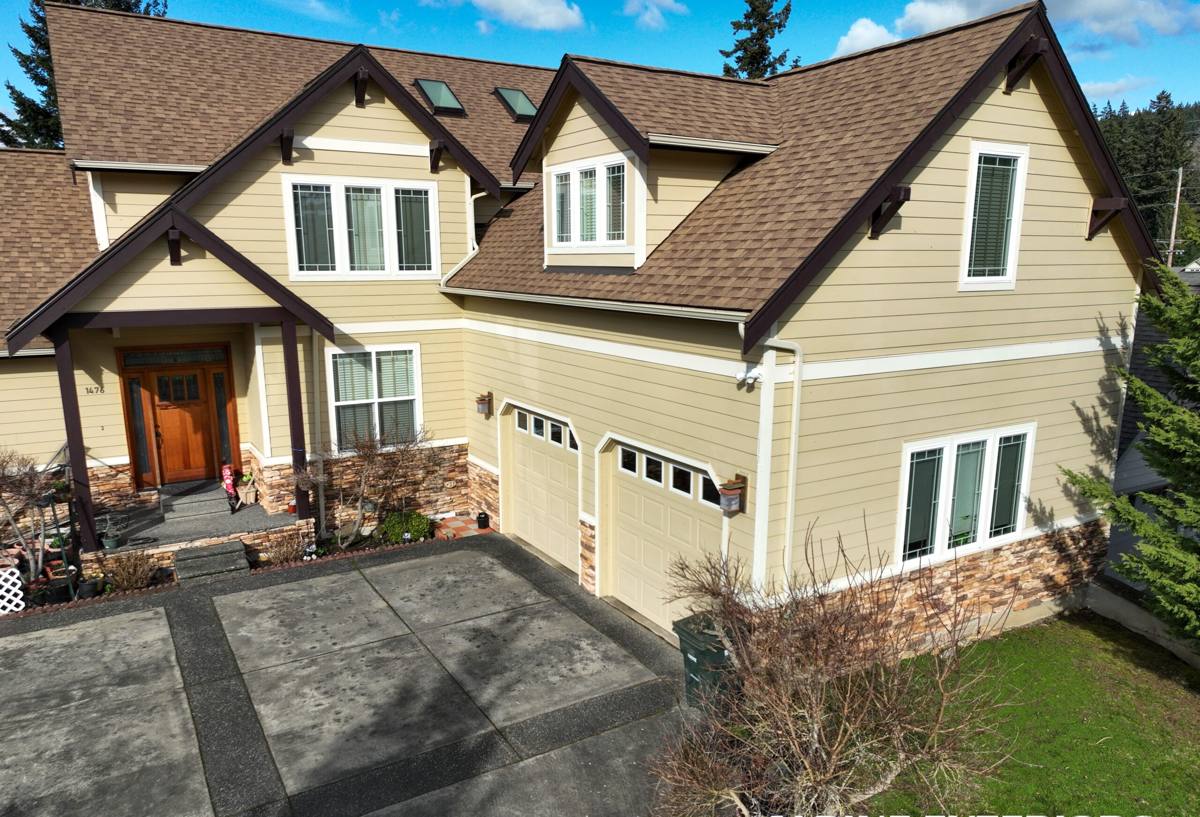
A lot of homes around Birch Bay are older beach cottages, additions, or houses that have been remodeled more than once, so window openings are frequently not standard sizes. "Custom" in practice usually means one or more of the following:
- Openings that are slightly out of square from decades of settling, requiring on-site measurement rather than catalog sizing
- Odd or non-standard dimensions from additions, sunrooms, or view-oriented remodels
- Matching sightlines and grid patterns across a mixed-age home so new windows don't look bolted on
- Replacing full frames (not just sash inserts) where water damage or rot has already compromised the original opening
- Positioning and glazing choices that account for direct water-facing exposure versus a more sheltered wall
None of this is exotic work, but it does mean the job starts with careful measurement and an honest look at the condition behind the existing trim — not a generic size chart.
Materials That Actually Hold Up Near the Water
We don't push one brand or material as the answer for every house. The right choice depends on exposure, budget, and how the rest of the home is built. Here's how the common options generally compare for a coastal Whatcom County setting:
| Frame Material | Salt Air / Moisture Behavior | Maintenance | General Cost Position |
|---|---|---|---|
| Vinyl (quality-grade) | Won't rust or corrode; UV and moisture stable if well-made | Low | Most affordable |
| Fiberglass | Very stable in temperature swings and moisture; strong long-term option for direct exposure | Low | Mid to higher |
| Wood-clad | Attractive, but cladding seams and any exposed wood need real diligence in salt air | Moderate to higher | Higher |
| Aluminum | Prone to corrosion and thermal transfer unless it's a marine-grade or thermally broken product | Moderate | Varies |
For homes taking direct wind and salt off the water, we generally steer clients toward vinyl or fiberglass for the frame, with hardware rated for coastal or marine environments. Wood-clad can still be the right call for a specific look, but it comes with a maintenance conversation we have honestly up front rather than after the fact.
Glass Matters Too
Dual-pane, low-E glass with an argon fill is the baseline we recommend for this area — it cuts down on the condensation that shows up on single-pane or older double-pane units during cold, damp stretches, and it helps with comfort near a water-facing wall where wind chill on glass is more noticeable.
The Install Details That Actually Prevent Leaks
Most window failures near the coast aren't the window's fault — they're an installation shortcut that didn't account for wind-driven rain. The parts that matter most:
Flashing and Weather Barrier Integration
Flashing tape and pan flashing need to integrate correctly with the home's existing weather-resistive barrier — lapped in the right order so water sheds outward and down, never trapped behind the siding. On a direct-exposure wall, we treat this step as non-negotiable, not optional.
Sill Pans and Drainage
A sloped sill pan under the window gives any water that does get past the exterior seal somewhere to go, instead of sitting against the framing. This is a small detail that's easy to skip and expensive to regret.
Sealant Selection and Placement
Not every exterior sealant is rated for the same temperature range or UV exposure. We use products suited to sustained damp conditions, and we leave the correct weep points open so the window can drain the way it's designed to — sealing everything shut solid is a common mistake that traps moisture instead of releasing it.
Signs Your Current Windows Are Already Losing the Battle
If you're not sure whether it's time to replace or repair, these are the practical signs we look for on a Birch Bay home:
- Fogging or a hazy film between panes of a double-pane window (the seal has failed)
- Noticeable drafts even when the window is fully latched
- Soft or discolored wood at the sill or lower frame corners
- Moss, algae, or black staining building up on the frame or sill despite regular cleaning
- Windows that stick, swell shut, or won't latch squarely anymore
- Visible gaps or separation between the frame and the siding or trim
Any one of these can be minor on its own. Two or three together on the same window usually means water has already been getting behind the frame for a while.
Our Process, Start to Finish
- On-site assessment. We look at the actual openings, check for hidden rot or water damage behind trim, and talk through what you actually want out of the windows — views, natural light, noise, energy performance.
- Honest product recommendation. We'll walk through frame and glass options suited to your home's specific exposure, with real trade-offs explained, not just an upsell.
- Precise measurement. Every opening is measured on-site since older and remodeled homes rarely match catalog dimensions exactly.
- Removal and prep. Old units come out carefully so we can inspect and repair any framing damage before a new window ever goes in — this is the step that gets skipped by crews in a hurry, and it's the one that causes leaks down the road.
- Flashing, sealing, and installation. Done in the sequence that actually sheds water on a wind-and-rain-exposed wall.
- Final walkthrough. We check operation, seal quality, and finish work with you before calling the job done.
Cost Factors to Expect
Every home is different, so we won't quote a number without seeing the job, but these are the main variables that move the price:
| Factor | Why It Matters |
|---|---|
| Number and size of windows | Bigger jobs bring per-unit efficiencies, but larger custom sizes cost more individually |
| Frame material | Vinyl is generally most affordable; fiberglass and wood-clad cost more up front |
| Full-frame vs. insert replacement | Full-frame work costs more but is often required where rot or water damage is present |
| Structural or trim repair needed | Damaged framing found during removal adds cost, but skipping it just hides a problem |
| Glass upgrades | Impact-resistant or higher-performance glazing adds cost but can be worth it on direct-exposure walls |
| Accessibility of the opening | Second-story, tight, or hard-to-reach windows take more labor time |
Why Local Experience in Birch Bay Actually Matters
A crew that's only worked drier, sheltered neighborhoods inland doesn't always think to plan for direct wind-driven rain or to spec hardware that won't corrode in salt air within a few years. Working regularly in Birch Bay and along the rest of the Blaine coastline means we're used to accounting for these conditions from the first site visit — not learning it the hard way on your house. It also means we're familiar with the mix of older cottages, additions, and newer builds that make up this part of Whatcom County, so we're not guessing at how to handle an out-of-square opening or a wall that's already showing early water damage.
If you're weighing whether to repair, replace a few windows, or do a full custom window package on a Birch Bay home, we're happy to take a look and give you a straight answer — including telling you if replacement isn't actually necessary yet. Reach out for a free, no-pressure estimate using the form below.