 Blaine Siding
 Why Birch Bay Siding Has to Work Harder Than Most
Birch Bay sits right on the water, and that changes what "good siding" means. A home a few miles inland in Whatcom County deals with rain and cold. A home in Birch Bay deals with all of that plus salt-laden air blowing straight off the water, wind-driven rain that hits siding sideways instead of falling straight down, and long stretches of gray, damp weather that keep exterior surfaces wet for days at a time. That combination is hard on cladding materials that aren't built for it, and it's the reason we treat Birch Bay as its own case, not just another stop on a Blaine service route.
Salt air is corrosive to exposed metal fasteners and trim, and it accelerates the breakdown of finishes that aren't engineered to resist it. Driving rain finds every gap, seam, and undersized flashing detail a standard installation might get away with in a calmer location. And the region's long moss season — often stretching from fall through spring — means anything that stays damp on a north-facing wall or under tree cover becomes a host for moss and algae growth if it can't dry out properly. Siding here isn't just about looks. It's about how the material and the installation handle sustained moisture exposure, season after season, year after year.
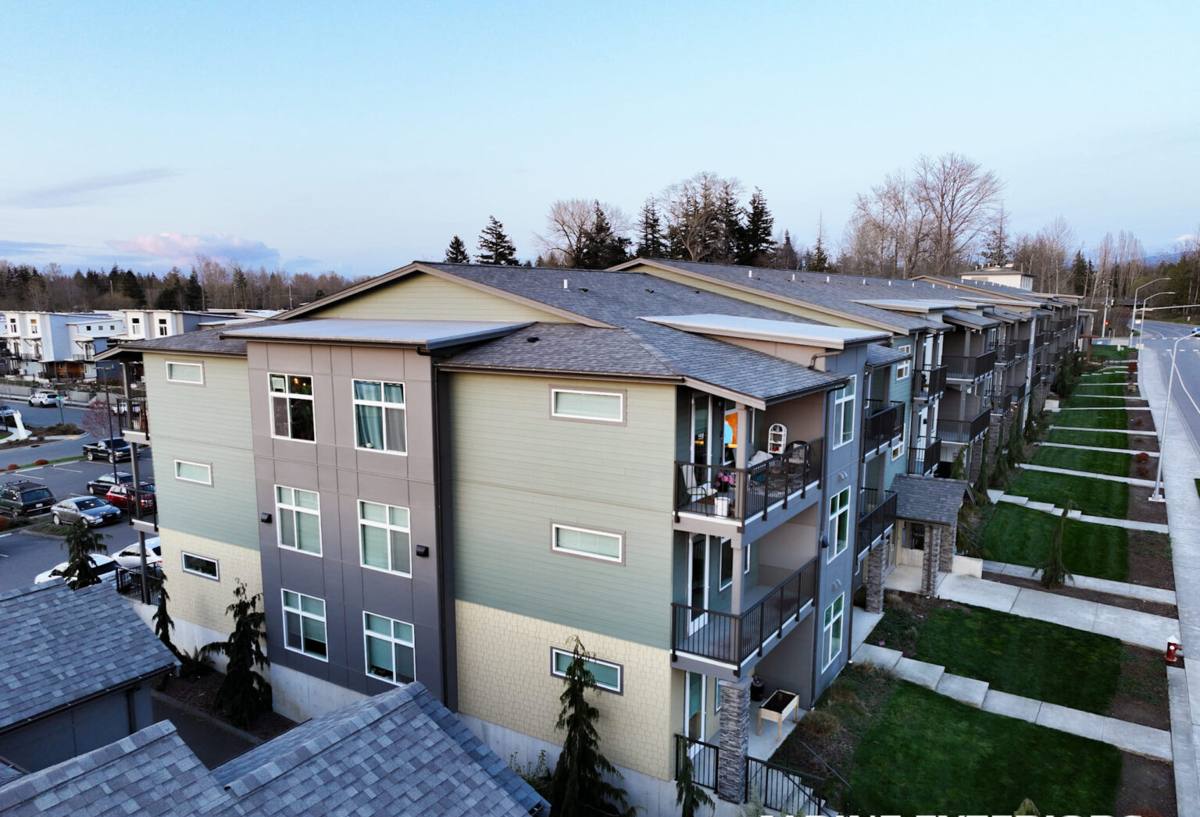
What Birch Bay Homes Actually Need From Their Siding
Based on what this climate does to a home over time, there are a few non-negotiables for siding in Birch Bay:
- A material that doesn't absorb and hold moisture. Wood-based products swell, warp, and rot when they stay wet. Siding here needs to shed water and dry out quickly.
- A finish that resists salt exposure. Coastal air is harder on paint and coatings than inland air. A finish that chalks, fades, or peels early means repainting on a shorter cycle than you'd plan for.
- Correct water management behind the siding. House wrap, flashing, and drainage gaps matter as much as the siding itself — maybe more, given how much wind-driven rain this area sees.
- Resistance to moss and algae staining. No siding is moss-proof, but some materials and finishes make it far easier for organic growth to take hold and stain the surface.
- Non-combustible material. Wildfire smoke and ember exposure are a growing concern across Western Washington, and non-combustible siding is one more layer of protection that doesn't cost you anything in appearance.
This is exactly why we install James Hardie fiber cement siding and nothing else. It's a cement-based product, not wood, so it doesn't feed moisture problems the way wood-based sidings can. It's non-combustible. And Hardie's ColorPlus factory finish is baked on and warranted specifically against the kind of fading and wear that coastal exposure causes faster than it should.
Why We Only Install James Hardie
We get asked about other siding options — vinyl, LP SmartSide, cedar, primed wood panels. Each of those has a place in the market, and we're not going to tell you they're worthless. But we made a decision as a company to install one product system, and Birch Bay's climate is a good illustration of why.
Vinyl is affordable and low-maintenance in mild climates, but it can warp in heat, become brittle in cold, and it's not something we'd stake a coastal installation on for the long haul. Wood-based composite sidings and cedar look great initially, but they rely on maintaining a paint or sealant barrier that salt air and constant moisture wear down faster than inland conditions would. Once that barrier is compromised, the substrate underneath is exposed to exactly the kind of sustained dampness that causes swelling, rot, and structural siding failure — and re-sealing or repainting on a tight cycle is a real, recurring cost that a lot of homeowners don't fully budget for upfront.
James Hardie fiber cement doesn't eliminate maintenance entirely — nothing does — but it removes the moisture-absorption problem at the material level, and it comes with a factory finish and a transferable warranty backing that finish. For a home exposed to salt air and driving rain, that's the difference that matters most over a 15- or 20-year horizon, not just at installation.
What a Correct Fiber Cement Installation Involves
Fiber cement siding is only as good as the installation behind it. A lot of the problems homeowners eventually deal with — moisture intrusion, premature caulk failure, staining, buckling — trace back to shortcuts in the details that don't show up until years later. In a climate like Birch Bay's, those shortcuts show up faster.
Water Management Comes First
Before any siding panel goes up, the wall needs a properly lapped weather-resistant barrier, correctly integrated flashing at every window, door, and penetration, and a drainage plane that lets any moisture that does get behind the siding find its way back out instead of sitting against the sheathing. This is the part of the job you won't see once it's finished, and it's the part that determines whether the siding actually performs for its full service life.
Fastening and Clearances
James Hardie publishes specific fastener patterns, clearances, and gapping requirements, and they exist for a reason — largely tied to how the material expands, contracts, and handles moisture at the edges. Panels need proper clearance from rooflines, decks, and grade, and butt joints need to be treated correctly rather than just caulked and hoped for.
Finish Integrity
Cut edges and any field-painted trim need to be properly sealed and primed to match the factory finish's protection. Skipping this step creates a weak point where a coastal environment will find a foothold faster than an inland one would.
None of this is exotic. It's disciplined, by-the-spec installation work. But it's exactly the kind of work that separates a fiber cement job that looks fine for two years from one that performs for two decades in a place like Birch Bay.
Our Process for Birch Bay Projects
- On-site assessment. We look at sun exposure, wind direction, tree cover, drainage around the foundation, and the current condition of your walls and trim before recommending anything.
- Product and color selection. We walk through Hardie's product lines and ColorPlus palette so you're choosing a look and a panel profile that fits your home, not a one-size-fits-all recommendation.
- Water management plan. We detail out flashing, house wrap, and drainage before a single panel is ordered — this is the step that protects the investment long-term.
- Installation to manufacturer spec. Fastening, clearances, joint treatment, and finish sealing all follow James Hardie's published requirements, not shortcuts.
- Final walkthrough. We go over the finished work with you directly so you know what was done and why.
Comparing Siding Options for a Coastal Climate
| Factor | James Hardie Fiber Cement | Vinyl | Wood-Based / Cedar |
|---|---|---|---|
| Moisture absorption | Very low — cement-based | Doesn't absorb, but can warp/gap | Absorbs if finish fails |
| Salt air resistance | Factory finish engineered for it | Can chalk and fade over time | Finish wears faster near the coast |
| Fire resistance | Non-combustible | Combustible | Combustible |
| Maintenance cycle | Periodic cleaning, minimal repainting | Low, but limited repair options if damaged | Regular repainting/sealing required |
| Typical lifespan when correctly installed | Decades, with transferable warranty | Varies widely by product grade | Shorter without diligent upkeep |
This isn't a knock on every other product on the market — it's a summary of why, for a coastal Whatcom County home, we think fiber cement is the more defensible long-term choice, and why we don't install the alternatives ourselves.
What to Check Before You Hire Anyone for Siding Work Here
Birch Bay's exposure makes the installer at least as important as the material. A few things worth confirming before you hire anyone:
- Are they familiar with James Hardie's published installation requirements, or just "siding in general"?
- Do they have a specific plan for water management — house wrap, flashing, drainage — before siding goes up, or is it an afterthought?
- Have they worked on homes with direct water exposure, not just inland properties?
- Are they licensed and insured to work in Washington, and can they explain how they handle warranty claims if something needs attention later?
- Will they walk you through product and color options rather than pushing one default choice?
A crew that regularly works this stretch of coastline already knows how salt air and driving rain behave against a wall, and that experience shows up in the details — the ones that determine whether your siding holds up or starts showing problems in year three instead of year twenty.
Let's Talk About Your Home
If your siding is showing moss staining, chalking, gaps at the trim, or you're just planning ahead for a home that's going to keep facing Birch Bay's salt air and rain for years to come, we're happy to take a look. We'll give you a straightforward, no-pressure estimate and an honest read on what your home actually needs — fill out the form below to get started.